3 Best Foot Valves for Rainwater Pumps
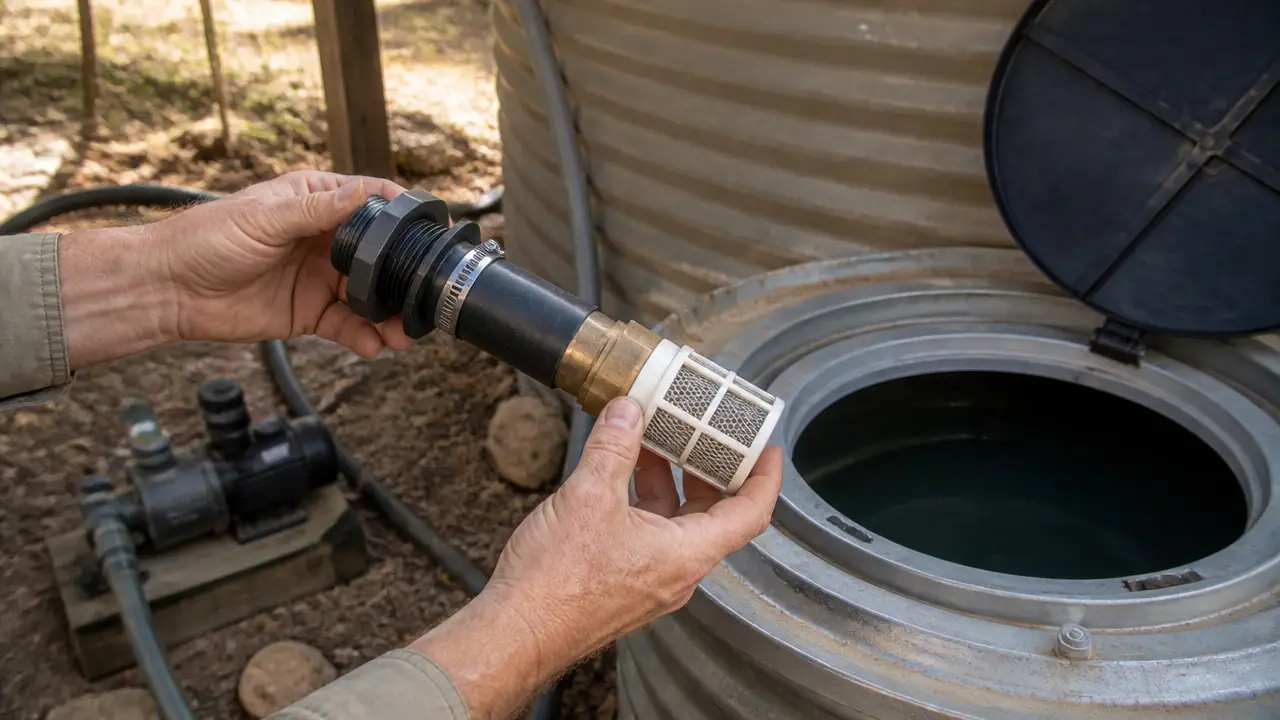
Compare foot valves by suction-line size, NPT fit, spring action, inlet screening, priming performance, and maintenance needs for rainwater pump systems.

Pressure tanks, regulators, switches, valves, and controllers.
Compare foot valves by suction-line size, NPT fit, spring action, inlet screening, priming performance, and maintenance needs for rainwater pump systems.
Reset a pump pressure switch only after correcting low water, lost prime, power, or pressure faults. Follow the manual and verify cut-in and cut-out.
Seventy PSI is high but often below residential limits. Confirm local rules and fixture ratings, measure static and flowing pressure, and control pressure creep.
A bad pressure switch may fail to start or stop the pump, chatter, arc, or operate at wrong pressures. Check power, gauge, tank charge, tubing, and contacts safely.
For a pump pressure tank, drain water and set air below the switch cut-in as specified. Ordinary vented storage tanks need no pressure setting.
A 30/50 switch eases pump demands; 40/60 gives stronger pressure when supported. Compare fixtures, elevation, tank precharge, and system ratings.
A 20-gallon pressure tank may suit some homes, but nominal volume is not drawdown. Size it from pump flow, runtime, switch range, demand, and space.
Ninety PSI is generally too high for residential plumbing and strains fixtures, hoses, valves, and appliances. Test it and use a suitable regulator.
Foot valves can clog, leak, stick, corrode, or admit air, causing lost prime and weak flow. Correct sizing, screening, submergence, and access reduce trouble.
Check-valve position depends on whether it holds suction prime or blocks discharge backflow. Follow pump instructions and avoid redundant valves that trap pressure.