As an affiliate, we may earn a commission from qualifying purchases. We get commissions for purchases made through links on this website from Amazon and other third parties.
Yes. An automatic irrigation system can use a soil moisture sensor to decide when plants need water. The sensor measures moisture near the roots, and a controller can open a valve or start a pump when the soil becomes too dry.
This can work with a garden hose supply, irrigation line, rain barrel, IBC tote, or larger rainwater tank. The important part is matching the sensor and controls to the way water moves through the system.
How a Soil Moisture Irrigation System Works
A basic automatic system has four main parts:
- Soil moisture sensor — detects how wet or dry the soil is.
- Controller — reads the sensor and decides whether watering is needed.
- Valve or pump control — starts and stops the water.
- Irrigation line — carries water to drip emitters, soaker hose, or another watering device.
The basic control sequence looks like this:
Soil gets dry → sensor detects the change → controller activates the valve or pump → plants are watered → soil moisture rises → controller stops watering.
A more advanced controller can also use a timer. This prevents the system from turning on every time the sensor briefly detects dry soil.
Choosing the Right Soil Moisture Sensor
Not all soil moisture sensors work the same way.
Capacitive sensors
Capacitive sensors measure changes in the soil without relying on exposed metal probes to carry electrical current through the soil.
They are commonly used for automatic watering projects because they tend to resist corrosion better than simple exposed-probe sensors.
They still need proper placement and calibration for the soil where they will be used.
Resistive sensors
Resistive sensors normally have two exposed metal probes. They estimate moisture by measuring how easily electricity passes through the soil.
They are inexpensive and simple, but the probes can corrode over time. Fertilizer and soil chemistry can also affect readings.
They may be useful for experiments or simple systems, but they usually require more inspection and replacement.
Commercial irrigation sensors
Some irrigation controllers accept dedicated soil moisture sensors. These systems may provide adjustable moisture limits, watering delays, and other controls without requiring a homemade electronic controller.
Check that the sensor and controller are designed to work together before connecting them.
The Sensor Should Not Usually Control the Pump Directly
A soil moisture sensor normally provides a small electrical signal. It is not designed to carry the electrical current required by a pump or irrigation valve.
Instead, the system usually follows this arrangement:
Sensor → controller → relay or valve driver → pump or solenoid valve
A relay is an electrically operated switch. It allows a small control signal to switch a larger electrical load.
Some irrigation valves use low-voltage control circuits. Pumps may require much more electrical power.
Do not connect a sensor directly to equipment unless the equipment manufacturer specifically says that connection is supported.
Outdoor electrical equipment should be protected from water and installed according to its instructions and applicable electrical requirements. Mains-voltage pump wiring is a good place to use a qualified electrician when you are not experienced with that work.
Using a Soil Moisture Sensor With Rainwater Storage
A sensor-controlled irrigation system can work especially well with stored rainwater.
For example, a simple layout might be:
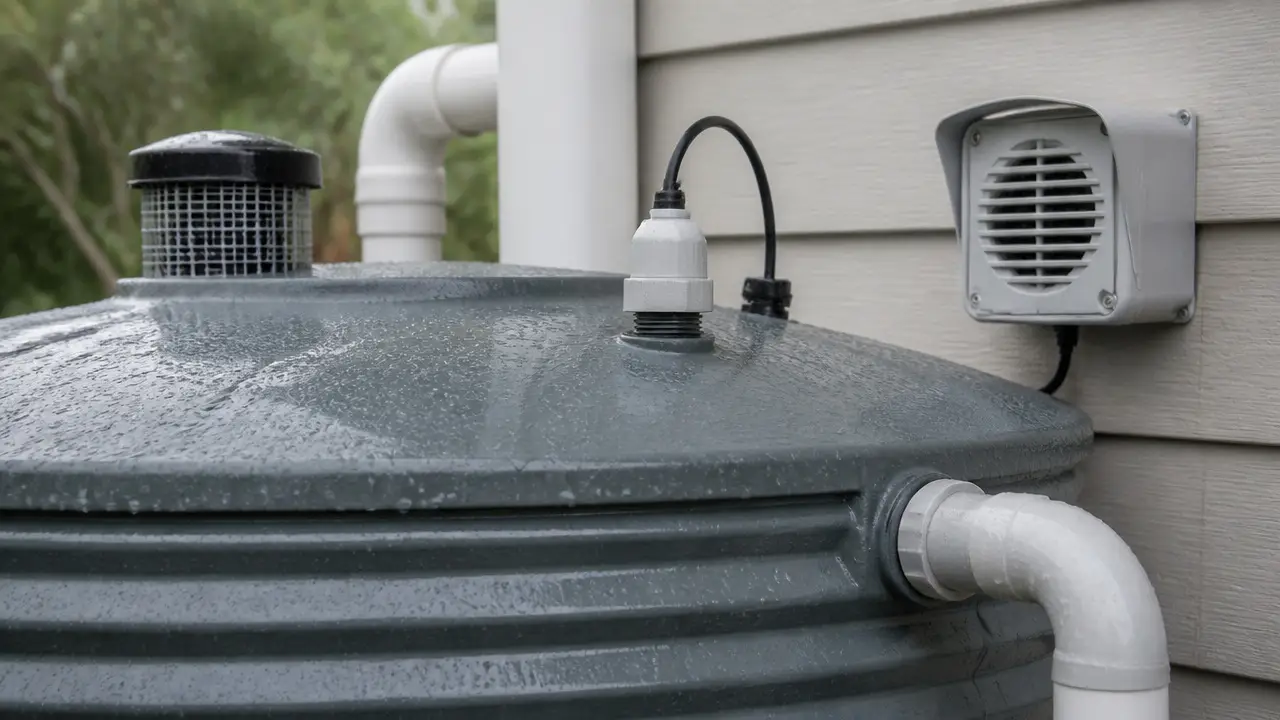
Roof → rainwater tank → filter → pump → irrigation valve → drip lines
The soil moisture controller can tell the pump or valve when watering is needed.
However, the moisture sensor does not know how much water remains in the tank. A second control may therefore be needed.
Add dry-run protection for a pump
A pump should not be allowed to continue running when the tank is empty if the pump is not designed for dry running.
A system may use a suitable:
- float switch,
- tank level sensor,
- pump controller, or
- built-in dry-run protection.
The exact arrangement depends on the pump.
This means the controller may need two conditions before watering begins:
Soil is dry AND enough water is available.
That is safer than letting soil moisture alone control the pump.
Gravity-Fed Systems Can Be Simpler
A pump is not always necessary.
If a rain barrel or tank is high enough above the garden, gravity may move the water through the irrigation system.
The vertical difference between the water level and the outlet affects the available pressure. This vertical difference is often called head height.
A gravity system might use:
Rain barrel → filter → electrically controlled valve → drip irrigation
The soil moisture controller opens the valve when watering is needed.
However, low-pressure irrigation requires compatible valves, tubing, filters, and emitters. Some irrigation valves need more pressure than a typical rain barrel can provide.
Check the operating pressure requirements before choosing the valve.
Where to Put the Soil Moisture Sensor
Sensor placement can make or break the system.
The sensor should measure conditions where the plant roots actually take up water. Do not simply place it wherever installation is easiest.
Try to place it:
- within the active root area,
- away from the very edge of the planting bed,
- where it represents typical soil conditions,
- away from a drip emitter that constantly keeps one small spot wet, and
- deep enough to represent the plants being irrigated.
A sensor directly beside an emitter may report wet soil while most of the bed remains dry.
A sensor too far from the irrigation area can have the opposite problem. It may remain dry and cause excessive watering.
Large beds or areas with different soil and plants may need more than one irrigation zone or sensor.
Set the Moisture Threshold for the Actual Soil
There is no single sensor number that works for every garden.
Sand, loam, clay, potting mix, and raised-bed soil hold water differently. Sensor readings can also vary between sensor designs.
The better approach is to calibrate the system using the soil itself.
Observe the sensor reading when the soil is:
- well watered,
- adequately moist, and
- dry enough that irrigation should begin.
Then choose a control point based on those observations.
Avoid assuming that a generic percentage displayed by an inexpensive sensor is a precise measurement of the amount of water in the soil.
Avoid Rapid On-and-Off Cycling
A poorly configured system can repeatedly switch between watering and stopping.
For example, suppose watering starts as soon as the sensor reaches a certain dry reading. Water near the sensor quickly increases the reading, so the controller shuts the valve. A few minutes later, the reading drops and watering starts again.
This repeated switching is undesirable for valves and especially pumps.
A controller can reduce this problem by using hysteresis, meaning separate start and stop points.
For example:
- watering starts at the chosen dry level,
- watering continues while moisture increases,
- watering stops at a wetter level.
The exact settings depend on the sensor, soil, plants, and controller.
Review selecting the right moisture sensor is used to water plants to evaluate thread size and material compatibility before purchase.
Another option is to give the system a minimum watering period followed by a waiting period so water has time to spread through the soil before another reading controls irrigation.
A Maximum Watering Time Is a Useful Backup
The moisture sensor should not be the system's only protection against continuous watering.
Sensors can fail. Wires can become damaged. A sensor may be pulled out of the soil or placed incorrectly.
A maximum run time gives the system a second limit.
For example, the logic can be:
Water only when soil is dry, but never allow one irrigation cycle to continue beyond the programmed maximum time.
The suitable maximum depends on the irrigation flow, soil, plants, and size of the watering zone.
This safeguard can reduce water loss if a sensor or control circuit does not behave as expected.
Flow Rate Still Matters
Automatic controls do not fix an irrigation system that cannot deliver enough water.
Flow rate is the amount of water moving through the system during a given period.
Before building the controls, make sure the water source can supply the irrigation zone.
A rain barrel with a small outlet, for example, may have enough stored water but not enough flow or pressure for a large group of emitters.
Filters, narrow tubing, long pipe runs, elevation changes, and partially closed valves can also reduce flow.
If you are using a pump, compare the pump's expected performance with the pressure and flow requirements of the irrigation system.
Include Filtration When Using Collected Rainwater
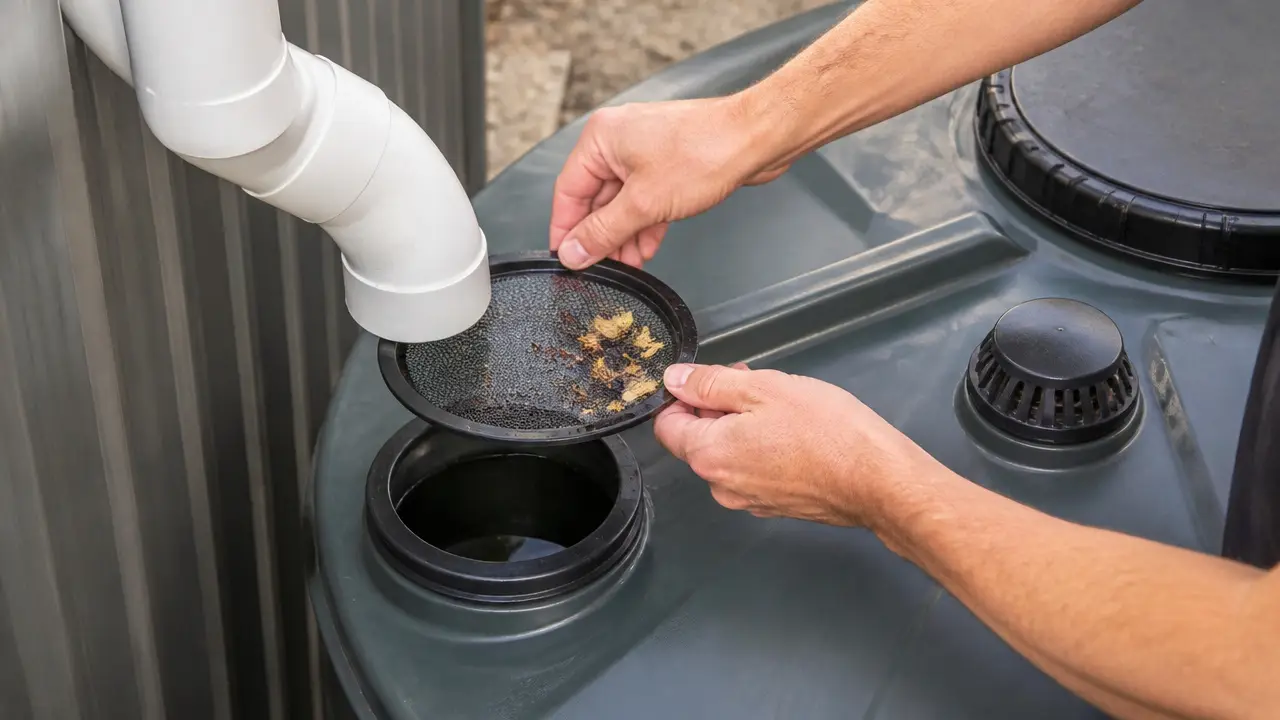
Roof runoff can carry leaves, grit, insects, roofing debris, and other material into storage.
Small irrigation emitters can clog easily.
The collection system should therefore keep larger debris out of the tank, and the irrigation side should have filtration suitable for the emitters being used.
The required filter size depends on the irrigation equipment. Check the emitter or irrigation manufacturer's requirements rather than choosing a filter by guesswork.
Clean the filter regularly. An automatic irrigation controller cannot compensate for a filter that has become blocked.
Should You Use a Timer Too?
In many gardens, combining soil moisture sensing with time controls works better than using either one alone.
The timer determines when watering is allowed, while the moisture sensor determines whether watering is needed.
For example, the controller might only check whether watering is required during a selected watering period. If the soil is still moist, it skips that irrigation cycle.
This approach can prevent watering at unwanted times and reduce unnecessary cycling.
It can also make the system easier to troubleshoot because irrigation is allowed only during predictable periods.
A Practical Control Layout
A small rainwater irrigation system might use the following arrangement:
Rainwater tank
↓
Irrigation filter
↓
Pump or gravity supply
↓
Controlled valve
↓
Drip irrigation
The control side could be:
Soil moisture sensor
↓
Controller
↓
Valve or pump control
The controller can also receive a signal from a tank-level switch so it does not request water when the tank is empty.
This is often a more dependable design than asking one moisture sensor to manage every part of the system.
Maintenance Is Still Required
Automatic does not mean maintenance-free.
Inspect the system periodically for:
- dirty sensors,
- damaged sensor cables,
- loose electrical connections,
- blocked filters,
- clogged emitters,
- leaking tubing,
- valves that do not fully close,
- changes in sensor placement,
- empty rainwater storage, and
- pump problems.
Also check the sensor reading against the actual soil occasionally. A controller can continue operating normally even when a poorly placed or failing sensor is giving misleading information.
Seasonal changes matter too. Plant roots grow, watering needs change, and freezing weather may require irrigation lines, valves, pumps, and exposed plumbing to be drained or otherwise protected according to the equipment manufacturer's instructions.
Is a Soil Moisture System Worth Building?
For many gardens, yes.
A soil moisture sensor can make an automatic irrigation system more responsive to actual soil conditions than a simple timer that waters whether the soil needs it or not.
The most reliable setup does more than switch water on when the soil becomes dry. It also accounts for:
- suitable sensor placement,
- sensor calibration,
- pump or valve compatibility,
- available flow and pressure,
- tank water level,
- filtration,
- maximum watering time, and
- routine maintenance.
For a small low-voltage garden system, much of the work can be a reasonable DIY project. Systems involving mains-powered pumps, complex pressure equipment, buried electrical wiring, or household plumbing may require qualified professional help.
Frequently Asked Questions
Can a soil moisture sensor automatically turn on a water pump?
Yes, but the sensor normally should not power the pump directly. A controller and suitable switching equipment are generally used between the sensor and pump. The pump should also have appropriate protection against running without water.
Can I use a soil moisture sensor with a rain barrel?
Yes. The sensor can control a suitable valve in a gravity-fed system or help control a pump if the barrel supplies a pumped irrigation system. Make sure the irrigation equipment can work with the available pressure and flow.
Where should a soil moisture sensor be placed?
Place it in the active root area where it represents normal soil conditions. Avoid placing it immediately beside an emitter or in an unusually wet or dry part of the bed.
Does a soil moisture sensor eliminate the need for an irrigation timer?
Not necessarily. A system can use both. The timer can determine when irrigation is allowed, while the sensor determines whether the soil actually needs water.
How many soil moisture sensors do I need?
A small, uniform garden may work with one well-placed sensor. Larger areas with different soils, sun exposure, plants, or watering zones may need separate sensors or controls.
Can a soil moisture sensor prevent overwatering?
It can help, but it cannot guarantee that overwatering will never occur. Incorrect placement, poor calibration, sensor failure, leaking valves, or controller problems can still cause excessive watering. A maximum run time provides useful additional protection.
Do soil moisture sensors need calibration?
Usually, yes. Sensor readings should be compared with the actual moisture condition of the soil where the sensor will operate. Different soils and sensor designs can produce different readings.
Can this type of system work without a pump?
Yes. A raised tank or rain barrel may provide gravity-fed irrigation if there is enough head height and the valves, tubing, filters, and emitters are suitable for the available low pressure.