

As an affiliate, we may earn a commission from qualifying purchases. We get commissions for purchases made through links on this website from Amazon and other third parties.
Best Overall
Best With Backup Power
Best Battery-Powered Alert
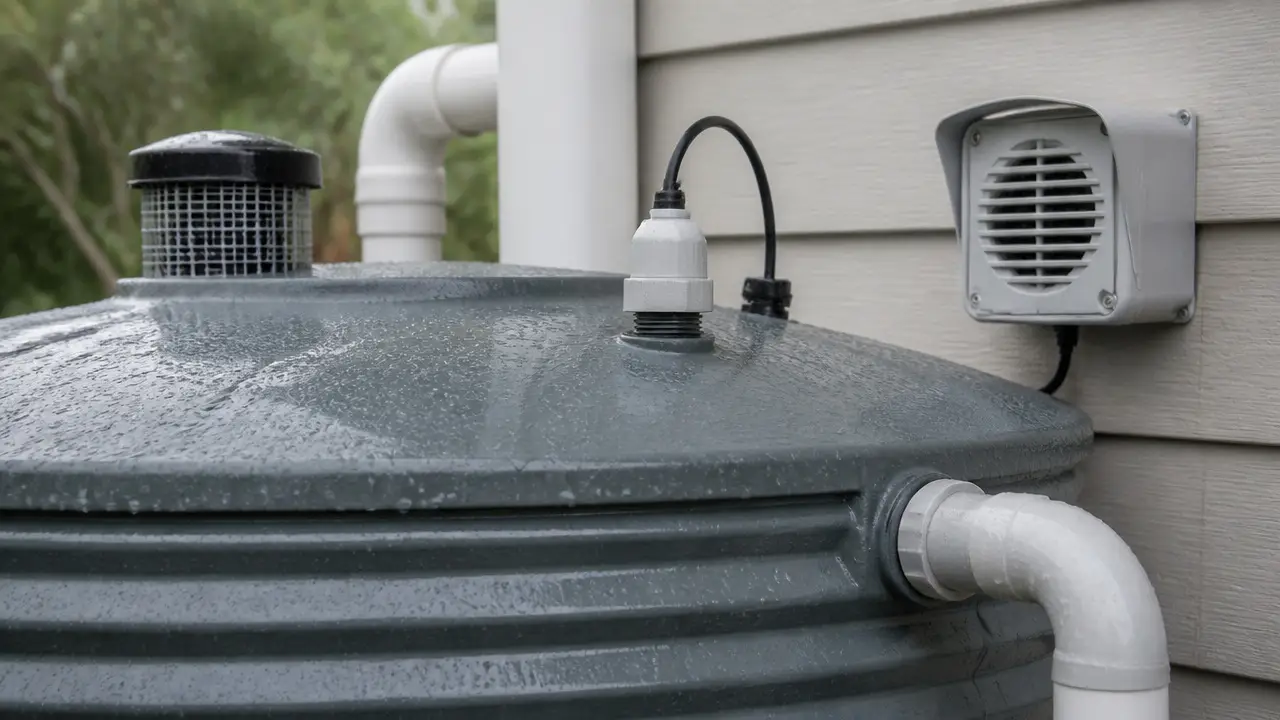
A water level alarm does not tell you every inch of water in a tank. Its job is simpler: warn you when the water reaches a point that needs attention. That point might be near the top of a rainwater tank, near the bottom where a pump could run dry, or inside a sump or transfer pit where rising water signals a failed pump.
For a rainwater system, the most useful alarm is one you will actually notice. A local siren works when someone is nearby. WiFi alerts help when the tank is out of sight or you are away from home. Backup power matters when the same outage that stops a pump could also disable the alarm.
The six products here are mostly float-switch alarm systems. Float placement, cable length, network connection, weather protection, and alert method matter more than display features. An alarm should support—not replace—proper overflow plumbing, low-level pump protection, and regular tank checks.
Water Level Alarms at a Glance
| Product | Best For | Key Strength | Tradeoff |
|---|---|---|---|
| Proteus L5 | Remote high-water alerts with local backup | 25-ft float cable, WiFi alerts, and built-in buzzer | WiFi and float hardware can fail over time |
| Level Sense Pro | Alarm coverage during power outages | AC power with rechargeable backup plus leak, temperature, and humidity monitoring | 2.4 GHz setup and app connectivity can be fussy |
| MySpool Water Level Alert | Low-power remote float alarm | Battery-powered electronics with text/email alerts | Float and electronics durability are inconsistent |
| Level Sense Sentry | Straightforward WiFi high-water warning | Float-switch alarm with power-loss notification | Connectivity and false-trigger behavior need attention |
| Sump Alarm WiFi Water Sensor | Outdoor or longer-cable installations | Weatherproof alarm with remote email plus audible warning | Higher complexity and connectivity complaints |
| Level Sense 120 dB Alarm | Loud local alarm with backup battery | 120 dB siren and rechargeable backup | Primarily local warning rather than full remote monitoring |
Decide Whether You Need High-Level or Low-Level Warning
A high-level alarm is useful when a pump is supposed to keep a pit or transfer tank from filling. If the pump fails and water rises to the float, the alarm gives you a chance to act before overflow.
A low-level alarm serves a different purpose. It can warn that stored rainwater is nearly exhausted or that a pump intake is approaching a dry-run condition. The same float-switch technology can sometimes be mounted for either purpose, but the alarm logic and float orientation have to match the intended trigger.
For a rainwater storage tank, do not use an alarm as the overflow system. The tank still needs a properly sized overflow route that works even if power, WiFi, or the alarm itself fails.
A Strong Mix of Local and Remote Warning
1 / 6
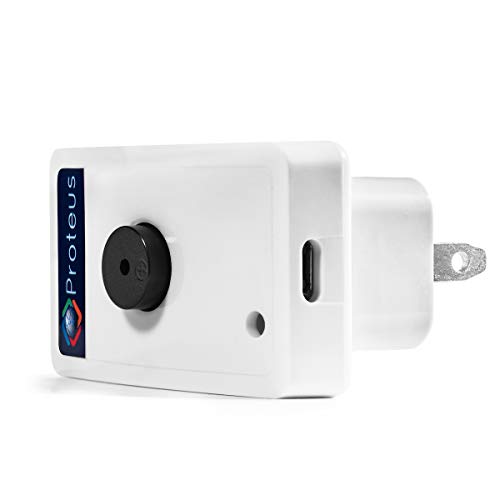
Proteus L5 WiFi Water Level Monitor
Float Cable
25 ft
Local Alarm
About 85 dB buzzer
Remote Alerts
Email / text
The Proteus L5 combines a long float-switch cable with both local and remote warning. Its 25-foot float cable gives useful reach when the alarm box needs to stay indoors or away from the tank while the float sits at the water trigger point.
A built-in buzzer rated around 85 dB provides a local alarm, while WiFi can send email or text notifications. That two-layer approach is useful for a rainwater system because you do not have to depend entirely on hearing a siren or entirely on noticing a phone notification.
Long-term performance is mixed but includes multi-year installations that produced valid alarms when pumps failed. Other units failed after months, developed false alarms from corroded contacts, or had connector problems. Keep the electronics dry, test the float on a schedule, and do not assume an alarm that worked last season is still ready today.
Why It Works
- 25-foot float cable gives flexible sensor placement.
- Built-in buzzer provides a local warning.
- Email and text alerts can reach you away from the tank.
- Float design keeps the sensing point simple and easy to test.
What To Keep In Mind
- WiFi setup and connection quality affect remote alerts.
- Float contacts and connectors can deteriorate over time.
- Test the system periodically by physically moving the float through its alarm point.
A Multi-Sensor Alarm With Rechargeable Backup Power
2 / 6
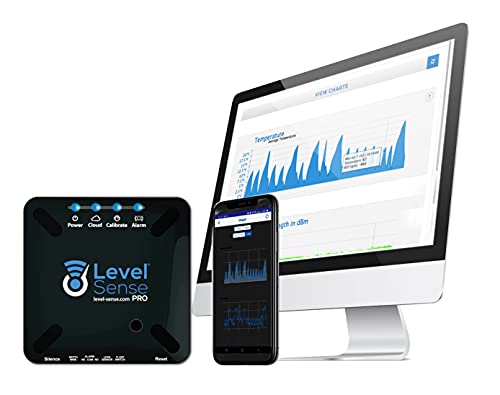
Level Sense Pro WiFi High Water Alarm
Power
AC with rechargeable battery backup
Monitoring
Water level, leak, power, temperature, humidity
Remote Access
WiFi
Level Sense Pro is the most complete monitoring box here. In addition to a float-based high-water alarm, it can monitor leak conditions, power failure, temperature, and humidity. An internal rechargeable battery provides backup power when AC power drops.
That combination makes sense around pumps. A storm can create the exact sequence you care about: power fails, the pump stops, and the water level rises. A battery-backed alarm has a better chance of remaining available during that event than a device powered only from the same circuit.
The setup is more involved than a simple siren. It uses 2.4 GHz WiFi, and connection instructions have frustrated some users. Network dropouts can reduce a sophisticated system to a costly local alarm if the remote path is not stable. Test power-loss and high-water alerts after installation instead of stopping once the app connects.
Why It Works
- Rechargeable backup power keeps monitoring available during outages.
- High-water, leak, power, temperature, and humidity functions cover several pump-area risks.
- Remote access suits tanks or sumps that are not checked daily.
- Useful for systems where pump failure and power loss are linked risks.
What To Keep In Mind
- Requires a stable 2.4 GHz network for remote functions.
- Setup is more complex than a stand-alone float siren.
- Network status should be tested along with the physical float.
A Battery-Powered Remote Float Alarm
3 / 6
MySpool WiFi Water Level Sensor
Power
3 AAA batteries
Float Cable
5 ft
Alerts
Email, text and smartphone
The MySpool alarm is attractive when running an AC line to the tank or sump area is inconvenient. It uses a waterproof float switch on a 5-foot cable and battery-powered electronics that stay dry while the float sits at the trigger point.
The design draws little or no battery current until it needs to send an alert, so the batteries are intended to spend most of their life waiting. Email, text, and smartphone notifications make it more useful for a remote shed or pump pit than a siren you can only hear from nearby.
The weak point is consistency. Some installations are simple and dependable, while others suffer float problems or fail within months. Five feet of cable is also short compared with the Proteus. Use it when the electronics can be mounted close to the sensing point and test the float before relying on remote notifications.
Why It Works
- Battery power avoids running AC wiring near the water source.
- Waterproof float keeps the sensing part simple.
- Email and text alerts can reach you away from home.
- Low standby power suits an alarm that may sit idle for long periods.
What To Keep In Mind
- Five-foot float cable limits mounting distance.
- Float reliability has been inconsistent in some units.
- Battery condition and WiFi connection both need periodic checks.
A Straightforward WiFi High-Water Alarm
4 / 6
Level Sense Sentry WiFi Sump Pump Alarm

Sensor
Float switch
Alerts
High water and power loss
Expansion
Additional sensor inputs supported
The Level Sense Sentry focuses on high-water warning with a float switch and WiFi connection. It can also signal power loss, which is valuable when the monitored water level depends on an electric pump staying online.
The alarm supports additional sensor inputs, so it can grow beyond one float in a more complex installation. That is useful around a tank room, transfer pit, or pump station where a leak detector and high-water switch may both be worthwhile.
The main issue is avoiding false alarms and connection frustration. A float or external switch that leaks a small electrical signal can sometimes appear tripped to a more sensitive alarm input. Use compatible switches and test the alarm repeatedly before leaving it unattended.
Why It Works
- High-water float provides a direct physical trigger.
- Power-loss warning adds context when a pump may have stopped.
- Additional inputs can support more than one sensing point.
- WiFi alerts make it useful for an out-of-sight tank or sump.
What To Keep In Mind
- Sensor compatibility matters when adding external switches.
- Connectivity needs to be tested where the alarm will actually live.
- False triggers should be resolved before the alarm is trusted remotely.
A Weatherproof WiFi Alarm for Longer Installations
5 / 6
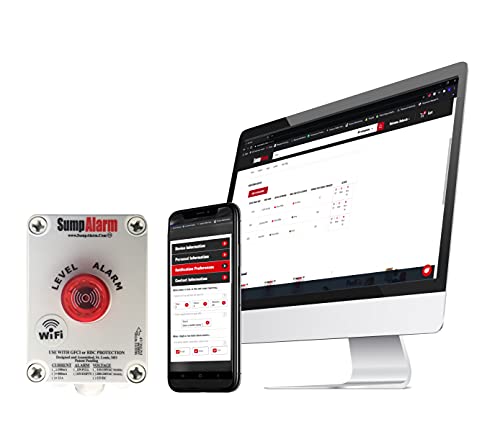
Sump Alarm WiFi Water Sensor
Power
Corded electric
Remote Devices
Smartphone and tablet
Alerts
Email plus audible alarm
The Sump Alarm WiFi Water Sensor is aimed at installations where the float may be farther from the alarm and where the box needs better weather protection. It combines an audible alarm with remote email notification and is intended for indoor or outdoor monitoring.
That makes it a candidate for an exterior rainwater tank, septic or transfer pit, or detached pump area where a normal indoor alarm box would be poorly placed. Remote notification is especially useful when nobody is close enough to hear the siren.
The tradeoff is setup complexity. Connectivity and instructions have frustrated some users, while successful installations have benefited from strong support and straightforward float placement. Put the alarm where its network signal is stable and keep every cable entry sealed against moisture.
Why It Works
- Weather-oriented enclosure fits tougher installation locations.
- Combines remote email warning with an audible local alarm.
- Smartphone and tablet access supports off-site monitoring.
- Float-switch design provides a simple high-water trigger.
What To Keep In Mind
- Network setup can be the hardest part of installation.
- Outdoor use still requires careful cable and enclosure sealing.
- Test remote delivery as well as the local siren.
A Very Loud Local Alarm With Battery Backup
6 / 6
Level Sense 120 dB High Water Alarm

Siren
120 dB
Float Cable
15 ft
Backup
Rechargeable LiPo up to 1 week
The Level Sense 120 dB alarm is the strongest choice when being heard on-site matters more than phone features. Its 120 dB siren is paired with a 15-foot float switch, giving enough separation to place the alarm in a drier or more audible location while the float monitors the water.
A rechargeable LiPo backup battery is intended to keep the alarm available for up to a week during a power outage. That is valuable around sump and transfer pumps because the alarm can remain active after the pump loses normal power.
This is primarily a local warning tool. If the property is often empty, a remote-notification model is more useful. The loud siren can also be difficult to ignore or silence while the high-water condition remains active, so mount it where the sound is useful without creating an unnecessary nuisance.
Why It Works
- 120 dB siren is designed to be noticed on-site.
- 15-foot float cable gives flexible sensor placement.
- Rechargeable backup can keep the alarm active during outages.
- Simple high-water function has fewer network dependencies.
What To Keep In Mind
- Local sound does not help much when nobody is home.
- Very loud alarm placement deserves thought before installation.
- Moisture-sensitive electronics should remain in a protected location.
Where to Put a Water Level Alarm Float
For high-water warning, place the float below the point where overflow or flooding becomes a problem but above the normal operating level. The goal is to create enough time to act after the alarm begins.
For low-water warning, place the trigger above the minimum safe pump intake level. A low-level alarm is useful as a warning, but automatic pump protection should use a proper control designed to stop the pump when needed.
Keep the float clear of tank walls, inlet turbulence, pipes, cables, and anything that can trap it. After mounting, move the float by hand through the trigger point and make sure it moves freely in both directions.
Local Siren or Phone Alert?
A local siren is simple and immediate. It works well in an occupied home, workshop, or pump room where someone can hear it quickly.
A phone alert is better for remote tanks, vacation homes, or systems that are rarely visited. The downside is dependence on WiFi, internet service, app servers, account settings, and phone notifications.
The strongest setup has two paths: a local alarm plus a remote message. If one path fails, the other may still reach you.
Why Backup Power Matters
A high-water alarm often watches equipment that itself depends on electricity. If a storm or outage stops the pump, the water can rise at the same moment normal power to the alarm disappears.
Battery backup separates those failures. It does not make the pump work, but it can keep the warning alive long enough for you to respond.
Test backup power by unplugging the alarm during a controlled test. Do not assume the internal battery is healthy simply because the normal-power light is on.
Test the Alarm Before Every Wet Season
Lift the float or place it in a controlled container of water according to its design. Listen for the local alarm and make sure every remote notification arrives.
Then test recovery. The alarm should return to normal when the float drops. A switch that sticks high can create nuisance alerts; one that sticks low can fail when you actually need it.
Also inspect cables for cuts, UV damage, animal chewing, loose connectors, and corrosion. An alarm that sits untouched for years is not automatically a reliable alarm.
Frequently Asked Questions
Can I use a sump alarm on a rainwater tank?
Yes, when the float, cable length, enclosure, power, and alarm logic fit the tank installation. A high-water float can warn when stored water reaches a chosen point.
Is a water level alarm the same as a tank gauge?
No. A gauge shows the level across a range. An alarm usually triggers only when water reaches a set high or low point.
Can a water level alarm stop a pump automatically?
Only when the complete alarm or control system is specifically designed to switch the pump. Many alarms here only notify you and do not control pump power.
How loud should a high-water alarm be?
It needs to be loud enough to be heard from its installed location. Remote notification is more important when the property may be empty or the tank is far from occupied rooms.
What happens to a WiFi water alarm during a power outage?
A model without backup power may go offline. Battery-backed units can continue monitoring for some period, but internet and router power can still affect remote alerts.
How often should I test a tank alarm?
Test it regularly and before seasons when heavy rain or pump demand is expected. Check the physical float, local alarm, remote notification, and backup power where applicable.
For a continuous reading instead of a single trigger point, water tank level gauges show how much storage remains. If you want to check that reading remotely, wireless water tank level monitors focus on app and receiver-based systems. For automatic pump protection, float switches for water tanks can provide a direct level-triggered control signal. When the goal is automatically stopping an inlet as a tank fills, float valves for water tanks provide a mechanical alternative.



