As an affiliate, we may earn a commission from qualifying purchases. We get commissions for purchases made through links on this website from Amazon and other third parties.
Best Overall
Best Compact Two-Stage System
Best With Automatic Sediment Prefilter
A whole-house filter can make stored rainwater easier on plumbing, fixtures, and downstream treatment, but it has to be matched to the water that actually reaches the pump. Roof debris should already be reduced before storage. Tank sediment should be controlled before fine cartridges. Carbon media belongs where taste, odor, or treatment byproducts are part of the problem.
The six systems here are plumbing-stage filters, not complete drinking-water systems. None should be treated as proof that roof runoff is safe to drink. If rainwater will supply potable fixtures, the whole system needs suitable source protection, treatment barriers, plumbing controls, local requirements, and current water testing.
For most pump-fed homes, the main buying questions are cartridge size, inlet and outlet size, useful flow, filter-change access, pressure conditions, and whether a coarse sediment stage protects the finer cartridges ahead of it.
Whole-House Rainwater Filters at a Glance
| Product | Best For | Main Strength | Main Tradeoff |
|---|---|---|---|
| iSpring WGB32B | General three-stage filtration | 20 x 4.5 in cartridges, 1 in NPT ports, sediment plus carbon stages | Large wall space and no usable product-specific customer evidence |
| Waterdrop WHF21-PG | Compact two-stage setup | 5-micron PP stage plus granular activated carbon | Housing and threaded-joint leaks appear in product-specific use |
| iSpring Ultimate | Systems needing an automatic coarse stage | Auto-flush spin-down filter ahead of large cartridges | More parts, more space, and little exact-product customer evidence |
| Express Water Heavy Metal | Three-stage media diversity | Sediment, KDF media and carbon block with pressure gauge | Housing cracks and fast flow loss have occurred |
| Waterdrop WHF21-FG | Iron/manganese-focused cartridge set | 1 in ports and targeted media in a compact two-stage body | Thread sealing is important; treatment results vary with source water |
| iSpring WGB32BM | Iron/manganese-focused three-stage system | Sediment, carbon and dedicated iron/manganese stage | Large housings, seal maintenance and capacity/dimension conflicts |
Start With the Rainwater, Not the Filter Package
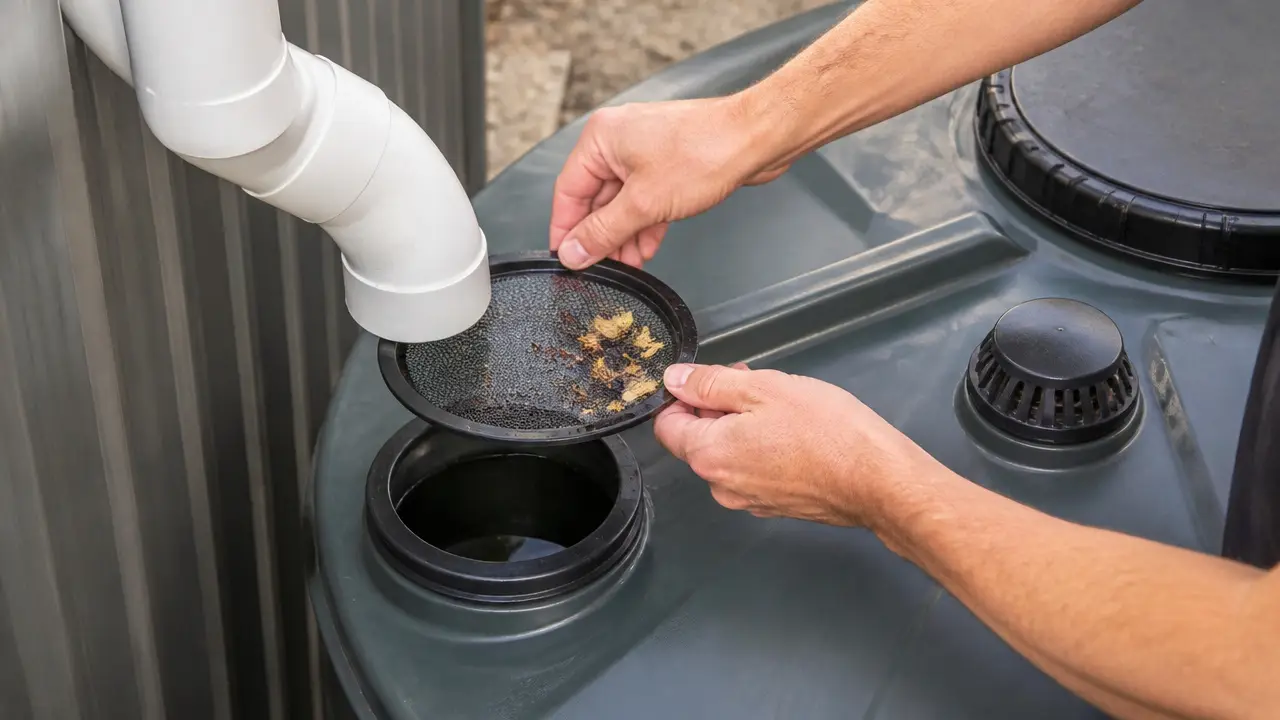
A whole-house unit works best after the collection system has already removed leaves and large roof debris. If tank water carries a heavy sediment load, place a flushable separator or spin-down stage before expensive disposable cartridges.
Think about what the house actually uses. Toilets and laundry may have different treatment needs from drinking-water fixtures. A carbon stage can be useful for odor and for water that has been chlorinated as part of a treatment plan, but carbon is not a substitute for microbial control.
Flow matters too. A filter that looks good on paper can become frustrating if cartridges load quickly and pressure drops every time several fixtures run at once. Oversized 20-by-4.5-inch cartridges generally offer more filter area than compact 10-inch housings, but they also need more wall space and service clearance.
A Three-Stage System With Large Cartridges and 1-Inch Ports
1 / 6
iSpring WGB32B Three-Stage Whole-House Water Filter

Stages
3
Ports
1 in NPT
Cartridge Size
20 x 4.5 in
Documented Flow
Up to 15 GPM
The iSpring WGB32B has the most useful general layout for a pump-fed rainwater plumbing system. Its three large cartridge housings use 20-by-4.5-inch filters, and the 1-inch NPT inlet and outlet are better suited to whole-house flow than small point-of-use connections. The documented flow is up to 15 GPM, giving it room for normal multi-fixture use when the pump and pipework can supply that flow.
The system combines mechanical sediment filtration with carbon-based adsorption stages. That sequence makes sense after tank storage because the first cartridge can catch suspended particles before water reaches the carbon media. Carbon can then address suitable taste, odor, and chemical targets supported by the installed cartridges.
The structured capacity and dimension fields conflict, and there is no useful exact-product customer material after filtering, so this guide does not use service-life numbers or exact housing dimensions as ranking claims. The reason to choose it is the three-stage layout, large cartridge format, 1-inch ports, and documented flow—not a promise that one cartridge set solves every rainwater-quality problem.
Why It Works
- Three stages allow sediment and carbon functions to be separated.
- 20-by-4.5-inch cartridges provide substantial filter area.
- 1-inch NPT ports suit many whole-house plumbing layouts.
- Up to 15 GPM documented flow supports multi-fixture systems when inlet pressure is adequate.
What To Keep In Mind
- It needs significant wall space and room below each housing for filter changes.
- Service-life and capacity claims are omitted because those fields conflict.
- Carbon and sediment treatment do not replace microbial treatment for potable use.
A Compact Two-Stage System for Sediment and Carbon
2 / 6
Waterdrop WHF21-PG Two-Stage Whole-House Filter

Stages
2
Sediment Stage
5 micron PP product claim
Second Stage
Granular activated carbon
Housing Size
10 x 4.5 in cartridge format
The Waterdrop WHF21-PG is easier to fit into a small equipment room than the large three-canister systems. It pairs a 5-micron polypropylene sediment cartridge with granular activated carbon in a two-stage housing, giving you a simple coarse-to-carbon sequence without a long row of 20-inch filters.
That layout can work well when tank sediment is already controlled upstream. If the first cartridge has to catch large amounts of sand or tank sludge, it will load faster and restrict flow. Product-specific use shows that the filtration can noticeably clean up dirty source water, but it also shows cracked housings and leaks around threaded brass-to-plastic connections on some installations.
The capacity field conflicts and is not used. Treat installation quality and pressure conditions seriously. A bypass and shutoff arrangement makes cartridge service much easier and limits the mess if a housing ever needs replacement.
Why It Works
- Two stages keep the plumbing layout compact.
- 5-micron sediment stage protects the carbon cartridge from larger particles.
- Granular activated carbon adds a separate adsorption stage.
- Does not require electrical power for normal filtration.
What To Keep In Mind
- Housing and threaded-joint leaks have occurred.
- Heavy sediment loads should be reduced before the disposable cartridge.
- Capacity is omitted because the prepared field conflicts.
A Multi-Stage System With an Automatic Spin-Down Prefilter
3 / 6
iSpring Ultimate Whole-House Filter With Auto-Flush Sediment Prefilter

Prefilter
WSP50ARB auto-flush spin-down
Cartridges
20 x 4.5 in product claim
Documented Flow
Up to 15 GPM
Method
Sediment plus carbon-block stages
This iSpring package stands out because it adds a reusable automatic spin-down sediment filter ahead of the cartridge system. That is a useful arrangement for rainwater: the coarse flushable stage can remove dirt before it reaches the large disposable cartridges, reducing how much sediment the finer filters have to hold.
The cartridge system uses 20-by-4.5-inch filters and a documented flow of up to 15 GPM. An auto-flush prefilter is especially attractive when the tank regularly carries visible sediment and the equipment area has a safe drain path for the flush discharge.
The tradeoff is complexity. The spin-down filter has a controller and flush mechanism, while the downstream system adds several large housings. There is no useful exact-product customer material here, and the structured capacity and dimension fields conflict, so this is a feature-driven pick rather than a long-term durability winner.
Why It Works
- Automatic spin-down stage catches coarse sediment before cartridges.
- Large cartridge format supports higher household flow than small housings.
- Up to 15 GPM documented flow suits many pump-fed plumbing systems.
- Coarse-to-fine staging can extend cartridge service intervals in dirty water.
What To Keep In Mind
- More components mean more valves, seals, and service points.
- Auto-flush requires a suitable discharge route and functioning controller.
- Capacity and exact dimensions are omitted because those fields conflict.
A Three-Stage System With Sediment, KDF, and Carbon Block
4 / 6
Express Water Heavy Metal Three-Stage Whole-House Filter

Stages
3
Media
Sediment, KDF, activated carbon block
Connection
1 in product claim
Documented Flow
0.25 gal/sec at 45-80 PSI
The Express Water system uses three distinct media stages: sediment filtration, KDF media, and activated carbon block. That gives it a broader treatment layout than a basic sediment-plus-carbon pair and may suit source water where testing identifies targets that match those media.
Its documented flow is 0.25 gallons per second at 45–80 PSI, which is 15 GPM. A pressure gauge is included, and the freestanding frame can make the three housings easier to organize in a utility area. The product also states that it does not reduce total dissolved solids, an important boundary for buyers who expect a normal cartridge system to behave like reverse osmosis.
Housing durability is the main caution. Product-specific use includes cracked first- and middle-stage housings and filters that restricted flow sooner than expected. Keep the system accessible, isolate it with valves, and treat cartridge change intervals as dependent on your water rather than a calendar promise.
Why It Works
- Three media stages handle different filtration roles.
- 1-inch connection and 15 GPM documented flow suit whole-house plumbing.
- Pressure gauge helps track system conditions.
- Freestanding frame organizes the housings for service.
What To Keep In Mind
- Clear housing cracks and leaks have occurred.
- Filter loading can reduce flow sooner in dirty water.
- It does not reduce TDS and is not a stand-alone potable-water treatment system.
A Compact Two-Stage System Focused on Iron and Manganese Media
5 / 6
Waterdrop WHF21-FG Two-Stage Whole-House Filter

Stages
2
Ports
1 in NPT product claim
Documented Flow
Up to 15 GPM
Target Media
Iron/manganese plus carbon-oriented cartridge set
The Waterdrop WHF21-FG is the more targeted version of the compact Waterdrop platform. Its cartridge combination is built around iron and manganese reduction along with carbon-oriented treatment, while the 1-inch inlet and outlet and documented flow of up to 15 GPM make it suitable for whole-house plumbing when the pump can support that demand.
This kind of media should be chosen from actual water conditions. Rainwater can pick up iron from tanks, fittings, or plumbing, but not every system has an iron or manganese problem. If testing does not show those targets, a general sediment-and-carbon system may be a better use of cartridge space.
Thread sealing is the practical weak point. Product-specific use shows that careful tape and joint preparation matter at the inlet and outlet. The safest reason to buy this model is a known water-quality need that matches the cartridge set, not the fact that it contains more named media.
Why It Works
- Compact two-stage format saves equipment-room space.
- 1-inch ports support whole-house plumbing layouts.
- Up to 15 GPM documented flow can suit normal residential demand.
- Targeted cartridge set is useful when iron or manganese is actually present.
What To Keep In Mind
- Use water testing to decide whether the targeted media is needed.
- Thread preparation is important to prevent leaks.
- Treatment performance changes with inlet concentration, flow, and cartridge age.
A Three-Stage Iron and Manganese System With Large Housings
6 / 6
iSpring WGB32BM Iron and Manganese Whole-House Filter

Stages
3
Cartridge Size
20 x 4.5 in product claim
Ports
1 in NPT product claim
Documented Flow
Up to 15 GPM
The iSpring WGB32BM uses a large three-stage format with sediment, carbon, and a dedicated iron/manganese treatment cartridge. It is the better targeted choice when testing shows those metals are a real problem and you want the larger 20-by-4.5-inch cartridge platform rather than a compact 10-inch system.
Product-specific use supports visible improvement in rust and iron staining in non-rainwater source systems, and the layout places the sediment cartridge before carbon and iron media. That sequencing is sensible because large particles are removed before water reaches the more specialized stages.
Housing weight and seal maintenance are the tradeoffs. Large canisters are heavy during cartridge changes, and leaks have occurred when O-rings were dry or housings were not tightened correctly. The structured dimensions and capacity fields conflict, so those values are omitted.
Why It Works
- Three stages separate sediment, carbon, and iron/manganese treatment.
- Large cartridge format provides more media area than compact housings.
- 1-inch ports and up to 15 GPM documented flow suit whole-house service.
- Dedicated media gives a clear role when iron or manganese is present.
What To Keep In Mind
- Specialized media is unnecessary when testing does not show the target problem.
- Large housings need support and service clearance.
- Seal care matters during cartridge changes.
What a Whole-House Rainwater Filter Does Not Solve
Microbial Safety
Sediment and carbon filters should not be treated as disinfection. If the intended use requires microbial control, that needs a separate treatment stage designed for the job.
Dissolved Salts
Normal sediment and carbon systems do not behave like reverse osmosis. If TDS or a specific dissolved contaminant is the concern, choose treatment from current testing rather than adding more sediment cartridges.
Dirty Storage Tanks
A whole-house filter should not be used as an excuse to ignore tank cleaning, inlet screens, or settled sludge. Reducing contamination before the pump lowers cartridge load and maintenance cost.
Cross-Connection Protection
Indoor rainwater plumbing must remain appropriately separated and identified according to local requirements. A filter does not replace plumbing safeguards.
How to Size the Filter Around the Pump
Look at the pump's practical flow and pressure, the largest simultaneous fixture demand, and the pressure loss through each treatment stage. A filter system that requires more inlet pressure than the pump can provide will create weak fixture flow.
Use full-size valves and bypass plumbing where appropriate. Leave enough room below the housings to remove cartridges without dismantling the system.
If filters clog quickly, the answer may be better pretreatment rather than a stronger pump. Coarse sediment should be removed before it reaches the fine cartridges.
Frequently Asked Questions
Can a whole-house filter make rainwater safe to drink?
Not by itself. Potable rainwater requires a suitable whole-system treatment plan, source protection, plumbing safeguards, local requirements, and current water testing.
What filter stages are useful for rainwater?
A common sequence is coarse roof screening, tank inlet screening, flushable sediment control, finer sediment filtration, and then treatment stages matched to the intended use and water test results.
Is carbon useful in a rainwater system?
Carbon can address suitable taste, odor, and chemical targets, including treatment byproducts when water has been chlorinated. It does not replace sediment removal or disinfection.
Do whole-house filters reduce water pressure?
Every filter adds some resistance. Pressure loss increases as cartridges load, so cartridge size, flow demand, pump performance, and maintenance all matter.
How often should whole-house rainwater filters be changed?
Use the cartridge instructions as a starting point, then adjust from actual sediment load, flow decline, pressure difference, water use, and current testing. Dirty rainwater can shorten service life substantially.
Should I install a spin-down filter before a whole-house cartridge system?
It can be useful when tank water carries visible sediment. A reusable coarse stage can keep sand and larger particles from filling disposable cartridges too quickly.
For a broader look at coarse and downstream stages, rainwater filters compares downspout screens, spin-down separators, and cartridge housings. Before making treatment decisions, rainwater test kits can help screen several basic water parameters while showing the limits of home testing. When microbial contamination is the specific concern, bacteria water test kits focus on coliform and E. coli screening. And upstream, rain barrel screens help keep larger debris from entering storage in the first place.