
As an affiliate, we may earn a commission from qualifying purchases. We get commissions for purchases made through links on this website from Amazon and other third parties.
Best Overall
Best for Heavy Sediment
Best Dual-Mesh
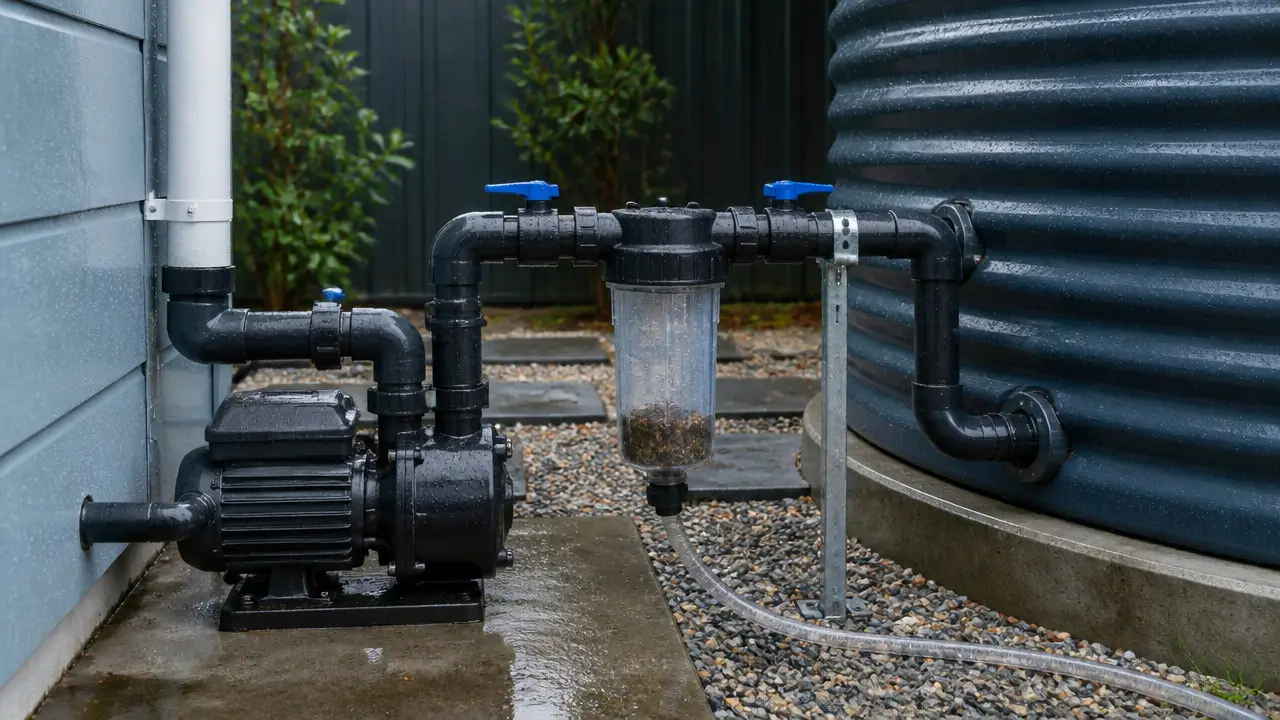
A spin-down filter is a strong first pressurized filter for rainwater because it catches sand, rust, roof grit, and other larger particles on a reusable screen. Instead of throwing the media away, you open a flush valve and send collected sediment out the bottom.
The main choice is micron size. A 50-micron screen catches smaller material but can clog quickly when a tank carries a lot of grit. A 100- or 500-micron screen passes more fine particles but can maintain flow longer in dirty source water. The best setup often uses a coarse reusable screen first and finer disposable cartridges later.
Flush control is the other big difference. Manual filters are simple and inexpensive to service. Automatic models can purge on a schedule, but they add motors, power, drain volume, and extra parts that can fail. Pick automation only when it solves a real maintenance problem.
Spin-Down Filters at a Glance
| Product | Best For | Key Strength | Main Tradeoff |
|---|---|---|---|
| iSpring WSP-50 | Most rainwater systems | Simple manual 50-micron screen with common dual threads | Needs frequent cleaning in heavy sediment |
| iSpring WSP50ARJ | Heavy sediment | Jumbo 50-micron screen and programmable automatic flushing | Large, powered, and capable of very high flush discharge |
| Waterdrop RPFK15 | Variable sediment loads | Includes 100- and 500-micron screens | Coarse mesh needs finer treatment downstream |
| iSpring WSP50ARB | Automatic flush in a smaller format | Auto, semi-auto, and manual flush modes | Flush module can fail and adds service complexity |
| Waterdrop PF01 | Compact 50-micron use | Small body, dual threads, and purge cleaning | Union and drain-valve leakage have occurred |
| iSpring WSP-50SL | Sediment plus scale-control media | 50-micron screen with Siliphos scale-control feature | Media replacement adds maintenance beyond simple flushing |
Best Overall: iSpring WSP-50
1 / 6
iSpring WSP-50 Spin-Down Sediment Filter

Screen
50 micron
Connections
1 in MNPT / 3/4 in FNPT
Pressure Range
15-115 PSI
The WSP-50 is the best starting point for a typical rainwater system because it keeps the design simple. Water passes through a reusable 50-micron stainless screen, sediment collects in the clear bowl, and the bottom valve lets you flush that material away. No powered control is needed.
Its dual-thread head provides 1-inch male NPT and 3/4-inch female NPT connection choices on both sides. The documented operating range is 15 to 115 PSI and 40°F to 100°F, with indoor use specified. That makes it a natural fit in a protected pump shed or filtration cabinet after a rainwater pump.
Rainwater-specific use is a major reason it ranks first. It has been used between storage tanks and a 12-volt pump, where the clear housing made accumulated sediment easy to see. The tradeoff is cleaning frequency. A 50-micron screen in gritty water can need more than a quick valve flush and may periodically require removal and manual washing.
Why It Works
- A 50-micron reusable screen is a useful coarse-to-medium prefilter.
- Manual flushing keeps the mechanism simple.
- Dual thread sizes fit many pump-room plumbing layouts.
- The clear bowl gives a direct view of sediment loading.
What To Keep In Mind
- Heavy sediment can clog a 50-micron screen quickly.
- The housing is intended for protected indoor conditions.
- Avoid forcing the bowl loose with tools that can crack it.
- It removes sediment only; it does not make rainwater safe to drink.
Best for Heavy Sediment: iSpring WSP50ARJ Jumbo
2 / 6
iSpring WSP50ARJ Jumbo Spin-Down Sediment Filter

Screen
50 micron
Connections
1 in MNPT / 3/4 in FNPT
Flush
Programmable automatic
The WSP50ARJ is built for systems where a compact screen loads too quickly. Its jumbo body gives sediment more room to collect around a 50-micron 316L stainless screen before the filter needs attention. That can help maintain pressure when the source carries a steady load of sand, rust, or iron particles.
The automatic module opens the flush valve on a schedule, with a default program of 15 seconds every 15 days. The interval can be changed for the actual water source. This is most useful when manual flushing would otherwise happen several times a week or be easy to forget.
Automation needs a proper drain plan. Product-specific use shows the filter can discharge several gallons in only a few seconds, which can overwhelm a small bucket. There have also been drain-valve leaks and auto-module failures. Exact housing capacity and dimensions are omitted because those prepared fields conflict.
Why It Works
- Large screen area takes longer to load than a compact spin-down.
- Automatic flushing can reduce repetitive maintenance.
- A 50-micron screen still provides useful protection for downstream cartridges.
- Common 1-inch and 3/4-inch NPT connection options simplify installation.
What To Keep In Mind
- The drain line must handle high flush flow.
- The powered flush module is another component that can fail.
- Manual cleaning may still be needed when iron or sediment sticks to the screen.
- Leave strong mounting and service access around the heavy housing.
Best Dual-Mesh: Waterdrop RPFK15
3 / 6
Waterdrop RPFK15 Spin-Down Sediment Filter

Screens
100 and 500 micron
Flow Claim
20 GPM
Connections
1 in MNPT / 3/4 in FNPT / 3/4 in MNPT
The RPFK15 stands out because it includes two very different screen sizes. A 500-micron screen is useful when incoming rainwater carries large amounts of coarse grit and you want to protect flow. The 100-micron screen gives a finer first stage once the source is cleaner.
Its compact body is about 3.78 x 2.6 x 7.9 inches, and the connection options include 1-inch male NPT, 3/4-inch female NPT, and 3/4-inch male NPT. A 3/4-inch push-fit adapter is also included. The 20 GPM flow claim gives it enough stated capacity for many whole-system prefilter layouts when the pump and pipe can supply that flow.
With little product-specific field history, this filter ranks on configuration flexibility rather than proven long-term service. It is best for a user who understands that the screen choice changes both debris capture and maintenance frequency.
Why It Works
- Two included screens let you choose between 100 and 500 microns.
- Multiple thread options reduce adapter work.
- The compact housing fits tight utility spaces.
- Coarse screening can protect finer cartridges without excessive early restriction.
What To Keep In Mind
- Neither included screen is a fine polishing filter.
- Install in protected conditions above the product's stated minimum environment.
- A 20 GPM rating does not mean every rainwater pump can deliver that flow through the full treatment train.
- Fine sediment still needs a later stage when required.
Best Automatic Compact Option: iSpring WSP50ARB
4 / 6
iSpring WSP50ARB Automatic Spin-Down Sediment Filter

Screen
50 micron
Connections
1 in MNPT / 3/4 in FNPT
Modes
Auto / semi-auto / manual
The WSP50ARB is the middle ground between the small manual WSP-50 and the jumbo automatic model. It uses a 50-micron stainless screen and offers automatic, semi-automatic, and manual flushing through its control module.
That flexibility is useful when you want scheduled maintenance but still want to trigger a flush at the filter after a dirty storm. The head supports 1-inch male NPT and 3/4-inch female NPT connections, and product-specific installations show it working as the first layer before multi-stage filtration.
The control module is also its weak point. A failed power or valve module can turn the filter into a manual unit until the part is replaced. The prepared capacity and overall dimension fields conflict, so those values are left out. Choose this model for the flush modes, not for disputed housing volume.
Why It Works
- Three flush modes let maintenance match the source-water load.
- A 50-micron screen is useful before finer filters.
- Dual thread sizes support common whole-system plumbing.
- Automatic flushing can keep routine sediment from accumulating unattended.
What To Keep In Mind
- The powered module adds a failure point.
- Exact housing dimensions and capacity are omitted because the prepared fields conflict.
- Keep the controller dry and accessible for service.
- Automatic flushing does not eliminate occasional screen inspection.
Best Compact 50-Micron Choice: Waterdrop PF01
5 / 6
Waterdrop PF01 Spin-Down Sediment Filter
Screen
50 micron
Dimensions
6.5 x 2.9 x 7.7 in
Connections
1 in MNPT / 3/4 in FNPT
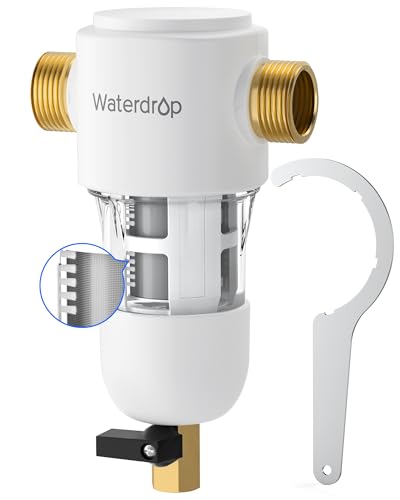
The PF01 is useful when you want a 50-micron filter but have little space around the pump. Its body is about 6.5 x 2.9 x 7.7 inches, and its dual-thread connections support both 1-inch male NPT and 3/4-inch female NPT plumbing.
The stainless screen catches larger sediment, while the purge valve opens the bottom of the collection chamber for cleaning. Product-specific use shows it helping keep sand out of sprinklers and extending the life of disposable filters downstream.
Seal quality is the main concern. Some units have leaked at the purge-valve control or union-style connection. Replacement-part availability has also been questioned. A permanent rainwater system should be installed with enough isolation and bypass capability that a small filter can be removed without shutting down all plumbing for a long repair.
Why It Works
- Compact dimensions suit crowded pump areas.
- A reusable 50-micron screen handles common sediment-prefilter work.
- Dual thread options reduce plumbing transitions.
- The flush valve makes routine cleaning faster than changing a cartridge.
What To Keep In Mind
- Inspect union seals and the purge valve under pressure.
- Replacement parts may be harder to source than for more established models.
- Use in a protected above-freezing location.
- Install isolation valves when the filter is critical to system operation.
Best for Sediment Plus Scale Control: iSpring WSP-50SL
6 / 6
iSpring WSP-50SL Spin-Down Sediment Filter

Screen
50 micron
Connections
1 in MNPT / 3/4 in FNPT
Pressure Range
20-100 PSI
The WSP-50SL uses the familiar 50-micron spin-down layout but adds Siliphos media intended for scale-control support. That makes it a more specialized product than the plain WSP-50 and only worth choosing when that added media serves a real system need.
Its documented operating range is 20 to 100 PSI and 40°F to 100°F, with indoor use specified. The filter head supports 1-inch male NPT and 3/4-inch female NPT connections. The sediment screen itself can be flushed, while the scale-control media introduces a separate replacement routine.
Product-specific use shows the filter working reliably in whole-house plumbing, but also shows the 50-micron screen becoming too restrictive in some high-sediment sources. Moving to a coarser screen can improve flow where the filter loads too quickly.
Why It Works
- A 50-micron reusable screen handles first-stage sediment removal.
- Siliphos adds a separate scale-control function for systems that need it.
- Common thread sizes simplify connection to pump plumbing.
- Manual flushing keeps sediment maintenance straightforward.
What To Keep In Mind
- Do not add scale-control media when the system has no clear need for it.
- The media has its own replacement cycle.
- High sediment may call for a coarser screen ahead of this filter.
- The unit is specified for protected indoor conditions.
How to Pick the Right Micron Rating
500 Micron
Use a very coarse screen when the source carries leaves, tank debris, large sand, or other material that would overwhelm a fine mesh. This stage protects later filters rather than producing visually polished water.
100 Micron
A 100-micron screen is a useful middle ground when 50 microns clogs too often but you still want to stop obvious grit before the pump or finer treatment.
50 Micron
Fifty microns is a common prefilter target for reasonably clean stored rainwater. It catches smaller visible sediment while still allowing much more flow than a 5- or 20-micron cartridge.
Manual vs Automatic Flushing
Manual flushing is more reliable because there is no motor or timer to fail. It works well when the filter is easy to reach and sediment only needs purging occasionally.
Automatic flushing makes sense when sediment load is high, the filter is in a less convenient location, or maintenance is frequent enough that a schedule saves real work. It still needs a drain, power source, and periodic inspection.
Installation and Maintenance Tips
Install pressure gauges before and after the filter when practical. Rising pressure difference tells you when the screen is restricting flow.
Support heavy filter bodies from framing rather than hanging them only from pipe. Add isolation valves around filters that may need disassembly. Route the flush outlet somewhere that can accept dirty water and high short-term flow.
Keep clear bowls away from direct sun and freezing conditions unless the exact filter is rated for that exposure.
Frequently Asked Questions
Is 50 microns fine enough for rainwater?
It is a useful prefilter size for many systems, but it does not remove all fine sediment, microbes, or dissolved contaminants. Later treatment depends on the intended water use.
Is a 100-micron filter better for dirty rainwater?
It can be better as the first stage because it clogs less quickly. A finer filter can follow after the heaviest grit has been removed.
Do spin-down filters reduce water pressure?
A clean, correctly sized filter should have modest pressure loss. As the screen fills with sediment, pressure drop increases and flow falls until the filter is flushed or cleaned.
Can I install a spin-down filter before the pump?
Only when the pump's suction requirements allow the added restriction. Many pressurized spin-down filters are better placed after the pump. Follow the pump and filter instructions for placement.
How often should an automatic spin-down filter flush?
Set the interval from actual sediment loading rather than using one schedule for every system. Dirty sources may need frequent short flushes, while clean tank water may need much less.
Does a spin-down filter make rainwater potable?
No. It removes physical sediment only. Drinking-water use needs suitable treatment for microbial and chemical risks, current testing, maintenance, and applicable local requirements.
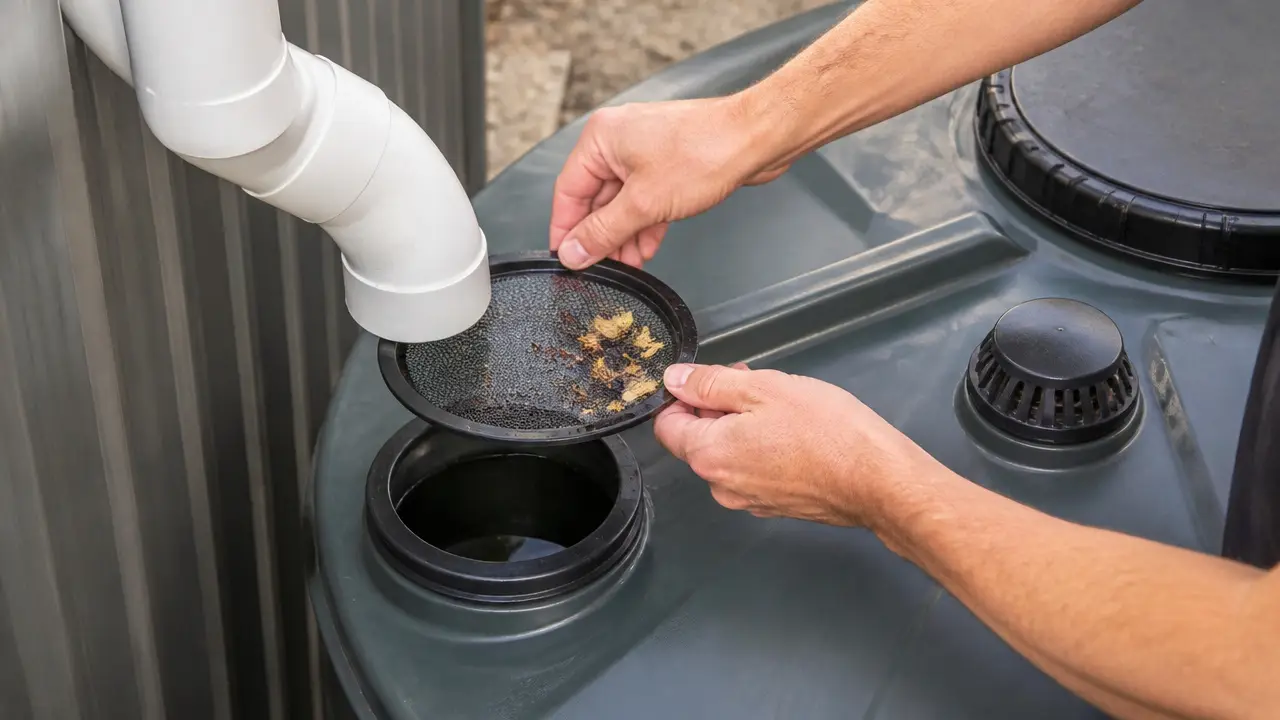
For a broader comparison that includes disposable cartridges, sediment filters for rainwater covers several filtration stages. Upstream, rainwater tank inlet screens keep larger debris out of storage. Downspout filters reduce the roof-debris load before water reaches the tank.