As an affiliate, we may earn a commission from qualifying purchases. We get commissions for purchases made through links on this website from Amazon and other third parties.
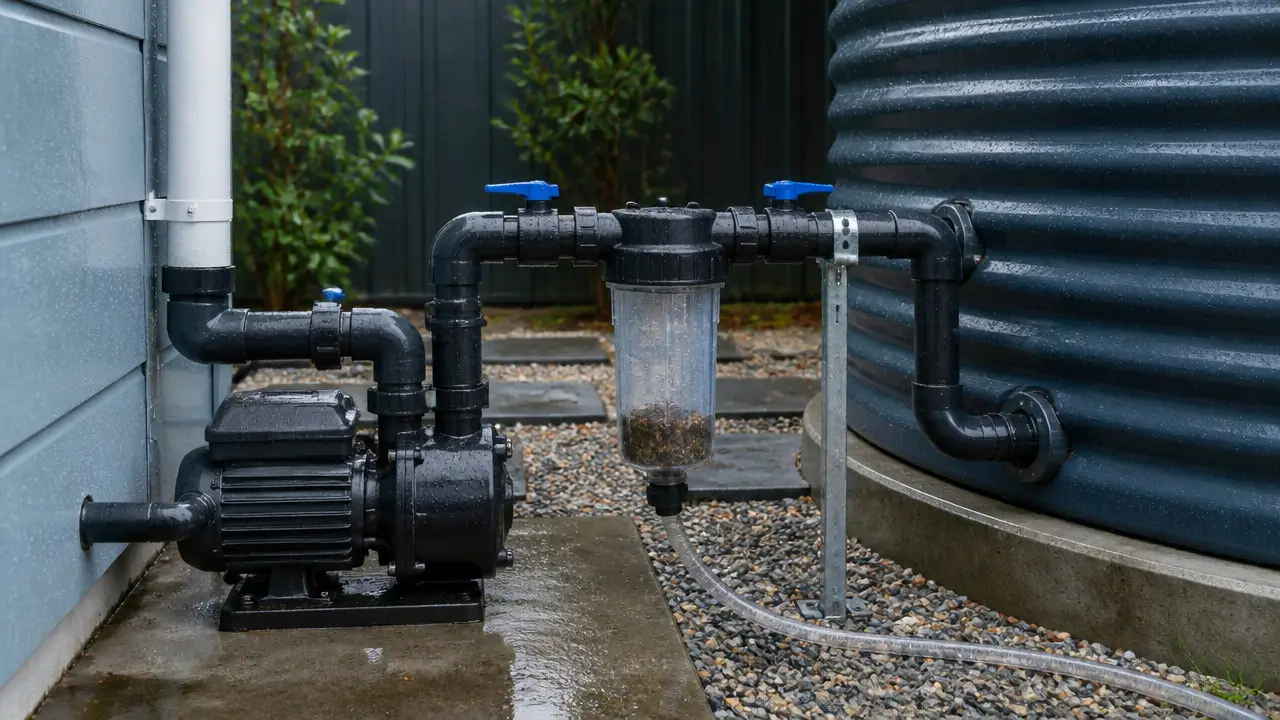
A 5-micron polypropylene depth filter is the best all-around choice for most rainwater systems. It catches fine dirt, rust, silt, and other suspended particles without adding chemicals to the water.
But the best 5-micron sediment filter is not just about the micron number. The filter material, housing size, flow rate, pressure drop, and amount of sediment in your water matter just as much.
For rainwater, a 5-micron filter also works best as part of a staged system. Trying to send very dirty tank water straight through a 5-micron cartridge can clog it quickly.
What Does 5 Micron Mean?
A micron is one-millionth of a meter.
A 5-micron sediment filter is designed to catch very small suspended particles. These can include:
- Fine silt
- Rust particles
- Dust
- Small pieces of organic debris
- Sediment from tanks and pipes
The micron rating does not mean the filter removes dissolved chemicals or makes water safe to drink.
There is also an important difference between nominal and absolute micron ratings.
A nominal 5-micron filter catches much of the material around that size, but some larger particles may pass through.
An absolute-rated filter has a much more controlled pore size and is designed to prevent particles above its stated rating from passing under specified conditions.
For ordinary sediment control, nominal filters are common. If another treatment device requires a specific particle size or absolute rating, follow that equipment manufacturer's requirements.
Best Overall: Polypropylene Depth Filters
For a typical rainwater system, a 5-micron polypropylene depth cartridge is usually the most practical choice.
A depth filter does not catch dirt only on its outside surface. Water travels through layers of filter material. Larger particles tend to stop near the outside while finer particles are trapped deeper inside.
This gives the filter room to hold sediment before becoming clogged.
Polypropylene also works well for water filtration because it does not depend on activated carbon or chemical treatment to remove sediment.
A depth cartridge can work well after:
- A rainwater tank
- An IBC tote
- A cistern
- A pump
- A coarse prefilter
- A whole-house rainwater supply
It is especially useful when the water contains fine sediment that settles slowly or remains suspended.
When a Pleated 5-Micron Filter Is Better
A pleated sediment filter has folded filter material that creates a large surface area.
Pleated cartridges can be a good choice when you want:
- High water flow
- Lower initial pressure loss
- Easy inspection of captured dirt
- A cartridge that can be cleaned, if the manufacturer says it is reusable
They often work well when the sediment is mostly visible particles rather than very fine silt.
For example, a rainwater system already using good gutter screens, a first-flush device, tank inlet screening, and settled storage may not send much heavy dirt to the final filter. A pleated 5-micron cartridge can work well in that situation.
A first flush device diverts the first portion of roof runoff, which often carries more dust, pollen, droppings, and other debris.
Do not assume every pleated cartridge can be washed and reused. Follow the cartridge manufacturer's instructions.
When a String-Wound Filter Makes Sense
String-wound cartridges are another type of depth filter.
They are made by winding filtration material around a center core. The winding creates layers that capture particles as water moves through the cartridge.
They can work well where the water carries a fairly heavy sediment load.
However, for a straightforward residential rainwater system, polypropylene depth cartridges are often simpler. String-wound filters become more useful when the water conditions and filtration system are specifically suited to them.
Do Not Put a 5-Micron Filter First in a Dirty System
One of the biggest mistakes is expecting a 5-micron cartridge to handle everything coming from a rainwater tank.
Imagine tank water containing:
- Leaf fragments
- Insects
- Roof grit
- Algae pieces
- Tank sediment
- Fine silt
A 5-micron cartridge can catch much of the fine material, but larger debris will fill it unnecessarily.
A better arrangement might be:
Tank → coarse screen or prefilter → pump → larger-micron sediment filter → 5-micron filter → intended use or further treatment
The exact stages depend on the system.
For water with a lot of sediment, a filter around 20 to 50 microns ahead of the 5-micron cartridge can reduce how quickly the finer filter loads up. The right size depends on the actual sediment and the requirements of equipment farther downstream.
Choose the Housing Before Choosing the Cartridge
A filter cartridge must physically fit its housing.
Common residential cartridge housings use cartridges roughly:
- 10 inches long
- 20 inches long
- Standard narrow diameter
- Large-diameter formats
Do not buy a cartridge based only on "5 micron."
Check:
- Cartridge length
- Cartridge diameter
- Housing type
- Maximum operating conditions
- Required flow
- Connection size
- Manufacturer compatibility
A larger filter usually provides more filtration area or media than a smaller cartridge of the same basic design. That can be useful for whole-house rainwater systems or irrigation systems with higher flow.
A small cartridge may be perfectly adequate for a single faucet or low-flow line but become restrictive when several fixtures operate together.
Flow Rate Matters
Every sediment filter creates some resistance to water flow.
As the cartridge fills with dirt, that resistance increases.
You may notice:
- Lower faucet pressure
- Weak irrigation flow
- A pump running longer
- Increasing pressure difference across the filter
The problem may not be the pump. The filter may simply be clogged.
When selecting a cartridge and housing, check that they can handle the flow your system requires.
For example, a garden drip line may need far less flow than a rainwater system serving toilets, washing machines, outdoor faucets, and irrigation at the same time.
Watch the Pressure Drop
Pressure drop is the loss of water pressure as water passes through equipment.
A clean 5-micron filter creates some pressure drop. A dirty one creates more.
This matters especially in systems where pressure is already limited.
Suppose a pump barely produces enough pressure for your irrigation system. Adding several undersized filters can reduce pressure enough to affect sprinklers or other equipment.
Using a larger housing can often provide more filter area and help maintain flow, but the actual performance depends on the cartridge and operating conditions.
Do not choose solely by micron rating.
Nominal or Absolute 5 Micron?
For basic sediment removal, a nominal 5-micron cartridge is often enough.
Planning around whole-home filters for suspended particles helps verify which contaminant-specific test should come next.
An absolute-rated cartridge becomes more important when downstream equipment requires tighter control over particle size.
The distinction also matters when discussing water treatment.
CDC explains that nominal pore sizes are average ratings, while an absolute pore rating provides a more defined maximum pore size.
Do not assume two cartridges marked "5 micron" provide identical filtration.
Check whether the manufacturer specifies:
- Nominal rating
- Absolute rating
- Particle-removal efficiency
- Recommended flow conditions
A 5-Micron Filter Does Not Make Rainwater Drinkable
A sediment filter should be viewed as pretreatment, not a complete drinking-water treatment system.
A 5-micron filter can improve clarity by removing suspended particles. It does not establish that the water is free of:
- Bacteria
- Viruses
- Parasites
- Dissolved metals
- Pesticides
- Other dissolved chemicals
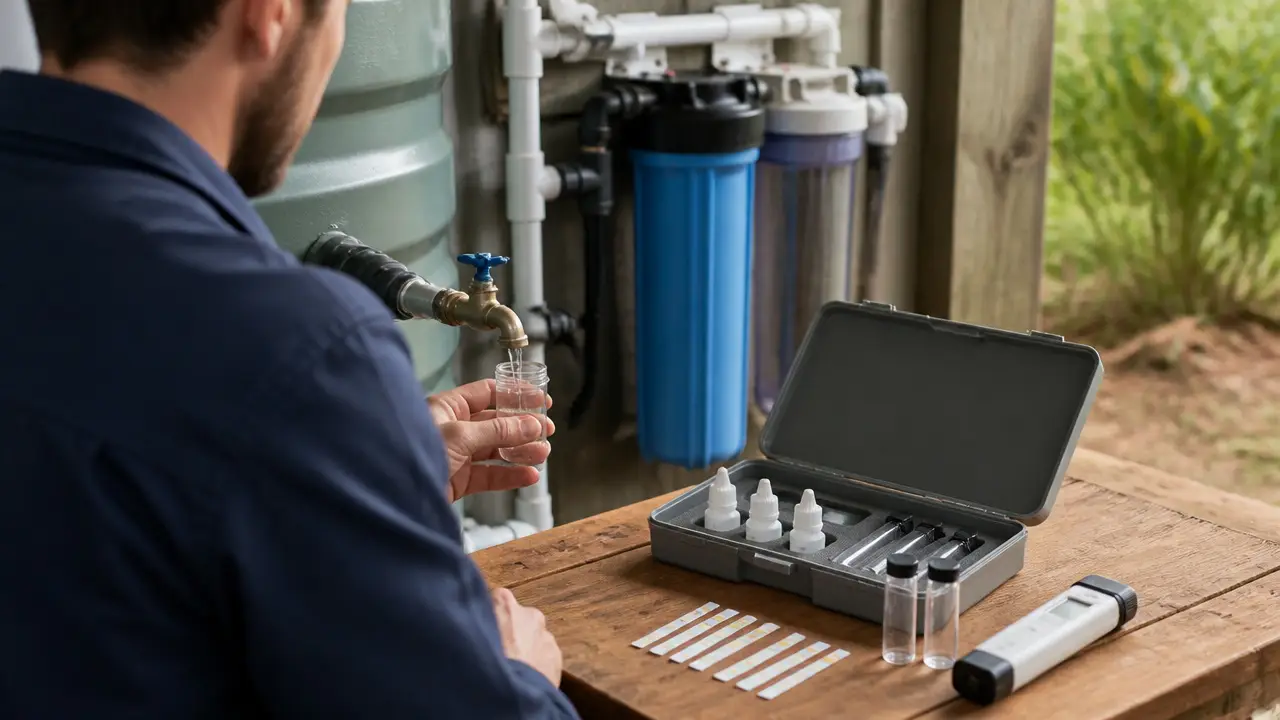
CDC advises people using rainwater collection systems for drinking-water purposes to test the water for harmful germs and chemicals and choose treatment based on what needs to be removed.
CDC also notes that filter performance against microorganisms depends heavily on pore size. A 5-micron sediment cartridge should therefore not be treated as a stand-alone microbiological barrier.
If collected rainwater will be used as potable water, meaning water intended for drinking or cooking, treat the whole system as a water-quality project. Collection surfaces, first flush, storage, prefiltration, treatment, current laboratory testing, maintenance, and applicable local requirements all matter.
What About a 1-Micron Filter Instead?
Smaller is not automatically better.
Going from 5 microns to 1 micron can capture smaller particles, but it can also:
- Clog faster
- Reduce flow
- Increase pressure loss
- Require more frequent replacement
If your goal is simply protecting a pump-fed irrigation system or removing visible sediment from stored rainwater, 1 micron may provide little practical benefit.
Use finer filtration when the downstream treatment process or intended water use actually requires it.
A Better Rainwater Filter Setup
For many systems, filtration works better in stages.
One practical arrangement is:
1. Keep Large Debris Out
Use appropriate gutter guards, inlet screening, and tank screening.
This prevents leaves and insects from reaching cartridge filters.
2. Reduce the Dirty First Runoff
A properly designed first-flush system can divert some of the dirtier initial runoff.
It does not make later runoff clean or potable, but it can reduce the debris entering storage.
3. Let the Tank Do Some Work
Sediment can settle toward the bottom of a tank.
Avoiding unnecessary disturbance of settled material can reduce the amount reaching downstream filters.
4. Use Coarse Filtration When Needed
If the water contains substantial sediment, use a coarser stage before the fine cartridge.
5. Finish With the 5-Micron Filter
The 5-micron stage then handles finer suspended material instead of wasting its capacity on larger dirt.
This usually gives the fine filter a more reasonable workload.
How Often Should a 5-Micron Filter Be Changed?
There is no universal replacement schedule.
A cartridge in clean, well-managed rainwater may last much longer than one filtering heavily contaminated tank water.
Watch for:
- Falling water pressure
- Reduced flow
- Increasing pressure difference across the housing
- Heavy visible sediment on the cartridge
- The manufacturer's replacement interval
Do not wait indefinitely simply because water still comes through.
Filters can collect organic material and microorganisms. CDC recommends maintaining and replacing water filters according to manufacturer instructions because poorly maintained filters can support microbial growth.
If cartridges clog very quickly, repeatedly replacing them is often treating the symptom rather than the cause.
Look upstream for excessive sediment.
How to Choose the Best 5-Micron Filter for Your System
For most RainwaterGuide readers, start with these questions:
| Question | What to look for |
|---|---|
| What am I filtering? | Fine sediment, heavy tank dirt, or already-clean prefiltered water |
| How will the water be used? | Irrigation, washing, household reuse, or part of potable-water treatment |
| How much water must flow? | Match cartridge and housing capacity to system demand |
| Is there heavy sediment? | Add a coarser stage before 5 microns |
| What housing do I have? | Match cartridge length and diameter exactly |
| Is pressure limited? | Avoid undersized filters and excessive filtration stages |
| Nominal or absolute? | Follow downstream equipment requirements |
| How will I maintain it? | Make cartridges accessible and monitor clogging |
For a basic rainwater system with moderate fine sediment, a correctly sized 5-micron polypropylene depth cartridge is the strongest starting point.
For cleaner water and higher flow, a pleated cartridge may make more sense.
For heavy sediment loads, improve pretreatment rather than simply installing an increasingly fine filter.
Frequently Asked Questions
Is a 5-micron sediment filter good for rainwater?
Yes. A 5-micron filter can be a useful final sediment stage for rainwater. It works best after larger debris and heavier sediment have already been removed.
Is a 5-micron or 20-micron filter better?
They serve different purposes. A 20-micron filter catches larger particles and normally clogs less quickly. A 5-micron filter catches finer sediment. Systems with dirty water may benefit from using both in stages.
Should a 5-micron filter go before or after the pump?
The best location depends on the pump and system design. Many pressure-side cartridge housings are installed after a pump, while suitable screening or pump-specific prefiltration may be used before it. Never restrict a pump inlet with a fine filter unless the pump manufacturer and system design allow it.
Will a 5-micron filter remove bacteria?
Do not rely on an ordinary 5-micron sediment cartridge to make water microbiologically safe. CDC guidance shows that much smaller absolute pore sizes or other treatment methods are needed for reliable control of various microorganisms.
Is a reusable 5-micron filter better?
Not necessarily. A washable pleated cartridge can reduce cartridge replacement in suitable applications, but some fine sediment becomes difficult to remove completely. Only clean and reuse a cartridge when its manufacturer says it is designed for that purpose.
Why does my 5-micron filter clog so quickly?
The water probably contains more sediment than the fine cartridge should handle by itself. Check tank sediment, inlet screening, first-flush performance, plumbing disturbance, and whether a coarser prefilter should be added.
Is 5 microns fine enough before a UV system?
It depends on the UV system. Sediment and cloudy water can interfere with UV treatment, but the required pretreatment specifications vary. Follow the UV manufacturer's water-quality and prefiltration requirements rather than assuming every 5-micron cartridge is suitable.