As an affiliate, we may earn a commission from qualifying purchases. We get commissions for purchases made through links on this website from Amazon and other third parties.
A sediment filter can last anywhere from a few weeks to many months. For a typical residential system, a disposable sediment cartridge often lasts about 3 to 9 months, but there is no single replacement schedule that fits every system. Some manufacturers specify around six months, while heavy sediment can shorten that interval.
Rainwater systems can be especially variable. A clean roof and good pre-screening may let a filter run for months. A system that receives leaves, roof grit, pollen, rust, or tank sediment may clog the same type of filter much sooner.
The best rule is to follow the filter manufacturer's replacement limit and also watch for reduced flow or pressure. CDC guidance recommends maintaining and replacing water filters according to the manufacturer's instructions.
Typical Sediment Filter Lifespan
The filter design makes a big difference.
| Sediment filter type | Typical service pattern |
|---|---|
| Disposable cartridge | Often replaced every few months |
| Pleated washable cartridge | Can usually be cleaned and reused until damaged or permanently clogged |
| Mesh or screen filter | Cleaned repeatedly and replaced when the screen wears or will no longer restore normal flow |
| Spin-down filter | Flushed and reused regularly; the screen is replaced only when worn, damaged, or no longer performing properly |
For example, Pentair lists replacement intervals of about 6 to 9 months for some 5-micron residential sediment prefilters. It also lists approximately 6 to 12 months for replacement screens in one reusable spin-down system, with cleaning between replacements. These are examples rather than universal limits.
Your own filter may have a very different schedule.
What Makes a Sediment Filter Wear Out Faster?
A sediment filter does not normally fail because it reaches a certain age. Most cartridges become unusable because their pores fill with particles.
Several factors control how quickly that happens.
Amount of sediment in the water
This is usually the biggest factor.
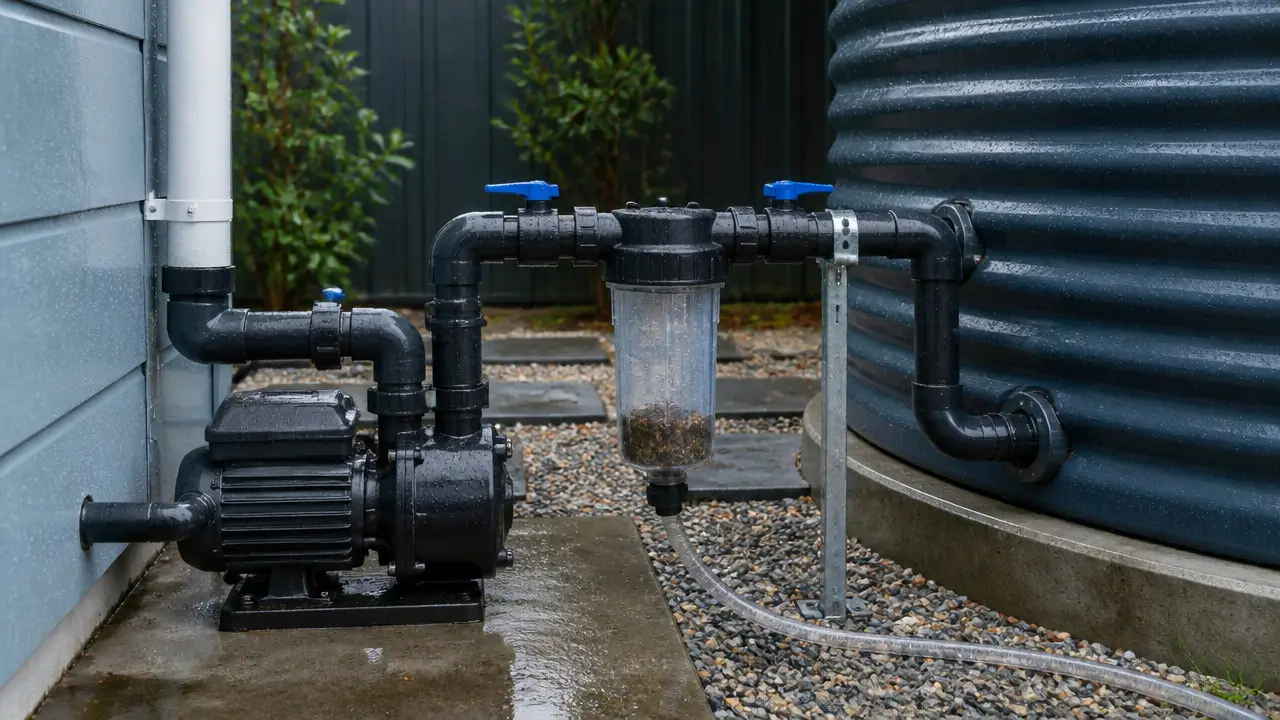
A filter receiving clear municipal water may collect relatively little material. One placed directly after a rainwater tank may receive:
- Roof grit
- Pollen
- Fine leaves
- Insect debris
- Rust
- Sand
- Silt
- Sediment stirred from the bottom of the tank
The more material the filter catches, the faster it clogs.
Micron rating
A micron rating describes the approximate size of particles a filter is designed to capture. One micron is one-thousandth of a millimeter.
A finer filter generally catches smaller particles. For example, a 5-micron cartridge provides finer sediment filtration than a 50-micron screen.
Finer is not automatically better.
Putting a very fine cartridge directly after a dirty rainwater tank can cause rapid clogging. A better arrangement may be several stages, such as:
roof screen → first-flush device → tank → coarse filter → finer sediment filter
A first-flush device diverts some of the initial roof runoff, which may contain more dust and debris than later runoff.
Amount of water used
A filter serving an entire house usually processes far more water than one serving a small garden line or cabin sink.
Higher water use sends more sediment through the filter and can shorten its service life.
Filter surface area
Two cartridges with the same micron rating may not last equally long.
A larger cartridge or pleated filter can have more surface area available to hold sediment. More surface area often means it can collect more material before flow becomes restricted.
Use the size and cartridge type approved for your housing rather than assuming that cartridges with similar dimensions are interchangeable.
How Do You Know When a Sediment Filter Needs Changing?
The calendar is useful, but system performance often tells you more.
Water pressure drops
One of the clearest signs is lower pressure after the filter.
As sediment fills the filter media, water has a harder time passing through it. Pentair also identifies declining flow or pressure as a reason to replace a cartridge.
If your system has pressure gauges before and after the filter, the difference between those readings can help show when the filter is becoming restricted.
Follow the filter manufacturer's stated pressure-drop limit rather than using a universal number.
Flow becomes noticeably slower
You may see:
- Slower hose flow
- Weak irrigation output
- A pump running longer
- Reduced flow at fixtures
- Poor performance from downstream treatment equipment
Do not automatically blame the cartridge. Closed valves, clogged strainers, pump problems, blocked pipes, low tank levels, and other restrictions can cause similar symptoms.
The cartridge is heavily loaded
A clear housing can make it easier to see sediment accumulation.
A filter that has turned brown does not always need immediate replacement. Some water sources stain cartridges quickly. Pressure, flow, service time, and the manufacturer's instructions are better indicators than color alone.
Cleaning no longer restores performance
Washable filters and screens should recover much of their normal flow after proper cleaning.
If a reusable screen remains restricted, damaged, distorted, or torn after cleaning, replace it.
A damaged sediment screen may allow larger particles to reach pumps, valves, irrigation emitters, or later filtration stages.
How Long Does a Sediment Filter Last With Rainwater?
Rainwater filtration can range from very light to very heavy sediment loading.
The roof and tank setup matter as much as the filter.
A system with clean gutters, screened inlets, good tank management, and coarse filtration ahead of the cartridge may give a sediment filter a long service life.
Reviewing expected timing for should a carbon water filter last helps interpret testing methods and treatment stages matched to the final use.
A filter placed directly after an older tank with bottom sediment may clog quickly.
If cartridges need replacement unusually often, do not simply install a finer or larger supply of filters. Look upstream for the source of the material.
Check:
- Roof and gutters
- Leaf screens
- First-flush components
- Tank inlet screening
- Tank condition
- Pump intake location
- Coarse prefilters
- Pipes that may contain rust or scale
Keeping large debris out of the water in the first place is usually easier than asking a fine cartridge to catch everything.
Can You Make a Sediment Filter Last Longer?
Yes, provided you do not extend it beyond the manufacturer's service limits.
Remove large debris first
Use appropriate screens or coarse filtration before fine cartridges.
A 100-micron screen, for example, can remove relatively large particles before water reaches a much finer cartridge. The exact staging should match the water source and equipment.
Keep rainwater collection components maintained
Clean gutters, intact screens, and properly maintained prefiltration reduce the amount of material entering storage.
A first-flush device can also help keep some early roof wash-off from reaching the tank.
Avoid pulling settled material from the tank bottom
Sediment naturally settles in many storage tanks.
A pump intake positioned where it continually pulls accumulated bottom material can place a heavy load on filters and pumps. Intake placement should follow the tank and pump manufacturer's requirements.
Use enough filter capacity
An undersized housing can become a bottleneck when a system needs substantial flow.
This is particularly important with whole-house pumps and larger irrigation systems. Check:
- Required flow rate
- Filter housing connections
- Cartridge size
- Maximum operating pressure
- Pressure loss through the filter
Flow rate means how much water moves through the system in a given time, commonly measured in gallons per minute.
Should You Clean or Replace a Sediment Filter?
It depends on the filter.
Disposable melt-blown, string-wound, and similar cartridges are generally intended for replacement rather than washing.
Pleated cartridges may be washable if the manufacturer says they are reusable.
Screen and spin-down filters are specifically designed around regular flushing or cleaning. Some reusable screens can be cleaned several times before replacement.
Do not pressure-wash, scrub, chemically soak, or disinfect a cartridge unless its manufacturer provides instructions allowing that method. Aggressive cleaning can damage filter media even when the cartridge still looks usable.
Does a Sediment Filter Make Rainwater Safe to Drink?
No.
A sediment filter mainly deals with suspended particles. It does not by itself establish that rainwater is potable, meaning safe for drinking.
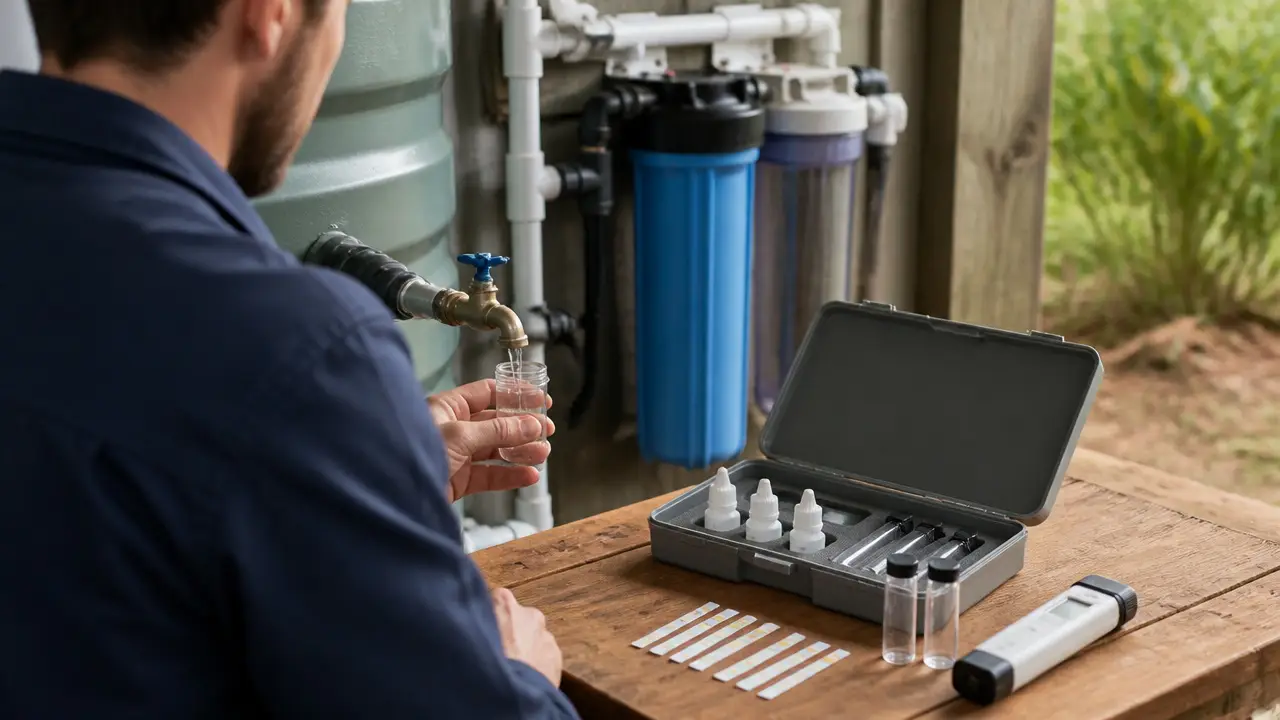
Different filtration technologies remove different substances, and filter performance depends on pore size and the contaminants involved. CDC also advises people using rainwater collection systems for household water to test the water for harmful germs and chemicals.
Drinking-water use should be treated as a complete system. That can involve suitable collection surfaces, debris control, prefiltration, appropriate treatment stages, current laboratory testing, maintenance, and applicable local requirements.
A sediment cartridge may be an important first treatment stage, but it should not be treated as proof that roof runoff is safe to drink.
A Practical Replacement Routine
For most systems, a simple maintenance routine works well:
- Write the installation date on the new cartridge or maintenance record.
- Note normal pressure and flow when the filter is clean.
- Inspect the system periodically.
- Check for declining pressure or flow.
- Flush or clean reusable filters as their instructions require.
- Replace disposable cartridges at the manufacturer's interval or sooner if performance falls.
- Inspect the housing, seals, and O-ring whenever the filter is serviced.
- Investigate unusually fast clogging instead of treating frequent cartridge changes as normal.
CDC recommends regular filter maintenance because poorly maintained filters can support germ growth. Follow the manufacturer's cleaning and replacement instructions, especially when the water may be used inside the home.
Frequently Asked Questions
How often should I change a sediment filter?
Many residential sediment cartridges are changed every few months, with some manufacturers specifying around 6 to 9 months. Heavy sediment can shorten that interval considerably. Follow the cartridge manufacturer's limit and replace it sooner if flow or pressure drops noticeably.
Can a sediment filter last a year?
Some can. Certain reusable screens and larger cartridges may have service intervals approaching a year under suitable conditions. Water quality, filter design, water use, and manufacturer instructions determine whether that is appropriate.
Why is my sediment filter clogging after only a few weeks?
The water may contain unusually high amounts of sand, silt, rust, roof debris, or tank sediment. The filter may also be too fine for its position in the system. Check upstream screens, tank condition, pump intake placement, and coarse filtration before simply installing another cartridge.
Does a lower micron sediment filter last longer?
Usually not under the same conditions. A finer filter catches smaller particles and may clog faster when water contains a lot of sediment. Good systems often remove large material first and use progressively finer filtration only where needed.
Can I wash and reuse a sediment filter?
Only if it is designed to be reusable. Many pleated cartridges and mesh screens can be cleaned, while common disposable depth cartridges are meant to be replaced. Follow the manufacturer's cleaning instructions.
Should I replace a sediment filter when it turns brown?
Not necessarily. Color shows that the cartridge is collecting material, but it does not always show how restricted it has become. Replacement should also consider pressure, flow, service time, filter condition, and the manufacturer's schedule.
Is a sediment filter enough for drinking rainwater?
No. A sediment filter removes particles but cannot by itself establish that rainwater is safe to drink. Potable rainwater requires a whole-system approach that considers collection, treatment, laboratory testing, maintenance, and applicable local requirements.