As an affiliate, we may earn a commission from qualifying purchases. We get commissions for purchases made through links on this website from Amazon and other third parties.
A whole-house water filtration system does not have one fixed lifespan. The permanent parts can often stay in service for many years, but the parts that actually treat the water wear out much sooner.
Filter cartridges, carbon media, membranes, UV lamps, seals, and valves all have their own service lives. Water quality and water use can shorten those lives greatly. A system handling clear municipal water may need much less frequent service than one handling sediment-heavy well water or untreated rainwater.
The most useful way to judge lifespan is to separate the filtration system itself from its replaceable treatment parts.
How Long Does a Whole-House Water Filter Last?
There is no universal replacement age for an entire whole-house filtration system.
A sound filter housing, media tank, mounting assembly, and plumbing connections may remain usable for many years. They normally need replacement because of physical wear, leaks, corrosion, damaged threads, failing valves, unavailable parts, or changes in water-treatment needs rather than because they reached a fixed age.
The filter media or cartridge is different. It has a limited treatment capacity and must be serviced or replaced.
Typical service patterns look like this:
| Part | What Determines Its Lifespan? |
|---|---|
| Sediment cartridge | Sediment load, water use, pressure drop, and manufacturer rating |
| Activated carbon cartridge | Water volume, contaminant concentration, and rated capacity |
| Large carbon media tank | Water quality, water use, media condition, and contaminant breakthrough |
| Specialty treatment media | Contaminant load and manufacturer specifications |
| UV lamp | Operating-hour or time-based replacement schedule |
| Reverse-osmosis membrane | Feed-water quality, pretreatment, use, and membrane condition |
| O-rings and seals | Wear, age, water chemistry, and service frequency |
| Valves and control heads | Mechanical wear, scale, water quality, and maintenance |
| Filter housing or tank | Physical condition, pressure exposure, corrosion, and damage |
EPA recommends following the manufacturer's replacement schedule rather than assuming that a filter remains effective because the water still looks or tastes normal.
Filter Life Is Not the Same as System Life
This distinction causes a lot of confusion.
Imagine a whole-house system with three cartridge housings. The housings may remain installed for years. The cartridges inside them could need changing many times during that period.
The same applies to a large tank filled with activated carbon. The fiberglass or other pressure-rated tank may still be sound when the carbon inside has reached the end of its useful treatment capacity.
Replacing the media does not necessarily mean replacing the entire filtration system.
Likewise, replacing a cracked housing or worn control valve does not automatically mean every treatment stage needs replacement.
What Usually Wears Out First?
Sediment filters
Sediment filters catch particles such as sand, rust, silt, and debris.
They are often the first treatment stage and may also be the first part to become clogged.
Their useful life depends heavily on how dirty the incoming water is. A cartridge exposed to very little sediment may last much longer than the same cartridge handling muddy well water or roof runoff.
A falling flow rate or increasing pressure difference across the filter can indicate loading. However, the manufacturer's rated service interval should still be followed.
Sediment filters are especially useful for protecting downstream carbon filters, UV systems, pumps, valves, and other equipment.
Activated carbon filters
Activated carbon is commonly used to reduce chlorine, tastes, odors, and certain chemicals. Exactly what a particular filter can reduce depends on its design and tested claims.
Carbon does not keep working forever. Its available adsorption sites eventually become exhausted.
There is no reliable universal replacement interval. Minnesota Department of Health notes that some large granular activated carbon filters may last several years when contaminant levels or water use are low, while high contaminant concentrations or heavy use can require much more frequent replacement.
Do not use taste or smell alone to decide whether carbon is still removing a health-related contaminant.
UV treatment
A UV system uses ultraviolet light to reduce microorganisms as water passes through its chamber.
The lamp has a limited operating life even if it continues to glow. Penn State Extension recommends annual UV bulb replacement for the systems described in its home water-treatment guidance. The exact schedule for your unit should come from its manufacturer.
UV also depends on clear water. Sediment and other material can interfere with treatment, which is one reason filtration ahead of the UV unit matters.
Tank-style filter media
Backwashing whole-house filters may contain carbon, oxidizing media, ion-exchange resin, or another treatment material.
Some of these media beds can stay in service much longer than disposable cartridges. Their useful life depends on:
- what the media is designed to remove,
- the concentration of that material in the incoming water,
- total gallons treated,
- backwashing and regeneration,
- water chemistry, and
- whether contaminants have begun to break through.
The tank itself may remain usable after the media needs replacement.
What Shortens a Whole-House Filter's Lifespan?
Heavy sediment
Sediment can fill cartridges and media beds quickly.
If a filter intended mainly for chlorine reduction is forced to catch large amounts of sand, rust, or silt, it may need attention much sooner than expected.
Good pretreatment can protect more expensive treatment stages.
High water use
Most filter media have a limited treatment capacity.
A home using large amounts of water sends more gallons through the media each day. Irrigation, livestock watering, large households, frequent laundry, and other high-flow uses can therefore shorten service intervals.
In some installations, it makes sense to keep untreated outdoor water from passing through treatment that is needed only for household fixtures. Whether that is appropriate depends on the water source and intended use.
High contaminant levels
Two homes with identical filters can have very different replacement schedules.
If one supply contains much more iron, manganese, chlorine, sediment, organic material, or another target contaminant, its treatment media may become exhausted faster.
This is why filter life expressed only as "months" can be misleading.
Incorrect filter sizing
A whole-house filter must handle both water quality and household flow.
Flow rate means how much water moves through the system during a given amount of time, usually expressed in gallons per minute.
A filter that is too small may cause poor flow or excessive pressure loss when several fixtures are used at once.
Look closely at expected timing for do water filter housings last to compare appropriate testing and treatment for the expected end use.
It may also force the treatment media to operate outside the conditions for which it was designed.
Poor maintenance
Neglected systems can develop clogged cartridges, fouled media, scale, leaks, dirty housings, or biological growth.
EPA warns that water-treatment systems require ongoing maintenance and that poorly maintained equipment can make water quality worse rather than better.
How Do You Know When a Filter Needs Replacement?
The safest first reference is the service schedule supplied for the exact filter or media.
Common signs that a system also deserves inspection include:
- noticeably lower water flow,
- greater pressure drop across the filter,
- sediment returning after filtration,
- unusual tastes or odors,
- leaks around housings or valves,
- damaged O-rings,
- frequent backwashing problems,
- warning lights or service alarms,
- treatment results no longer meeting expectations.
These signs are useful for troubleshooting, but they should not replace a scheduled cartridge change when the filter is being relied on for contaminant reduction.
NSF notes that filter service cycles may be expressed as either time or total gallons treated. Replacement cartridges also need to be compatible with the specific housing. A cartridge that merely fits physically may not provide the intended treatment performance.
Does Water Pressure Affect Filter Life?
It can.
Every filter creates some resistance to flow. As a sediment cartridge becomes clogged, that resistance usually increases.
Very high pressure can also place additional stress on housings, seals, fittings, valves, and other plumbing components. The complete system must stay within its rated operating pressure.
Do not install a housing or treatment unit based only on pipe size. Check its allowable pressure, flow requirements, connection size, installation direction, and temperature limits as well.
A qualified plumber or water-treatment professional may be appropriate when pressure regulation, major plumbing changes, pumps, pressure tanks, or complicated treatment equipment are involved.
How Rainwater Affects Whole-House Filter Life
Whole-house filtration on a rainwater system needs extra planning.
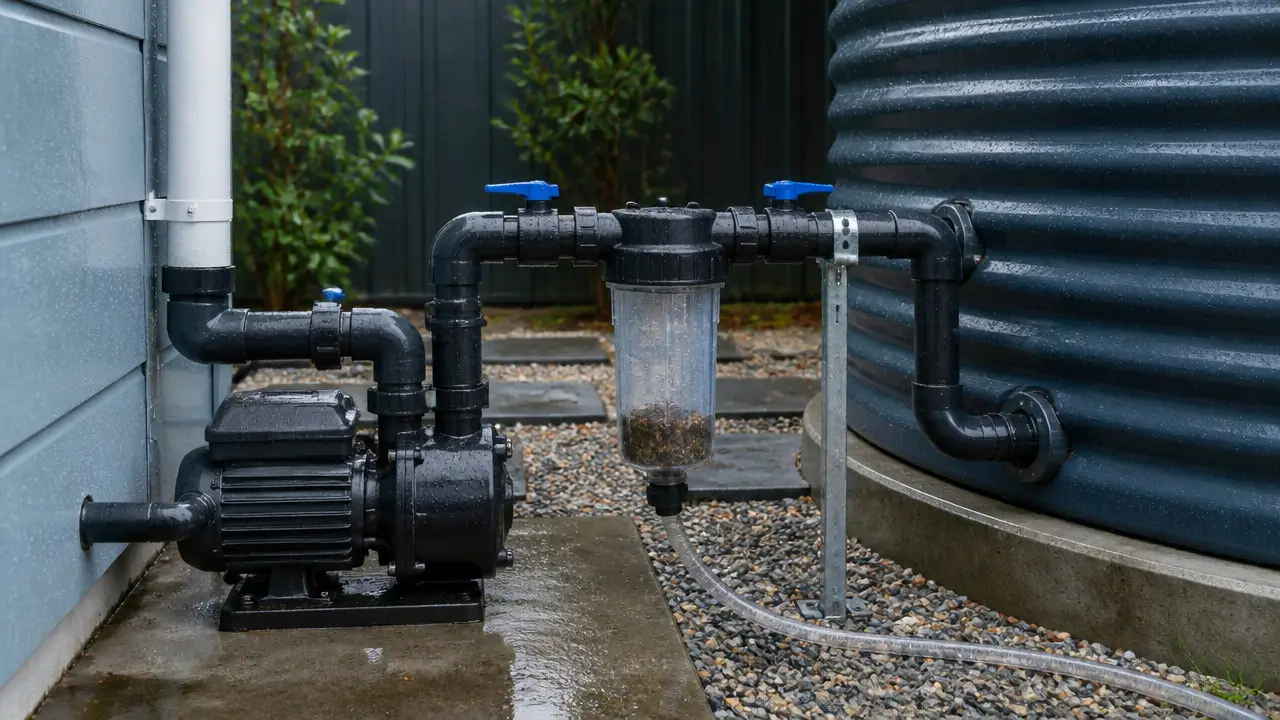
Roof runoff can carry leaves, grit, pollen, dust, insects, bird or animal waste, roofing debris, microorganisms, and other contaminants into storage.
Sending all of that directly into fine household filters can shorten their useful life dramatically.
A rainwater system normally benefits from managing debris before water reaches the final treatment stages. Depending on the system, this may include gutters and screens, inlet filtering, sediment control, and a first-flush diverter.
A first-flush diverter sends away some of the initial roof runoff, which can contain a concentrated load of debris and contamination.
These steps can reduce the workload placed on downstream filtration, but they do not make rainwater safe to drink.
If collected rainwater will supply drinking, cooking, or other potable uses, treat it as a complete water-quality system rather than simply adding a whole-house filter. Potable means suitable for drinking. Collection surfaces, storage, pretreatment, treatment, disinfection where appropriate, current laboratory testing, maintenance, and applicable local requirements all matter.
CDC emphasizes that different treatment methods remove different contaminants and that many filters do not remove all harmful germs or chemicals.
Can You Make Filters Last Longer?
You should not try to extend a cartridge beyond its rated treatment capacity. You can, however, reduce unnecessary loading.
Useful steps include:
- keep sediment out of the system before fine filtration,
- size filters for the required household flow,
- use the correct cartridge for each housing,
- follow required backwashing or regeneration schedules,
- repair leaks and pressure problems,
- keep service records,
- record filter-change dates,
- inspect seals whenever housings are opened, and
- maintain upstream equipment that protects downstream filters.
For rainwater, keeping gutters, screens, tanks, and prefilters maintained can reduce the amount of debris reaching household treatment equipment.
When Should the Entire System Be Replaced?
Replacing consumables is normal maintenance. Replacing the complete system becomes more reasonable when the permanent equipment itself is no longer dependable.
Consider replacement or professional evaluation when you find:
- cracked or distorted filter housings,
- repeated leaks,
- badly corroded fittings,
- damaged tank connections,
- unreliable control valves,
- obsolete components with no suitable replacement parts,
- equipment that cannot provide the required household flow,
- treatment technology that no longer matches the water problem, or
- equipment that cannot support the contaminant-reduction performance you now require.
Changes in the water supply can also make an otherwise functioning filter inappropriate.
For example, a system originally installed only to reduce chlorine taste may not be suitable if testing later identifies a different contaminant that requires another treatment method.
Test the Water, Not Just the Filter
A whole-house system should be selected according to what is actually in the water.
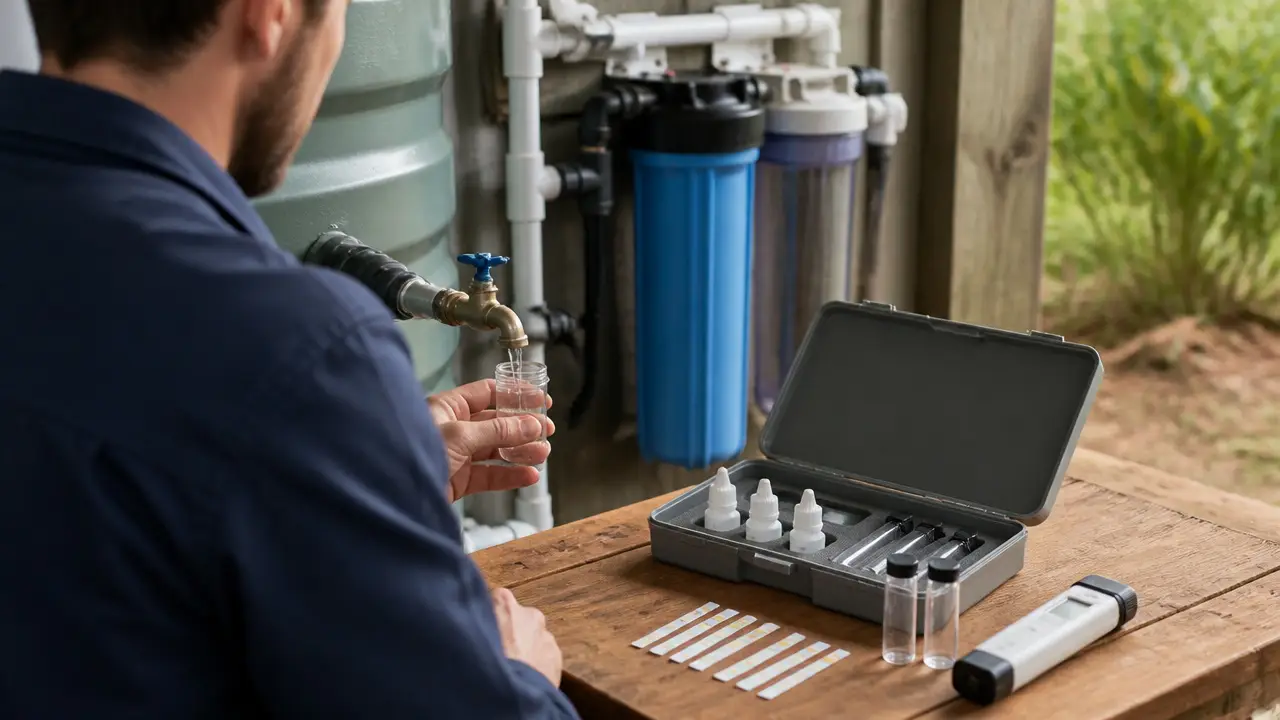
CDC recommends testing the water and choosing treatment designed for the specific harmful germs or chemicals of concern.
Certification can help verify a treatment claim. NSF/ANSI 42 covers certain aesthetic effects such as chlorine taste and odor, while NSF/ANSI 53 covers specified contaminants with health effects. A certification number by itself does not mean that a filter removes every contaminant covered by that standard. Check the exact contaminant-reduction claims for the system.
If the system treats drinking water from a private well, rainwater tank, or another source whose quality is not routinely managed by a public water supplier, laboratory testing becomes particularly important.
Frequently Asked Questions
Can a whole-house water filtration system last 20 years?
Some durable housings, tanks, and plumbing components may remain in service for many years if they stay in good condition. There is no universal 20-year lifespan, however. Filter cartridges, media, lamps, membranes, seals, and mechanical components will normally need service or replacement during the system's life.
How often should a whole-house water filter be changed?
Use the replacement schedule for the exact cartridge or media. Filter life may be based on elapsed time, gallons treated, contaminant loading, pressure drop, or a combination of these factors. There is no replacement interval that fits every whole-house filter.
What happens if you do not change a whole-house filter?
Flow may decrease, treatment performance may decline, and the system may become harder to maintain. CDC and EPA both stress the importance of regular maintenance because neglected water-treatment equipment may no longer provide its intended performance.
Does a bigger whole-house filter last longer?
Not automatically. More media may provide greater treatment capacity in some designs, but actual lifespan still depends on water quality, flow, water use, media type, and the manufacturer's rated capacity. Bigger equipment also needs to be correctly sized for the plumbing and treatment goal.
Does well water wear out filters faster?
It can. Wells with sediment, iron, manganese, hardness, or other treatment challenges may place a heavier load on certain filters. Water testing should determine what treatment is actually needed rather than assuming that every well requires the same filtration stages.
Will rainwater clog a whole-house filter faster?
It can if roof debris and tank sediment reach the household filter. Screens, sediment management, appropriate prefiltration, and other collection-stage controls can reduce that load. These measures do not make untreated rainwater potable.
Can I tell when a carbon filter is exhausted by taste?
Not reliably. Taste and odor changes can reveal some problems, but a filter may stop effectively reducing a health-related contaminant without an obvious change in the water. Follow the rated service schedule and use appropriate water testing when treatment performance affects drinking-water safety.