As an affiliate, we may earn a commission from qualifying purchases. We get commissions for purchases made through links on this website from Amazon and other third parties.
A rainwater collection system does not have one fixed expiration date. As a practical planning range, a well-installed and well-maintained system can often stay useful for 20 to 30 years or longer. The storage tank and fixed pipes are usually the longest-lived parts. Pumps, filters, screens, seals, valves, and controls normally need service or replacement sooner.
The U.S. Department of Energy notes that manufacturers may provide warranties of roughly 15 to 30 years for rainwater storage tanks and pipework, while pump warranties are commonly much shorter. Regular upkeep is important to getting a long service life from the system.
A Rainwater System Wears Out One Part at a Time
It helps to think of a rainwater collection system as several connected parts rather than one piece of equipment.
A typical system may include:
- Roof gutters and downspouts
- Leaf screens or rain heads
- A first-flush diverter
- A storage tank or cistern
- Tank inlet and overflow screens
- Pipes and fittings
- Valves
- A pump
- Filters or treatment equipment
- Irrigation or household distribution pipes
A first-flush diverter sends the first portion of roof runoff away from the tank. This helps keep some dirt, pollen, droppings, and other roof debris out of storage.
These parts do not wear at the same rate. A sound tank may remain in place through several pump replacements, filter changes, and repairs.
Typical Lifespan of the Main Components
There is no single lifespan that applies to every rainwater system. Material, installation, climate, water use, and maintenance make a large difference.
| Component | Practical lifespan expectation |
|---|---|
| Storage tank or cistern | Often around 20–30 years or longer, depending on material and conditions |
| Fixed pipework | Often lasts for decades if properly supported and protected |
| Rainwater pump | Often replaced well before the tank; around 10 years can be a reasonable planning point for some household systems |
| Gutters and downspouts | Depends heavily on material, corrosion, fastening, and weather exposure |
| Screens and strainers | Long-lasting housings may remain usable, but mesh can tear or clog and may need replacement |
| First-flush components | Usually serviceable rather than treated as a fixed-life item |
| Valves and seals | Replace when leakage, stiffness, cracking, or poor operation develops |
| Filter cartridges | Consumable items replaced according to the filter type, water condition, and manufacturer instructions |
Government guidance from Australia's YourHome program notes that rainwater pumps commonly need servicing or replacement after about 10 years. Older rainwater harvesting guidance has also placed storage tank life around 20 to 30 years while stressing that material and environmental conditions matter.
These numbers are best used for planning. They are not guarantees.
The Storage Tank Usually Sets the Long-Term Foundation
The tank is normally the largest permanent part of the system. Its lifespan depends heavily on what it is made from and how it is installed.
Plastic tanks
Above-ground plastic tanks need proper support and protection from conditions they were not designed to handle. A poor base can allow the tank to settle unevenly. Long-term sun exposure can also matter, depending on the tank material and design.
Plastic tanks can also move when empty. Some government guidance recommends securing them when necessary so wind cannot overturn or shift them.
Watch for:
- Bulging or distortion
- Cracks
- Leaking fittings
- Damage around the outlet
- A base that has settled
- Brittle or damaged exposed parts
Concrete tanks
Concrete cisterns can be very long-lived when correctly designed and installed. Cracking, ground movement, and water entering from outside an underground cistern can shorten their useful life.
Some concrete tanks should not be allowed to dry completely because drying can contribute to cracking. Follow the tank builder's instructions rather than assuming every concrete tank can safely remain empty.
Metal tanks
Metal tank life depends on the tank construction, protective coatings, water conditions, and corrosion control.
Regularly inspect:
- Seams
- Fasteners
- The tank bottom
- Areas around fittings
- Damaged coatings
- Rust or corrosion
Small surface problems are easier to deal with before they become leaks.
Pumps Usually Need Replacement Before Tanks
An active rainwater system uses a pump to move water from storage to a garden, toilet, washing machine, or other point of use.
The pump is a moving mechanical part, so it normally has a shorter working life than the tank.
Pump life can be reduced by:
- Running without enough water
- Frequent rapid starting and stopping
- Drawing sediment into the pump
- Operating outside its designed flow or pressure range
- Freezing
- Poor electrical connections
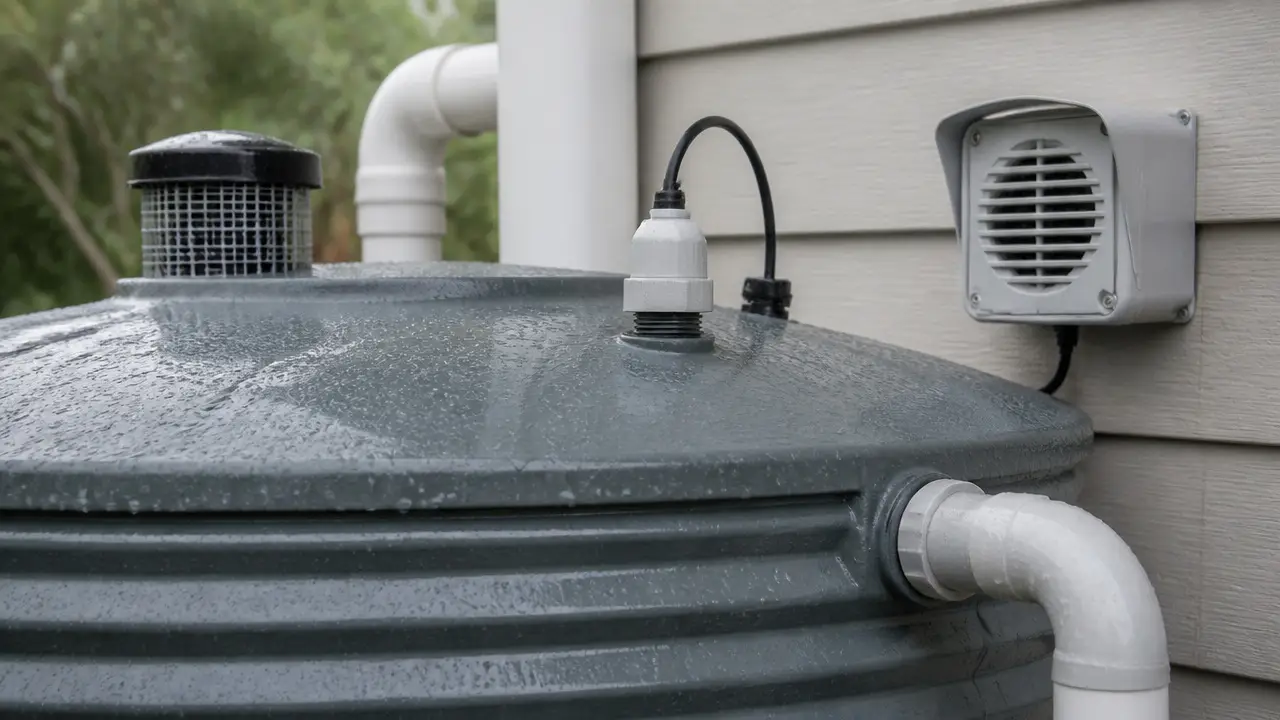
- Poor ventilation around an above-ground pump
Flow rate is how much water the pump moves in a given time. Head height describes the vertical lift and resistance the pump must overcome. A pump that is poorly matched to the required flow and head may work harder than necessary.
Dry-run protection can be useful in systems where the tank may empty. It shuts down a compatible pump when there is not enough water to operate safely.
Electrical pump installation should follow the manufacturer's requirements and applicable electrical rules. Outdoor electrical work or permanent household wiring is a job for a qualified professional where required.
Filters Do Not Share the Tank's Lifespan
Filters are maintenance parts.
A filter housing may last many years, while the element inside it may need cleaning or replacing much more often.
The replacement interval depends on:
- How dirty the roof runoff is
- Filter type
- Filter size
- Water use
- Sediment load
- Manufacturer instructions
A filter's micron rating describes the approximate size of particles it is designed to capture. A lower micron number generally means finer filtration.
Do not keep using a clogged filter simply because it has not reached a certain age. Reduced flow or increasing pressure loss can be a sign that service is needed.
For drinking-water applications, filtration is only one part of treatment. A filter alone does not establish that collected rainwater is safe to drink.
What Shortens the Life of a Rainwater Collection System?
Several common problems can age a system faster than expected.
Poor tank support
A full tank is extremely heavy. Uneven, unstable, or unsuitable support can stress the tank and its fittings.
Large-tank foundations and structural supports should follow the tank manufacturer's requirements. Do not place a large cistern on a deck or elevated structure without confirming that the structure can safely carry the load.
Sediment buildup
Fine debris eventually settles on the tank floor.
Large amounts of sediment can:
- Reach the outlet
- Block fittings
- Increase filter loading
- Enter a pump
- Make tank cleaning harder
Government rainwater guidance commonly recommends checking tanks periodically for sediment rather than assuming they remain clean indefinitely. Victoria recommends checking for sludge buildup every two to three years, while other guidance uses similar periodic inspection schedules.
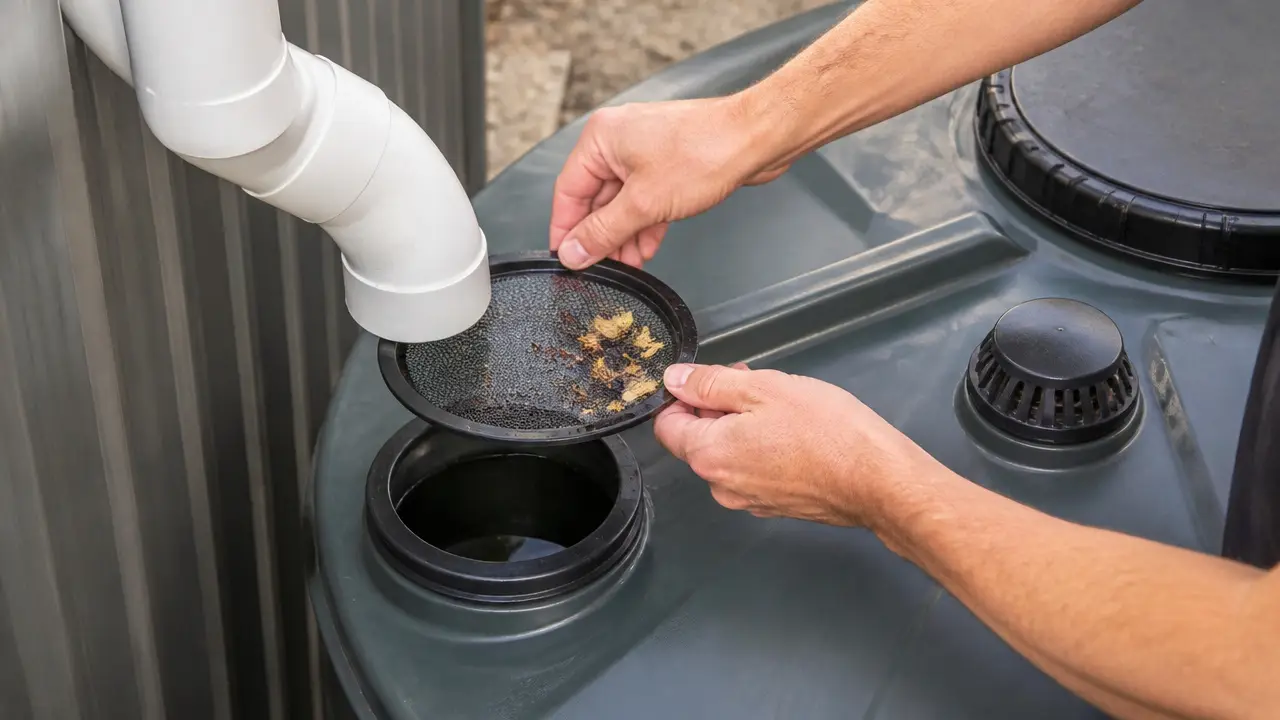
Clogged screens and gutters
Leaves and debris restrict flow and can cause water to overflow in places it should not.
Clogged components can also allow more organic material to reach storage.
The EPA recommends routine inspection and cleaning of gutters, pre-screening equipment, inlet filters, first-flush devices, tank screens, overflow components, pumps, pipes, and other system parts.
Freezing
Water expands when it freezes.
Study key facts about the average lifespan of a rainwater tank to assess tank materials suited to the water’s intended use.
In a freezing climate, trapped water can damage:
- Pipes
- Filter housings
- Pumps
- Valves
- First-flush devices
- Exposed fittings
A seasonal system may need to be drained or otherwise winterized according to its design. Underground pipes are not automatically freeze-safe simply because they are buried.
Sun exposure
Sunlight can age exposed plastics over time. It can also encourage biological growth if light enters the stored water.
Use tanks, pipe, and fittings intended for their installation environment and protect components where their manufacturer requires protection.
Bad connections
A heavy pipe hanging from a tank fitting can put constant stress on the tank wall.
Tank connections should be aligned and supported so the fitting is not carrying unnecessary pipe weight.
A bulkhead fitting is a fitting that passes through the wall of a tank and creates a sealed connection for a pipe, valve, or outlet.
Maintenance Can Add Years to the System
Rainwater harvesting is better described as low maintenance, not no maintenance. NSW Health uses the same general principle when discussing rainwater tanks.
A useful maintenance routine includes checking the system after major storms and doing periodic inspections throughout the year.
Regular checks
Look at:
- Gutters
- Downspouts
- Leaf screens
- First-flush devices
- Tank inlet screens
- Overflow screens
- Pipe supports
- Fittings and valves
Remove debris before it can move farther into the system.
At least yearly
Inspect:
- Tank condition
- Tank base
- Pipes and joints
- Pump operation
- Electrical equipment
- Overflow path
- Screens and covers
- Signs of leaks
The exact schedule should follow the equipment manufacturer's instructions and the amount of debris reaching your roof.
Every few years
Check the bottom of the tank for accumulated sludge.
Do not enter a cistern or enclosed tank to clean it. A tank can be a confined space with serious hazards. Use cleaning methods that do not require entry, or use a qualified tank-cleaning service when needed.
When Repair Makes More Sense Than Replacement
A failed small component does not normally mean the whole rainwater system is finished.
For example, you may be able to replace:
- A leaking valve
- A damaged screen
- A worn seal
- A pump
- A pressure control
- A first-flush valve
- A filter housing
- A short section of pipe
Replacement of the main tank becomes more likely when there is significant structural deterioration, repeated cracking, severe corrosion, major deformation, or damage that cannot be repaired using a method approved for that tank.
Before replacing a tank because of a leak, check the fittings. A leaking bulkhead, valve, pipe joint, or overflow connection can sometimes look like a leaking tank.
How to Plan for a 20-Plus-Year System
If you want the main rainwater installation to last for decades, design it so the smaller parts can be serviced.
That means providing reasonable access to:
- Filters
- First-flush devices
- Pumps
- Valves
- Tank outlets
- Screens
- Overflow piping
Avoid permanently trapping components behind walls or below structures when they are likely to need maintenance.
It also helps to keep a simple record of when you:
- Clean the tank
- Replace a pump
- Change filters
- Repair fittings
- Inspect screens
- Replace valves
A system that is easy to maintain is much more likely to remain useful for the full life of its major components.
Does Intended Water Use Affect Lifespan?
It can affect how much equipment the system contains.
A simple gravity-fed garden system may consist of a roof, gutter, barrel, screen, valve, and hose. There are few mechanical parts to fail.
A household reuse system may add:
- A large cistern
- Pump
- Pressure controls
- Filters
- Backup-water controls
- Additional plumbing
More equipment means more parts that will need maintenance and eventual replacement.
Using collected rainwater as drinking water adds another level of responsibility. Potable means suitable for drinking. Non-potable means the water is not intended for drinking.
Roof runoff should not be assumed potable simply because it looks clear. Drinking-water use should be treated as a complete system involving a suitable collection surface, contamination control, appropriate treatment, current laboratory testing, ongoing maintenance, and applicable local requirements.
Frequently Asked Questions
Can a rainwater collection system last 30 years?
Yes. A well-designed system can remain useful for 30 years or longer, especially when its tank and fixed pipework are properly installed and maintained. Expect pumps, filters, seals, and some other parts to be replaced during that period.
How long does a rainwater storage tank last?
Around 20 to 30 years is a useful general planning range for many rainwater tanks, but actual life varies considerably with tank material, installation, sunlight, climate, structural support, and maintenance. Some tanks can remain serviceable longer.
How long does a rainwater pump last?
Rainwater pumps normally wear out sooner than storage tanks. Around 10 years is a reasonable long-term planning point for some residential pumps, although the real service life can be shorter or longer depending on use, pump design, sediment, dry running, and maintenance.
Do rainwater tanks need to be replaced when the pump fails?
No. Pumps are separate service components. If the tank is structurally sound, a failed pump can usually be repaired or replaced without replacing the storage tank.
How often should a rainwater tank be cleaned?
There is no single cleaning interval for every tank. Inspect for sediment periodically. Several government rainwater guidelines recommend checking sludge buildup about every two to three years or within a similar multi-year interval. Cleaning should be based on the actual condition of the tank.
What causes rainwater tanks to fail early?
Common causes include poor foundations, structural movement, unsuitable installation, damaged fittings, corrosion, UV exposure, freezing, and neglected maintenance. The important risks depend on the tank material and installation.
Does adding a filter make a rainwater system last longer?
Prefiltration can reduce the amount of debris and sediment entering the tank, which may reduce stress on downstream filters and pumps. It does not remove the need for tank, gutter, screen, and system maintenance.