As an affiliate, we may earn a commission from qualifying purchases. We get commissions for purchases made through links on this website from Amazon and other third parties.
The best month to get your gutters cleaned is usually late fall, after most leaves have dropped but before winter weather arrives.
For many homes, that means November. But the right month depends on your trees, climate, roof, and how often debris collects. Homes under pine trees, in stormy areas, or with heavy spring pollen may need cleaning more than once a year.
When Should You Clean Your Gutters?
A simple schedule for many homes is:
- Late spring: Remove seed pods, blossoms, pollen buildup, and winter debris.
- Late fall: Remove fallen leaves before winter rain, snow, and freezing weather.
If you only clean your gutters once a year, late fall is often the most useful time.
The goal is to clean them after the main leaf drop while leaving enough time to fix clogs, loose sections, or drainage problems before winter.
Why November Is Often a Good Choice
November works well in many parts of the United States because most deciduous trees have already dropped their leaves.
Cleaning too early can mean doing the job twice. A gutter cleaned in September may fill again by late October.
Waiting too long can also cause trouble. Leaves packed into a gutter can hold water. In freezing climates, that wet debris may freeze and add weight to the gutter.
A late-fall cleaning also helps prepare the roof drainage system for winter rain and snowmelt.
The Best Month Depends on Your Climate
There is no single month that works everywhere.
Cold and Snowy Areas
Aim for October or November, depending on when leaves finish falling.
Try to have the gutters clear before regular freezing temperatures and snow arrive. Clear gutters give melting snow and rain a better path away from the roof.
Do not climb onto an icy or snow-covered roof to clean gutters.
Mild or Warm Climates
Homes without a strong fall leaf season may not need to follow a November schedule.
Instead, plan cleaning around:
- Heavy leaf or flower drop
- Storm season
- Long dry periods that allow debris to build up
- The start of the rainy season
In some areas, cleaning shortly before the wet season is more useful than choosing a specific fall month.
Areas With Heavy Spring Debris
Some trees create nearly as much gutter debris in spring as they do in fall.
Seeds, blossoms, small twigs, and pollen can collect around outlets and downspouts. A late-spring cleaning may be worthwhile even if you already cleaned the gutters in fall.
How Often Should Gutters Be Cleaned?
Most homes should have their gutters checked at least once or twice a year.
You may need more frequent cleaning if your roof is close to:
- Pine trees
- Oaks or other heavy leaf-dropping trees
- Trees that release seeds or blossoms
- Overhanging branches
Pine needles can be especially troublesome because they may fall throughout the year and can work their way into small openings.
The calendar matters less than actual gutter condition. If water is overflowing during normal rain, do not wait for your scheduled cleaning month.
What If You Collect Rainwater?
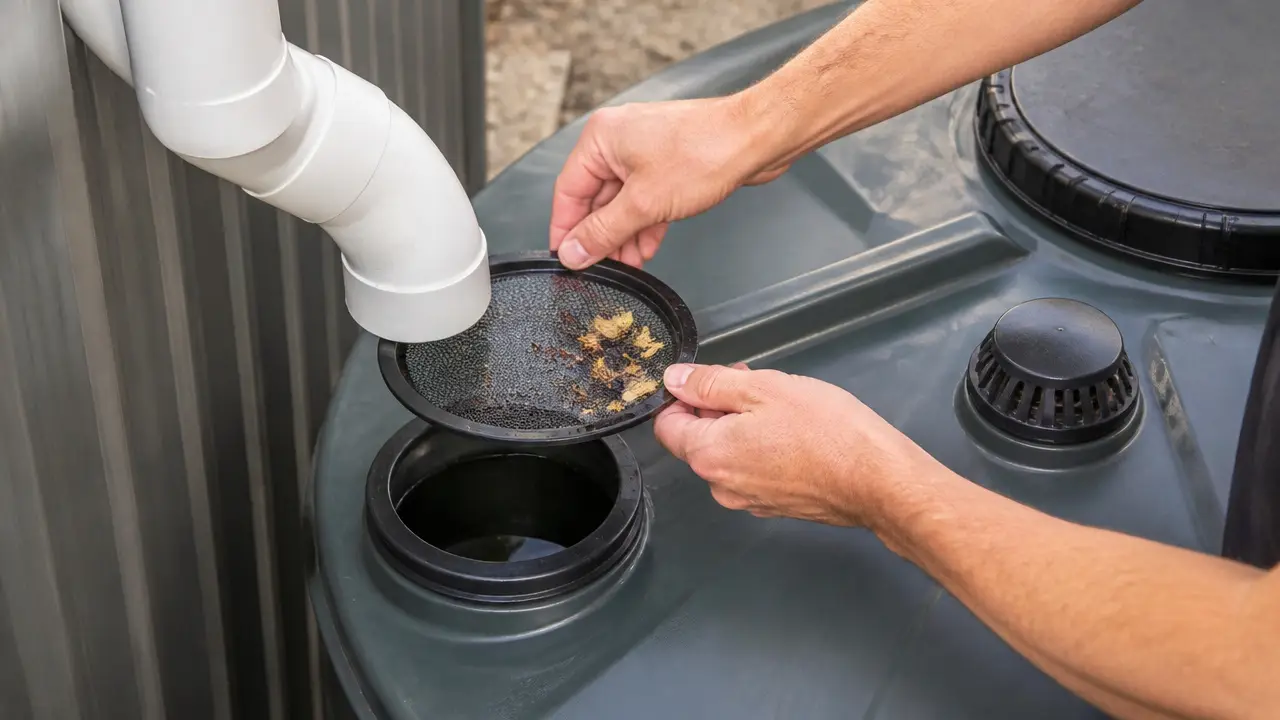
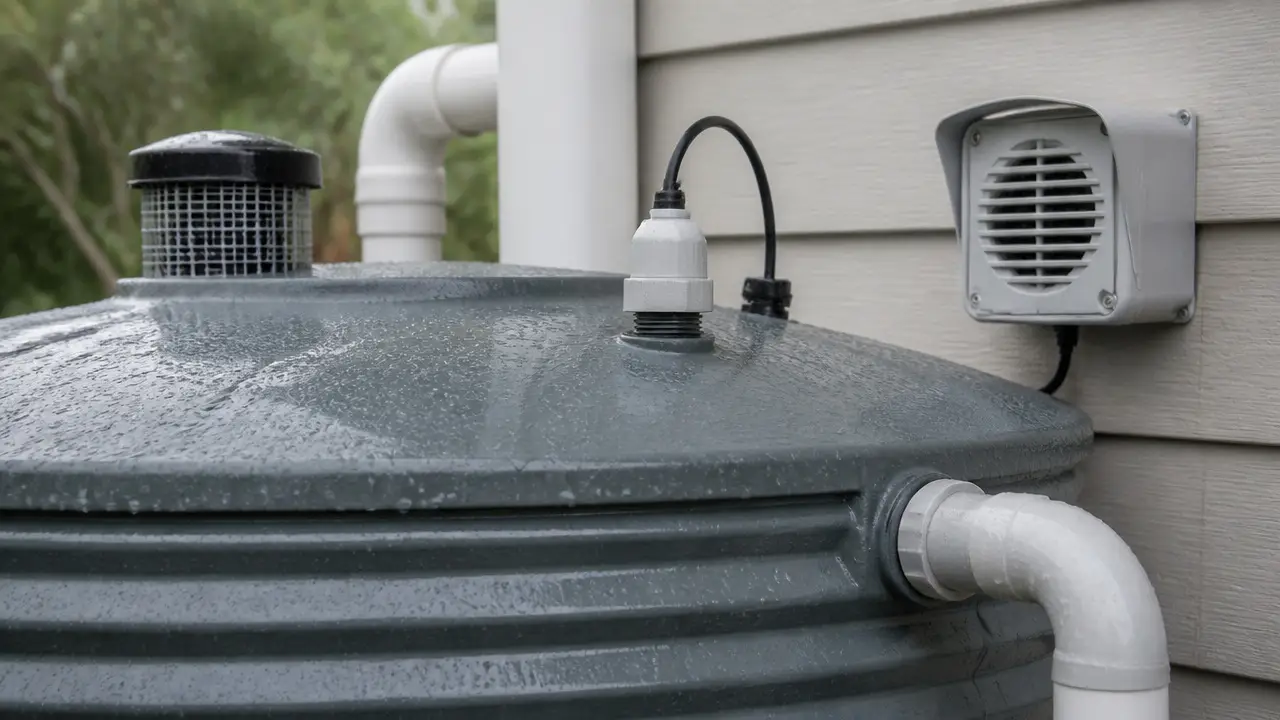
Gutter cleaning becomes even more important when roof runoff feeds a rain barrel, IBC tote, or cistern.
Leaves and organic debris can:
- Block downspouts
- Reduce water flow
- Add sediment to storage
- Increase the amount of material that must be removed during tank cleaning
- Clog screens and prefilters
Clean gutters before periods when you expect to collect significant rainfall.
A leaf screen or gutter guard may reduce large debris, but it does not eliminate maintenance.
If your rainwater system uses a first-flush diverter, remember that gutter cleaning and first-flush diversion perform different jobs. A first-flush device sends away an initial portion of roof runoff that may carry dirt and other debris. It is not a replacement for keeping the roof drainage system clean.
Collected roof runoff should not be assumed to be safe for drinking. Drinking-water systems require suitable collection, treatment, maintenance, water testing, and compliance with applicable local requirements.
Signs Your Gutters Need Cleaning Now
Do not wait for fall if you notice a drainage problem.
Check the gutters if you see:
- Water spilling over the gutter edge
- Water coming from gutter joints
- Plants growing in the gutter
- Visible leaves or pine needles
- Downspouts that release very little water
- Water backing up near the roof edge
- Sagging gutter sections
- Pools of water near the foundation
Overflow can also happen because a downspout is blocked or because the gutter has the wrong slope. Cleaning may not solve every drainage problem.
Should You Clean Gutters Before or After Leaves Fall?
Usually, after most leaves have fallen.
That gives you the best chance of clearing the system once rather than cleaning it repeatedly through autumn.
However, do not wait for every last leaf if heavy rain, freezing weather, or snow is approaching. A mostly clear gutter is better than a completely clogged one while you wait for the season to finish.
Use recommended annual gutter-cleaning frequency to coordinate collection hardware matched to weather and roof litter.
Homes surrounded by several types of trees may have a long leaf-drop period. In that case, an early cleaning followed by a final late-fall cleaning may make sense.
Is Spring Gutter Cleaning Necessary?
Spring cleaning can be useful even when you cleaned the gutters in fall.
Winter weather may leave:
- Twigs
- Roofing granules
- Dirt
- Bird nesting material
- Windblown leaves
Spring is also a good time to confirm that water can move through the gutters and downspouts before seasonal storms.
For rainwater harvesting systems, this inspection gives you a chance to clean screens, first-flush equipment, and other prefiltration parts before heavier collection begins.
What About Gutter Guards?
Gutter guards can reduce how quickly gutters fill with large leaves, but they do not make gutters maintenance-free.
Small debris may still collect:
- On top of the guard
- Under the guard
- Around downspout openings
- In corners and valleys
Some guard systems also make inspection or cleaning harder.
Check guarded gutters periodically rather than assuming they are clear.
How to Choose the Right Cleaning Date
Instead of following one fixed month, use these three factors.
1. Watch Your Trees
Wait until the main leaf drop has finished.
If trees near the roof are still covered with leaves, another cleaning may be needed later.
2. Check the Weather
Choose a dry, calm day.
Wet leaves are heavier and messier, and ladders become more hazardous when surfaces are wet.
Avoid gutter work during high winds, storms, freezing conditions, or when the roof is slippery.
3. Clean Before the Next Demanding Season
Your gutters should be clear before they have to handle sustained rain, snowmelt, or the main rainwater-harvesting season.
That may be more important than the month shown on the calendar.
When to Hire a Professional
Gutter cleaning can involve significant fall risk.
Consider professional help if the home has:
- A steep roof
- More than one story
- Difficult ladder access
- Very high gutters
- Electrical lines near the work area
- Damaged or unstable gutters
- A roof that is wet, icy, or otherwise unsafe to access
A professional may also be useful if water still overflows after cleaning. The problem could involve gutter slope, undersized drainage, damaged sections, or a blocked underground drain.
A Practical Yearly Schedule
For many homes, a simple routine works well:
| Time | What to Do |
|---|---|
| Late spring | Inspect and remove spring debris if needed |
| Early fall | Watch leaf buildup and check downspout flow |
| Late fall | Complete the main annual cleaning |
| After major storms | Check for branches, leaves, or blocked outlets |
Adjust the schedule to match the trees and weather around your home.
Frequently Asked Questions
What is the best month to clean gutters?
November is often the best month in areas with deciduous trees because most leaves have fallen and winter weather has not fully arrived. In colder regions, October may be more suitable.
Is October too early to clean gutters?
Not necessarily. October can be ideal in colder climates or where trees drop their leaves early. If many leaves are still on nearby trees, you may need another cleaning later.
Should gutters be cleaned twice a year?
Many homes benefit from spring and fall cleaning. Homes with few nearby trees may need less maintenance, while homes surrounded by trees may need more frequent attention.
Should I clean gutters before winter?
Yes. Clearing leaves and other debris before freezing weather helps water and snowmelt move through the drainage system instead of collecting in clogged gutters.
When should gutters be cleaned for a rain barrel?
Clean them before the main rainy season and whenever debris becomes noticeable. Also maintain inlet screens, downspouts, first-flush devices, and other prefiltration components in the rainwater system.
Do gutter guards mean I do not need to clean my gutters?
No. Gutter guards can reduce large debris, but smaller material can still accumulate. Gutters and guards still need inspection and periodic cleaning.
How do I know if my gutters are clogged?
Common signs include overflowing water, slow downspout flow, visible debris, sagging gutters, or water collecting near the foundation. These problems should be checked rather than waiting for the next scheduled cleaning.