As an affiliate, we may earn a commission from qualifying purchases. We get commissions for purchases made through links on this website from Amazon and other third parties.
Walking on the roof to clean gutters is usually not the safest choice. In most homes, it is better to clean gutters from the ground or from a properly placed ladder. Walking on a roof adds a serious fall risk, and some roofing materials can also be damaged by foot traffic.
If you cannot reach the gutters safely without getting onto the roof, consider hiring a roofing or gutter-cleaning professional instead.
Why Walking on the Roof Is Risky
A roof may look easy to walk on from the ground. Once you are on it, conditions can be very different.
Common hazards include:
- Steep roof slopes
- Wet shingles or metal
- Moss, algae, leaves, or pine needles
- Frost, snow, or ice
- Loose or damaged roofing
- Fragile clay or concrete tiles
- Skylights and roof openings
- Power lines near the roof edge
- An unstable ladder transition
- A sudden loss of balance while reaching toward the gutter
Even a low roof can cause a serious injury if you fall.
The U.S. Consumer Product Safety Commission recommends placing ladders on solid, level ground when doing jobs such as gutter cleaning and having another adult present as a spotter. It also warns users to keep ladders away from power lines and live wires.
Clean Gutters Without Walking on the Roof When Possible
For most gutter cleaning, there is no need to stand on the roof.
Work From the Ground
Ground-based gutter tools are the lowest-risk option when they can do the job.
Depending on the gutter height and debris, you may be able to use:
- A telescoping gutter-cleaning tool
- A gutter scoop or brush on an extension pole
- A suitable vacuum attachment
- A controlled water-flushing tool
Avoid spraying water blindly if you do not know where it will go. Water forced under roofing, behind fascia, or into wall openings can cause problems.
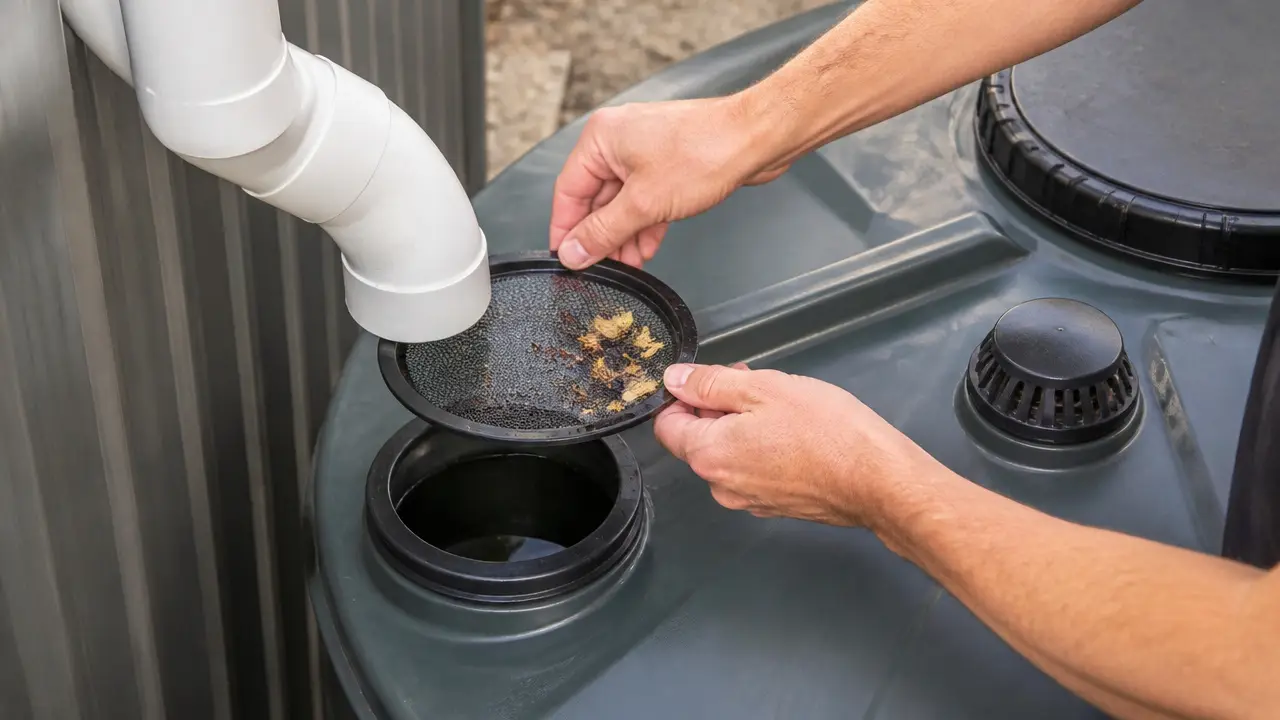
If your gutters feed a rain barrel, IBC tote, or cistern, disconnect or bypass the storage system while removing heavy debris. This keeps leaves, roof grit, and dirty cleaning water from entering the tank.
Work From a Ladder
A ladder may provide enough access without stepping onto the roof.
Set it on firm, level ground and follow the ladder manufacturer's instructions. Keep your body between the ladder rails rather than leaning far to one side. Move the ladder as you work along the gutter.
OSHA's workplace ladder guidance provides a useful conservative benchmark: maintain three points of contact while climbing, face the ladder, stay between the side rails, and do not exceed the ladder's rated load.
Do not place a ladder on boxes, barrels, blocks, or another unstable object to gain extra height.
What If You Need to Step Onto the Roof?
Getting from a ladder onto a roof is one of the more dangerous parts of the job.
For workplace roof access, OSHA requires an extension ladder used to reach an upper landing to extend at least 3 feet, or about 0.9 meter, above the landing surface, with other provisions when that extension is not possible.
OSHA requirements apply to workplaces and should not be treated as a complete set of DIY homeowner rules. They do show why a short ladder that barely reaches the gutter is not a safe way to climb onto a roof.
If roof access would require fall-protection equipment, anchors, ropes, or other specialized gear that you do not already know how to select and use, that is a good point to hire a qualified professional. A fall-arrest system is only useful when every part of the system, including its anchor, is suitable for the job.
Do Not Walk on a Wet or Slippery Roof
Do not get onto a roof when it is:
- Wet
- Icy
- Frost-covered
- Snow-covered
- Covered with loose leaves
- Heavily covered with moss or algae
- Extremely windy
A little moisture can greatly change how secure a roof feels underfoot.
Metal roofing can become especially slippery. Steep roofs make the consequences of a slip even greater.
Waiting for dry conditions is much safer than trying to finish gutter cleaning during or immediately after rain.
Roofing Material Matters
Some roofs tolerate occasional foot traffic better than others. That does not make them safe to walk on.
Clay and Concrete Tile
Avoid walking on tile roofs unless it is necessary and you know how the roof is constructed.
Roof tiles can crack under concentrated loads. The Tile Roofing Industry Alliance recommends keeping walking on concrete and clay roof surfaces to a minimum and advises using a trained roofing professional for roof access.
A cracked tile can allow water to reach the layers beneath the roofing.
Asphalt Shingles
Asphalt-shingle roofs may support necessary service access when they are in good condition, but slope, temperature, age, surface debris, and existing damage still matter.
Do not assume that a shingle roof is safe simply because other people have walked on it.
Metal Roofing
Evaluating conveying roof water from gutters to a tank helps assess the conveyance path from the roof surface into the tank.
Treat sloped metal roofing as a high-slip surface. Water, frost, dust, pollen, or loose debris can make footing much less secure.
Unless the roof has a safe access system designed for maintenance, gutter cleaning is better done without walking on it.
Old or Damaged Roofs
Stay off a roof if you see:
- Sagging areas
- Rotten roof decking
- Loose roofing
- Broken tiles
- Severe rust
- Soft spots
- Storm damage
- Unknown structural condition
A surface that looks solid may not support a person safely.
Be Extra Careful Near the Gutter Edge
Cleaning gutters puts you close to the exact part of the roof where a fall is most likely to be serious.
You may also be pulling wet leaves, sticks, mud, and other material toward yourself. A clog can release suddenly and throw your balance off.
Do not sit on the roof edge, stand in the gutter, or walk backward while cleaning.
Also keep tools, hoses, and cords from becoming trip hazards.
Check for Power Lines Before Using a Ladder
Look overhead before raising or moving a ladder.
A metal ladder contacting an energized power line can cause electrocution. OSHA's extension-ladder safety guidance calls for keeping ladders and tools at least 10 feet away from power lines in the situations covered by its guidance.
If electrical lines are close enough to make ladder placement questionable, do not try to work around them yourself.
Gutter Cleaning for a Rainwater Harvesting System
Clean gutters matter even more when roof runoff is being collected.
Leaves and roof debris can:
- Block downspouts
- Reduce water flow
- Fill screens
- Clog first-flush devices
- Accumulate in rain barrels or tanks
- Increase tank-cleaning needs
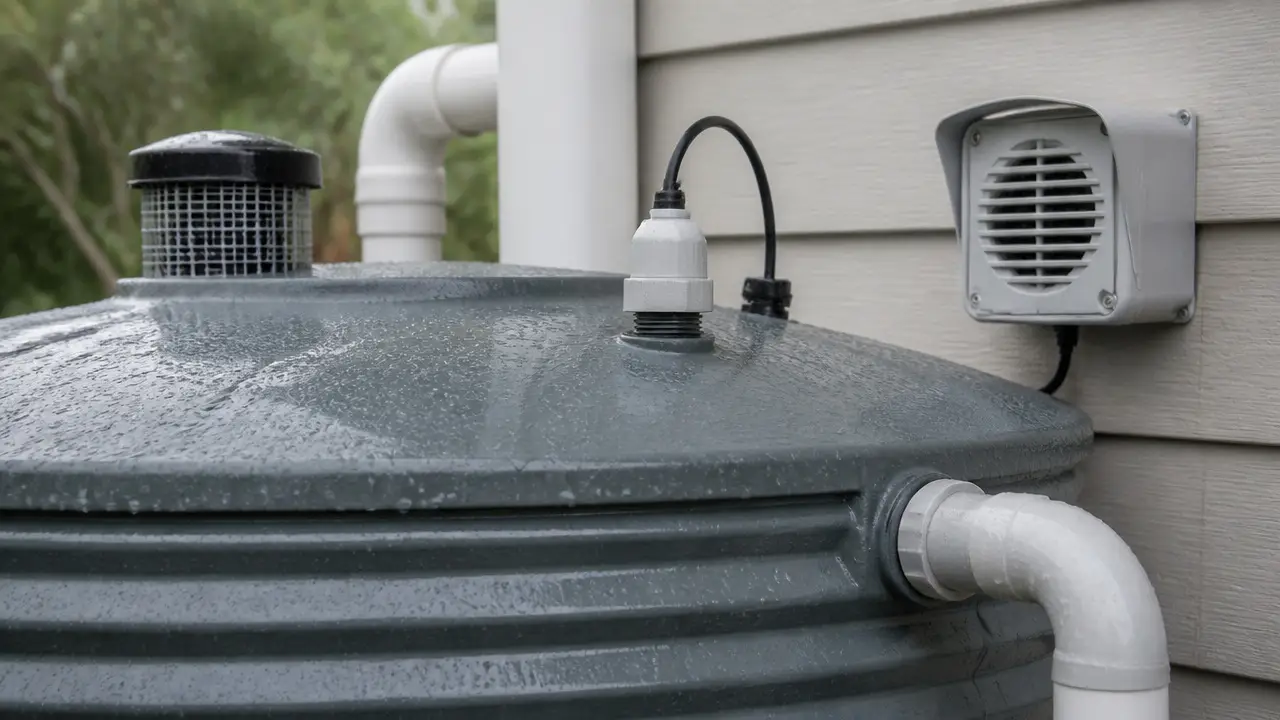
A first-flush device diverts some of the first runoff from a rain event before water enters storage. It can help keep some roof debris and contamination out of the tank, but it does not replace gutter cleaning or make collected rainwater safe to drink.
After cleaning, inspect the gutter screens, downspouts, first-flush components, and tank inlet screens before sending runoff back into storage.
For drinking-water systems, gutter cleaning is only one part of water-quality management. Roof runoff should not be assumed to be potable, meaning safe to drink. Drinking-water use requires suitable collection, treatment, maintenance, current water testing, and compliance with applicable local requirements.
When to Hire a Professional
Professional cleaning is the better choice when:
- The roof is steep
- The building is more than one story
- The roof is wet or difficult to access
- You have clay or concrete tile
- The roof is damaged or very old
- Power lines interfere with safe ladder placement
- The gutters cannot be reached without climbing onto the roof
- Proper fall protection would be needed
- You are not comfortable using an extension ladder
Gutter cleaning is routine maintenance. It is not worth taking an unnecessary fall risk to do it yourself.
Frequently Asked Questions
Can I walk on a low-pitch roof to clean gutters?
A low pitch may reduce some difficulty, but it does not remove the fall risk. Wet roofing, loose debris, roof damage, and the open edge can still make the job dangerous. Cleaning from the ground or a ladder is usually safer.
Is it safer to clean gutters from the roof or a ladder?
In most cases, staying off the roof is preferable. A properly selected and positioned ladder may allow you to reach the gutter without exposing yourself to the roof edge. Ladder use still requires care and proper setup.
Can I walk on roof shingles?
Some asphalt-shingle roofs can tolerate limited service traffic, but that does not mean walking on them is safe. Roof slope, weather, roof condition, and access all matter. Avoid unnecessary roof traffic.
Should I walk on a tile roof?
It is best to avoid it. Concrete and clay tiles can break under foot traffic, and tile roofs can be difficult to walk on safely. The Tile Roofing Industry Alliance recommends minimizing roof traffic and using trained professionals for roof access when appropriate.
Can I clean gutters when the roof is wet?
Do not walk on a wet roof. Wet roofing can be much more slippery than it appears. Wait for suitable dry conditions or use a method that keeps you safely off the roof.
How often should gutters on a rainwater collection system be cleaned?
There is no single schedule that works for every home. Check them often enough to prevent debris buildup, especially during periods when nearby trees are dropping leaves, seeds, flowers, or needles. Also inspect gutters after major storms.
Should I send the gutter-cleaning water into my rain barrel?
It is better to bypass or disconnect storage while removing accumulated debris and flushing dirty gutters. Reconnect the rainwater system after the gutters, downspouts, screens, and inlet components are clean and working properly.