As an affiliate, we may earn a commission from qualifying purchases. We get commissions for purchases made through links on this website from Amazon and other third parties.
If your gutters are too high or awkward to reach safely, clean them from the ground when possible. A telescoping gutter tool, gutter vacuum, or blower attachment can remove leaves without putting you on the roof.
If the gutter still cannot be cleaned well from the ground, hiring a qualified gutter or roof professional is usually safer than stretching from a ladder or walking near a roof edge.
Start With the Safest Cleaning Method
The best method depends on what is blocking the gutter.
Dry leaves are easier to remove with a vacuum or blower. Wet leaves, mud, and roof grit often need a scoop or water rinse. A clogged downspout may need separate attention.
Try these options in this order:
- Clean from the ground.
- Use a properly placed ladder only if the gutter can be reached without stretching.
- Hire a professional for very high, steep, damaged, or hard-to-access gutters.
Do not climb onto a roof just because the gutter cannot be reached from a ladder.
Use a Telescoping Gutter Cleaning Tool
A telescoping gutter cleaner lets you work from the ground. These tools use a long pole with an angled end that reaches over the gutter edge.
Different attachments can:
- Scoop leaves out.
- Blow dry debris away.
- Vacuum loose material.
- Spray water through the gutter.
They work best on one- and some two-story homes where the gutter is visible enough to guide the tool.
A pole becomes harder to control as it gets longer. Stop if you cannot keep the tool steady or see where it is contacting the gutter.
Be especially careful around overhead electrical lines. Long poles, wet equipment, and electricity can be a dangerous combination.
Try a Gutter Vacuum for Loose Debris
A gutter vacuum uses long suction tubes to pull leaves and other loose material from the gutter while you remain on the ground.
This approach works well for:
- Dry leaves.
- Pine needles.
- Small twigs.
- Loose roof grit.
It is less effective on heavy mud or debris that has become packed into the gutter.
Some systems let you inspect the gutter with a camera attached near the end of the pole. That can help you find areas that still need cleaning without climbing a ladder.
Use a Blower Attachment for Dry Leaves
A leaf blower with a gutter attachment can work well when the debris is dry and loose.
The curved tube reaches into the gutter and blows leaves toward an open end or down to the ground.
Wear eye protection. Debris can fall directly toward you.
A blower is usually not a good choice when gutters contain wet leaves, mud, or standing water. It can also spread dirty material over siding, windows, and nearby rainwater equipment.
Rinse Gutters From the Ground
A telescoping water wand can help move small amounts of dirt after larger debris has been removed.
Use moderate water flow rather than trying to blast a blockage loose.
High-pressure cleaning can damage some gutter joints, seals, coatings, roof edges, and downspout connections. A pressure washer can also create strong reaction forces that are difficult to control from a ladder.
If a gutter contains a solid blockage, remove the debris before relying on water.
Check the Downspouts Separately
A gutter may look clean but still overflow because the downspout is blocked.
After removing gutter debris, run a small amount of water into the gutter and watch the downspout outlet.
Water should drain freely.
If it backs up, debris may be lodged in:
- The downspout opening.
- An elbow.
- A narrow connection.
- A screen or leaf guard.
- The bottom of the downspout.
Some blockages can be cleared from the lower end after disconnecting an accessible section. Stop if clearing it would require unsafe ladder work or forceful probing near electrical wiring or hidden plumbing.
When a Ladder May Be Appropriate
If ground tools cannot do the job, a ladder may sometimes provide safe access to a low gutter.
The ladder should stand on firm, level ground and be positioned according to its manufacturer's instructions. Keep your body between the ladder rails rather than leaning sideways.
Move the ladder instead of reaching farther.
Do not rest your weight on the gutter. Many gutters are not designed to support a person or a ladder.
Avoid ladder work when:
- The ground is soft, wet, or uneven.
- The gutter is above a steep slope.
- You would need to stand on the top steps.
- You cannot reach without leaning.
- The roof or gutter is near electrical lines.
- Wind or rain makes the setup unstable.
- You would need to handle a heavy or powerful tool while climbing.
If the gutter is still out of reach with a safe ladder setup, use a professional.
Do Not Walk Along the Roof Edge to Clean Gutters
Walking on a roof often creates more risk than the gutter cleaning itself.
Roof surfaces can be slippery because of:
- Moss.
- Algae.
- Dust.
- Wet leaves.
- Frost.
- Loose roofing material.
With practical considerations for it okay to walk on the roof to clean gutters, you can coordinate the catchment surface’s effect on usable collection volume.
The danger increases on steep roofs and multi-story homes.
A long-handled tool used from the ground is usually a better choice. Professional roof access may require fall-protection equipment and training that most homeowners do not have.
Be Careful With Gutter Guards
Gutter guards reduce some debris, but they do not eliminate gutter cleaning.
Leaves can collect on top of guards, while smaller material can pass through and build up underneath.
Some guards lift or snap open. Others must be partially removed.
Do not pry or remove a gutter guard unless you know how it is attached. Forcing it can damage the guard, gutter, or roof edge.
Ground-level blower or vacuum tools may work for debris sitting on top of accessible guards.
Protect Your Rainwater Tank While Cleaning
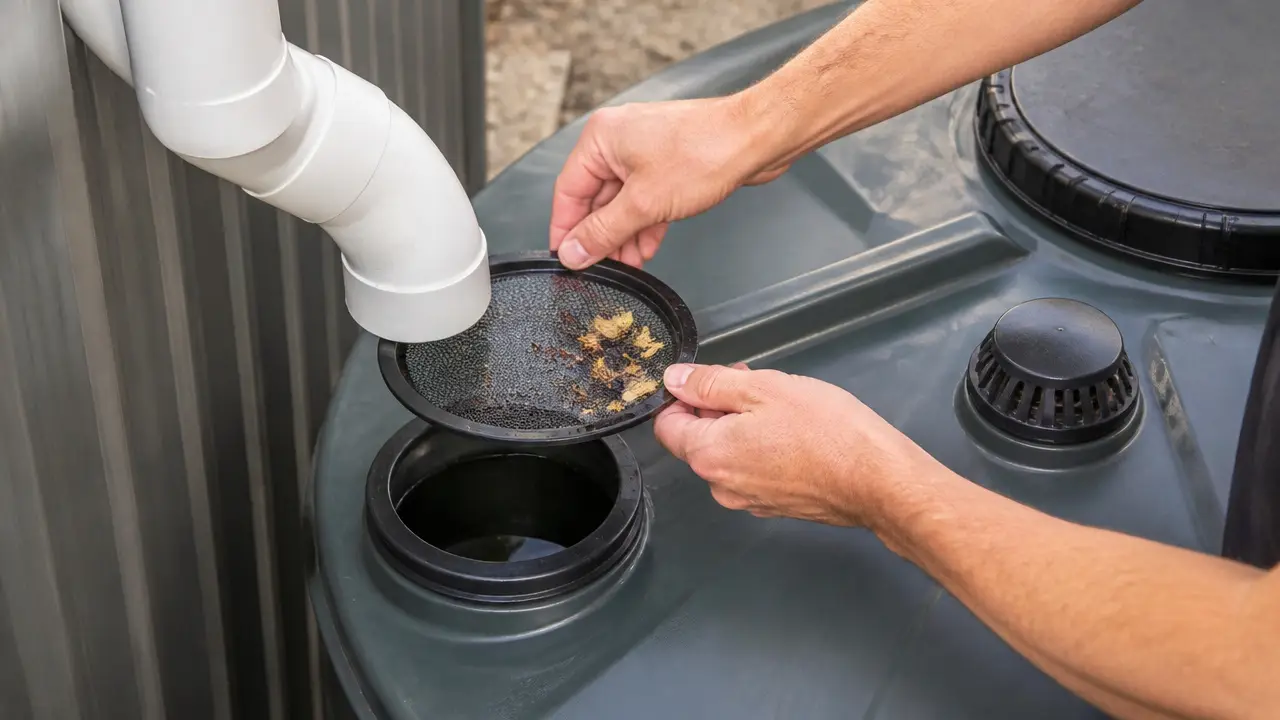
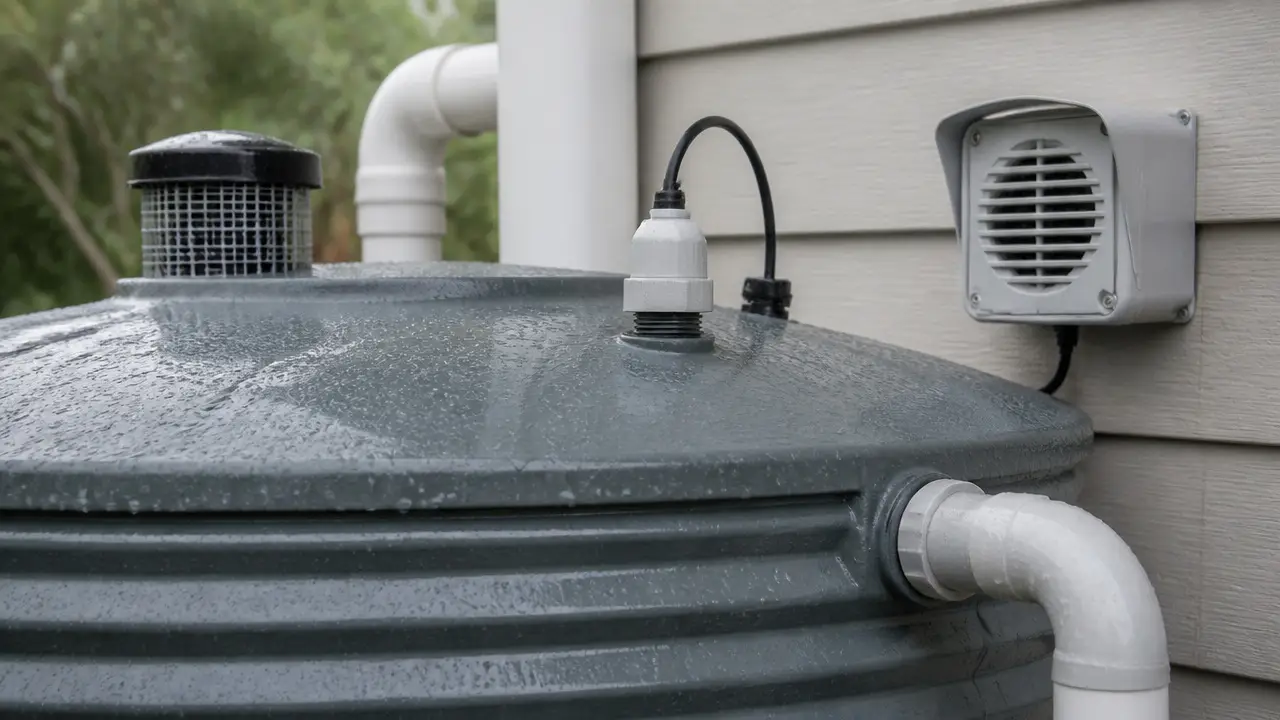
Gutter cleaning matters even more when the roof feeds a rain barrel, IBC tote, or cistern.
The material you remove may include:
- Leaves.
- Bird droppings.
- Insect material.
- Roof grit.
- Dust.
- Moss.
- Decaying organic matter.
Do not wash this debris into your stored rainwater.
Before cleaning, divert or disconnect the gutter from the rainwater tank when your system allows it.
After cleaning, let enough water flush through the roof, gutter, and downspout to carry loose debris away before directing runoff back into storage.
If your system has a first-flush device, clean and inspect it as well. A first flush device diverts the first portion of roof runoff, which often carries more dirt and debris than later runoff.
Cleaning the gutters helps improve collected water quality, but it does not make roof runoff automatically safe to drink. Drinking-water systems require suitable collection, treatment, testing, maintenance, and compliance with applicable local requirements.
Look for Problems While the Gutter Is Empty
Cleaning is a good time to inspect the system from the ground.
Look for:
- Sagging gutter sections.
- Water dripping from joints.
- Loose brackets.
- Cracked downspouts.
- Overflow stains.
- Standing water.
- Bent gutter sections.
- Damaged screens.
- Downspouts that have pulled away from the wall.
Standing water can mean the gutter is blocked or does not drain properly.
A badly sagging or loose gutter may need repair rather than cleaning alone.
How Often Should Hard-to-Reach Gutters Be Cleaned?
There is no single schedule that works for every home.
Inspect them more often if your roof is near:
- Pine trees.
- Large deciduous trees.
- Heavy seed-producing trees.
- Mossy or shaded areas.
Gutters may also need attention after storms or periods of heavy leaf fall.
For rainwater harvesting systems, regular inspection helps prevent organic material from washing into storage and clogging screens, first-flush devices, filters, pumps, or irrigation lines.
A ground-level camera or telescoping inspection tool can make routine checks easier without climbing.
When to Hire a Professional
Professional cleaning is the safer choice when the gutter cannot be reached comfortably from the ground or a properly positioned ladder.
Consider professional help for:
- Two-story or taller homes.
- Steep roofs.
- Gutters above slopes or retaining walls.
- Difficult roof shapes.
- Electrical lines near the work area.
- Heavy packed debris.
- Damaged gutters.
- Loose roofing materials.
- Gutters that require roof access.
- Anyone who is not comfortable working on a ladder.
Tell the contractor if the gutter connects to a rainwater storage system. Ask them not to wash accumulated debris directly into your tank.
Frequently Asked Questions
Can I clean second-story gutters without a ladder?
Often, yes. Telescoping gutter vacuums, blower attachments, scoops, and water wands can reach some second-story gutters from the ground. Their usefulness depends on the building height, gutter shape, and type of debris.
Can I use a pressure washer to clean gutters from the ground?
A pressure washer is usually unnecessary for routine gutter cleaning. High-pressure water can damage joints and create difficult-to-control forces. Remove large debris first, then use moderate water flow if rinsing is needed.
Is it safe to clean gutters from the roof?
Roof-edge work has a serious fall risk. Ground tools or properly positioned ladder access are safer options for many homes. If cleaning requires walking near an exposed roof edge, consider hiring a qualified professional.
How do I know if my downspout is clogged?
Run a small amount of water through the cleaned gutter. Slow drainage, backing up, or overflow near the downspout usually indicates a blockage somewhere in the downspout or its connections.
Do gutter guards mean I never have to clean the gutter?
No. Gutter guards can reduce large debris, but smaller particles may still collect underneath them, and leaves can build up on top. The gutter and guard still need periodic inspection and cleaning.
Should I disconnect my rain barrel before cleaning the gutters?
Yes, when your system design allows it. Divert dirty cleaning water and loose debris away from storage. Flush the roof drainage path before reconnecting the rain barrel or tank.
What is the easiest way to inspect gutters I cannot see?
A telescoping inspection camera or pole-mounted camera can help you check for leaves, standing water, damage, and blocked downspout openings from the ground. You can also inspect during rain from a safe location to see where water is overflowing.