As an affiliate, we may earn a commission from qualifying purchases. We get commissions for purchases made through links on this website from Amazon and other third parties.
The best tool for cleaning gutters is usually a gutter scoop if you can reach the gutter safely. It removes wet leaves, mud, roof grit, and packed debris better than most spray tools.
If you want to stay on the ground, a telescoping gutter-cleaning wand or vacuum attachment is often the better choice. The best tool depends on the debris, gutter height, and whether you can work safely without climbing onto the roof.
Best Gutter Cleaning Tool for Most Jobs
A plastic gutter scoop is simple, cheap, and effective. Its narrow shape fits inside common gutters and lets you lift debris out without pushing it into the downspout.
A scoop works especially well for:
- Wet leaves
- Pine needles
- Roof grit
- Small twigs
- Mud and decomposed leaves
- Debris around gutter outlets
Plastic is usually better than metal because it is less likely to scratch coated gutters.
After scooping out the heavy material, you can rinse the gutter gently with a garden hose. This helps move loose dirt toward the outlet and shows whether the downspout is flowing properly.
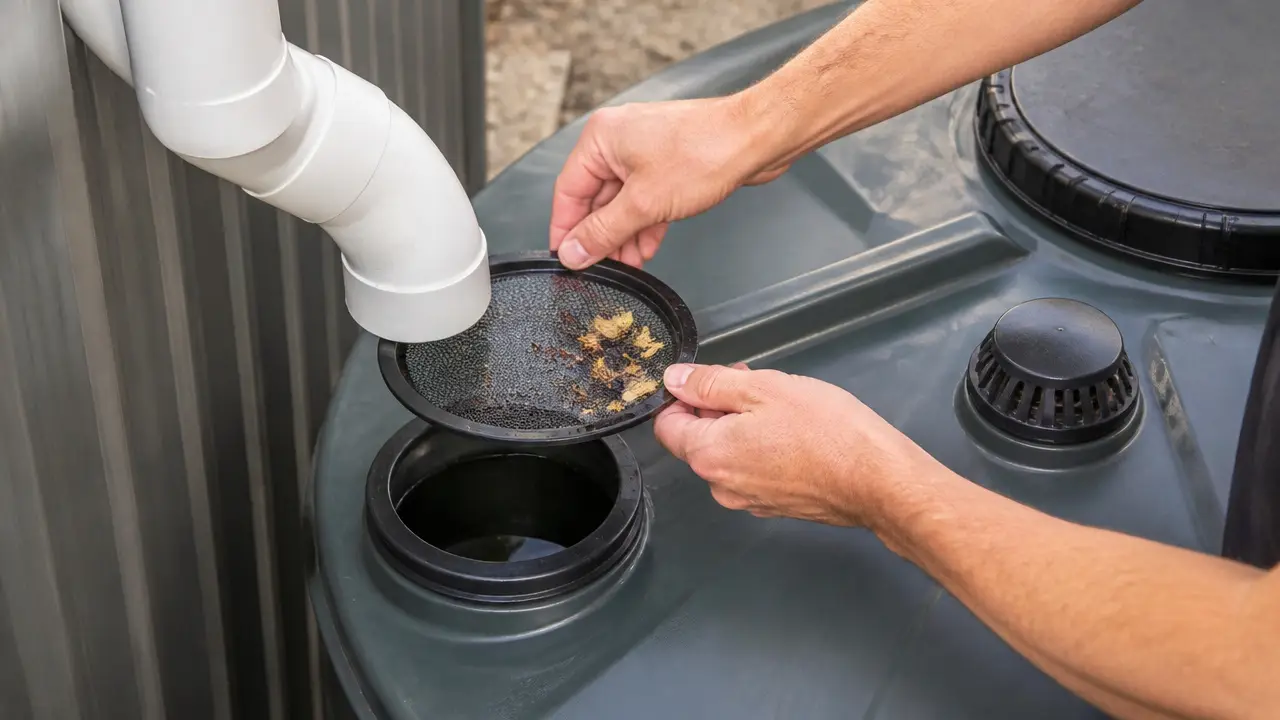
For a rainwater collection system, remove the debris rather than washing large amounts of dirt into the storage tank.
Choose the Tool Based on the Type of Debris
No single gutter tool works best in every situation.
| Gutter condition | Useful tool |
|---|---|
| Wet, packed leaves | Gutter scoop |
| Mud and roof grit | Scoop followed by gentle hose rinse |
| Loose, dry leaves | Leaf blower or gutter blower attachment |
| Light debris in high gutters | Telescoping vacuum or cleaning wand |
| Blocked downspout | Hose or suitable drain-cleaning tool |
| Small amount of surface dirt | Garden hose |
Gutter Scoop
A gutter scoop gives you the most control. You can remove debris without forcing it farther into the drainage system.
It is especially useful on rainwater harvesting gutters because you can remove dirty material before it reaches the downspout, first-flush device, or tank.
A first-flush device diverts the first portion of runoff from a roof. That early water often carries more dust, pollen, bird droppings, and other debris.
Telescoping Gutter Tool
A telescoping tool lets you work from the ground in many situations. Different designs use water, air, brushes, or vacuum suction.
These tools can be a good choice when gutters are too high to reach safely. Their main weakness is visibility. You may not be able to see whether packed material has actually been removed.
A gutter inspection mirror or camera can help you check your work from the ground.
Wet/Dry Vacuum
A wet/dry vacuum with a gutter attachment can remove both dry and damp material.
It can work well for:
- Leaves
- Pine needles
- Loose sediment
- Debris near downspouts
Very dense mud may still need to be loosened or scooped first.
Keep electrical equipment and extension cords away from standing water unless the equipment is designed and connected for that type of use. Follow the tool manufacturer's electrical safety instructions.
Leaf Blower
A leaf blower can clear dry leaves quickly. It is much less useful when gutters contain wet leaves, mud, or compacted debris.
Blowers can also scatter dirty material across the roof, siding, and yard.
For rainwater systems, do not simply blow debris toward the downspout. Remove it from the collection path.
Is a Pressure Washer Good for Cleaning Gutters?
A pressure washer is usually not the best first choice.
High-pressure water can:
- Splash dirty water under roofing materials
- Damage or loosen gutter components
- Spray debris over siding and windows
- Push sediment into downspouts
- Send large amounts of dirty runoff toward a rainwater tank
- Make ladder work harder to control
A regular garden hose is usually enough for the final rinse after solid debris has been removed.
If you use powered cleaning equipment, follow the manufacturer's instructions and avoid using it from an unstable ladder position.
What About Gutter Cleaning Brushes?
Long brushes can loosen light dirt and leaves, especially when used from the ground.
They are less effective on thick layers of wet organic material. A brush may also push debris along the gutter instead of removing it.
Brushes are better for light maintenance than for a badly clogged gutter.
The Best Setup for Rainwater Harvesting Gutters
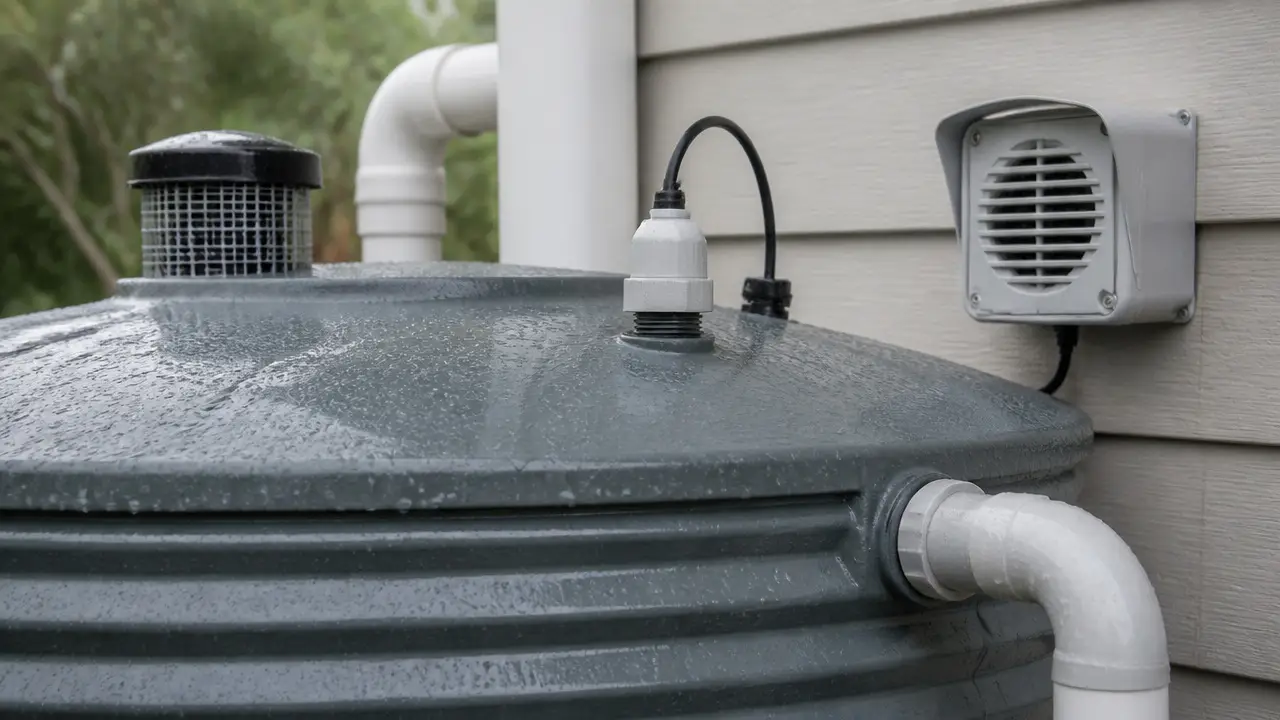
If your gutters feed a rain barrel, IBC tote, cistern, or other rainwater storage tank, cleaning should focus on removing contamination before it enters storage.
A practical cleaning setup is:
- Disconnect or divert the downspout from the storage system if your setup allows it.
- Remove large debris with a scoop, vacuum, or other suitable tool.
- Clear debris around the downspout outlet.
- Rinse the gutter gently.
- Confirm that the downspout drains freely.
- Clean gutter screens, inlet screens, and first-flush components as needed.
- Reconnect the collection system only after dirty cleaning water has cleared.
Do not intentionally flush gutter sludge into your rain barrel or tank. Organic material can settle in storage and increase cleaning needs.
Cleaning gutters also does not make collected rainwater automatically safe to drink. Drinking-water use requires a suitable collection system, proper treatment, maintenance, current water testing, and compliance with applicable local requirements.
Check the Downspout While You Clean
A clean gutter does little good if the downspout is blocked.
Explore ladder-free gutter-cleaning equipment to compare debris control at gutter outlets and downspout entries.
After removing gutter debris, run a modest amount of water toward the outlet. It should drain without backing up.
If it does not, the blockage may be inside the downspout.
Loose material near the opening can sometimes be removed by hand or with a suitable tool while working from a safe position. A garden hose may clear some soft blockages.
Stop if clearing the blockage would require unsafe roof access, risky ladder positioning, disassembling inaccessible sections, or working near electrical lines.
Avoid Pushing Debris Into the Downspout
One common mistake is using water to wash everything toward the outlet.
That can turn a simple gutter-cleaning job into a clogged-downspout job.
Remove leaves, twigs, mud, and sediment first. Use water mainly for the final rinse and flow check.
This is even more important when the downspout feeds a rainwater harvesting system.
Gutter Cleaning Safety Matters More Than the Tool
Falls are a much greater concern than choosing between a scoop and a brush.
Whenever possible, use a tool that lets you work safely from the ground.
If a ladder is necessary, follow the ladder manufacturer's instructions. Use firm, level footing and avoid overreaching. Do not climb onto a wet, steep, damaged, or otherwise unsafe roof just to clean a gutter.
Be especially cautious around overhead electrical lines.
For tall buildings, difficult rooflines, unstable ground, or gutters that cannot be reached safely, professional gutter cleaning may be the better option.
How Often Should Gutters Be Cleaned?
There is no single schedule that fits every property.
Check gutters more often if your roof is near:
- Trees that drop leaves
- Pine trees
- Heavy pollen
- Seed-producing trees
- Moss or roof debris
Rainwater harvesting systems may also need more frequent inspection because gutter debris can affect screens, first-flush devices, downspouts, and stored water quality.
A useful time to inspect the system is before a rainy season and after periods of heavy leaf or seed fall.
Signs Your Gutters Need Cleaning
You may need to clean or inspect the gutters if you notice:
- Water spilling over the gutter edge
- Slow drainage
- Plants growing in the gutter
- Visible leaves or sediment
- Water backing up near the downspout
- Reduced flow into a rainwater tank
- Frequent blockage of inlet screens
- Heavy sediment entering prefilters
Overflow does not always mean the gutter is dirty. Gutters can also overflow because of poor slope, undersized drainage, damaged sections, or rainfall that exceeds the system's drainage capacity.
Best Tool for Different Situations
For a typical one-story gutter with wet debris, a plastic gutter scoop is hard to beat.
For gutters that can be cleaned safely from the ground, a telescoping vacuum or gutter-cleaning attachment can reduce the need for ladder work.
For loose dry leaves, a blower attachment can be fast.
For the final cleanup, a garden hose is useful after the bulk debris has already been removed.
The important part is not having the most powerful tool. It is getting the debris out of the gutter safely without sending it into the downspout or rainwater tank.
Frequently Asked Questions
What is the easiest tool for cleaning gutters?
A plastic gutter scoop is one of the easiest tools for removing wet leaves, mud, and other packed debris. If you want to work from the ground, a telescoping gutter vacuum or cleaning attachment may be easier and safer.
Can I clean gutters with just a garden hose?
A hose can remove light dirt, but it is not ideal for heavy debris. Remove leaves, twigs, and mud first so they do not clog the downspout.
Is a leaf blower good for gutter cleaning?
A leaf blower works well on loose, dry leaves. It is much less effective on wet leaves and sediment. Avoid blowing debris into a downspout connected to a rainwater tank.
Should I pressure wash my gutters?
Usually, no. A pressure washer is more powerful than most gutter cleaning jobs require. A scoop followed by a gentle hose rinse gives better control and is less likely to force water or debris where it should not go.
How do I clean gutters without a ladder?
Telescoping gutter vacuums, blower attachments, brushes, and water-fed cleaning wands can often be used from the ground. Their effectiveness depends on gutter height and the type of debris.
Should I disconnect my rain barrel before cleaning the gutters?
If your system allows it, diverting dirty cleaning water away from the rain barrel or storage tank is a good practice. This keeps gutter sludge and rinse water out of storage.
What should I do if the gutter is clean but still overflows?
Check the downspout for a blockage. Also look for poor gutter slope, damaged sections, restricted outlets, or drainage capacity that is too small for heavy rainfall. Difficult repairs or high-access work may require a qualified professional.