As an affiliate, we may earn a commission from qualifying purchases. We get commissions for purchases made through links on this website from Amazon and other third parties.
Gutter cleaning tools really do work, but they do not all work equally well for every gutter. A long-handled scoop may handle loose leaves well. A vacuum attachment can remove dry debris without spraying it around. Water-powered tools can clear lighter buildup, but they can also make a mess or push debris into a downspout.
For most homes, the best gutter cleaning tool is the one that removes debris while letting you stay safely on the ground. If you have packed mud, heavy roof grit, blocked downspouts, gutter guards, or hard-to-reach roof sections, a simple tool may not be enough.
What Gutter Cleaning Tools Can Actually Do
A useful gutter cleaning tool should do at least one of these jobs:
- Pull leaves and twigs out of the gutter.
- Break up loose debris.
- Vacuum dry material from the gutter.
- Rinse fine dirt toward a drain point.
- Reach gutters without requiring you to climb onto the roof.
These tools can make regular maintenance much easier. They work best when gutters are cleaned before leaves and dirt turn into a heavy, wet layer.
They are less effective when debris has been sitting for months or years. Wet leaves can form a dense mat. Roof granules, soil, moss, seeds, and decomposed leaves can create mud that sticks to the bottom of the gutter.
In those cases, you may still need a scoop, brush, or professional cleaning.
Which Types of Gutter Cleaning Tools Work Best?
Extension-Pole Scoops and Brushes
These are simple tools mounted on a long pole. Some have curved heads that reach over the gutter edge.
They work well for:
- Loose leaves
- Pine needles
- Small twigs
- Light sediment
- Regular maintenance
Their main advantage is that you can often work from the ground.
The downside is visibility. You may not be able to see what remains inside the gutter. A tool can also push debris toward the downspout instead of removing it.
If you use one, pull debris out of the gutter rather than simply moving it along the channel.
Gutter Vacuum Attachments
Gutter vacuum systems use long tubes connected to a suitable wet/dry vacuum or dedicated vacuum system.
They can work very well on dry material such as:
- Leaves
- Seed pods
- Pine needles
- Small twigs
- Loose roof grit
Vacuuming also avoids washing large amounts of debris into a downspout.
Wet, packed material is harder. A small vacuum may struggle with heavy mud or large wet clumps. Long hoses and tubes can also reduce useful suction.
Check that the vacuum and attachments are intended for the material you are collecting. Do not expose equipment that is not designed for wet use to water.
Garden-Hose Gutter Wands
A gutter wand directs water into the gutter from an extension pole.
These tools are useful for flushing:
- Fine dirt
- Small particles
- Loose sediment
- Remaining material after larger debris has been removed
They are usually better as a finishing tool than as the first cleaning step.
Trying to flush a gutter packed with leaves can push the material directly into the downspout. That may turn an easy gutter cleaning job into a blocked-downspout problem.
Remove large debris first. Then use water to check whether the gutter drains normally.
Leaf-Blower Attachments
Some gutter attachments use curved tubes connected to a leaf blower.
They can be effective when the gutter contains dry leaves and other lightweight debris.
They do not work nearly as well with:
- Wet leaves
- Mud
- Moss
- Heavy sediment
- Material stuck under gutter guards
They can also scatter dirty gutter material over siding, windows, walkways, and landscaping.
For a rainwater collection system, make sure loosened debris does not end up inside the storage tank.
Pressure-Washer Attachments
Pressure can remove stubborn dirt, but more pressure is not automatically better.
A strong water stream can spray dirty material over the roof and building. It may also send a large amount of debris down the downspout at once.
Be careful around gutter seams, aging gutters, screens, downspout connections, and rainwater-system components. These parts may not be designed for aggressive pressure washing.
For normal maintenance, mechanical debris removal followed by a gentle rinse is usually easier to control.
Gutter Cleaning Robots
Small gutter-cleaning machines can move through some open gutters and push debris out.
Their usefulness depends heavily on the gutter layout. They may have trouble with:
- Gutter guards
- Narrow gutters
- Tight corners
- Downspout outlets
- Heavy mud
- Large branches
- Closely spaced roof or gutter hardware
They also do not remove the need to check whether the gutter and downspout actually drain afterward.
Ground-Based Tools Usually Make the Most Sense
A tool that lets you stay on the ground has an important advantage: it reduces the amount of ladder work.
Ladder falls are a real risk both at work and at home. NIOSH lists incorrect ladder setup, poor ladder selection, inadequate inspection, overreaching, carrying objects, and applying excessive force among common causes of ladder incidents.
That matters with gutter cleaning because the job encourages exactly the kind of movements that can make a ladder unstable. You may be reaching sideways, pulling stubborn debris, holding equipment, or moving repeatedly along the edge of a house.
If a ground tool can do the job properly, it is usually the better starting point.
When Gutter Cleaning Tools Do Not Work Well
There are several situations where a basic cleaning tool may not solve the problem.
The Downspout Is Already Blocked
A clean-looking gutter does not mean the system is clear.
Leaves can become trapped:
- At the gutter outlet
- Inside elbows
- At downspout joints
- Inside underground drain lines
- At screens or diverters
If water backs up when you rinse the gutter, stop adding more water until you find where the restriction is.
Factor in professional gutter-cleaning tools to understand maintenance details that prevent conveyance failures.
Do not keep forcing debris into a blocked pipe.
The Gutter Contains Packed Mud
Once leaves break down, they can form soil-like material. Seeds may even start growing in it.
A blower will usually do little against this material. A vacuum may also struggle if the debris is wet and dense.
Physical removal is normally more effective.
Gutter Guards Limit Access
Gutter guards can reduce the amount of large debris entering a gutter, but they do not make gutters maintenance-free.
Fine material can still collect underneath some guards. Leaves can also pile on top and prevent water from reaching the gutter properly.
A cleaning tool designed for an open gutter may be useless unless the guard can be safely opened or removed.
The Gutter Is Damaged or Poorly Sloped
Cleaning cannot repair a drainage problem caused by the gutter itself.
If water remains after the gutter is clear, possible problems include:
- Sagging gutter sections
- Poor slope toward the outlet
- Loose brackets
- Crushed downspouts
- Misaligned joints
- An undersized or poorly placed outlet
These are repair issues rather than cleaning issues.
How to Tell Whether the Tool Actually Worked
Do not judge the job only by how much debris came out.
After removing the large material, check the full water path.
Water should enter the gutter, move toward the outlet, pass through the downspout, and discharge where intended.
Look for:
- Standing water
- Slow drainage
- Water overflowing the gutter edge
- Leaking seams
- Water backing up near the outlet
- Downspout joints leaking under flow
- Debris collecting on screens
A small amount of water remaining in an imperfect gutter is different from a section that consistently holds a deep pool. Persistent standing water deserves a closer look.
Gutter Cleaning Matters More When You Harvest Rainwater
If your gutters feed a rain barrel, IBC tote, or cistern, gutter maintenance affects more than drainage.
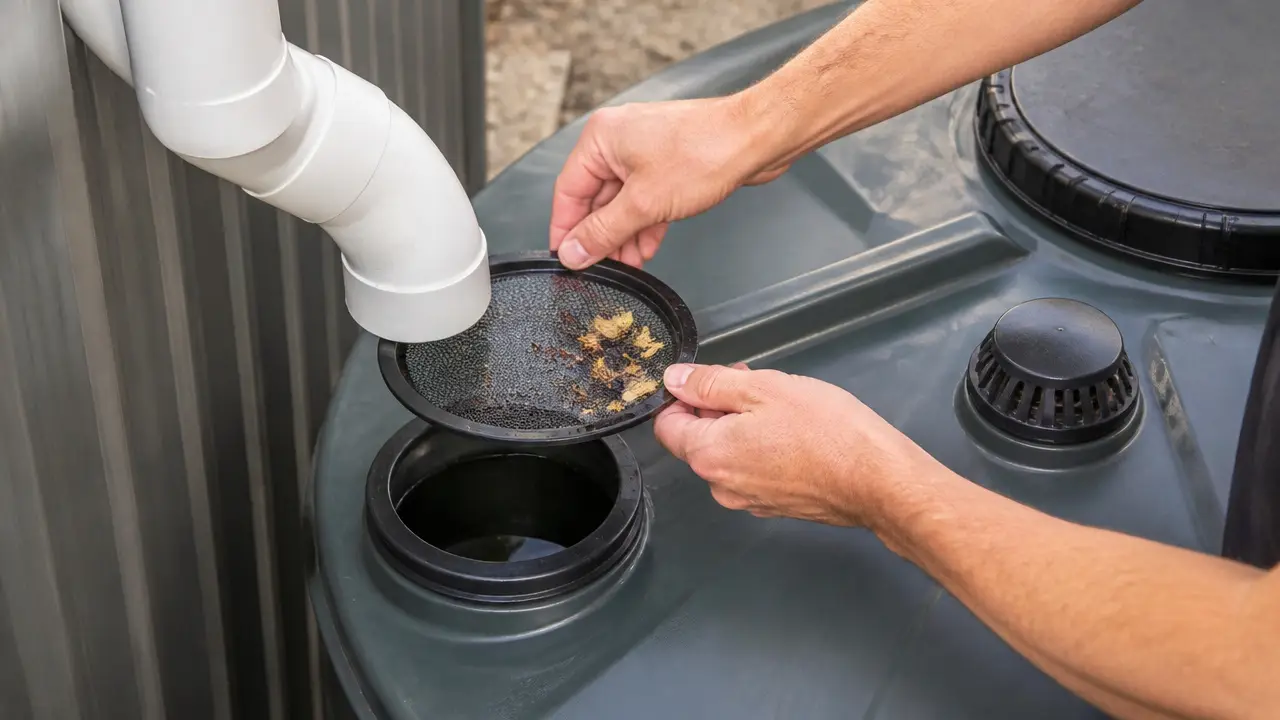
Leaves, pollen, animal waste, roof grit, insects, and other debris can move from the roof into the collection system. Cleaning the gutter reduces the amount of solid material entering later stages, but it does not make roof runoff automatically safe or clean.
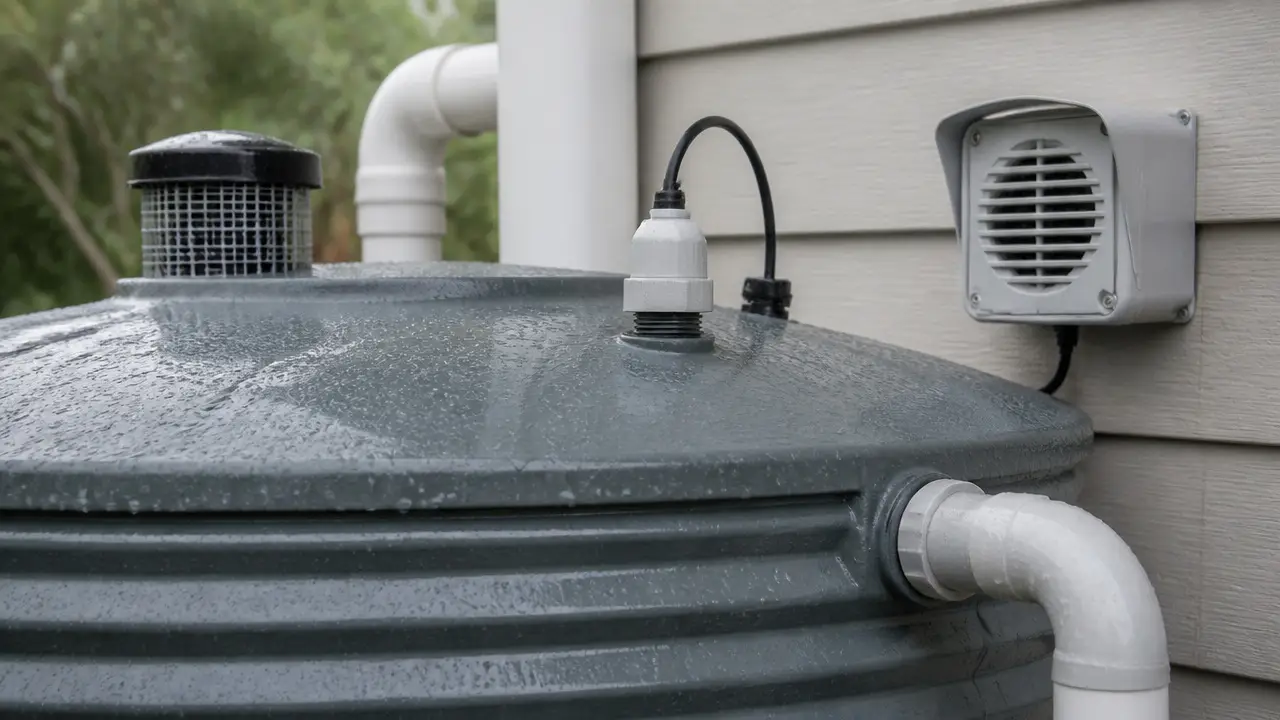
A rainwater system may also include features such as:
- Leaf screens
- Downspout screens
- A first-flush device
- Tank inlet screening
- Sediment control
A first-flush device diverts some of the initial roof runoff away from storage so that part of the material washed from the roof does not immediately enter the tank.
These parts still need maintenance. A freshly cleaned gutter will not help much if the leaf screen or first-flush outlet is blocked.
For drinking-water use, gutter cleaning is only one part of a much larger water-safety system. Suitable collection surfaces, prefiltration, appropriate treatment, current laboratory testing, regular maintenance, and applicable local requirements all matter.
A Practical Way to Clean Gutters
For routine maintenance, a simple order usually works well.
- Remove large debris first. Use a scoop, brush, vacuum, or other suitable tool rather than washing piles of leaves into the downspout.
- Clear the outlet area. Debris often collects where the gutter meets the downspout.
- Check accessible screens. Clean leaf screens, rainwater diverters, and other parts that have collected debris.
- Use a small amount of water to test drainage. Watch where the water goes rather than assuming the downspout is open.
- Check the discharge point. Make sure water exits normally and is not backing up elsewhere.
- Inspect for standing water and leaks. Cleaning will sometimes reveal a gutter slope or connection problem that debris had hidden.
For a rainwater harvesting system, keep the storage inlet isolated if the cleaning process is likely to send dirty wash water or a large amount of loosened debris toward the tank.
Be Careful With Ladder-Based Cleaning
Sometimes a ground-based tool cannot reach the gutter properly.
If a ladder is required, use a ladder suitable for the job and inspect it before use. Set it on firm, level footing and avoid reaching beyond the side rails. OSHA guidance for extension ladders uses roughly a 1-to-4 setup ratio: the base is about one foot away from the support for every four feet of working ladder length.
The U.S. Consumer Product Safety Commission also advises placing ladder feet on solid, level ground for tasks such as gutter cleaning and keeping ladders away from power lines and live wires.
Do not climb onto a roof simply because a gutter tool cannot reach a difficult section. Steep roofs, high gutters, unstable ground, nearby electrical lines, and difficult access are good reasons to use a qualified professional instead.
Are Gutter Cleaning Tools Worth Using?
Yes. For normal residential maintenance, gutter cleaning tools can save a lot of effort.
They work especially well when:
- You clean gutters regularly.
- Debris is still loose.
- You choose a tool suited to the debris.
- You can reach the gutter safely from the ground.
- You remove large debris before flushing.
- You check the downspout afterward.
They are less useful when the gutter contains packed mud, has hidden blockages, sits several stories high, has complicated guards, or needs repairs.
For most homeowners, there is no need for an elaborate cleaning system. A simple ground-based tool that safely removes the type of debris you actually have is often the most practical choice.
Frequently Asked Questions
Can you really clean gutters from the ground?
Yes. Extension-pole scoops, brushes, vacuums, blowers, and water wands can clean many one-story gutters from the ground. Results depend on gutter height, roof shape, debris type, landscaping, and how clearly you can reach the gutter.
Do gutter cleaning wands work?
Yes, especially for rinsing fine material after leaves and twigs have been removed. They are less suitable for flushing a gutter that is already packed with debris because the material may clog the downspout.
Is a gutter vacuum better than a gutter blower?
Neither is always better. Vacuums are useful when you want to collect dry debris instead of scattering it. Blowers can remove light, dry leaves quickly. Both become less effective as debris gets wetter and heavier.
Should I pressure wash inside my gutters?
High pressure is usually unnecessary for normal gutter maintenance. It can create considerable spray and may put unnecessary force on seams, screens, connections, and older gutter materials. Removing debris mechanically and then rinsing gently is normally easier to control.
How often should gutters be cleaned?
There is no single schedule that works for every property. Check them often enough to prevent significant buildup. Homes near trees may need attention much more often than homes with little nearby vegetation. Also inspect the system after major leaf fall or storms that deposit large amounts of debris.
Do gutter guards eliminate the need for cleaning?
No. They can reduce large debris entering the gutter, but leaves and fine particles may still collect on top or underneath them. Gutters, outlets, and guards should still be checked for proper drainage.
Should gutters feeding a rain barrel be cleaned differently?
The basic cleaning process is similar, but avoid sending the loosened debris and dirty cleaning water directly into the barrel. Check inlet screens, first-flush components, and other prefiltration parts at the same time. Gutter cleaning improves system maintenance but does not by itself make collected rainwater safe for drinking.