As an affiliate, we may earn a commission from qualifying purchases. We get commissions for purchases made through links on this website from Amazon and other third parties.
For most homes, the best gutter cleaner you can use from the ground is a lightweight telescoping gutter-cleaning wand with a curved or adjustable head. It connects to a garden hose and lets you flush leaves, dirt, and small debris without climbing onto the roof.
A gutter vacuum is often better for thick, packed debris because it removes the material instead of washing it toward the downspout. A blower attachment can work well for dry leaves, but it is less useful for wet sludge.
For a rainwater harvesting system, the goal is not just to make the gutter look clean. You also want to keep leaves, animal waste, roof grit, and other debris from being washed into your barrel or tank.
What Makes a Good Ground-Based Gutter Cleaner?
The best tool should let you reach the gutter while keeping both feet on the ground. It should also be easy enough to control when fully extended.
Look for these features:
- Enough reach for your gutter height
- A lightweight pole
- A curved or adjustable cleaning head
- Good control when the pole is extended
- Connections that fit your hose, vacuum, or blower
- Replaceable or removable attachments
- A design that can reach around the gutter edge
Longer is not always better. A very long pole may reach a second-story gutter but become difficult to control.
Measure from the ground to the gutter before choosing a tool. Remember that the listed pole length and the actual working reach may not be the same.
The Best All-Around Choice: A Telescoping Water Wand
A telescoping water-fed gutter wand is a good choice for routine cleaning on many homes.
The pole extends upward, while a curved nozzle reaches over the gutter edge. Water from a garden hose loosens and pushes out small leaves, dirt, pollen, and roof grit.
This type works especially well when:
- You clean your gutters regularly.
- Debris has not formed a thick layer.
- You have normal water pressure.
- Your gutters are reasonably easy to reach.
- You want a simple tool without a motor.
An adjustable nozzle is useful because gutter shapes and roof edges vary. Being able to point the water along the gutter instead of straight downward usually makes cleaning easier.
The main drawback is that water does not remove debris from the property. It moves it somewhere else. Leaves and sludge may travel toward the downspout or spill over the gutter edge.
Be Careful With Rainwater Tanks
If the gutter feeds a rain barrel, IBC tote, or cistern, do not simply wash all the dirty gutter water into storage.
Disconnect or divert the collection system before cleaning. Remove the debris first, flush the gutter and downspout, and reconnect the system only after the dirty water has cleared.
Roof runoff can carry germs, chemicals, bird droppings, dirt, and other contaminants. The CDC recommends maintaining the roof-water collection system and notes that a first flush diverter can help send the dirtier first portion of runoff away from storage. A first flush diverter is a device that temporarily directs the first water from a storm away from the tank.
When a Gutter Vacuum Is Better
A ground-based gutter vacuum is often the better tool when gutters contain a thick layer of leaves, pine needles, seed pods, or damp organic material.
These systems use long hollow poles connected to a wet/dry vacuum or purpose-built gutter vacuum. The curved end reaches into the gutter and sucks debris downward.
The big advantage is that you remove the dirt instead of pushing it toward the downspout.
That can be especially useful for rainwater harvesting because fewer solids are left to enter:
- Downspout screens
- First flush devices
- Inlet filters
- Rain barrels
- Storage tanks
Gutter vacuums also make it easier to clean when you do not want large amounts of wash water around the house.
The tradeoff is complexity. Long vacuum poles can become awkward, particularly when wet debris begins collecting inside them. You also need enough suction and airflow for the pole length and debris being removed.
A small household vacuum with a very long extension may not perform well simply because the connection fits.
What About Leaf Blower Gutter Attachments?
Some leaf blowers can use extension tubes that curve over the gutter.
They can be very effective when the gutter contains dry, loose leaves.
They are less effective against:
- Wet leaves
- Mud
- Moss
- Packed needles
- Roof granules mixed with sludge
- Material stuck around downspout openings
Blowers also scatter debris. Wear eye protection and keep other people away from the work area.
The U.S. Consumer Product Safety Commission recommends eye protection when working around flying debris and advises keeping children and pets away from power equipment.
For a rainwater harvesting system, a blower can be useful for removing dry debris before you flush the gutter with water.
Water Wand vs. Vacuum vs. Blower
| Ground-based cleaner | Best for | Main limitation |
|---|---|---|
| Telescoping water wand | Routine dirt and light debris | Can wash debris into downspouts |
| Gutter vacuum | Heavy or damp debris | Bulkier and needs strong suction |
| Blower extension | Dry loose leaves | Poor on wet or packed material |
| Telescoping brush or scoop | Small problem areas | Slow for long gutter runs |
For most homeowners, a water wand is the simplest starting point.
If your gutters frequently fill with thick organic material, a vacuum system is usually a better match.
Choose the Tool Based on Gutter Height
Before buying any extension system, measure the approximate gutter height.
A one-story gutter is much easier to clean from the ground than a high second-story gutter. As a pole gets longer, leverage works against you. Even a fairly light attachment can feel heavy when it is several yards above your hands.
A suitable tool should reach the gutter without requiring you to:
- Stand on a chair or box.
- Lean far backward.
- Hold the pole directly under power lines.
- Stretch beyond your comfortable control.
- Combine extensions that were not designed to work together.
If you cannot safely control the tool from the ground, the fact that it technically reaches the gutter does not make it a good choice.
Watch for Overhead Power Lines
Long gutter-cleaning poles can create an electrical hazard around overhead wiring.
Check the whole working area before extending the pole. Do not assume a power line is insulated simply because it has a coating.
The CPSC warns that contact between ladders and overhead electrical wiring can cause electrocution. The same basic hazard should be taken seriously when handling any long cleaning pole near electrical lines.
If the gutter is close to electrical service equipment or overhead wires, have the cleaning handled by an appropriate professional rather than trying to work around the hazard.
Clean the Downspout Too
A clean gutter does not help much if the downspout is blocked.
After removing loose material, check whether water can move freely through each downspout. A slow drain may indicate debris around an elbow, screen, diverter, or outlet.
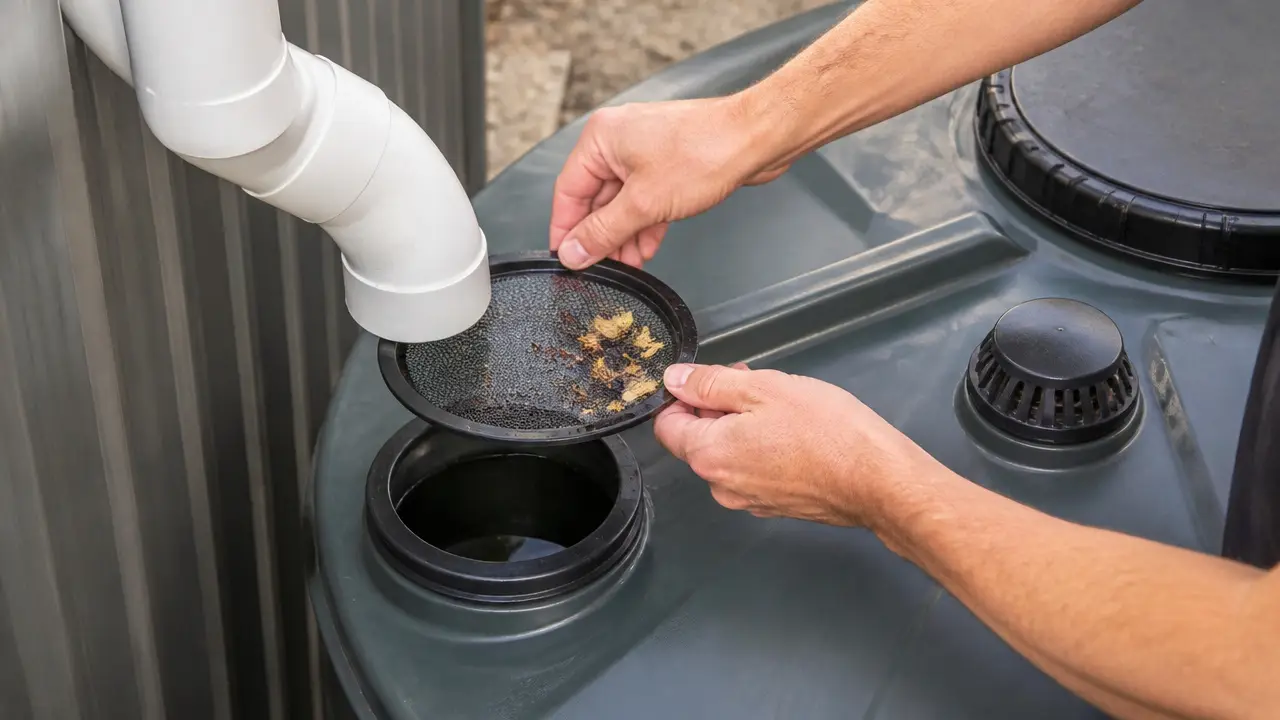
With a rainwater collection system, pay particular attention to:
- Downspout screens
- Leaf guards
- First flush chambers
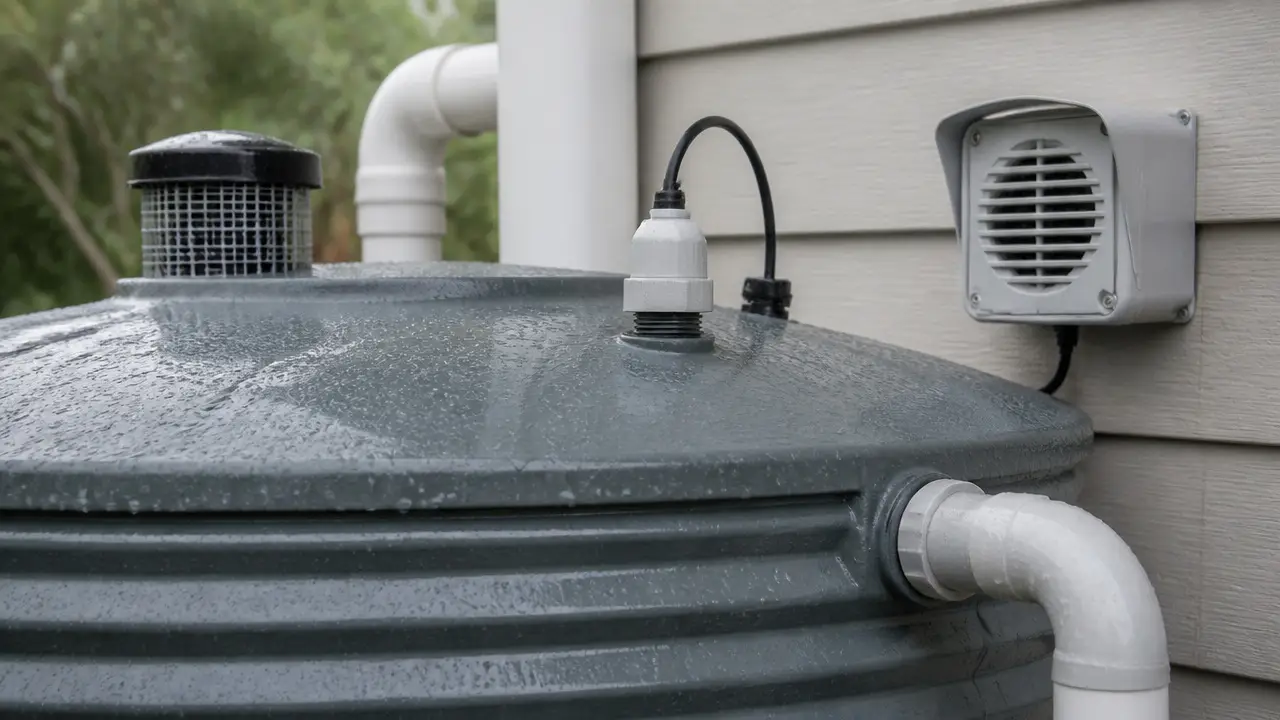
- Tank inlet strainers
- Overflow screens
These parts often collect debris before the tank does, which is exactly what they are supposed to do. That also means they need regular cleaning.
CDC guidance recommends keeping rainwater collection systems clean and repairing or replacing damaged parts.
Gutter Guards Do Not Eliminate Cleaning
Evaluating practical considerations for there a wet and dry vacuum that can be used for gutter cleaning helps assess screening and conveyance for anticipated storm conditions.
Gutter guards can reduce the amount of large debris entering the gutter, but they do not make the system maintenance-free.
Fine material can still collect around or beneath a guard, including:
- Roof grit
- Pollen
- Dust
- Small seeds
- Pine needles
- Organic sludge
Some ground-based cleaning attachments also cannot reach through certain gutter guards.
If your gutters have guards, check how they are installed before choosing a tool. Spraying water over a solid cover may accomplish very little, while a vacuum nozzle may not fit into the openings.
How to Clean Rainwater Gutters From the Ground
For a basic ground-level cleaning, work in an order that keeps dirty runoff out of storage.
1. Isolate the rainwater storage system
Divert the downspout away from the tank or barrel before cleaning.
Do not use the storage tank as the place where gutter-cleaning water goes.
2. Remove large debris first
Use a vacuum, blower, or suitable telescoping tool to remove leaves and other large material.
Removing solids before flushing reduces the chance of clogging a downspout.
3. Flush the gutter
If using a water wand, direct water along the gutter toward a safe discharge point.
Watch how quickly the water drains. Standing water may indicate a blockage or a gutter that is not draining properly.
4. Check the downspout
Make sure water moves through the downspout without backing up.
Clean accessible screens and filters separately.
5. Let the dirty water clear
Continue diverting runoff until loose debris and dirty wash water have left the system.
6. Reconnect the collection system
Reconnect the barrel or tank after the catchment path is clean and working normally.
If you use a first flush system, inspect and maintain it at the same time.
Do You Need a Pressure Washer?
A pressure washer is usually unnecessary for routine gutter maintenance.
High-pressure water can create more splash, send debris farther, and may damage some gutter finishes, seals, roofing edges, or nearby materials if used incorrectly.
A normal hose-fed gutter wand usually provides enough force for loose debris.
If material is so firmly attached that ordinary flushing cannot remove it, the problem may need closer inspection rather than simply more pressure.
Being on the Ground Does Not Remove Every Risk
Ground cleaning avoids many of the risks that come with climbing a ladder, but you still need to pay attention to what is above you.
Wear eye protection. Leaves, grit, dirty water, and small objects can fall directly toward you.
Also avoid standing directly below the section you are cleaning. Work from an angle when the tool allows it.
If gutter damage, roof damage, loose fasteners, large branches, electrical hazards, or inaccessible blockages are visible, stop cleaning and have the problem inspected.
If ladder work becomes necessary, the CPSC recommends stable, level placement, a spotter, and keeping ladders away from electrical wires.
What Is Best for a Rainwater Harvesting System?
For a rainwater system, a useful combination is often:
- A ground-based vacuum or blower for large debris
- A telescoping water wand for the final flush
- A maintained leaf screen or inlet screen
- A properly sized first flush system where appropriate
This approach removes solids before washing the catchment surface clean.
Regular gutter cleaning can improve the condition of collected water, but it does not make roof runoff automatically safe to drink. Even clear rainwater can contain germs and chemicals. Drinking-water use requires suitable collection materials, treatment, maintenance, current water testing, and compliance with applicable local requirements.
Frequently Asked Questions
What is the easiest gutter cleaner to use from the ground?
For routine cleaning, a lightweight telescoping water-fed wand with a curved or adjustable nozzle is usually the easiest option. It needs little setup and can handle loose leaves, dirt, and roof grit.
Can you completely clean gutters without a ladder?
Often, yes, especially on one-story homes with accessible gutters. However, ground tools cannot always reveal damaged hangers, hidden blockages, gutter corrosion, or problems beneath gutter guards. Some situations still require professional inspection.
Is a gutter vacuum better than a water wand?
A vacuum is better for removing thick, wet, or packed debris. A water wand is simpler for routine flushing and light dirt. For heavily wooded properties, a vacuum may be the more useful primary tool.
Can I use a leaf blower to clean gutters from the ground?
Yes, if the blower has a compatible gutter extension and the debris is mostly dry and loose. A blower is much less effective on wet leaves, mud, or compacted debris.
Should I disconnect my rain barrel before cleaning gutters?
Yes. Divert dirty cleaning water away from the rain barrel or tank. Flush the gutter and downspout before reconnecting the collection system.
How often should rainwater collection gutters be cleaned?
There is no single schedule that fits every property. Check them more often when trees overhang the roof, after heavy leaf fall, after storms, or whenever water begins overflowing or slowing at the downspout. Rainwater systems also need regular cleaning of screens and other collection components.
Will clean gutters make collected rainwater safe to drink?
No. Cleaning reduces debris but does not establish that rainwater is potable, meaning safe for drinking. Roof runoff may still contain harmful germs or chemicals. Drinking-water systems require appropriate collection, treatment, testing, maintenance, and attention to local health requirements.