As an affiliate, we may earn a commission from qualifying purchases. We get commissions for purchases made through links on this website from Amazon and other third parties.
The best filter for tank water depends on what you plan to do with the water. For a rainwater tank used for garden watering, a simple screen and sediment filter are often enough. For water used inside a home, you may need finer filtration and other treatment. If you plan to drink the water, no single filter should be treated as a complete solution.
Rainwater can pick up dirt, bird droppings, germs, metals, and other contaminants from the roof, gutters, pipes, and tank. The CDC advises matching treatment to the contaminants present and regularly testing rainwater that is used for drinking, cooking, or bathing.
The Best Filter Depends on How You Use the Tank Water
A good tank-water system starts by choosing treatment for the intended use.
| Tank water use | Typical filtration approach |
|---|---|
| Garden watering | Inlet screen plus coarse sediment filtration if needed |
| Drip irrigation | Screen plus sediment filter sized to protect emitters |
| Outdoor washing | Screen and sediment filtration |
| Toilet flushing | Sediment filtration; additional treatment may be required locally |
| Laundry or household reuse | Finer sediment filtration and treatment suited to water quality |
| Drinking and cooking | Multi-stage treatment based on testing, plus disinfection and ongoing monitoring |
The key point is that more filtration is not automatically better. A very fine filter may clog quickly if leaves, grit, and sediment are not removed first.
For Most Rainwater Tanks, Start With Sediment Control
For ordinary non-potable tank water, sediment control is usually the most useful type of filtration.
A sediment filter catches solid material such as:
- Sand
- Rust
- Grit
- Small pieces of leaves
- Roof debris
- Sediment stirred up from the tank bottom
This helps protect pumps, valves, hoses, irrigation equipment, and later treatment stages.
A sediment filter does not necessarily remove harmful germs or dissolved chemicals. The CDC notes that different filters remove different contaminants, and many common household filters are not designed to remove germs.
What Does Micron Rating Mean?
A micron rating describes the size of particles a filter is designed to catch. One micron is one-thousandth of a millimeter.
A lower micron number means finer filtration.
For example, a coarse filter can catch larger grit while allowing tiny particles through. A much finer filter catches smaller material but usually creates more resistance to water flow and may clog faster.
Do not choose the smallest micron number just because it sounds better. Choose filtration that gives your equipment the protection it needs without causing unnecessary pressure loss or frequent filter changes.
A Better Setup Uses Several Barriers
The filter beside the tank should not have to catch everything coming off the roof.
A practical rainwater system removes debris in stages.
1. Keep Large Debris Out
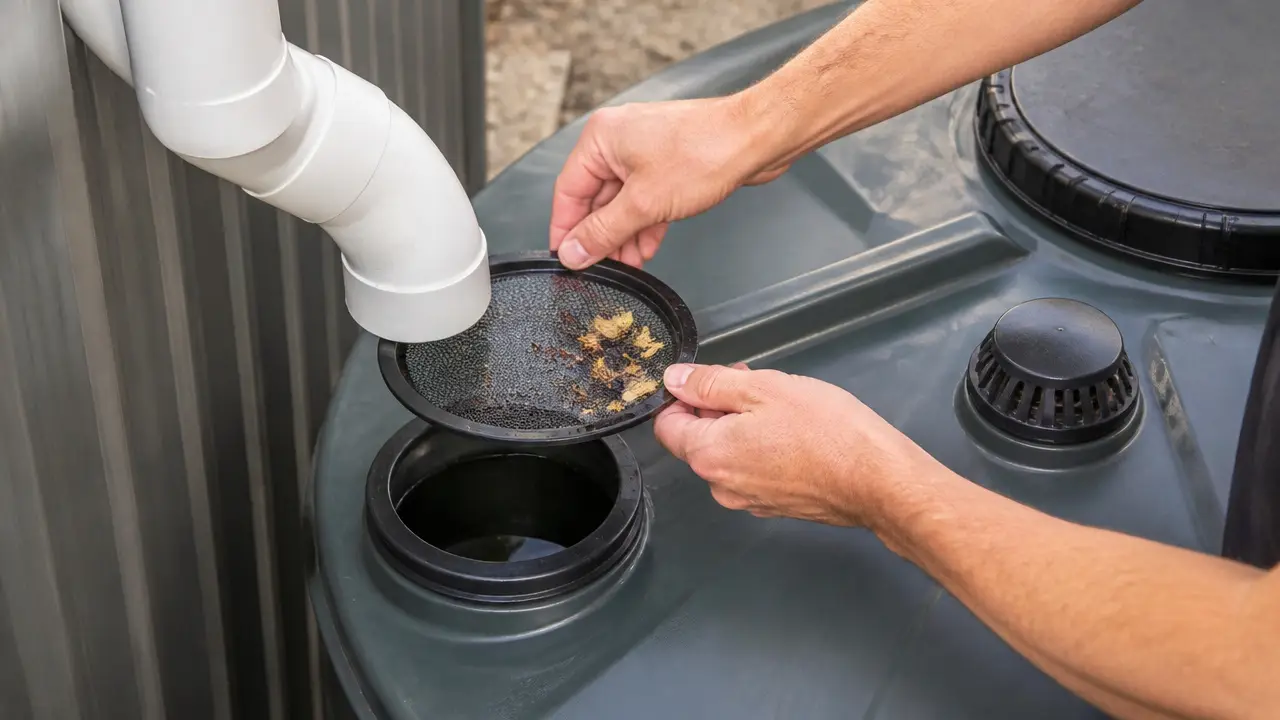
Use suitable gutter guards or inlet screens to stop leaves, insects, and larger debris before they enter the tank.
Screens also help keep mosquitoes from entering stored rainwater. The CDC recommends screening rainwater collection openings as part of good system management.
2. Consider a First Flush Diverter
A first flush diverter sends the first portion of roof runoff away from the tank.
That early runoff can carry a heavier load of dust, dirt, bird waste, and other material that collected on the roof between storms.
A first flush system does not make rainwater safe to drink. It simply reduces some of the contamination reaching the tank. The CDC recommends considering one as a way to improve collected rainwater quality.
3. Let the Tank Help With Settling
Heavy particles often settle toward the bottom of a rainwater tank.
Where practical, avoid drawing water directly from the sediment layer. Tank design, outlet position, and regular cleaning can help reduce the amount of settled material entering your filter and pump.
4. Add a Serviceable Sediment Filter
Install the sediment filter where you can inspect and clean or replace it.
A filter that is difficult to reach often gets neglected. As dirt builds up, flow can fall and a pump may have to work harder.
If you use a pump, confirm that the filter housing and connections can handle the system's pressure and flow.
What Is Best for Garden Irrigation?
For basic garden watering, you usually do not need extremely fine filtration.
The main goals are to keep:
- Leaves out of the tank
- Grit out of valves
- Sediment out of hoses
- Debris out of irrigation equipment
A washable screen or sediment filter can work well because it can be cleaned instead of being discarded every time it loads with dirt.
Drip irrigation needs more attention. Small emitter passages can clog easily. Check the irrigation equipment's filtration requirements and choose the filter around those requirements rather than selecting an arbitrary micron rating.
Flow rate matters too. A filter that is too small can restrict water even when it is clean.
What Is Best for a Pumped Tank System?
A pumped rainwater system usually benefits from filtration that protects the pump and anything downstream without starving the pump of water.
The exact arrangement depends on the pump design.
Some systems use coarse screening before the pump and finer filtration after it. Others use a suitable prefilter on the suction side. Excessive restriction before a pump can cause poor performance and may contribute to pump problems.
Check:
- Pump manufacturer's requirements
- Filter maximum flow
- Connection size
- Pressure rating
- Expected water demand
- How the filter will be cleaned
- Whether the pump has dry-run protection
Do not assume that reducing a large pipe down to a small filter connection will have no effect on performance.
What About Carbon Filters?
An activated carbon filter can be useful when you need to address certain tastes, odors, or chemicals.
Planning around practical considerations for there a filter for rainwater helps verify what the measured values reveal and what remains uncertain.
It should not normally be the first filter taking dirty rainwater straight from a tank.
Sediment can quickly foul carbon media. A sediment stage placed before it usually helps the carbon stage work more effectively.
More importantly, carbon filtration alone should not be used as proof that rainwater is safe to drink. The CDC notes that many carbon-based household filters are primarily intended to improve taste or remove selected chemicals rather than provide complete protection from germs.
What Filter Should You Use for Drinking Tank Water?
If the tank contains harvested rainwater and the water will be consumed, think in terms of a treatment system, not a single filter.
Rainwater that looks clear can still contain harmful germs or chemicals. The CDC recommends regular testing when collected rainwater is used for drinking, cooking, or bathing.
A drinking-water system may involve several steps, such as:
- Keeping contaminants out of the collection system.
- Removing leaves and larger debris.
- Diverting dirty initial roof runoff where appropriate.
- Removing sediment.
- Using treatment selected for identified chemical concerns.
- Providing effective microbial treatment or disinfection.
- Testing the finished water.
- Maintaining every treatment stage on schedule.
Filtration and disinfection perform different jobs. Public drinking-water treatment systems commonly use several treatment processes rather than relying on one filter.
Even very fine filtration has limits. For example, the CDC explains that microfiltration can remove parasites and some bacteria but does not reliably remove viruses or dissolved chemicals such as lead and arsenic.
WHO drinking-water guidance also takes a whole-system approach, managing risks from the water source through treatment and delivery rather than judging safety from one piece of equipment.
For drinking-water use, work with your local health authority or a qualified water-treatment professional. Use current laboratory testing to identify relevant microbial and chemical risks and select treatment designed for them.
Do Not Forget Filter Flow Rate
Micron rating gets a lot of attention, but flow rate is just as important.
Flow rate tells you how much water can pass through the filter over a given time.
If a pump can supply more water than the filter can comfortably pass, you may notice:
- Low pressure
- Weak hose flow
- Poor irrigation performance
- Rapid pressure drop as the filter gets dirty
- Unnecessary load on the pump
Choose a filter and housing large enough for the expected peak flow, not just the average amount of water you use.
Match the Connections to the Rest of the System
Before buying or installing any tank filter, check the plumbing.
Look at:
- Tank outlet size
- Pipe or hose diameter
- Thread type
- Pump inlet and outlet sizes
- Filter connection size
- Shutoff valve locations
- Space needed to remove the filter for cleaning
Avoid creating a severe bottleneck with a small filter or fitting in an otherwise large water line.
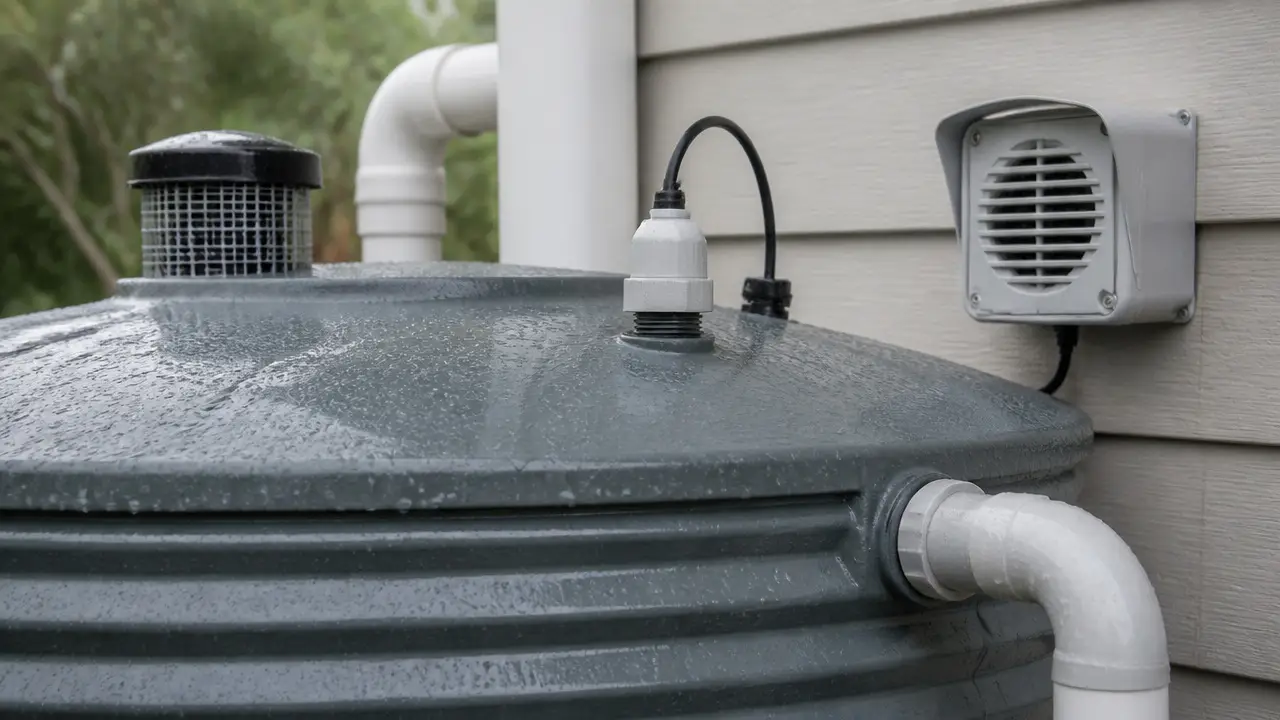
If you are connecting through the wall of a tank, the fitting that forms the sealed connection is often called a bulkhead fitting. Make sure any fitting, seal, hose, or pipe is suitable for the tank material and intended water use.
Maintenance Matters as Much as Filter Choice
Even a well-designed filter stops working properly if it is ignored.
Check filters regularly, especially after heavy rain or long dry periods followed by rain.
Depending on the system, maintenance may include:
- Cleaning inlet screens
- Emptying first flush devices
- Washing reusable filter screens
- Replacing cartridges
- Checking filter housings for leaks
- Removing accumulated tank sediment when necessary
- Inspecting gutters and roof collection areas
- Checking overflow screens
- Inspecting pumps and valves
A sudden drop in flow is often a sign that a filter needs attention.
For drinking-water treatment systems, follow the treatment equipment's maintenance schedule carefully. Germs can grow in poorly maintained filters and treatment equipment.
A Simple Way to Choose
For most rainwater tanks, choose the filter by working backward from the water use.
If you are watering a garden, focus on keeping debris and sediment away from your plumbing and irrigation equipment.
If you have drip irrigation, match the filter to the emitter manufacturer's filtration requirement.
If you are supplying household fixtures, consider the plumbing, pressure, treatment needs, and local requirements as a complete system.
If you are drinking the water, do not choose a filter based only on micron size or marketing claims. Test the water, identify the risks, and use suitable collection, filtration, treatment, disinfection, maintenance, and verification together.
Frequently Asked Questions
Is a 5-micron filter good for tank water?
A 5-micron sediment filter can be useful as one filtration stage, but it is not automatically the best choice for every tank. It may clog quickly if larger debris and sediment have not already been removed. It also does not by itself establish that water is safe to drink.
Should I filter rainwater before or after the tank?
Ideally, use both debris control before the tank and suitable filtration after storage when your water use requires it. Screens and first flush devices reduce material entering the tank. Downstream filtration protects pumps, plumbing, irrigation equipment, or later treatment stages.
Can a sediment filter make tank water drinkable?
No. A sediment filter mainly removes suspended particles. Drinking-water safety can also depend on bacteria, viruses, parasites, chemicals, collection surfaces, storage conditions, treatment, maintenance, and testing.
Is a carbon filter good for rainwater tanks?
Carbon can help with certain tastes, odors, and chemicals, but it normally works better after sediment has been removed. Carbon alone should not be treated as complete drinking-water treatment.
Do I need a filter for rainwater used on the garden?
A simple system may only need good inlet screening, but additional filtration can protect valves, hoses, sprinklers, and irrigation equipment. Drip systems generally need more controlled filtration because their small emitters are easier to clog.
How often should a tank-water filter be cleaned?
There is no single cleaning interval for every system. Inspect it regularly and clean or replace it when debris builds up or flow begins to fall. Roof condition, rainfall, tank sediment, filter size, and water use can all change how quickly a filter gets dirty.
Can I use the same filter for a pump and drip irrigation?
Sometimes, but only if its flow capacity, pressure rating, connection size, and filtration level suit both systems. Check the pump requirements and the irrigation manufacturer's filtration requirement before choosing the filter.