As an affiliate, we may earn a commission from qualifying purchases. We get commissions for purchases made through links on this website from Amazon and other third parties.
Gutter cleaning vacuums can work well, especially for loose leaves, dry debris, pine needles, and small twigs. They can also let you clean many gutters from the ground instead of climbing a ladder.
But they are not perfect. Wet sludge, packed leaves, roof grit, rooted plants, and debris trapped under gutter guards can be much harder to remove. A vacuum also will not fix a clogged downspout, poor gutter slope, loose brackets, or damaged drainage parts.
How Gutter Cleaning Vacuums Work
A gutter vacuum uses strong airflow to pull debris out of the gutter.
Most systems have:
- A wet/dry vacuum or dedicated gutter vacuum
- Long extension tubes
- An angled nozzle that reaches over the gutter edge
- A collection tank or debris bag
The tubes let you reach gutters from ground level. Some systems use lightweight poles so several sections can be joined together.
The idea is simple: move the nozzle along the gutter and vacuum out the material instead of scooping it by hand.
What Gutter Vacuums Remove Well
Gutter vacuums tend to work best when debris is loose enough to be lifted by airflow.
They are usually effective on:
- Dry leaves
- Small twigs
- Pine needles
- Seeds
- Loose moss
- Insects and nesting material
- Light roof granules
- Small amounts of damp debris
Dry material is usually much easier to remove than heavy, wet material.
If you maintain gutters often, a vacuum can be especially useful because debris has less time to become compacted.
What Gutter Vacuums Struggle With
A vacuum becomes less effective when gutter debris forms a heavy layer.
Common problem materials include:
- Wet leaf sludge
- Mud
- Packed pine needles
- Large sticks
- Thick moss
- Rooted weeds
- Debris frozen inside the gutter
A vacuum may remove the loose material on top while leaving a layer stuck to the bottom.
In those situations, mechanical loosening or flushing may be needed.
Do not use aggressive flushing if you do not know where the downspout drains. Pushing a large amount of debris into a buried drain can create a harder clog farther downstream.
Can a Shop Vacuum Clean Gutters?
A wet/dry shop vacuum can clean gutters when paired with suitable extension tubes and a gutter nozzle.
This can make sense for a one-story home with reasonably accessible gutters.
The main limitation is suction loss.
The longer and narrower the hose or pole system becomes, the harder it can be for the vacuum to move heavy debris. Bends in the tubing also reduce airflow.
A vacuum that works well through a short hose at ground level may perform very differently when connected to a long gutter-cleaning pole.
Make sure the vacuum is designed for any wet material you plan to collect. Never use a dry-only vacuum for wet gutter debris.
Are Gutter Vacuums Better Than Cleaning by Hand?
Neither method is always better.
A gutter vacuum has one major advantage: it may allow much of the work to be done from the ground.
Hand cleaning gives you better control. You can pull out large debris, scrape stuck material, inspect seams, and see problems more easily.
For many homes, the most practical approach is regular ground-based vacuum cleaning with occasional close inspection when safe access is available.
If the roofline is high, steep, difficult to reach, or close to electrical lines, professional gutter cleaning may be the safer choice.
Gutter Vacuums and Rainwater Harvesting Systems
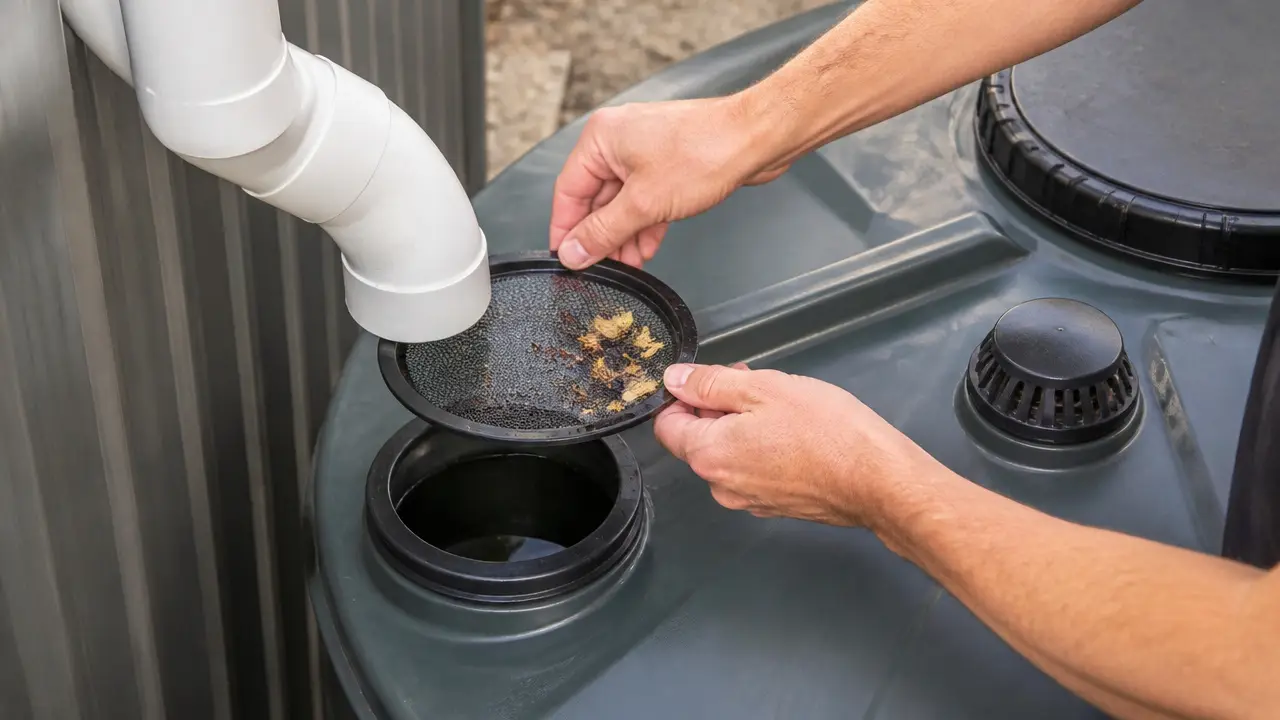
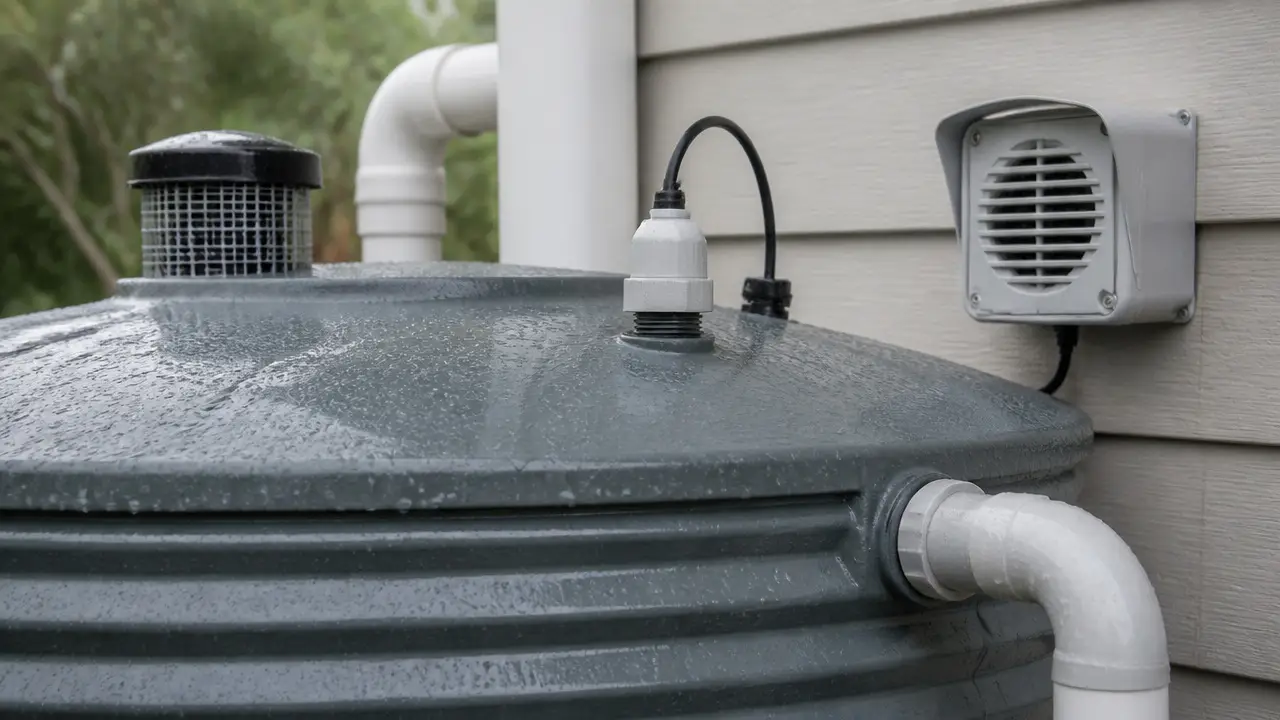
Clean gutters are especially important when roof runoff feeds a rain barrel, IBC tote, or larger cistern.
A gutter vacuum can reduce the amount of leaves and organic material entering the collection system. That helps reduce the load on:
- Gutter screens
- Downspout screens
- First-flush devices
- Tank inlet screens
- Pumps
- Filters
A first-flush device diverts some of the first runoff from a rain event before water enters storage. That early runoff often carries more dust, droppings, pollen, and roof debris.
Gutter cleaning does not make roof runoff safe to drink. Even a visibly clean roof and gutter can contribute microorganisms, animal waste, roofing material residues, and other contaminants.
If collected rainwater is intended for drinking, treat it as a whole-system water-quality issue involving suitable collection surfaces, prefiltration, treatment, maintenance, current laboratory testing, and applicable local requirements.
Can a Gutter Vacuum Clear Downspouts?
Sometimes, but not always.
A vacuum may remove debris sitting near the top of the downspout. It may also pull out a loose blockage if the vacuum can make a good connection.
Deep or tightly packed clogs are different.
Signs of a downspout blockage include:
- Water overflowing near the downspout
- Water sitting in the gutter after rain
- Little or no discharge from the downspout
- Debris packed into an elbow
Do not assume the gutter is clean just because the visible section is empty.
If your downspout connects to buried drainage, rainwater storage, or another pipe system, find out where that line goes before forcing debris through it.
Does Suction Power Matter?
Yes, but suction alone does not determine how well the system works.
Performance also depends on:
- Airflow
- Hose diameter
- Pole diameter
- Tube length
- Number of bends
- Nozzle shape
- Debris weight
- Whether the debris is wet or dry
A very narrow tube may reach easily but clog more often.
A larger tube can pass bigger debris but may be heavier and harder to control.
Use practical considerations for there a wet and dry vacuum that can be used for gutter cleaning to coordinate the influence of roof material on usable rainwater.
For homeowners, practical handling can matter as much as raw vacuum power.
How to Use a Gutter Vacuum More Effectively
Start when conditions are suitable.
If possible, clean loose debris before it turns into wet compost-like material.
Move the nozzle slowly along the gutter instead of sweeping it quickly back and forth. Give the airflow time to pick up the material.
Listen for changes in sound. A sudden drop in airflow can mean the tube is blocked.
Check the collection container regularly. A full vacuum loses effectiveness.
After vacuuming, inspect water flow during the next safe opportunity or rain event. Water should move toward the downspout without overflowing.
Use a Camera If You Are Cleaning From the Ground
One weakness of ground-level gutter cleaning is that you cannot easily see what remains.
Some extension systems can be used with a small camera or inspection device. This can help you find:
- Missed debris
- Standing water
- Loose gutter sections
- Damaged joints
- Plant growth
- Blocked outlets
You do not need a camera for every cleaning job, but some way of checking your work is useful.
A gutter can look clear from below while still containing debris behind the outer edge.
What About Gutter Guards?
A gutter vacuum can still be useful with some gutter guards, but the guard design matters.
You may be able to vacuum debris from the top of screens or mesh without removing them.
However, debris can sometimes collect:
- Under screens
- Around mounting brackets
- Near downspout openings
- In narrow gaps along the roof edge
A vacuum cannot reach material trapped below a sealed guard.
Gutter guards reduce some maintenance. They do not eliminate the need to inspect and clean the gutter system.
When Should You Clean Gutters?
There is no single schedule that fits every property.
Check them more often if the roof is near:
- Deciduous trees
- Pine trees
- Seed-producing trees
- Heavy moss growth
- Bird or animal activity
Also inspect the system after major storms or whenever you notice overflow.
For a rainwater harvesting system, check gutters and inlet screens regularly because even a small buildup of organic material can eventually wash into storage.
Safety Matters More Than Getting Every Leaf
Ground-based gutter vacuums can reduce ladder use, which is one of their biggest benefits.
They do not remove every risk.
Long poles can become awkward, especially when they are wet or extended several stories. Keep poles away from electrical lines and equipment.
Stop if the work requires unsafe roof access, unstable ladder placement, or reaching near overhead electrical conductors.
High roofs, steep slopes, difficult access, damaged gutters, and electrical hazards are good reasons to use a qualified professional.
Are Gutter Vacuums Worth Using?
They can be.
A gutter vacuum makes the most sense when you want to remove loose debris regularly while staying on the ground. It can be especially useful for maintaining gutters that feed a rain barrel or other rainwater storage system.
It is less useful when the gutters have been neglected for years and contain thick mud, rooted plants, or large packed blockages.
Think of a gutter vacuum as a maintenance tool, not a guaranteed solution for every clogged gutter.
Regular cleaning also makes future vacuuming much easier.
Frequently Asked Questions
Do gutter cleaning vacuums really remove wet leaves?
They can remove damp leaves, but very wet or compacted leaves are much harder to lift. Thick gutter sludge may need to be loosened before a vacuum can remove it effectively.
Can I clean second-story gutters with a vacuum?
Extension poles can reach some second-story gutters from the ground. However, longer poles become harder to control and usually reduce airflow. High or awkward rooflines may be safer for a professional to clean.
Can I use a regular household vacuum?
A normal household vacuum is not suitable for gutter cleaning. Gutter debris can contain water, grit, sticks, and heavy organic material. A suitable wet/dry vacuum or dedicated gutter vacuum is generally needed.
Will a gutter vacuum unclog a downspout?
It may remove a loose blockage near the opening, but it may not clear a deep or tightly packed clog. Be especially careful with downspouts connected to buried drainage because pushing debris farther into the pipe can make the problem harder to reach.
Do I still need to inspect gutters after vacuuming?
Yes. Ground-level cleaning can leave hidden debris behind. An inspection can also reveal standing water, damaged joints, loose brackets, and clogged outlets that vacuuming alone will not fix.
Does cleaning gutters improve rain barrel water quality?
It reduces leaves and organic debris entering the collection system, which is useful. It does not make roof runoff automatically safe to drink. Drinking-water use requires appropriate collection, treatment, maintenance, testing, and compliance with local requirements.
Can a gutter vacuum replace gutter guards?
No. They do different jobs. Guards try to keep larger debris out, while a vacuum removes debris that has already accumulated. Both still require inspection and maintenance.