As an affiliate, we may earn a commission from qualifying purchases. We get commissions for purchases made through links on this website from Amazon and other third parties.
Yes. A wet and dry vacuum can be used for gutter cleaning, and it can work well for dry leaves, small twigs, roof grit, and wet gutter sludge.
The main issue is reach. A normal shop vacuum is not meant to be carried up a ladder while you clean. For safer ground-level cleaning, you need a gutter-cleaning tube or extension system that fits the vacuum hose and can reach over the gutter edge.
How a Wet and Dry Vacuum Cleans Gutters
A wet and dry vacuum, often called a shop vacuum, can pick up both dry debris and water.
For gutter cleaning, the vacuum usually stays on the ground. A long tube connects to the vacuum hose and reaches up to the gutter.
The end of the tube curves over the gutter edge. You slowly move it along the gutter while the vacuum pulls debris through the tube.
This setup can remove:
- Dry leaves
- Pine needles
- Small twigs
- Seeds and roof grit
- Mud and wet organic material
- Small amounts of standing water
It can be especially useful where gutter debris is too wet for a leaf blower.
What Type of Vacuum Works Best?
You do not necessarily need a special "gutter vacuum." Many standard wet and dry vacuums can work if they have enough suction and a compatible hose connection.
The more important issue is whether you can connect a suitable gutter-cleaning attachment.
Look for a Vacuum With a Large Enough Hose
A larger hose is less likely to clog when leaves and small twigs are pulled through it.
Very narrow hoses may work for fine dirt but can become frustrating when cleaning gutters full of leaves.
Check the diameter of both the vacuum hose and the gutter attachment before buying anything. Adapters are available for some sizes, but connections should fit securely.
Consider the Length of the Hose
The vacuum should remain on stable ground.
A longer hose gives you more freedom to move along the house without repeatedly moving the vacuum.
However, very long hoses and extension tubes can reduce effective suction. A long vertical lift also makes the vacuum work harder.
Wet Pickup Is Helpful
Gutters are often damp even when it has not recently rained.
A vacuum designed for wet pickup lets you remove muddy leaves, sludge, and small amounts of water without damaging a dry-only household vacuum.
Follow the vacuum manufacturer's instructions when switching between dry and wet pickup. Some vacuums require changes to the filter or collection setup.
You Will Usually Need a Gutter-Cleaning Attachment
The vacuum itself is only part of the setup.
A ground-level gutter-cleaning system normally uses several lightweight extension tubes with a curved section at the top.
The curved end lets the suction opening drop into the gutter.
A basic arrangement looks like this:
Wet/dry vacuum → vacuum hose → adapter → extension tubes → curved gutter nozzle
Check every connection before use. Loose tubes can separate while they are several feet above the ground.
Lightweight tubes are easier to control than heavy rigid pipe.
How High Can You Reach?
Reach depends on the attachment system rather than the vacuum alone.
Single-story gutters are usually the easiest application. Some extension systems can reach higher gutters, but the tube becomes harder to control as length increases.
Longer tubes also increase the distance that debris must travel before reaching the vacuum.
For a two-story house, do not assume that adding homemade pipe sections will provide a safe or effective system. Long assemblies can become heavy, unstable, or difficult to see into the gutter.
Professional gutter-vacuum systems may use long lightweight poles and cameras so the operator can see what is happening from the ground.
Wet Debris Can Be Harder to Remove
Wet and dry vacuums are useful for soggy gutters, but heavy sludge is one of the harder materials to move through a long suction tube.
Several problems can occur:
- Wet leaves may stick together.
- Twigs can lodge across a tube.
- Mud can build up inside bends.
- Large debris can block the nozzle.
- A full vacuum container can greatly reduce performance.
If suction suddenly drops, turn the vacuum off before checking for a blockage.
Do not reach into operating equipment or try to clear a tube while the vacuum is running.
Vacuuming Is Not the Same as Flushing the Gutter
Removing visible debris is only part of gutter maintenance.
Explore comparing effective gutter vacuums to understand gutter safeguards that keep downspouts flowing.
After the gutter is clear, water still needs a working path through the downspout.
If practical, check that water can move freely toward the downspout and drain away from the building.
A vacuum may remove debris from the gutter while leaving a blockage deeper inside the downspout.
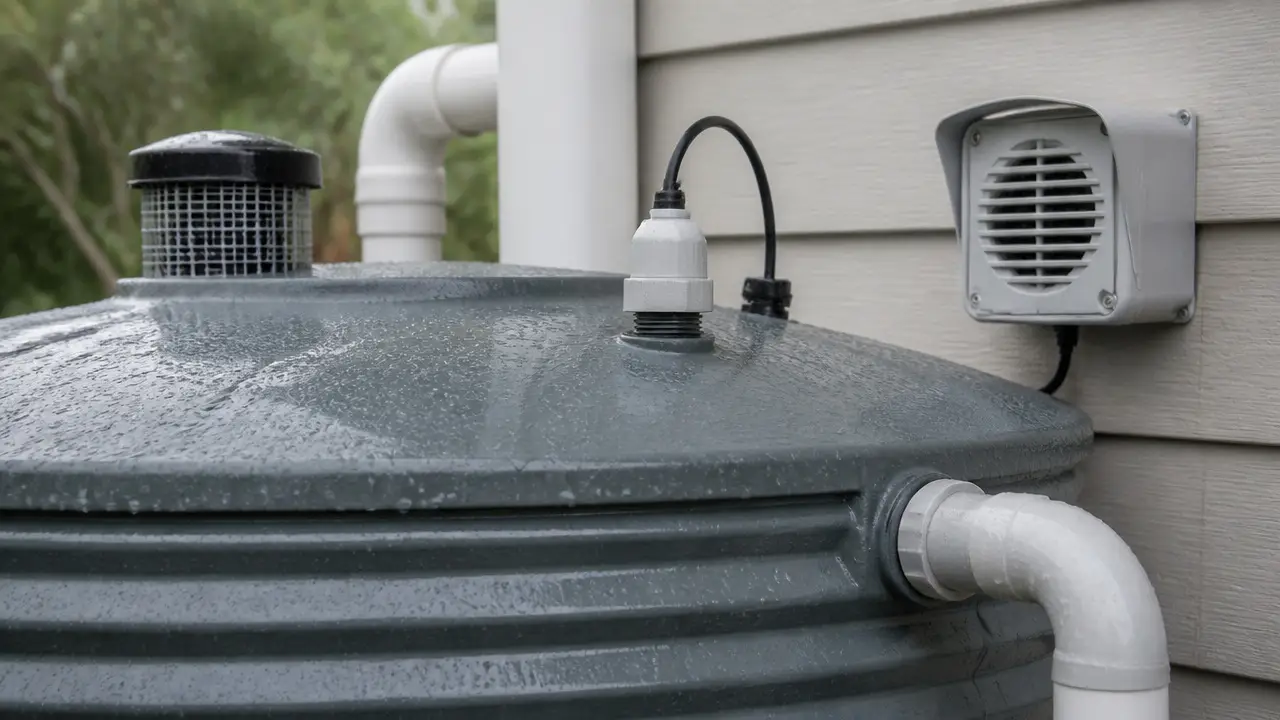
For rainwater harvesting systems, this check is particularly important. Restricted gutters or downspouts can reduce collection and cause water to overflow before it reaches your storage tank or rain barrel.
What About Gutter Water Going Into a Rainwater Tank?
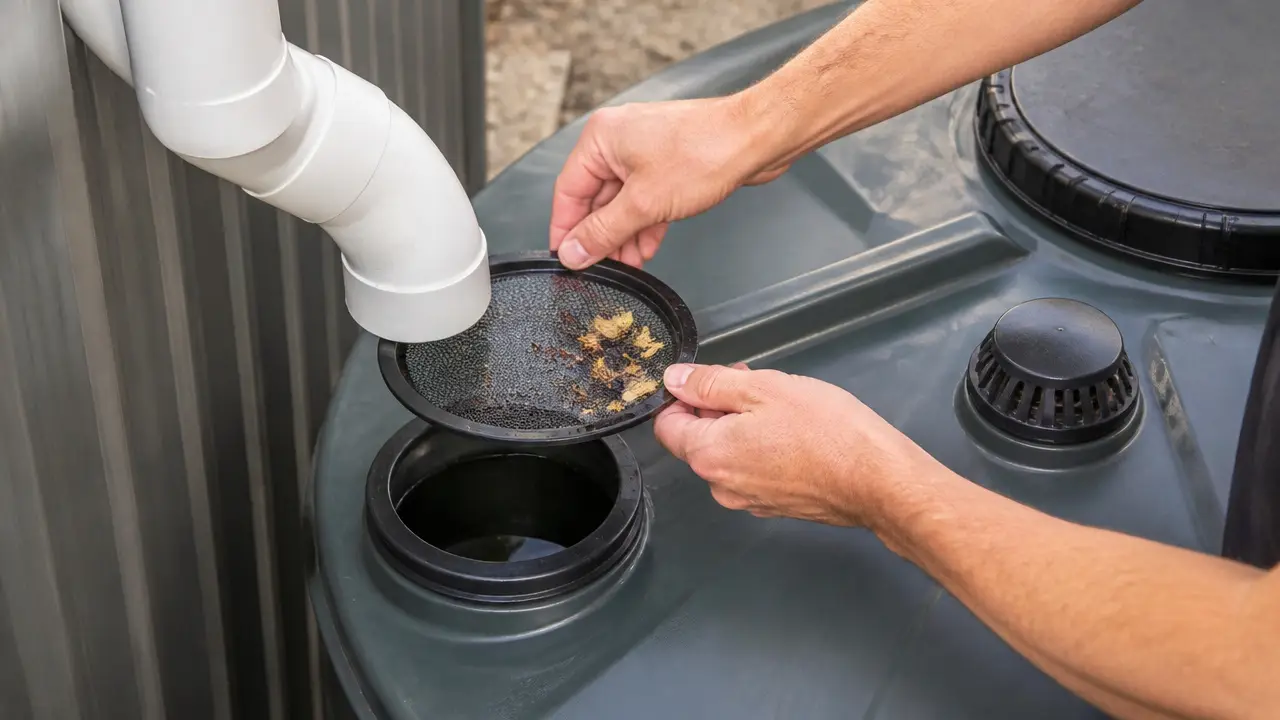
If your gutters supply a rainwater harvesting system, gutter cleaning helps reduce the amount of organic material entering storage.
Leaves, pollen, dirt, bird droppings, insects, and roof debris can still enter the collection system after cleaning.
Gutter cleaning does not make roof runoff safe to drink.
A rainwater system may also use components such as gutter screens, inlet screens, and a first-flush device. A first flush diverts some of the earliest roof runoff so part of the accumulated roof dirt does not immediately enter the tank.
The appropriate collection and treatment setup depends on how the water will be used.
Wet/Dry Vacuum vs. Leaf Blower
Both methods can work, but they suit different conditions.
| Method | Works Best For | Main Limitation |
|---|---|---|
| Wet/dry vacuum | Wet leaves, dirt, sludge, mixed debris | Tubes can clog |
| Leaf blower | Dry loose leaves | Poor performance on wet sludge |
| Manual scoop | Heavy packed debris | Usually requires direct gutter access |
| Water flushing | Checking drainage and moving fine dirt | Can make a mess and may not clear large clogs |
A vacuum is often a good middle ground when you want to work from the ground and the debris is too damp for blowing.
Can You Make Your Own Vacuum Gutter Attachment?
Some people connect lightweight tubing or pipe to a shop vacuum hose.
A homemade setup may work for a low gutter, but several things matter:
- The tube diameter should not excessively restrict airflow.
- Connections need to stay secure.
- The assembly should remain light enough to control.
- The upper bend must fit into the gutter.
- The attachment must not contact overhead electrical lines.
- The vacuum must remain stable on the ground.
Do not create an extremely long or heavy pipe assembly just to avoid professional help with a high gutter.
Commercial extension systems are generally easier to handle because they are designed around reach and connection sizes.
Important Safety Limits
Ground-level vacuuming can reduce the need for ladder work, but it does not remove every hazard.
Never allow a long gutter pole or vacuum tube to approach overhead electrical wiring.
Do not work beneath loose roofing, damaged gutters, unstable fascia boards, or hanging branches.
If a gutter is too high to reach while you remain in full control of the attachment, use a qualified gutter-cleaning service rather than improvising a longer pole.
Roof access and tall-ladder work carry much greater fall risk than ground-level cleaning.
Is a Wet and Dry Vacuum a Good Choice?
For many single-story homes, yes.
A wet and dry vacuum can be a practical gutter-cleaning tool if you already own one and can get a compatible ground-level extension attachment.
It is particularly useful for damp leaves and muddy debris that a blower cannot easily move.
Before choosing a setup, check:
- Gutter height
- Vacuum hose diameter
- Attachment connection size
- Extension length
- Wet-pickup capability
- Amount and type of debris
- Whether the downspout also needs cleaning
For high gutters, very heavy debris, damaged gutter systems, or locations near electrical lines, professional cleaning is the safer option.
Frequently Asked Questions
Can a normal shop vacuum clean gutters?
Yes. Many wet and dry shop vacuums can clean gutters when connected to suitable extension tubes and a curved gutter nozzle. Check that the hose and attachment sizes are compatible.
Can a wet and dry vacuum pick up wet leaves?
Yes, if the vacuum is configured for wet pickup. Wet leaves may still clog narrow hoses or bends, so the tube size matters.
Can I clean gutters from the ground with a shop vacuum?
Yes. Ground-level cleaning is possible with long lightweight extension tubes designed to reach over the gutter edge.
Can a shop vacuum clear a clogged downspout?
Sometimes it can remove debris near the top or bottom of a downspout, but it may not clear a tightly packed blockage deep inside the pipe. Avoid forcing tools into concealed piping if you cannot tell what is blocking it.
Is a vacuum better than a leaf blower for gutter cleaning?
A vacuum is often better for wet leaves, mud, and sludge. A leaf blower is usually faster for light, dry debris.
Do I need a special filter when vacuuming wet gutters?
The required setup depends on the vacuum. Follow its instructions for wet pickup because some models require removing or changing filters before collecting liquids.
Will vacuuming my gutters keep my rainwater tank clean?
It helps reduce debris entering the collection system, but it does not keep a tank completely clean or make collected rainwater safe to drink. Collection, screening, storage, treatment, testing, and maintenance all matter when water quality is important.