As an affiliate, we may earn a commission from qualifying purchases. We get commissions for purchases made through links on this website from Amazon and other third parties.
What’s the Best Gutter Vac?
The best gutter vacuum is one that can lift wet leaves and roof debris from your gutter height without losing too much suction.
For most homeowners, a wet/dry gutter vacuum with a high-reach pole kit and a wide hose is the most practical choice. Look for enough airflow to move damp leaves, a hose and pole system that does not clog easily, and a setup you can operate safely from the ground.
For a broader equipment comparison, review three practical vacuum-cleaner options before deciding whether a shop vacuum is the right base machine.
The right size depends on your house. A single-story home with light leaf buildup needs much less equipment than a two-story house surrounded by mature trees.
What Makes a Good Gutter Vacuum?
A gutter vacuum has to do more than pick up dry leaves. Gutters often contain wet leaf mats, pine needles, twigs, moss, roof grit, and standing water.
The most useful features are:
- Strong airflow
- A reasonably wide suction hose
- Lightweight extension poles
- Enough reach for your gutter height
- Wet-and-dry vacuum capability
- A collection drum large enough for the job
- Easy access for clearing clogs
Do not judge a gutter vac by one power number alone. Motor wattage, airflow, hose diameter, hose length, and lift height all affect how well the complete system works.
Choose the Vacuum Based on Your House Height
Single-Story Homes
A standard wet/dry shop vacuum with a gutter-cleaning attachment may be enough for many one-story homes.
This works best when:
- The gutters are fairly easy to reach from the ground.
- Debris is mostly loose leaves and small twigs.
- Cleaning is done often enough that thick compost-like material does not build up.
A simple setup can be much easier to store than a large professional gutter vacuum.
Two-Story Homes
For a two-story house, look for a purpose-built high-reach gutter vacuum system.
The important feature is not just pole length. The vacuum must still move debris through the entire pole and hose run.
Every extra foot of tubing adds resistance. Bends and narrow openings add more.
A machine that works well at 10 feet may struggle considerably when connected to a much longer pole system.
Very Tall or Difficult Gutters
Three-story buildings, steep sites, awkward rooflines, and gutters hidden behind architectural features can move beyond a simple homeowner job.
Long poles become harder to control. It also becomes difficult to confirm that the gutter and downspout openings are actually clear.
Professional gutter cleaning may be the safer choice when the system cannot be inspected properly from the ground.
Airflow Matters More Than Many Buyers Expect
A gutter vacuum needs enough moving air to carry debris through the hose.
This is especially important with:
- Wet leaves
- Pine needles
- Small twigs
- Moss
- Roof granules
- Heavy organic sludge
A vacuum may produce strong suction at the inlet but still perform poorly if the hose is too narrow or the airflow drops sharply through a long pole system.
For gutter cleaning, a larger debris path is generally easier to keep clear than a very narrow one.
Avoid assuming that the vacuum with the highest advertised wattage will automatically clean gutters best. Wattage mainly tells you about electrical input. It does not tell you exactly how the complete gutter-cleaning setup will perform.
Hose Diameter Can Make or Break the System
Gutter debris is bulky.
A narrow hose may work well for dust but clog quickly when leaves and twigs enter it.
Larger hoses allow bigger material to pass and usually make gutter cleaning less frustrating. They also reduce the chance of a single curled leaf or twig stopping the entire system.
The tradeoff is weight. Large hoses and fittings become heavier, especially when attached to several feet of extension poles.
For a homeowner system, look for a reasonable balance between debris capacity and pole weight.
Carbon Fiber vs. Aluminum Gutter Vacuum Poles
Long-reach poles are commonly made from lightweight materials such as aluminum or carbon fiber.
Carbon Fiber
Carbon fiber poles are attractive because they can be lighter and easier to handle at height.
That difference becomes noticeable when several pole sections are connected.
Less weight can make it easier to:
- Move along long gutter runs
- Lift the nozzle over gutter edges
- Control the tool near corners
- Work without tiring as quickly
The important limitation is electrical safety. Conductive poles, wet conditions, and overhead electrical lines are a dangerous combination. Never allow gutter-cleaning equipment to approach overhead electrical conductors.
Aluminum
Aluminum poles can be durable and relatively affordable, but they become harder to control as the total pole length increases.
Aluminum also conducts electricity, so the same electrical precautions apply.
Pole material should never be treated as protection from electrical hazards.
Wet/Dry Capability Is Worth Having
Gutters are rarely completely dry.
A wet/dry vacuum is useful because the gutter may contain:
- Rainwater
- Mud
- Decomposed leaves
- Saturated moss
- Damp roof grit
A dry-only vacuum is poorly suited to this environment.
Before vacuuming water, configure the machine according to its instructions. Some wet/dry vacuums use different filters or operating arrangements for liquid pickup.
How Much Reach Do You Need?
Measure from the ground where you will stand to the gutter opening.
Do not simply buy a pole system rated for your house's number of stories.
Ground elevation can vary around the same building. A gutter that is easy to reach at the front may be several feet higher at the back.
You also need enough working length to position the nozzle over the gutter lip without holding the final pole section almost vertically against your body.
More reach is not always better. Excess pole length adds weight and makes the nozzle harder to control.
Look for a Useful Gutter Nozzle
The nozzle should fit into the gutter while allowing leaves and small debris to enter without constant clogging.
An angled nozzle is usually easier to guide from the ground because it can hook over the gutter edge.
Very narrow nozzles create high air speed but may clog more easily.
Very large nozzles accept debris well but can be harder to move through narrow gutters or around brackets.
The best setup allows you to change nozzles when conditions differ.
A Camera Can Be More Useful Than Extra Vacuum Power
One limitation of ground-based gutter cleaning is visibility.
Look closely at recommended gutter cleaning vacuum attachments for ground-based debris removal to compare roof-drainage protection during debris-heavy rainfall.
From below, you may not know whether:
- A compacted section remains
- A downspout opening is blocked
- Water is trapped behind debris
- A gutter joint is damaged
- Roof grit is still covering the gutter bottom
Some gutter-vac systems allow a small camera to be mounted near the nozzle.
A camera is not required, but it can make the job much easier on tall gutters because you can see where cleaning is actually needed.
A separate inspection camera or other safe ground-based viewing method can serve the same purpose.
Gutter Vacs Do Not Always Clear Downspout Blockages
Vacuuming the gutter trough does not guarantee that the downspout is clear.
Leaves often collect around the downspout opening, but blockages can also form farther down the pipe.
After cleaning, check whether water can move through the drainage path properly.
Do not force tools deep into an unfamiliar downspout where they may become stuck or damage joints.
If a buried drainage line is involved, the blockage may be outside the gutter system entirely.
This matters for rainwater harvesting because poor gutter or downspout flow reduces the amount of water reaching your rain barrel, IBC tote, or cistern.
Gutter Vacuum Size for Rainwater Harvesting Systems
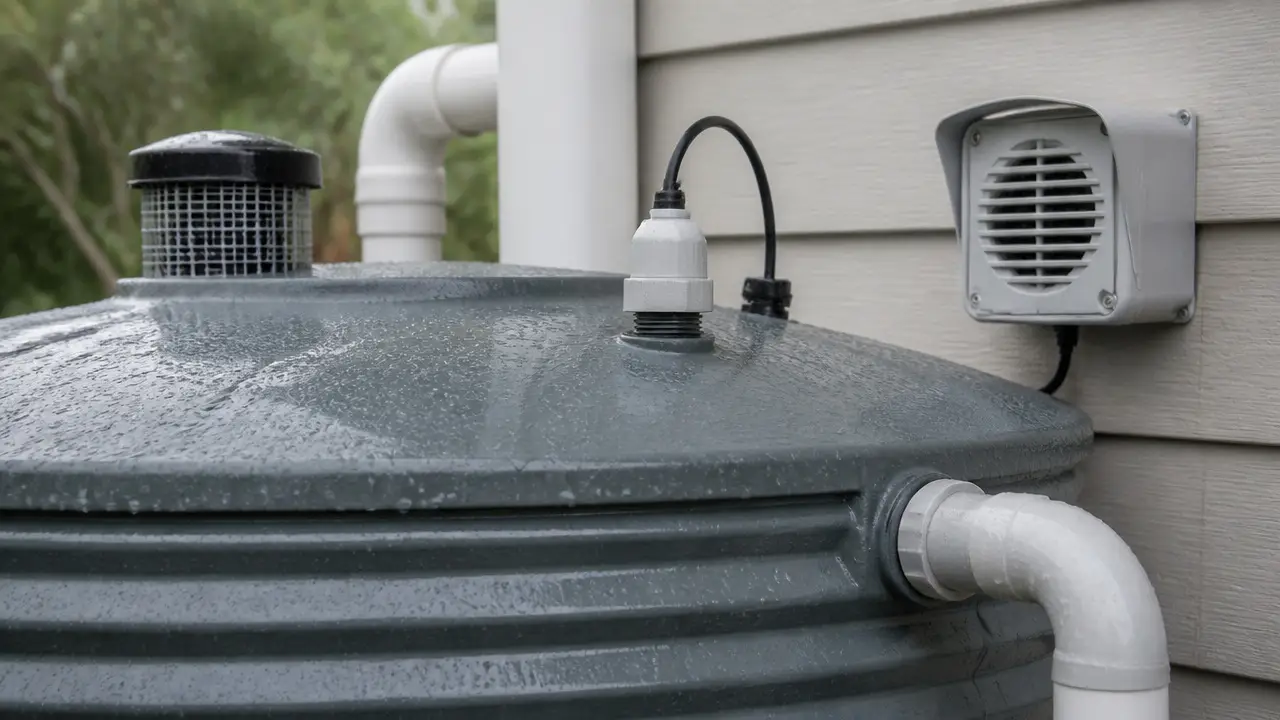
If your gutters feed a rainwater tank, regular gutter cleaning helps reduce the debris entering the rest of the collection system.
The collection path may include:
- Roof
- Gutter
- Downspout
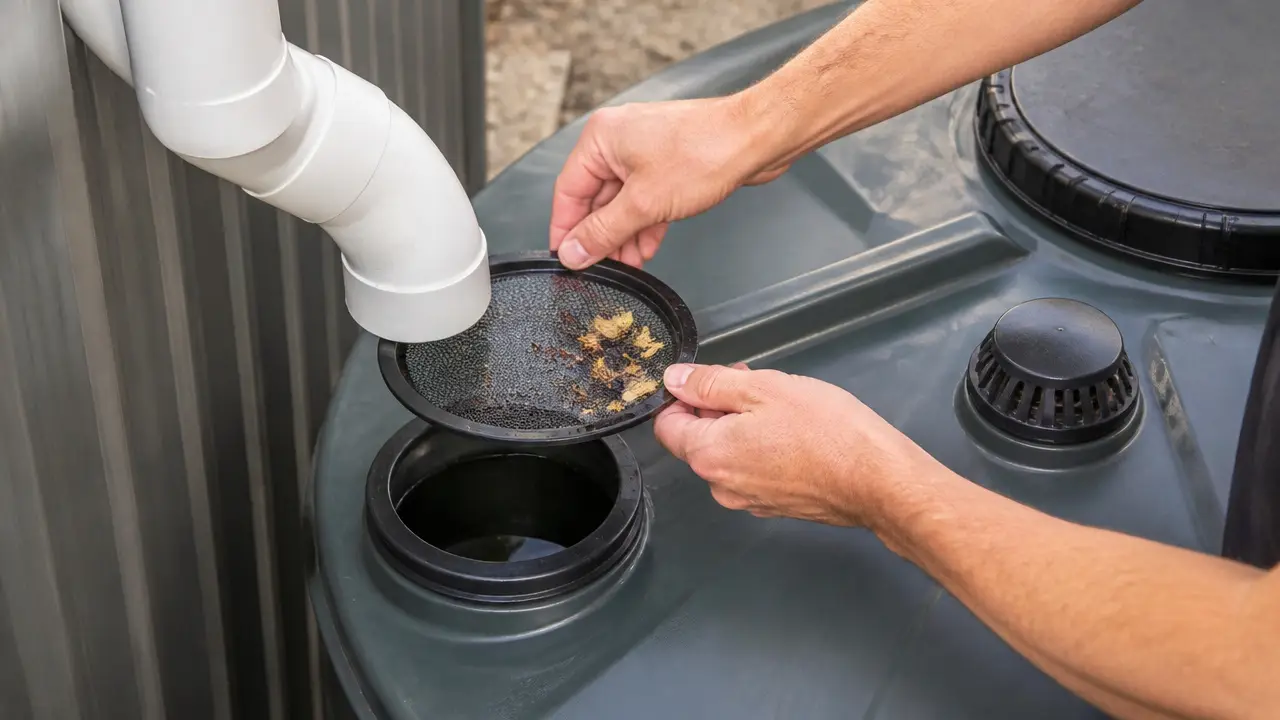
- Leaf screen
- First-flush device
- Tank inlet screen
- Storage tank
A first-flush device diverts some of the first runoff from the roof so dirt and debris are less likely to enter the tank.
A gutter vacuum does not replace these parts.
It simply removes one major source of material before it moves farther downstream.
Keeping gutters relatively clean can also reduce how quickly inlet screens and first-flush components fill with debris.
When a Shop Vac Is Enough
You may not need a dedicated gutter vacuum if you already own a capable wet/dry shop vacuum.
A shop vac can work well when:
- Your gutters are low.
- The hose is not excessively long.
- You can attach suitable gutter poles.
- Debris is not heavily compacted.
- The vacuum is rated for wet pickup when needed.
The main weakness is usually reach.
As pole length increases, ordinary shop vac setups can become awkward and may lose effective debris-moving ability.
When a Dedicated Gutter Vac Makes More Sense
A dedicated system becomes more useful when you regularly clean:
- Two-story gutters
- Long gutter runs
- Several buildings
- Gutters beneath heavy tree cover
- Rainwater collection roofs that need frequent maintenance
These systems are generally built around large debris paths and long extension poles.
For occasional cleaning on a small one-story house, that extra capacity may not provide much benefit.
Common Problems With Gutter Vacuums
The Hose Keeps Clogging
Likely causes include:
- Hose diameter is too small.
- Large twigs are entering the nozzle.
- Wet leaves are forming plugs.
- Debris has collected around a hose bend.
Clear the machine before continuing rather than repeatedly trying to pull more material through an existing blockage.
Suction Feels Weak at the Gutter
Check for:
- A full collection drum
- A dirty filter
- Air leaks
- A partially blocked hose
- Poorly connected pole sections
- An excessive hose or pole run
A vacuum can sound normal even when airflow at the nozzle has dropped sharply.
Wet Leaves Will Not Move
Heavily decomposed gutter debris can form a dense mat.
Vacuuming may loosen the upper layer without removing everything underneath.
In severe cases, manual cleaning may be necessary.
If that would require unsafe roof or ladder access, use a professional gutter-cleaning service instead.
Important Safety Limits
Ground-based gutter vacuums can reduce the need for ladder work, but they do not remove every hazard.
Watch for:
- Overhead power lines
- Wet electrical equipment
- Damaged extension cords
- Uneven ground
- Falling debris
- Heavy poles
- Loose gutter parts
- Nearby windows, vehicles, and people
Use electrical equipment according to its instructions and keep electrical connections protected from wet conditions.
Do not work near overhead electrical lines with long poles.
If safe access requires working on a steep roof, leaning from a ladder, or reaching around electrical equipment, stop and use a qualified professional.
So, Which Type Is Best?
For most homeowners, the best choice is a wet/dry gutter vacuum system with lightweight high-reach poles, a reasonably wide debris path, and enough airflow for damp leaves.
For a one-story house, a compatible shop vacuum and gutter attachment may be all you need.
For a two-story house or heavy tree cover, a purpose-built gutter vacuum with longer lightweight poles usually makes more sense.
Choose based on gutter height and debris type rather than simply buying the machine with the largest motor.
Frequently Asked Questions
Can I use a normal shop vac to clean gutters?
Yes. A wet/dry shop vacuum can work well on low gutters when paired with suitable extension poles and gutter attachments. Long pole runs and heavy wet debris may require a stronger or more purpose-built system.
Are gutter vacuums good for wet leaves?
They can be, but wet leaves are much harder to move than dry ones. Good airflow, a wide hose, and a wet/dry vacuum design are especially important.
Can a gutter vacuum clean a two-story house?
Some high-reach systems are designed for this type of work. Measure the actual ground-to-gutter height rather than relying only on the number of stories.
Do gutter vacuums clean downspouts too?
They can clear debris around the downspout entrance, but they may not remove a blockage deeper inside the downspout or underground drainage pipe.
Is a gutter vacuum better than using a ladder?
Ground-based cleaning can reduce the amount of ladder work needed. However, long poles, electricity, falling debris, and difficult building layouts can still create hazards.
How often should gutters be vacuumed?
There is no single schedule for every home. Gutters beneath trees may require several checks during heavy leaf-fall periods, while homes with little nearby vegetation may need much less frequent cleaning.
Does cleaning gutters improve rainwater collection?
Yes. Removing leaves and sediment helps water move freely toward your downspouts and rainwater storage system. It also reduces the amount of debris reaching screens, first-flush devices, and tank inlets.