As an affiliate, we may earn a commission from qualifying purchases. We get commissions for purchases made through links on this website from Amazon and other third parties.
Gutter guards can work well for rainwater harvesting, but they do only one part of the job. Their main purpose is to keep leaves, twigs, and other large debris out of the gutter and storage system.
A good gutter guard can reduce debris entering a rain barrel, IBC tote, or cistern. It can also reduce clogs in downspouts and inlet screens. But it does not make harvested rainwater clean or safe to drink. Fine dust, pollen, bird droppings, chemicals, and microorganisms can still wash through with the rain.
For most rainwater systems, think of a gutter guard as prefiltration, not complete filtration.
How Gutter Guards Help a Rainwater Harvesting System
Rainwater follows a simple path:
Roof → gutter → downspout → storage tank → end use
Anything sitting on the roof can move along that same path.
Leaves and twigs are especially troublesome because they can:
- Block downspouts.
- Clog tank inlet screens.
- Collect inside rain barrels and cisterns.
- Break down into organic material.
- Increase sediment and cleaning needs.
- Clog irrigation equipment farther downstream.
A gutter guard creates the first physical barrier against this larger material.
The Texas Water Development Board describes leaf screens as an important way to keep larger debris out of rainwater harvesting systems. It also points out that these screens need regular cleaning. A clogged screen can prevent water from reaching the storage tank.
That last point matters. A gutter guard helps only when water can still move through it freely.
What Gutter Guards Do Not Remove
Gutter guards are sometimes mistaken for water filters. They are not the same thing.
Even a fairly fine gutter screen may still allow through:
- Dust.
- Pollen.
- Small roof particles.
- Smoke residue.
- Dissolved chemicals.
- Very small organic material.
- Germs from animal waste.
Rainwater can pick up contamination from the air, roofing material, gutters, pipes, and anything deposited on the roof. The CDC warns that rainwater that looks clean can still contain germs or chemicals.
This means gutter guards should not be treated as a water-safety device.
They mainly remove physical debris that is larger than the openings in the guard.
Gutter Guards vs. First-Flush Diverters
These two parts do different jobs, and a harvesting system may benefit from both.
A gutter guard stops larger material before it enters the gutter or downspout.
A first-flush diverter sends the first portion of runoff from a storm away from the storage tank. That first water often carries a higher load of dust, pollen, animal droppings, and other material that has built up on the roof between rains.
The CDC recommends considering a first-flush diverter because the first runoff can carry dirt, germs, and chemicals from the collection surface.
A useful setup may look like this:
Roof → gutter guard → downspout debris screen → first-flush diverter → screened tank inlet → storage
Not every small garden system needs every component. But a gutter guard should not be expected to replace a first-flush device when better prefiltration is needed.
Do Gutter Guards Improve Rainwater Quality?
They can improve the condition of the water entering the tank by reducing large organic debris.
That can make storage easier to manage.
For example, fewer leaves entering a barrel usually means:
- Less material settling on the bottom.
- Less decomposing plant matter.
- Less frequent removal of large debris.
- Lower risk of inlet and outlet blockages.
However, this does not mean the water becomes potable.
Potable means suitable for drinking.
For garden irrigation or other non-potable uses, removing large debris may be one of the most useful improvements you can make. For drinking-water systems, it is only an early treatment stage.
The CDC advises people using harvested rainwater for drinking, cooking, or bathing to use appropriate treatment and regular testing for harmful germs and chemicals.
Can Gutter Guards Reduce How Much Rainwater You Collect?
They can if they become clogged or cannot handle the water coming off the roof.
This is especially important during heavy rain.
Water can miss the gutter or overflow when:
- Leaves cover the guard.
- Fine debris blocks the openings.
- Water moves across the roof faster than it can enter the gutter.
- A roof valley sends a large amount of water to one small section.
- The gutter is too small.
- There are too few downspouts.
- The gutter does not drain correctly.
Roof valleys can concentrate runoff from several roof sections into one spot. Steep roofs and long roof runs can also make capture more difficult.
After installing gutter guards, watch the system during a strong rain if it is safe to do so from the ground.
Look for water:
- Pouring over the front of the gutter.
- Shooting past the gutter edge.
- Backing up at roof valleys.
- Flowing poorly through the downspout.
Do not climb onto a wet roof to inspect the system.
If a large amount of water is bypassing the gutter, the guard, gutter size, downspout arrangement, or roof geometry may need attention.
What Type of Gutter Guard Works Best for Rainwater Harvesting?
There is no single best type for every roof.
Choose based on the debris you actually have and how much maintenance you can easily perform.
Coarser Screens
A larger mesh or open screen works well where the main problem is:
- Large leaves.
- Twigs.
- Seed pods.
- Other bulky debris.
The larger openings usually allow water through easily, but smaller material can still enter the gutter.
Fine-Mesh Guards
Fine mesh can stop smaller debris.
That may help where you have:
- Pine needles.
- Small seeds.
- Roof grit.
- Fine plant material.
The tradeoff is that fine screens can collect dirt and organic film more easily. They may need more frequent cleaning to keep water flowing.
Downspout Leaf Screens
Details about the purpose of a first-flush diverter help understand upkeep requirements that affect future reliability.
Instead of covering the entire gutter, some systems use a debris screen in or near the downspout.
This can be useful because the screen may be easier to reach and clean.
It does mean leaves are still allowed into the gutter, so the gutter itself needs regular cleaning.
Tank Inlet Screens
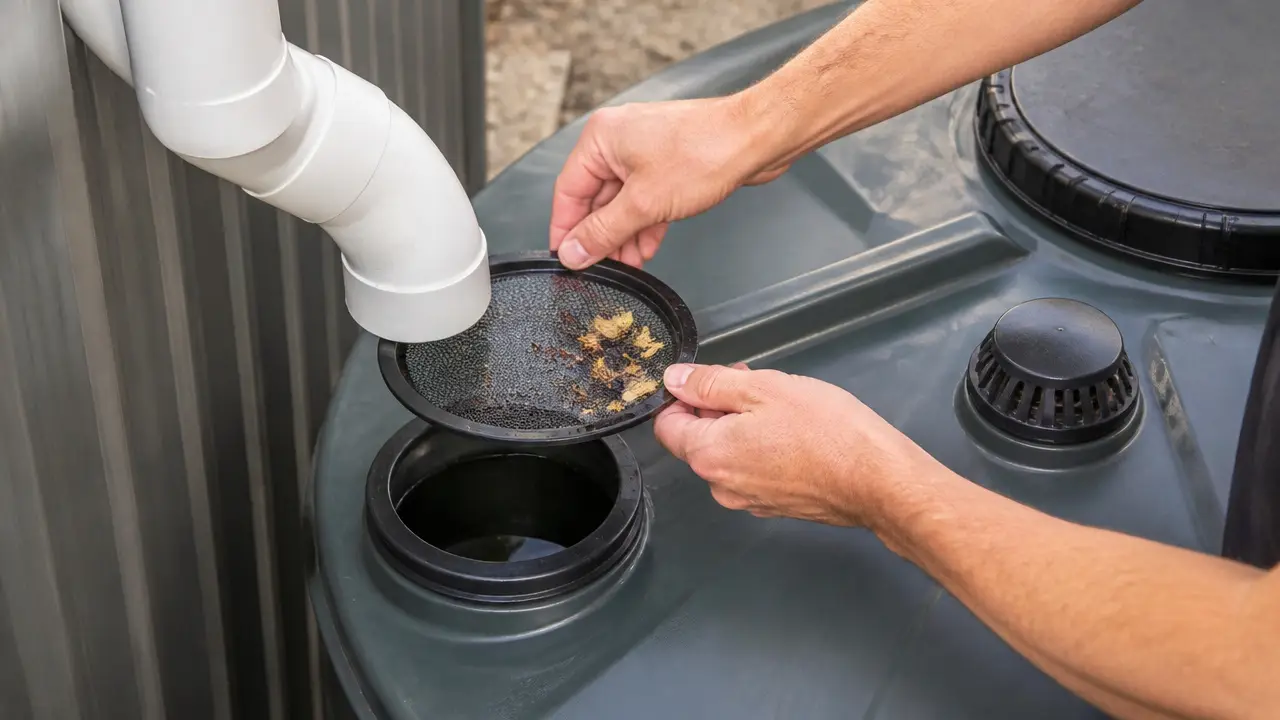
A tank inlet screen provides another barrier just before water enters storage.
This is worth having even when gutter guards are installed.
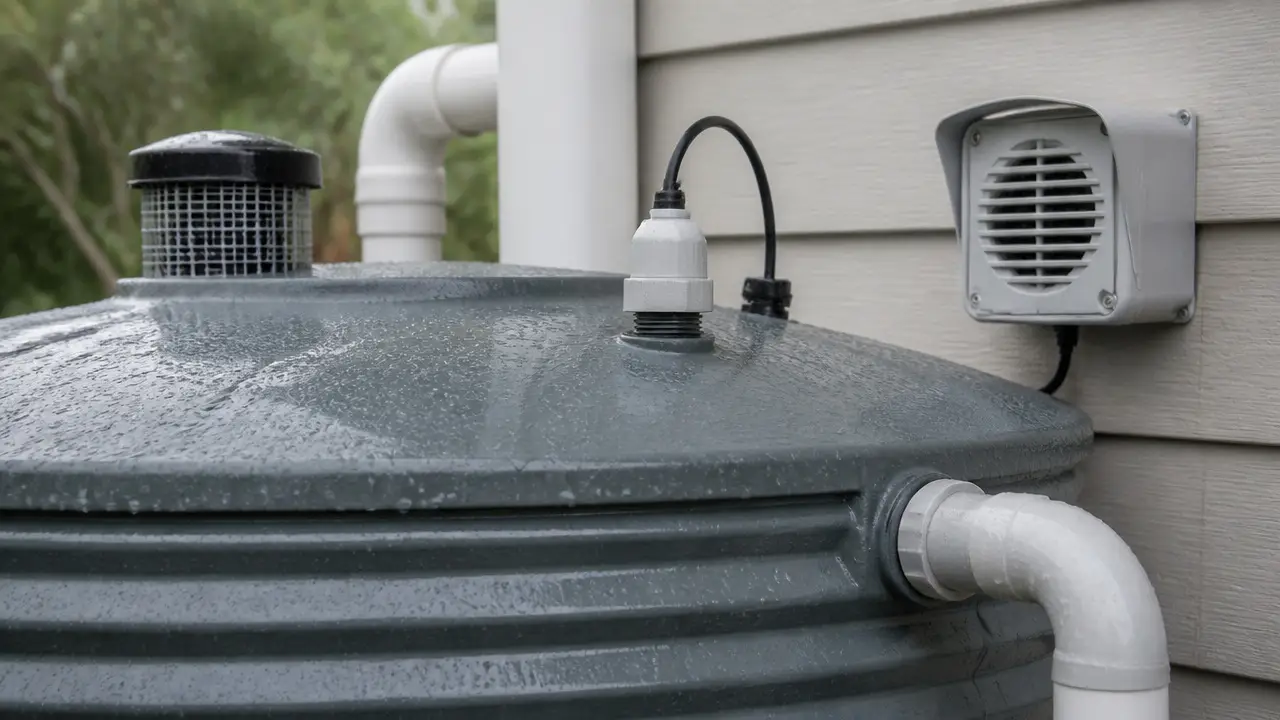
The inlet screen can catch material that gets through the roof-level guard. A properly fitted screen can also help keep mosquitoes and other insects out of the tank. The CDC specifically recommends screening the entrance to rainwater storage to help prevent mosquitoes from laying eggs.
Match the Guard to Your Main Debris Problem
Look around the roof before choosing a setup.
If large deciduous trees hang over the house, leaves may be the main issue.
If pine trees are nearby, needles may slip through larger openings.
If there are few trees, a full gutter-cover system may offer less benefit. A downspout screen and tank inlet screen may be enough for a simple garden system.
The amount of maintenance required also matters.
A guard that catches nearly everything but is difficult to reach may be less useful than a simpler screen you can safely inspect and clean.
Easy maintenance is especially important for rainwater harvesting because blocked gutters mean lost collection.
Gutter Guards Still Need Cleaning
Gutter guards do not create a maintenance-free gutter.
Leaves may collect on top of them. Fine dirt can collect inside the openings. Seeds may become trapped. In damp areas, organic material can form a layer that slows drainage.
The Texas rainwater harvesting guidance specifically notes that leaf screens need regular cleaning to remain effective and that accumulated debris can interfere with flow into the storage tank.
How often you need to clean them depends on:
- Nearby trees.
- Season.
- Wind.
- Roof shape.
- Dust levels.
- Bird activity.
- The type of guard.
Inspect the system more often during heavy leaf fall or after storms that deposit a lot of debris.
Always use safe access methods. Roof work and high ladder work may be better left to a qualified contractor.
What About Drip Irrigation?
Gutter guards can help protect a drip irrigation system, but they usually are not enough by themselves.
Drip emitters have small water passages. Fine sediment that easily passes through a gutter guard can still clog them.
A typical arrangement might be:
Gutter guard → tank inlet screen → storage tank → irrigation filter → drip line
The irrigation filter should match the needs of the emitters being used.
Also remember that gravity-fed rain barrels may provide much less pressure than a household faucet. Adding more filtration can reduce flow further, especially if the filter begins to clog.
Check both filtration needs and available water pressure when planning the irrigation side of the system.
Are Gutter Guards Worth Adding?
They are usually most useful when your roof regularly collects leaves, needles, twigs, or other large debris.
They may be especially worthwhile when:
- You collect from a roof near trees.
- Downspouts clog often.
- You use a large cistern that is difficult to clean.
- You want to reduce organic material entering storage.
- Your tank inlet screen fills with leaves quickly.
- You run stored rainwater through irrigation equipment.
They are less important when the roof stays mostly clear and you already have an easy-to-clean downspout or tank prefilter.
The goal is not to install as many filters as possible. It is to keep troublesome material out while still allowing rainwater to reach the tank.
A Practical Rainwater Harvesting Setup
For many home systems, a sensible approach is:
- Keep large roof debris under control where this can be done safely.
- Use a gutter guard or accessible leaf screen where tree debris is a problem.
- Keep gutters and downspouts clear enough to handle heavy rainfall.
- Consider a first-flush diverter where cleaner incoming water is important.
- Use a screened inlet on the rain barrel or cistern.
- Use additional sediment filtration where pumps, valves, or irrigation emitters require it.
- Base any further water treatment on the intended use.
For a basic garden barrel, this may remain a fairly simple system.
For household plumbing or drinking-water use, the system becomes much more demanding. Roof materials, contamination sources, storage design, filtration, disinfection, laboratory testing, maintenance, and local requirements all matter. A gutter guard by itself cannot establish that collected water is safe to drink.
Frequently Asked Questions
Do gutter guards make rainwater clean?
No. Gutter guards mainly remove leaves and other larger debris. Fine particles, chemicals, and microorganisms can still enter harvested rainwater.
Do I still need a first-flush diverter if I have gutter guards?
Possibly. The two devices perform different jobs. Gutter guards block larger debris, while a first-flush diverter sends away the initial roof runoff that can carry dust, pollen, animal waste, and other contaminants.
Will gutter guards reduce rainwater collection?
They can if they become clogged or restrict runoff during heavy rain. Check the gutters during rainfall from a safe location and make sure water is entering the gutter instead of flowing over or past it.
Are fine-mesh gutter guards better for rainwater harvesting?
Not always. Fine mesh catches smaller debris but may clog faster. A more open screen may work better where large leaves are the main problem. The best choice depends on your roof, nearby trees, rainfall, and cleaning access.
Do I still need a screen on my rain barrel?
Yes, an inlet screen is useful even when gutter guards are installed. It catches debris that gets through upstream screens and can help keep insects out of the storage container.
Can gutter guards stop drip irrigation emitters from clogging?
They can reduce the amount of large debris entering the system, but fine sediment can still reach the irrigation line. Drip systems normally need filtration suited to the emitter openings.
Are gutter guards enough if I want to drink harvested rainwater?
No. Gutter guards are only a debris-control stage. Drinking-water use requires suitable collection materials, appropriate treatment, careful storage, ongoing maintenance, current laboratory testing, and compliance with applicable local requirements. The CDC advises regular testing for harmful germs and chemicals when rainwater is used for drinking, cooking, or bathing.