As an affiliate, we may earn a commission from qualifying purchases. We get commissions for purchases made through links on this website from Amazon and other third parties.
Roofers generally have a practical view of gutter guards: they can reduce clogs and make gutters easier to maintain, but they do not make gutters maintenance-free. The right guard can be useful on homes surrounded by trees. The wrong guard, or a poor installation, can create new drainage and roofing problems.
Roofers also tend to care about something gutter-guard advertising may overlook: the guard has to work with the roof, gutters, rainfall, and debris found at that specific house.
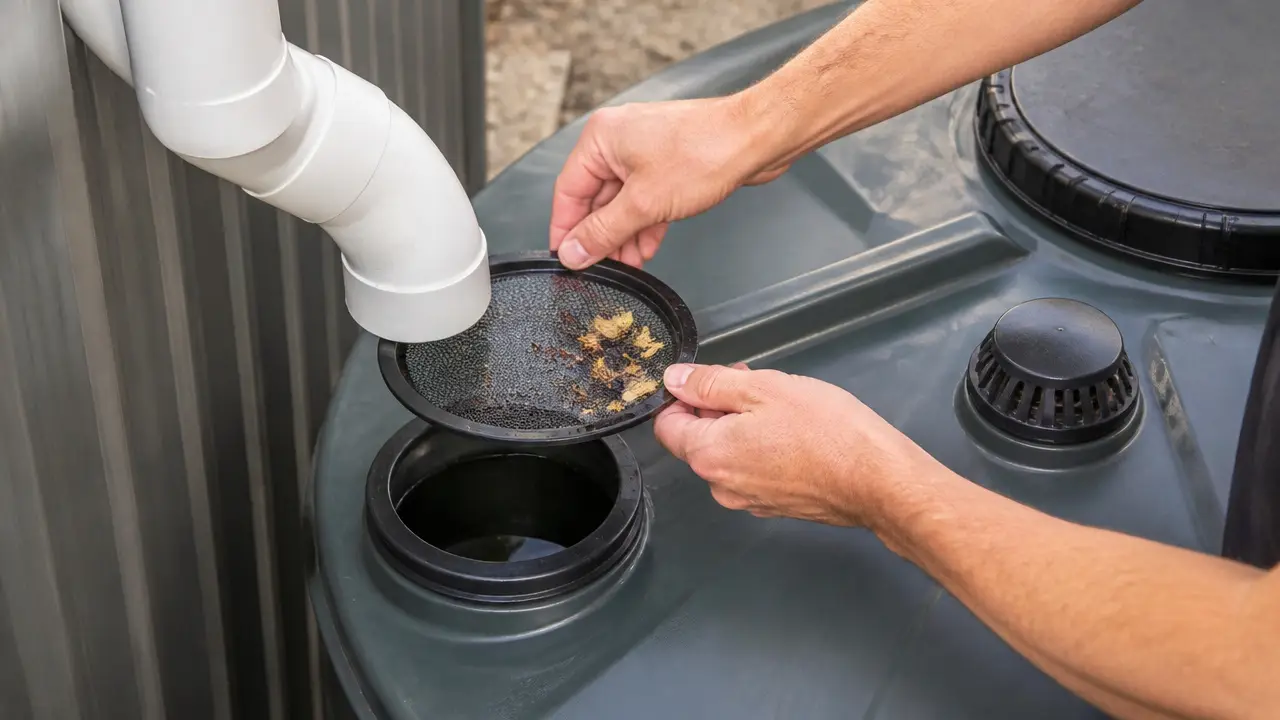
For a rainwater harvesting system, there is another concern. A gutter guard can keep larger debris out of collected water, but it is only an early screening step. It does not replace a first-flush system, tank screening, filtration, or treatment when those stages are needed.
The Main Things Roofers Look At
A roofer usually does not judge gutter guards by whether they stop leaves alone. They look at the complete roof edge.
Important questions include:
- What type of debris lands on the roof?
- How steep is the roof?
- How quickly does water reach the gutter?
- Are the gutters large enough and properly pitched?
- Can the guard handle heavy rain?
- Does installation disturb the shingles or drip edge?
- Can the guard be removed when the roof needs repair?
- How will the system be cleaned?
That is why one gutter guard can work well on one house and poorly on another.
Roofers Do Not Consider Gutter Guards Maintenance-Free
This is one of the strongest points of agreement.
Guards may stop leaves from filling the gutter, but material can collect on top of the guard instead.
Common buildup includes:
- leaves
- pine needles
- seed pods
- pollen
- roof grit
- dust
- moss fragments
- small twigs
Fine debris can plug small mesh openings. Larger debris can form a wet layer across the surface.
Current maintenance guidance from This Old House also recommends continued inspection and cleaning. Even guarded systems can develop surface buildup, damaged sections, or restricted water flow.
For homeowners who find gutter cleaning difficult or unsafe, reducing the amount of debris inside the gutter can still be a major benefit. Just do not assume the ladder will never be needed again.
Roofers Care a Lot About How Guards Attach to the Roof
The installation method matters as much as the guard itself.
Some guards attach entirely to the gutter. Others extend toward or beneath the first row of shingles.
This is where roofers may become cautious.
Atlas Roofing recommends avoiding gutter-cover installations that require penetrating shingles with fasteners, removing shingles, removing the drip edge, cutting or modifying shingles, disturbing underlayment, or placing the cover beneath the underlayment.
That does not mean every guard that reaches beneath a shingle automatically damages a roof. Products and roofing systems differ.
The safer rule is simple:
Do not assume a gutter-guard installation is compatible with your roof warranty. Check the roofing manufacturer's instructions and warranty requirements before changing the roof edge.
This matters even more when the roof is new.
Be especially cautious about screws through shingles
A screw driven through a finished shingle creates a roof penetration.
Roofing systems already use nails and other fasteners, but those fasteners are placed in specific protected locations as part of the roofing installation. Adding exposed penetrations later is different.
A gutter guard that can be secured to the gutter without unnecessary roof penetrations generally creates fewer roofing concerns.
Good Guards Can Reduce Gutter Clogs
Roofers are not against gutter guards as a category.
A suitable guard can greatly reduce the amount of leaves and other large debris entering a gutter. That can help water continue moving toward the downspout instead of backing up behind a pile of leaves.
This can be especially useful when:
- large trees hang over the roof
- leaves fill gutters several times each year
- reaching the gutters is difficult
- clogged downspouts are a regular problem
- rainwater is being collected and reducing large debris is useful
The key word is reduce.
A guard does not guarantee that the gutter or downspout will never clog.
Heavy Rain Can Expose a Poor Gutter-Guard Design
Stopping debris is only half of the job.
The other half is getting rain into the gutter.
Water can move very quickly down a steep roof during a strong storm. If the guard cannot accept that water fast enough, some of it may pass over the outside edge instead.
Testing published by This Old House found meaningful differences between gutter-guard designs under simulated heavy rainfall. Some designs allowed more water to overshoot the gutter than others. Roof pitch, guard angle, debris buildup, and the type of guard can all affect performance.
Look at your own system during a real rainstorm from a safe place on the ground.
Watch for:
- water shooting past the gutter
- water running behind the gutter
- overflow at valleys
- dripping along the fascia
- overflow near downspouts
- water backing up over debris sitting on the guard
A guard that keeps every leaf out but sends part of your roof runoff onto the ground is not doing its full job.
Roof Valleys Need Extra Attention
A roof valley is where two sloping roof sections meet.
Valleys can concentrate water from a large section of roof into one small area of gutter. During heavy rain, the flow arriving there can be much greater than along a normal section of eave.
This can overwhelm some gutter guards.
A splash guard or another properly designed detail may sometimes be needed, but the solution depends on the roof and gutter layout. Simply blocking the outside edge higher can also create problems if water starts backing toward the roof.
Persistent overflow at a valley is worth having a roofer or experienced gutter installer inspect.
Different Debris Favors Different Guards
There is no single guard design that handles every type of debris equally well.
Large leaves
Simple screens can work reasonably well where most debris consists of large leaves.
The openings allow plenty of water through while stopping material too large to enter the gutter.
Pine needles
Pine needles are more difficult.
They can pass through larger openings or become caught across them. Finer mesh may block them better, although the finer surface can also collect pollen and small particles.
Testing comparing different guard styles has similarly found that fine debris such as pine needles and shingle grit behaves differently from ordinary leaves.
Pollen and roof grit
Very fine mesh can stop surprisingly small material.
That sounds good, but everything stopped by the mesh has to go somewhere.
Fine debris can remain on the surface and gradually reduce water flow. Periodic rinsing or cleaning may be needed.
Some Roofers Prefer Guards That Leave the Roofing Alone
Understanding comparing high-performing gutter guards helps evaluate available conveyance for the expected roof discharge.
When several designs would work equally well, a guard attached to the gutter rather than the shingles can simplify things.
It may make future work easier because roofers can replace shingles or service the roof edge without dealing with a guard integrated into the roofing.
This becomes important when a roof replacement is approaching.
If your shingles may need replacement soon, ask whether installing gutter guards now makes sense. Paying to install guards that soon have to be removed and reinstalled may create unnecessary work.
Old or Damaged Gutters Should Be Fixed First
Gutter guards cannot fix a bad gutter system.
Before covering the gutters, check for:
- loose hangers
- sagging sections
- incorrect slope
- leaking joints
- damaged fascia
- undersized downspouts
- blocked downspout elbows
- gutters pulling away from the house
A guard placed over a poorly draining gutter simply hides part of the problem.
Cleaning and inspecting the gutter before installation also prevents existing debris from becoming trapped underneath the new guard.
What Roofers Say About Gutter Guards in Snowy Areas
Snow and ice add another complication.
Snow can sit on a gutter guard. Meltwater can then refreeze around the roof edge or gutter. Guards do not automatically prevent ice problems, and they should not be treated as an ice-dam solution.
Winter conditions can also make some guards harder to clean or temporarily restrict drainage. This Old House notes that snow and ice buildup can affect guarded gutter systems and recommends seasonal inspection where freezing occurs.
If you already have recurring ice dams, investigate insulation, air leakage, ventilation, roof design, and drainage rather than expecting gutter guards to solve the problem.
What Gutter Guards Mean for Rainwater Harvesting
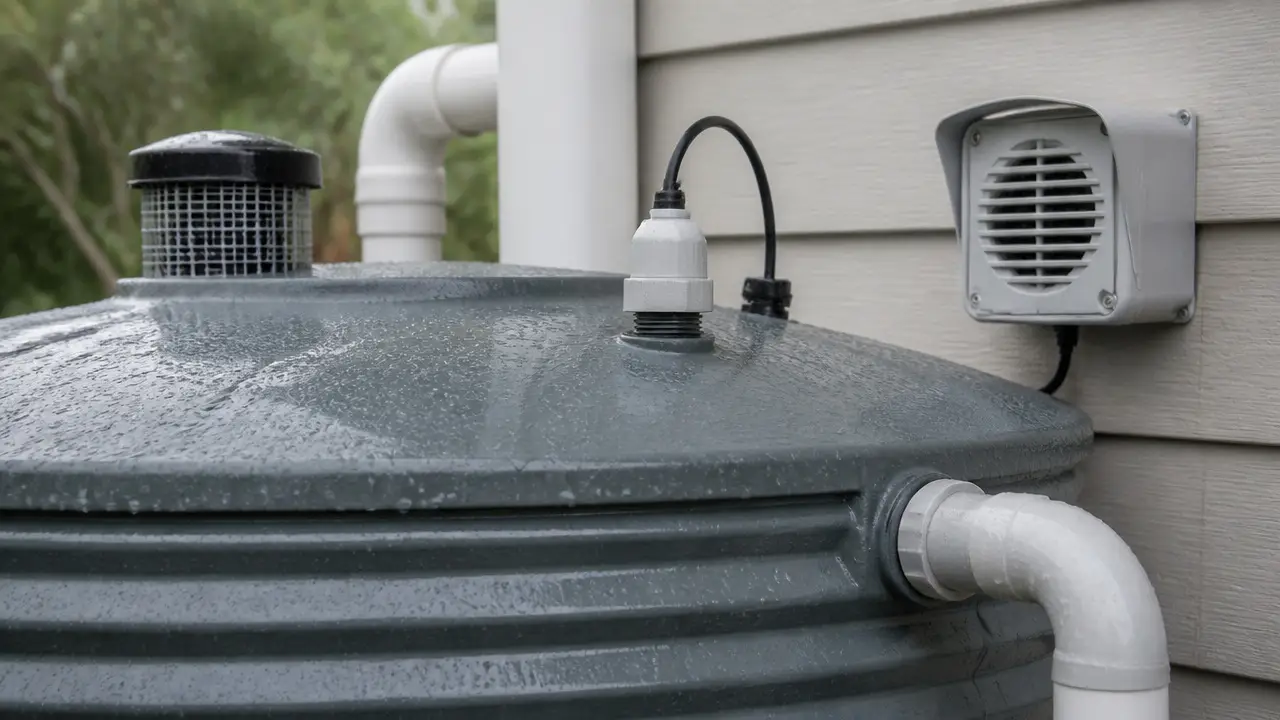
Gutter guards can be useful on a rainwater collection system, but their role is limited.
Think of them as debris control at the roof edge.
They can reduce the amount of leaves and larger material traveling toward:
- downspout screens
- first-flush devices
- tank inlet screens
- rain barrels
- IBC totes
- cisterns
That can make later parts of the system easier to maintain.
However, a gutter guard does not make roof runoff clean or potable.
Water can still carry:
- dust
- pollen
- bird and animal waste
- microorganisms
- fine roofing particles
- airborne contamination
A first flush is a device that diverts the first portion of runoff from a rain event because that water often carries much of the material accumulated on the roof.
Gutter guards do not replace that function.
For garden or other non-potable uses, the amount of treatment needed depends on the intended use and system. Drinking-water use requires a suitable whole collection and treatment system, current laboratory testing, proper maintenance, and compliance with applicable local requirements.
Will Gutter Guards Reduce the Amount of Rainwater You Collect?
They can.
Ideally, almost all roof runoff passes through the guard and enters the gutter. In real installations, some loss may occur during intense rain or when the guard becomes covered with debris.
The chance of losing water increases when:
- the roof is steep
- runoff is concentrated at a valley
- mesh is partially clogged
- the gutter is too small
- the guard is installed at the wrong angle
- heavy rainfall exceeds what the roof-edge arrangement can accept
This matters more for rainwater harvesting than it might for ordinary drainage.
If you depend on capturing as much rainfall as practical, water-entry performance should be considered alongside debris filtration.
When Gutter Guards Usually Make Sense
Gutter guards are most useful when there is a real debris problem.
They are worth considering when you regularly remove large amounts of leaves or needles and want to reduce how often the gutters need major cleaning.
They may be less useful when:
- there are few trees nearby
- your open gutters rarely clog
- the roof is easy and safe for professional servicing
- very fine debris constantly coats the roof
- a guard would interfere with the roofing system
- your existing gutters already struggle during heavy rain
Do not install guards simply because gutters are supposed to have them. Many homes work perfectly well with ordinary gutters that are inspected and cleaned when needed.
What to Ask Before Having Gutter Guards Installed
A few questions can reveal a lot about an installation.
Ask the contractor:
- How does this guard attach?
- Will you lift, cut, screw through, or otherwise modify my shingles?
- Will the drip edge remain unchanged?
- Is this installation method allowed by my roofing manufacturer?
- How does the guard handle water from roof valleys?
- What debris is it designed to stop?
- How will I clean the guard afterward?
- Can it be removed when the roof needs repair or replacement?
- Will you inspect and clean the gutters and downspouts before covering them?
Be cautious if the answer to the maintenance question is simply, "You will never need to clean them again."
The Practical Takeaway
Most roofers do not see gutter guards as either wonderful or useless.
They are another part of the drainage system.
A well-matched guard can reduce leaves, lower the chance of some clogs, and make gutter maintenance easier. A poorly selected or poorly installed guard can restrict water, cause overflow, trap debris, or interfere with the roof edge.
For rainwater collection, favor a system that keeps debris out without sacrificing water flow. Then continue using the other debris-control and water-quality stages appropriate for your intended use.
And before anything is attached to or placed beneath your shingles, make sure the installation method is compatible with your particular roofing system.
Frequently Asked Questions
Do roofers recommend gutter guards?
Many roofers recommend them when trees create frequent gutter clogs. They are less useful on homes with little roof debris. Roofers generally look at the roof, gutter condition, rainfall, debris, and installation method before deciding whether guards make sense.
Can gutter guards damage a roof?
The guard itself does not necessarily damage the roof. Improper installation can. Fasteners through shingles, damaged drip edges, heavily lifted shingles, or other changes to the roof edge can create problems. Check the roofing manufacturer's requirements before installation.
Do gutter guards eliminate gutter cleaning?
No. They usually reduce cleaning rather than eliminate it. Leaves, pollen, needles, roof grit, and other debris can collect on the guard and eventually restrict water flow.
Can rain overflow gutter guards?
Yes. Heavy runoff may pass over some guards, especially on steep roofs, at roof valleys, or when debris has blocked part of the guard. Watch the gutter system during heavy rain from a safe location to see how it performs.
Are gutter guards good for rainwater collection?
They can be helpful because they stop some leaves and larger debris before it reaches the storage system. They should be treated as pre-screening, not as water treatment. Other screens, first-flush equipment, filtration, or treatment may still be needed depending on the intended water use.
Do gutter guards replace a first-flush diverter?
No. A gutter guard mainly blocks physical debris. A first-flush diverter sends away the first portion of roof runoff, which can contain accumulated dirt and contaminants. The two components perform different jobs.
Should I install gutter guards before replacing my roof?
If the roof is likely to be replaced soon, talk to your roofer first. Some guards must be removed for reroofing and then reinstalled. Coordinating the jobs can avoid unnecessary work and reduce the chance of damaging either system.