As an affiliate, we may earn a commission from qualifying purchases. We get commissions for purchases made through links on this website from Amazon and other third parties.
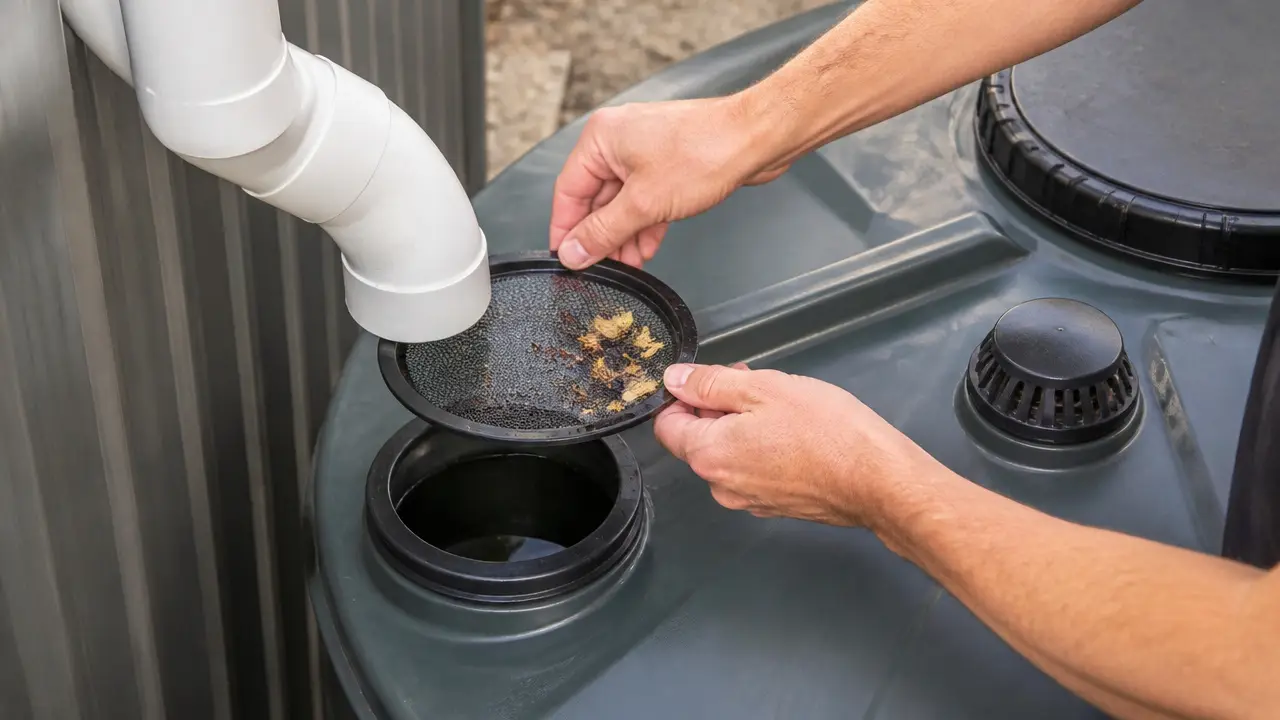
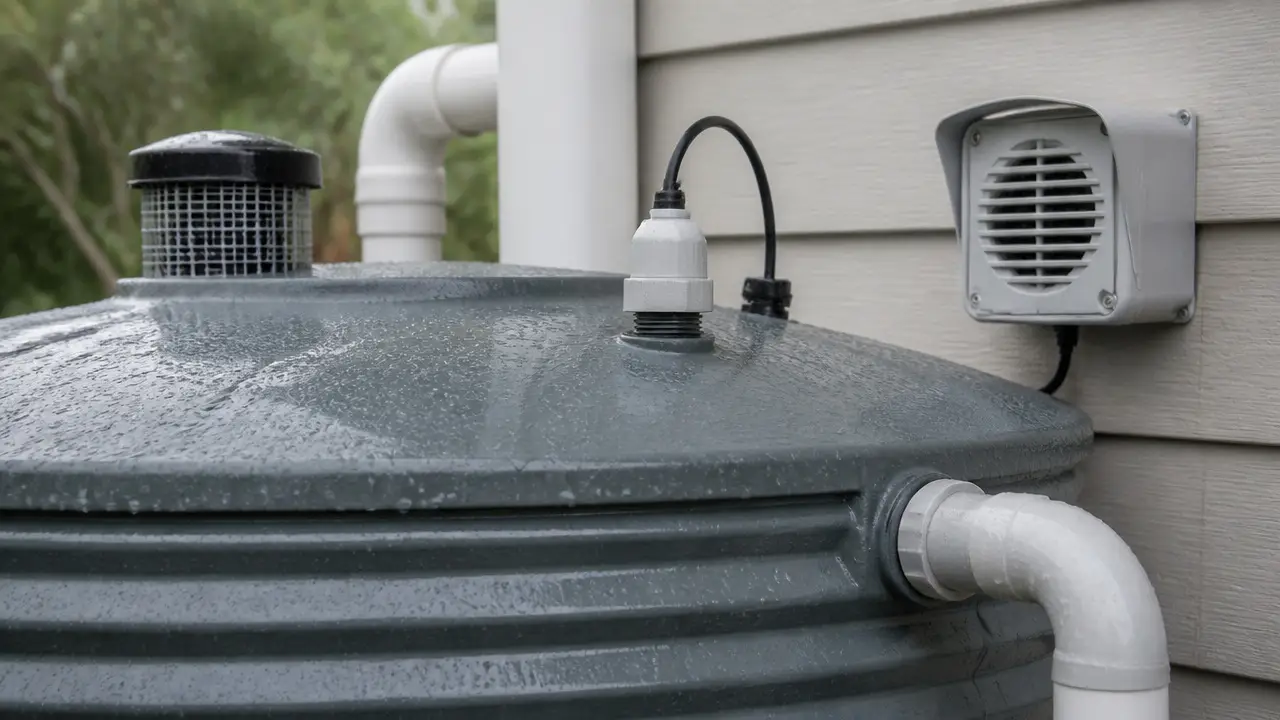
An air vent filter for a water tank is a filter fitted to the tank’s air vent. It lets air move in and out while helping keep insects, dust, leaves, and other debris from entering the stored water.
The vent is important because a closed tank needs to breathe. When water enters the tank, air must escape. When water leaves the tank, replacement air must enter.
Why a Water Tank Needs an Air Vent
A water tank should not be completely sealed unless it was specifically designed as a pressure vessel.
For a typical rainwater tank, IBC tote, cistern, or storage tank, the vent helps balance air pressure as the water level changes.
Without enough venting, several problems can occur:
- A pump can create a partial vacuum inside the tank.
- Thin tank walls can flex or deform.
- Water may drain more slowly.
- Filling can push air through lids, fittings, or other openings.
- Pressure changes can stress seals and connections.
The vent opening should be large enough for the expected filling and withdrawal rates. A tiny vent can become a restriction when a large pump or fast inlet moves water quickly.
What the Air Vent Filter Does
An air vent filter adds a protective barrier over the vent opening.
The exact design varies, but most tank vent filters are intended to block one or more of the following:
- Mosquitoes and other insects
- Leaves
- Dust
- Small debris
- Animals or pests trying to enter the opening
For rainwater storage, insect screening is especially useful. Mosquitoes can breed in standing water if they can reach the inside of the tank.
A vent filter does not normally clean the water already inside the tank. Its job is to reduce contamination entering through the air opening.
Vent Screen vs. Vent Filter
The terms are sometimes used loosely.
A vent screen is usually a mesh barrier. It mainly keeps insects and larger debris out.
A vent filter may use finer material to reduce smaller airborne particles as well.
Finer is not always better. A very fine filter can restrict airflow or clog quickly.
For many outdoor rainwater tanks, a durable insect-resistant screen is more practical than a very fine air filter. The vent still needs to move enough air for the system.
Where the Vent Filter Is Installed
The vent is normally located near the top of the tank, above the highest normal water level.
Depending on the tank, it may be built into:
- A tank lid
- A dedicated vent fitting
- An overflow assembly
- A short vent pipe
- A screened opening in the tank wall
Some systems use the overflow pipe as part of the tank's ventilation. In that case, the overflow must remain open enough to move both water and air.
Do not block an overflow simply to keep insects out. Use a suitable screen or fitting that allows the required flow.
How to Choose a Suitable Vent Filter
The best vent setup depends more on the tank and water system than on the filter alone.
Match the Connection
Check how the vent attaches to the tank.
Common possibilities include threaded fittings, slip-fit pipe connections, flanges, or screened caps. Avoid forcing together fittings with different thread types or sizes.
Allow Enough Airflow
The vent must support the fastest expected movement of water.
For example, a small garden rain barrel usually needs much less airflow than a large cistern being filled rapidly or supplying a high-flow pump.
The vent should not become the bottleneck.
Use Insect-Resistant Screening Outdoors
For rainwater tanks, openings should be protected against insects without stopping normal ventilation.
Inspect screens regularly. Dirt, spider webs, algae, or leaves can reduce the open area.
Consider the Environment
A tank near a dusty road or workshop may need more protection from airborne material than a tank in a clean residential yard.
A finer filter may help, but it will generally require more frequent cleaning or replacement.
Can a Tank Vent Filter Make Rainwater Safe to Drink?
Guidance on the effects when you don’t have a vent pipe helps compare practical installation decisions for consistent operation.
No.
A vent filter is only one small part of protecting stored water. It cannot establish that rainwater is potable, meaning safe for drinking.
Roof runoff can pick up material from roofing surfaces, gutters, bird droppings, dust, insects, and other sources before it ever reaches the tank.
A drinking-water system may require suitable collection surfaces, debris removal, first-flush management, filtration, disinfection, careful storage, maintenance, and current laboratory testing. Local requirements may also apply.
An air vent filter should therefore be treated as contamination control, not as drinking-water treatment.
Does the Filter Need Maintenance?
Yes.
Check the vent during routine tank maintenance. A blocked vent can cause problems even if the tank itself is clean.
Look for:
- Dust buildup
- Insect nests
- Spider webs
- Leaves
- Damaged mesh
- Corrosion
- Algae or organic growth
- Cracked fittings
Clean or replace the screen or filter according to its design. Do not permanently remove insect protection just because it has become clogged.
Also check the vent after storms, nearby construction, heavy pollen seasons, or other conditions that could load the screen with debris.
What Happens If the Vent Is Too Small or Clogged?
A restricted vent can prevent air from entering or leaving the tank quickly enough.
You may notice:
- Tank walls pulling inward while pumping
- Tank walls bulging while filling
- Unusual gurgling
- Slow water flow
- Pumps struggling to draw water
- Air moving through unintended openings
- Leaks developing around lids or fittings
If a tank visibly deforms, stop the filling or pumping operation and find the cause. Do not assume the tank can safely handle vacuum or internal pressure.
Large tanks, high-flow pumps, or complex plumbing systems may need vent sizing from the tank manufacturer or a qualified system designer.
Air Vents and Tank Overflows Work Together
The vent and overflow have different jobs, even though some systems combine them.
The vent allows air movement.
The overflow provides a safe path for excess water when the tank becomes full.
Both need to remain clear.
A blocked overflow can cause water to back up into gutters or force its way through tank openings. A blocked vent can create pressure differences even when the overflow itself is not carrying water.
For rainwater tanks, both openings should also be protected against insects where practical without reducing the required flow.
Frequently Asked Questions
Does every water tank need an air vent?
Most non-pressurized storage tanks need a way for air to enter and leave as the water level changes. Some tanks use a dedicated vent, while others use a vented lid or overflow arrangement.
Can I completely seal my rainwater tank?
A normal atmospheric storage tank should not be sealed in a way that prevents pressure equalization. Filling and pumping water changes the amount of air inside the tank.
Is mosquito mesh enough for a tank vent?
For many outdoor rainwater tanks, suitable insect-resistant mesh is an effective way to protect the vent while allowing airflow. It still needs to be kept clean and sized so it does not restrict ventilation.
Can I use a very fine filter on the vent?
You can use finer filtration in some systems, but very fine material creates more airflow resistance and may clog quickly. Make sure the vent can still handle the tank's filling and withdrawal rates.
How often should I clean a tank vent filter?
Inspect it as part of routine tank maintenance and more often when the area is dusty, leafy, or insect-prone. Clean it whenever buildup begins to reduce the open area.
Can a blocked vent damage a water tank?
It can. Pumping water from a poorly vented tank can create a partial vacuum, while rapid filling can create positive pressure. Some storage tanks are not designed to withstand either condition.
Does an air vent filter remove bacteria from rainwater?
A normal vent filter is not a complete water-treatment device and should not be relied on to make stored rainwater microbiologically safe. Drinking-water safety requires evaluation of the whole collection, treatment, storage, and testing system.