As an affiliate, we may earn a commission from qualifying purchases. We get commissions for purchases made through links on this website from Amazon and other third parties.
A water tank usually needs a vent. The vent lets air move in and out as the water level changes.
Without enough venting, a tank can build pressure while filling or develop a vacuum while draining. Either problem can damage the tank, slow water flow, or cause fittings and seals to leak.
The vent also needs to be designed so insects, debris, and dirty water cannot easily enter the tank.
Why a Water Tank Needs a Vent
Water takes up space inside a tank. Air fills the space above the water.
When water enters the tank, that air has to escape. When water leaves the tank, replacement air has to enter.
A vent provides that path.
Think of pouring water from a bottle. If air cannot enter smoothly, the water may glug and flow unevenly. A storage tank has the same basic problem, but the forces can be much greater.
Proper venting helps prevent:
- Pressure buildup while the tank fills
- Vacuum formation while the tank drains
- Slow or uneven water flow
- Tank walls pulling inward
- Stress on lids, seals, and fittings
- Overflow problems caused by trapped air
A tank designed as a sealed pressure vessel is different. Most rainwater tanks, rain barrels, IBC totes, and atmospheric cisterns are not pressure vessels and should not be treated like one.
What Happens If a Water Tank Is Not Vented?
An unvented tank can have problems during both filling and draining.
Pressure can build while filling
As water enters, it pushes air toward the top of the tank.
If the air cannot escape fast enough, pressure rises. Lightweight plastic tanks can bulge. Seals, covers, or fittings may also be stressed.
A pump can make the problem worse because it may move water into the tank much faster than gravity-fed roof runoff.
A vacuum can form while draining
When water leaves the tank, air must replace it.
If air cannot enter, the pressure inside the tank drops. A flexible plastic tank may begin to pull inward.
In more severe cases, the tank can deform or collapse.
The risk depends on the tank design, water flow rate, strength of the tank, and how restricted the vent is.
Do Rainwater Tanks Need Vents?
Yes. A typical rainwater storage tank should be vented unless the tank manufacturer specifically designed the system differently.
Rainwater tanks are usually atmospheric tanks. This means the air space inside stays close to normal outdoor air pressure.
The tank may already be vented through:
- A screened vent fitting
- A vented access lid
- An overflow designed to allow air movement
- A separate vent pipe
Do not assume an ordinary closed lid provides enough ventilation.
Also do not assume that an overflow automatically provides adequate venting. Its size, location, plumbing layout, and screening can restrict airflow.
Follow the tank manufacturer's venting requirements when they are available.
Does a Rain Barrel Need a Vent?
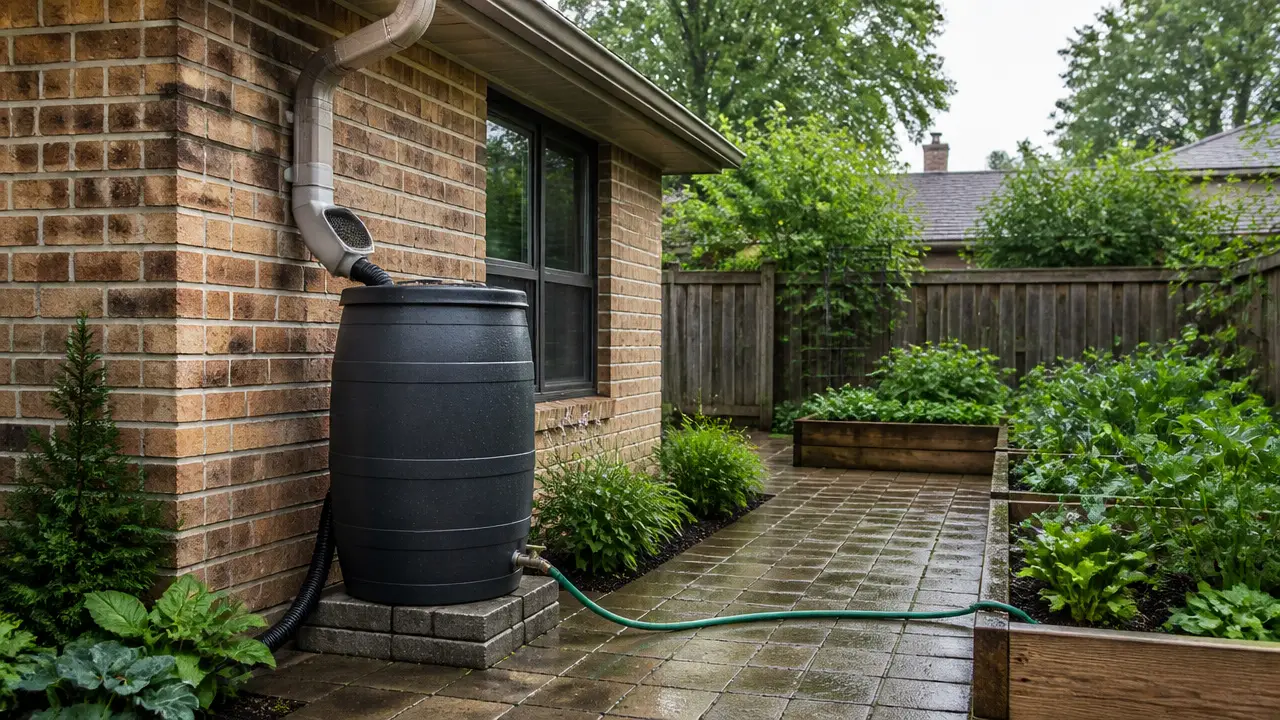
A rain barrel also needs a way for air to move.
Some rain barrels are naturally vented because the lid is not airtight. Others have screened openings near the top.
A tightly sealed barrel connected to a downspout can become pressurized as rainwater enters. A sealed barrel can also resist draining through a hose or spigot because replacement air cannot enter.
Any vent opening should still be protected against mosquitoes and debris.
Does an IBC Tote Need a Vent?
An IBC tote used for water storage should normally be able to breathe as its water level changes.
IBC totes often have top caps or lids that may include venting features, but configurations vary. Do not assume every cap is automatically suitable for your water system.
This matters especially when:
- A pump fills the tote
- A pump draws water from the tote
- Several totes are connected together
- The original lid or cap has been replaced
- The tote drains through a large outlet
Large water flows require enough airflow to prevent pressure or vacuum conditions.
Also make sure an IBC tote previously held a material suitable for its intended reuse. A tote with an unknown or unsuitable previous contents should not be used for drinking-water storage.
How Large Should a Tank Vent Be?
There is no single vent size that works for every tank.
Vent capacity depends mainly on how fast water can enter or leave the tank. Faster water movement requires faster air movement.
Important factors include:
- Maximum fill flow
- Maximum pump withdrawal rate
- Tank size and construction
- Overflow arrangement
- Vent pipe length
- Screens or filters that restrict airflow
- Manufacturer requirements
The vent should be able to move enough air for the highest realistic water flow without creating harmful pressure or vacuum inside the tank.
This is particularly important on large cisterns and tanks connected to pumps.
Do not reduce a manufacturer's specified vent size just because the opening looks larger than necessary.
Can the Overflow Be Used as the Vent?
Sometimes, but not always.
A large, properly arranged overflow may allow enough air to pass in and out of an atmospheric tank. Some tank systems are designed this way.
However, airflow can be restricted by:
- Long overflow pipes
- Small pipe diameter
- Water trapped in low sections
- Screens
- Flap valves
- Insect guards
- Sharp plumbing bends
- Partially blocked pipes
A dedicated vent can provide a more reliable air path when the overflow plumbing is restrictive.
Check the tank design rather than assuming the overflow will handle both jobs.
Where Should a Water Tank Vent Be Located?
A tank vent is normally located near the top of the tank, above the normal water level.
The opening should remain clear during normal operation.
Its location should also reduce the chance of contaminants entering the stored water. Avoid placing an open vent where runoff, soil, insects, animals, or dirty splash water can easily reach it.
Outdoor tank vents are commonly protected with a suitable screen or vent fitting.
The exact arrangement depends on the tank and intended water use.
Should the Vent Have a Screen?
A rainwater tank vent should generally be protected from insects and debris.
This is especially important in areas where mosquitoes can breed in standing water.
Look closely at the effects when you don’t have a vent pipe to evaluate whether the selected components work together before purchase.
The screen should be:
- Securely fitted
- Resistant to corrosion
- Fine enough for the intended pest control
- Easy to inspect
- Kept clean enough to allow airflow
A dirty screen can become a serious restriction.
That means a well-screened vent still needs maintenance.
Can You Completely Seal a Water Storage Tank?
Do not completely seal a normal atmospheric water tank unless it was specifically engineered to operate that way.
A sealed tank can experience both positive pressure and vacuum.
Most common rainwater tanks are not designed to contain those forces.
Keeping contaminants out does not mean making the tank airtight. A better approach is controlled ventilation through protected openings.
This lets air move while reducing access for insects, leaves, animals, and other contaminants.
Venting a Tank Connected to a Pump
Pump systems deserve extra attention because pumps can move water much faster than typical gravity flow.
Pumping water out
If a pump draws water from an atmospheric tank, the vent must let replacement air enter fast enough.
A blocked vent can cause the tank to pull inward before the pump itself shows an obvious problem.
Pumping water in
If a transfer pump fills the tank, air must escape at roughly the same rate that water displaces it.
A restricted vent can allow pressure to build.
For larger pumps or cisterns, use the tank and pump manufacturers' requirements rather than guessing at vent size.
Venting Tanks Connected Together
Multiple tanks connected at the bottom can behave like one larger storage system, but each tank still needs a reliable way to equalize air pressure.
Do not assume air can always travel between tanks through the water connection.
This becomes especially important when tanks:
- Fill unevenly
- Have separate lids
- Have different elevations
- Are joined through small pipes
- Are pumped rapidly
A venting problem in one tank can cause unexpected water levels or tank deformation even when the other tanks appear normal.
What About Underground Cisterns?
Underground cisterns also require proper ventilation according to their design.
Their venting needs can be more complicated because the vent outlet must be routed to a suitable location while keeping surface water, insects, and debris out.
Underground tanks also involve structural loads, excavation hazards, groundwater pressure, and confined-space risks.
Never enter a cistern or underground tank unless proper confined-space procedures are being used by qualified people. These spaces can contain dangerous atmospheres even when they appear harmless from above.
Venting in Freezing Climates
Cold weather can create another problem: ice.
A vent that becomes blocked by ice can effectively turn an atmospheric tank into a sealed tank.
Vent pipes and screens should be positioned and maintained so condensation, snow, or ice is less likely to block airflow.
Freeze protection should consider the entire system, including:
- Tank fittings
- Overflow pipes
- Valves
- Pumps
- Exposed water lines
- Vent openings
Do not assume that insulating only the tank will protect the rest of the system.
Keep the Vent Clean
Tank vents should be part of normal system maintenance.
Periodically check for:
- Insect nests
- Leaves
- Dust
- Algae or biological growth
- Spider webs
- Corrosion
- Damaged screening
- Ice
- Crushed or disconnected vent pipes
A vent can look open from the outside while still being partly blocked.
Check it more often if the tank suddenly drains slowly, bulges while filling, pulls inward while pumping, or makes unusual air noises.
Venting Does Not Make Rainwater Safe to Drink
A vent is necessary for normal tank operation, but it is only one part of protecting stored water.
A screened vent can reduce the entry of insects and debris. It does not remove contaminants already present in roof runoff or storage.
Rainwater intended for drinking requires a complete approach that may include suitable collection surfaces, debris control, first-flush management, protected storage, appropriate treatment, ongoing maintenance, current laboratory testing, and compliance with applicable local requirements.
A first flush device diverts some of the first roof runoff from a rain event because that water can carry accumulated dirt and debris.
Do not treat a screened vent, sediment filter, UV unit, or other single component as proof that stored rainwater is potable. Potable means suitable for drinking.
Frequently Asked Questions
Does every water storage tank need a vent?
Most atmospheric water storage tanks need a way for air to enter and leave. Tanks specifically engineered as pressure vessels operate differently and should follow their manufacturer's design requirements.
What happens if a tank vent is blocked?
The tank may build pressure while filling or develop a vacuum while draining. This can cause poor flow, deformation, leaks, or damage to the tank and fittings.
Can I drill a small vent hole in a tank lid?
A hole may allow some airflow, but it may not provide enough capacity or protection from insects and contamination. Use the tank manufacturer's recommended vent arrangement whenever possible.
Can I use the overflow pipe as a vent?
Sometimes. It depends on the tank design and the overflow plumbing. Long pipes, screens, bends, valves, or trapped water can restrict airflow, so a dedicated vent may still be needed.
Should a water tank vent be airtight except when pressure builds?
Normal atmospheric storage tanks generally need continuous pressure equalization rather than an airtight relief-only arrangement. Follow the tank manufacturer's instructions for the specific system.
Why does my plastic tank suck inward when I pump water out?
The tank may not be receiving replacement air fast enough. A blocked or undersized vent is one possible cause. Stop operating the system if the tank is deforming and inspect the venting before continuing.
Does a vent need mosquito screening?
Outdoor rainwater storage openings should be protected against insect entry where appropriate. Screens must also remain clean enough to allow adequate airflow.
Does a vent make stored rainwater safe for drinking?
No. Venting protects tank operation and can help limit pest entry, but it does not make rainwater potable. Drinking-water use requires suitable collection, treatment, maintenance, testing, and compliance with applicable local requirements.