As an affiliate, we may earn a commission from qualifying purchases. We get commissions for purchases made through links on this website from Amazon and other third parties.
Where Should a Rainwater Tank Vent Pipe Be Installed?
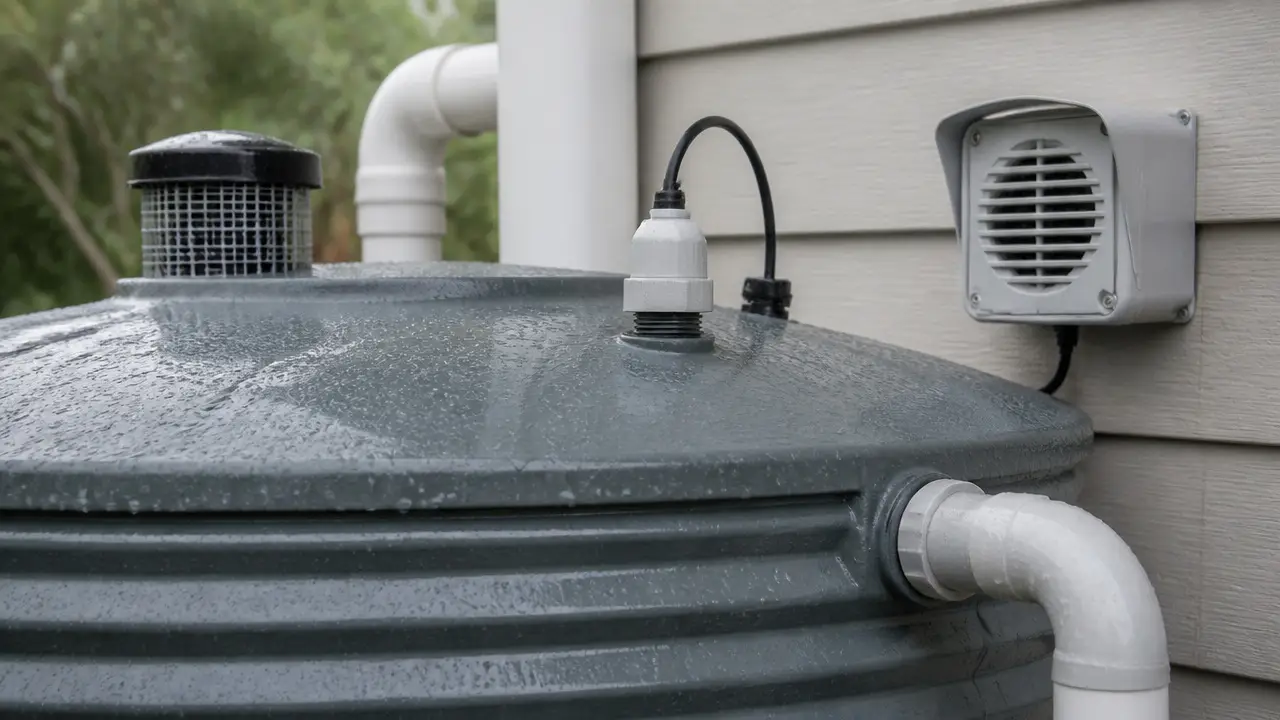
A rainwater tank vent pipe should be installed near the top of the tank, above the normal maximum water level.
The vent needs to connect to the tank’s air space rather than stay underwater. Its job is to let air move in and out as the tank fills and empties.
The vent opening should also be positioned where insects, debris, surface water, and animals cannot easily enter the tank.
For most above-ground rain barrels, IBC totes, and cisterns, this means installing the vent through the upper wall or top of the tank. Underground tanks may use a vertical vent pipe that rises above the surrounding ground.
Why a Water Tank Needs a Vent
A sealed tank cannot freely exchange air with the outside.
When rainwater enters the tank, it pushes air out. When a pump or gravity-fed outlet removes water, air must come back in.
Without enough ventilation, pressure or vacuum can build inside the tank. This can contribute to:
- Slow filling or draining
- Tank deformation
- Pump problems
- Overflow behaving poorly
- Stress on tank fittings or walls
Many storage tanks are not designed to operate as pressure vessels. Their vents should remain open enough to keep the inside close to normal atmospheric pressure.
Install the Vent Above the Highest Water Level
The main rule is simple: the vent connection belongs in the air space at the top of the tank.
Do not install the vent low on the tank where normal water levels could cover it.
A submerged vent cannot move air properly. Water may also enter the vent pipe and interfere with airflow.
If the tank has an overflow fitting near the top, the vent is usually installed at about the same general upper portion of the tank, although the exact arrangement depends on the tank design.
Always use connection points approved by the tank manufacturer when they are provided.
Where to Put the Vent on an Above-Ground Tank
For an above-ground rainwater tank, common locations include:
- The top surface of the tank
- An upper sidewall connection
- A dedicated molded vent opening
- A tank lid designed to provide ventilation
The vent should remain above the tank's normal operating water level.
Avoid putting it directly below a roof valley, gutter discharge, sprinkler, or other place where water can repeatedly splash into the opening.
The end of the vent should also be protected from insects and larger debris.
Where to Put the Vent on an Underground Tank
An underground tank needs the same air movement, but the vent opening should not simply terminate at ground level.
A typical arrangement uses a vent pipe connected to the upper air space of the tank and extended vertically above the surrounding surface.
The above-ground opening helps reduce the chance of:
- Rain runoff entering the tank
- Mud blocking the vent
- Floodwater flowing through the opening
- Leaves collecting against the screen
Keep the vent away from low spots where surface water collects.
For buried cisterns used as part of a household water system, tank placement, venting, access, plumbing, and treatment may also be subject to local requirements. Follow the tank manufacturer's instructions and applicable local plumbing or health rules.
Keep the Vent Away From Sources of Contamination
A vent allows outside air to communicate with stored water, so its location matters.
Avoid terminating a tank vent beside obvious contamination sources such as:
- Sewer vents
- Septic-system components
- Compost piles
- Animal enclosures
- Vehicle exhaust
- Chemical storage areas
- Dusty workshop exhausts
This becomes especially important when rainwater will receive additional treatment for indoor uses.
Rainwater collected from a roof should not be assumed to be potable, meaning safe for drinking. Drinking-water systems require appropriate collection, treatment, maintenance, testing, and compliance with applicable local requirements.
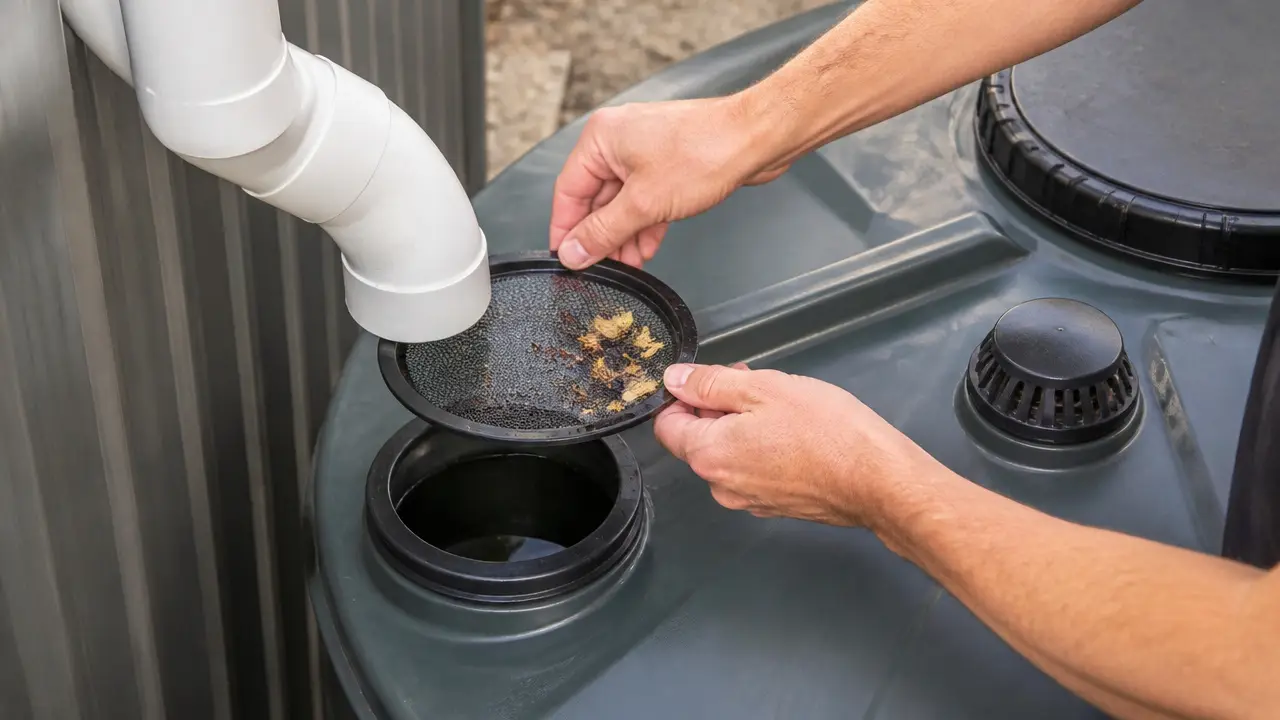
Screen the Vent Opening
An open pipe is an easy entry point for insects.
Use a suitable corrosion-resistant insect screen or a purpose-made screened vent fitting.
The screen should keep mosquitoes and larger insects out without restricting airflow too much.
A very fine or dirty screen can reduce airflow. Check it regularly for:
- Dust
- Spider webs
- Algae
- Insect nests
- Leaves
- Ice
- Corrosion
Cleaning the vent screen should be part of routine tank maintenance.
Do Not Make the Vent Too Small
The vent has to move enough air for the rate at which water enters or leaves the tank.
A small vent may seem adequate while the tank is sitting still but become restrictive during heavy rainfall, rapid pumping, or fast filling from another source.
The required vent size depends on factors such as:
- Tank size
- Maximum inlet flow
- Pump flow rate
- Overflow arrangement
- Manufacturer requirements
Do not automatically assume that a small plumbing vent is suitable for a large cistern.
For large tanks or systems with powerful pumps, follow the manufacturer's vent-sizing requirements or have the system checked by someone familiar with water-storage systems.
The Vent and Overflow Are Not Always the Same Thing
Tank vents and overflows serve different jobs.
The vent moves air.
The overflow carries away excess water after the tank reaches its maximum level.
Some tank designs allow an adequately sized overflow arrangement to provide part or all of the required air movement. Other tanks have a separate vent connection.
Do not block an overflow or assume it can serve as a vent unless the system was designed that way.
Both pathways should remain protected against insects where practical.
Keep Water Out of the Vent Pipe
A vent should be arranged so that rain does not easily fall or run directly through it.
Common approaches include a downward-facing vent termination or a purpose-made weather-protected vent cap.
The important point is that the fitting must still allow free airflow.
Guidance on proper placement for an underground water tank helps understand storage reserves based on use rate and likely rainfall.
Do not use a sealed cap.
For outdoor tanks, also make sure water cannot collect inside a sagging or poorly arranged vent line.
Avoid Low Loops and Traps
The vent pipe should have a clear air path.
Avoid routing it with deep low spots that can fill with condensation or rainwater. A water-filled section can act like a trap and block ventilation.
A short, simple vent route is generally easier to inspect and maintain.
If a longer vent run is necessary, arrange it so moisture cannot easily collect and block the pipe.
Protect the Vent in Freezing Climates
A vent must stay open during cold weather if the tank remains in service.
Ice can block:
- Screens
- Small vent openings
- Condensate-filled sections
- Exposed fittings
Do not assume that adding insulation alone will keep a vent from freezing.
Systems operated through winter need a design appropriate for the local climate, including consideration of the tank, pipes, valves, overflow, pump, and vent.
If freezing could damage a large tank or pressure system, get help from an installer familiar with cold-weather water storage.
Do Not Damage the Tank When Adding a Vent
Before drilling a tank, check whether it already has a vent connection.
Many tanks include molded connection points or fittings intended for specific purposes. Drilling into an unsupported area can weaken the wall or create a leak.
Also be careful with fittings installed through curved tank walls.
A bulkhead fitting is a fitting that passes through a tank wall and seals around the opening. It creates a secure threaded connection for a pipe or fitting.
Use a fitting suitable for the tank material and wall shape.
Large cisterns and underground tanks may have structural limitations that make field modifications inappropriate. Follow the manufacturer's instructions rather than simply drilling wherever space is available.
Vent Placement for Common Rainwater Systems
Rain Barrels
Small rain barrels often vent through the lid, screened inlet, or overflow arrangement.
Make sure the barrel cannot become completely sealed when the lid is installed.
Keep all openings screened against mosquitoes.
IBC Totes
An IBC tote usually has a large top opening, but replacing its original cap with an airtight arrangement can prevent normal ventilation.
If the tote is being adapted for permanent rainwater storage, provide a protected vent in the upper air space.
Avoid altering the structural cage or unsupported parts of the container unnecessarily.
Above-Ground Cisterns
Use the tank manufacturer's intended vent connection whenever possible.
The vent should remain above the maximum water level and protected from insects and weather.
Underground Cisterns
Connect the vent to the upper air space and terminate it safely above ground.
Do not place the opening where stormwater, mud, or floodwater can enter.
Underground tanks also require safe access arrangements. Never enter a cistern or other confined tank unless proper confined-space procedures are being followed.
Check the Vent During Routine Maintenance
A tank vent is simple, but it still needs attention.
Inspect it when you inspect gutters, screens, filters, overflows, and tank fittings.
Look for:
- Blocked screens
- Insect nests
- Mud
- Plant growth
- Corrosion
- Cracked fittings
- Loose connections
- Standing water in the pipe
- Ice damage
A blocked vent can cause problems that may initially look like a pump, inlet, or overflow issue.
Frequently Asked Questions
Does a rainwater tank need a vent?
Usually, yes. Air must leave the tank as water enters and return as water is removed. Some tanks obtain adequate ventilation through a specially designed overflow or inlet system, while others require a separate vent.
Should the vent be at the top or bottom of the tank?
The vent should connect to the air space at the top of the tank, above the normal maximum water level.
Can the overflow pipe be used as the tank vent?
Sometimes, but only if the tank and overflow system are designed to provide enough unrestricted airflow. A separate vent may still be required.
Should a water tank vent be screened?
Outdoor rainwater tank vents should generally have suitable insect screening. The screen must still allow enough airflow and should be kept clean.
Can I put a cap on the vent pipe?
You can use a vent cap designed to keep out rain and debris, but it must not seal the pipe. The tank still needs free airflow.
How high should an underground tank vent extend?
It should terminate above the surrounding ground where surface runoff, mud, and normal flooding are unlikely to enter it. Exact requirements can depend on the tank design and local rules.
Why does my rainwater tank collapse inward?
A blocked or undersized vent can create a vacuum as water leaves the tank, which may contribute to deformation. Stop operating the system if the tank is visibly deforming and check the venting and manufacturer's requirements before continuing.