As an affiliate, we may earn a commission from qualifying purchases. We get commissions for purchases made through links on this website from Amazon and other third parties.
An underground water tank should be placed on stable ground where it can be safely buried, reached for maintenance, connected to the collection system, and protected from flooding, groundwater pressure, vehicle loads, utilities, and nearby structures.
The best spot is often near the building collecting the rainwater, but not so close that excavation could affect the foundation. The exact location also depends on the tank design, soil, groundwater level, pipe elevations, overflow route, and intended water use.
What Makes a Good Underground Tank Location?
A good location usually has these features:
| Location factor | What to look for |
|---|---|
| Ground | Stable soil that can support a full tank |
| Groundwater | A location with low risk of the tank becoming buoyant |
| Flooding | Ground that does not regularly flood or collect surface water |
| Buildings | Enough clearance from foundations and retaining walls |
| Utilities | No buried gas, electric, sewer, water, or communication lines in the excavation area |
| Traffic | Outside driveways unless the tank and installation are designed for vehicle loads |
| Rainwater inlet | Practical pipe run from gutters or collection points |
| Water use | Reasonably close to the pump and places where the water will be used |
| Overflow | A safe place for excess water to drain |
| Maintenance | Clear access to lids, filters, pumps, and inspection openings |
The tank manufacturer's installation instructions should also be treated as part of the location decision. Different underground tanks have different limits for burial depth, backfill, groundwater, and loads above the tank.
Keep the Tank Away From Building Foundations
Do not choose a spot simply because it is close to a downspout.
Installing a large underground tank requires removing a large amount of soil. Excavation near a house, garage, retaining wall, or other structure can remove soil that helps support the foundation.
The risk depends on:
- excavation depth
- distance from the structure
- soil type
- foundation depth
- slope
- groundwater
- size of the tank
There is no single safe foundation distance that works for every installation.
If the excavation could enter the area supporting a foundation or retaining wall, have the location reviewed by a qualified contractor or engineer before digging.
Keeping the tank reasonably close to the building can still be useful. Shorter pipe runs are usually easier to install and maintain. Philadelphia Water Department guidance, for example, notes that locating cisterns near the collection area or end use can reduce the amount of piping needed.
Check the Groundwater Level Before Choosing the Spot
Groundwater can create a serious problem for underground tanks.
An empty or partly empty tank can act somewhat like a boat. If groundwater rises around it, the water can push upward on the tank. This is called buoyancy.
In severe cases, an improperly installed tank can shift or rise out of the ground.
High groundwater does not always mean an underground tank is impossible. It may mean the installation needs special engineering, anchoring, drainage, or a different type of tank.
EPA guidance for underground tanks notes that soil conditions and groundwater can greatly affect buoyancy and that anchoring may be needed where flotation is possible.
Watch for signs such as:
- a seasonally high water table
- standing water after rain
- nearby wetlands
- frequently wet soil
- sump pumps running often in nearby buildings
- previous flooding
- water entering test holes or excavations
Do not guess about an anchoring system. Tank shape, volume, groundwater level, soil, backfill, and tank weight all affect the forces involved.
Avoid Low Spots and Flood-Prone Areas
An underground tank does not need to be on the highest point of the property, but avoid obvious drainage depressions when possible.
Surface water around the access lid can create several problems. It may enter poorly sealed fittings, wash soil away, make maintenance difficult, or increase groundwater pressure around the tank.
Access openings should be positioned and installed so surface water does not readily enter the tank. Philadelphia's cistern guidance specifically requires subsurface access openings to prevent surface or groundwater from entering through the top of fittings.
Also consider where water will go when the tank is full.
Every rainwater tank needs a planned overflow route. The overflow should carry excess water somewhere that will not:
- wash soil away from the tank
- flow toward the house
- flood a neighbor
- create a muddy maintenance area
- run back into the tank excavation
A tank may be underground, but its overflow still has to work by gravity unless a separate pumped system has been designed.
Locate Underground Utilities Before Digging
Never choose the final excavation area without checking for buried utilities.
Possible conflicts include:
- electrical cables
- natural gas lines
- water service
- sewer pipes
- septic piping
- irrigation lines
- communication cables
- drainage pipes
In the United States, contact the local 811 service before excavation so participating utilities can mark buried lines. OSHA also requires underground installations to be identified before covered excavation work begins.
Utility markings do not necessarily identify every privately installed pipe or cable on a property. Old irrigation lines, private electrical feeds, septic piping, and similar systems may require separate investigation.
Stay Clear of Driveways Unless the Tank Is Designed for Traffic
Putting a tank under a driveway can save yard space, but it changes the installation requirements.
A normal underground rainwater tank should not automatically be assumed to support cars, trucks, tractors, or other heavy loads.
Traffic loads may be transferred through:
- pavement
- soil
- access covers
- tank risers
- backfill
- the tank itself
Some underground systems are specifically designed for these loads. Others are not.
Philadelphia's subsurface cistern standards require designs to account for expected vehicle loads where vehicles may travel above the storage system.
Unless the manufacturer clearly allows the planned traffic loading and specifies the required installation, place the tank under a lawn or another non-traffic area instead.
Do not assume adding extra soil or concrete above an ordinary tank makes it safe for vehicles.
Make Sure the Tank Can Be Reached for Maintenance
Do not bury the tank somewhere that will become impossible to reach later.
Underground systems still need maintenance.
Depending on the system, you may need access to:
- the tank lid
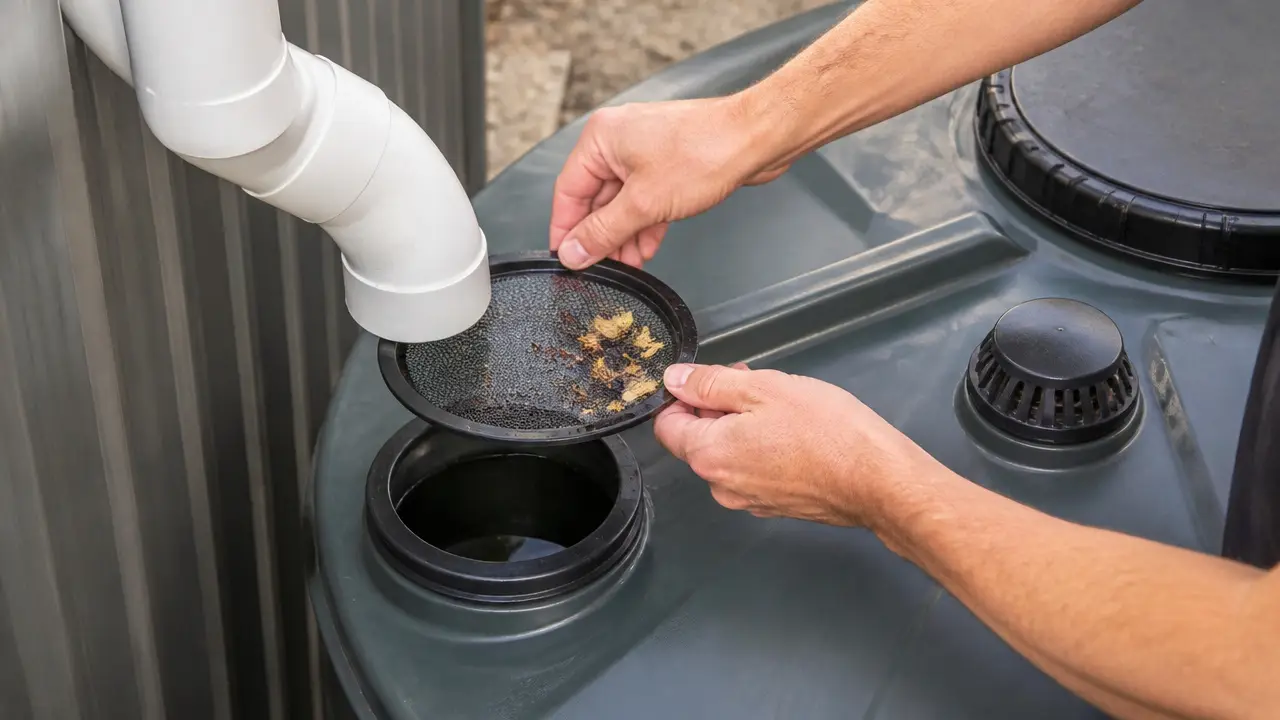
- inlet screens
- prefilters
- first-flush equipment
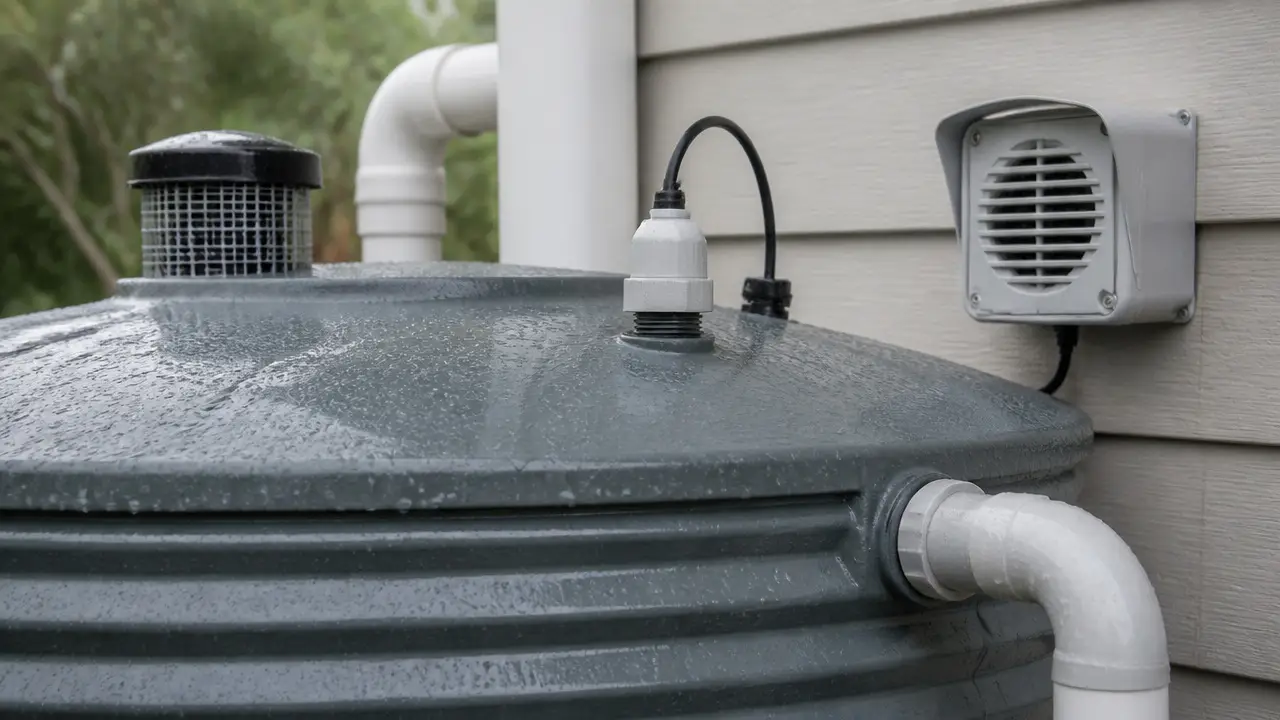
- pump
- pump controls
- level sensors
- outlet fittings
- overflow
- sediment inside the tank
A first-flush diverter is a device that sends away some of the first roof runoff from a rainfall event. That first runoff can contain dirt and debris that accumulated on the roof.
Leave enough room around access points for inspection and service equipment.
Do not plan on entering the tank for routine cleaning. Underground tanks and cisterns can present serious confined-space hazards. Cleaning and repair methods should be designed so work can normally be done from outside the tank.
Keep Pipe Runs Practical
Tank placement affects how easily rainwater can get into the tank.
For a roof collection system, water normally moves through gutters and downspouts and then through an inlet pipe.
The inlet pipe needs enough downward slope to drain properly unless the system has been specifically designed to work differently.
A tank placed too far away or too high relative to the collection pipes can make this difficult.
Before excavation, work out:
- where the downspouts will join
- the height of the collection pipe
- the required pipe slope
- the tank inlet height
- the tank overflow height
- where the overflow will discharge
Examine suitable placement for a rain barrel to compare reserve capacity for likely demand and collection rates.
This simple elevation check can prevent discovering after excavation that the inlet pipe is too low for the tank.
Think About Where the Stored Water Will Be Used
The tank does not always need to be closest to the roof. The intended use also matters.
For example, a tank serving garden irrigation may work well between the house and garden. A tank supplying a cabin may make more sense near the building containing the pump and treatment equipment.
Most underground tanks rely on a pump because the stored water is below the point of use.
Keeping the tank reasonably close to the pump and distribution system can reduce unnecessary pipe length.
For pumped systems, placement may also affect:
- pipe size
- flow rate
- pressure loss
- electrical runs
- freeze protection
- pump access
Flow rate means how much water moves through the system during a given amount of time, usually measured in gallons per minute or liters per minute.
Keep the Tank Away From Possible Contamination Sources
Placement becomes especially important when rainwater will be used for household purposes.
Avoid locations where contaminated surface water could easily enter the tank area.
Possible concerns include:
- septic systems
- sewage piping
- animal waste areas
- chemical storage
- fuel storage
- contaminated soil
- runoff from parking or vehicle service areas
Required separation distances from wells, septic systems, property lines, and buildings vary by location and by how the stored water will be used.
Check current local health, plumbing, building, stormwater, and sanitation requirements before choosing the final location.
Rainwater intended for drinking needs much more than a well-placed tank. Potable use should be treated as a complete system involving suitable collection surfaces, debris control, prefiltration, appropriate treatment, current laboratory testing, maintenance, and applicable local requirements.
Potable means suitable for drinking. Non-potable water is water that is not intended for drinking.
Make Sure the Soil Can Support the Tank
Water is heavy.
A large cistern can place many thousands of pounds of load on the ground beneath it when full.
The tank therefore needs suitable bedding and support. Poor soil can allow a tank to settle unevenly, move, or place stress on its connections.
Problems may include:
- soft soil
- loose fill
- expansive clay
- saturated ground
- buried construction debris
- steep slopes
The correct base and backfill depend on the tank design and local soil conditions.
Do not substitute your own bedding material because it seems stronger. Some plastic and fiberglass tanks require specific materials and compaction methods so the tank receives even support.
Follow the tank manufacturer's installation requirements.
Do Not Bury an Above-Ground Water Tank
A tank that holds water above ground is not automatically suitable for burial.
Soil creates pressure against the outside walls of a buried tank. When an above-ground tank is empty, its walls may not be designed to resist that pressure.
Use a tank specifically rated for underground installation.
Also check its limits for:
- maximum burial depth
- minimum soil cover
- groundwater
- backfill
- anchoring
- access risers
- traffic loads
Two tanks that look similar can have very different installation requirements.
A Simple Way to Compare Possible Locations
If you have several possible locations, evaluate them in this order:
- Eliminate unsafe excavation areas. Avoid utility conflicts and locations that could affect buildings or retaining walls.
- Check groundwater and flooding. Avoid locations with serious buoyancy or drainage problems unless the system is professionally designed for them.
- Check the tank requirements. Confirm burial depth, bedding, backfill, and load limits.
- Work out pipe elevations. Make sure rainwater can reach the inlet and the overflow can drain.
- Consider contamination sources. Follow any required local setbacks.
- Check maintenance access. Make sure lids, pumps, filters, and other parts remain reachable.
- Consider the water-use location. Avoid unnecessarily long distribution pipes.
- Plan the overflow. Know where excess rainwater will safely go before digging.
A slightly longer pipe run is usually a better tradeoff than putting the tank in a poor excavation location.
When Professional Help Makes Sense
A straightforward residential installation may still require excavation equipment and an experienced tank installer.
Professional design or installation becomes especially important when the tank will be:
- close to a building foundation
- beside a retaining wall
- installed in unstable soil
- installed on a steep slope
- below the groundwater table
- in an area that floods
- underneath vehicle traffic
- very large
- connected to household plumbing
- used as part of a drinking-water system
Deep excavations can collapse without warning. Do not enter an unsupported excavation or attempt structural, groundwater, or tank-anchoring work beyond your experience.
The tank location should be decided before ordering equipment whenever possible. Tank dimensions, inlet depth, access risers, burial limits, and installation requirements can all affect whether a particular spot will work.
Frequently Asked Questions
How close should an underground water tank be to a house?
There is no universal distance that is safe for every property. The tank can often be reasonably close to the building to shorten rainwater piping, but the excavation must not undermine or overload the foundation. Foundation depth, excavation depth, soil, slope, and tank size all matter.
Can an underground water tank go under a driveway?
Only when the tank and installation are specifically designed for the expected vehicle loads. Do not assume a standard underground tank can safely support cars or trucks.
Can I install an underground tank in an area with a high water table?
Sometimes, but high groundwater creates buoyancy risk. The tank may require special anchoring, drainage, bedding, or engineering. Follow the tank manufacturer's requirements and get professional help when groundwater can surround the tank.
Should an underground rainwater tank be near the downspout?
Being near the collection point can make the plumbing simpler, but it is not the only consideration. The location must also work with the foundation, utilities, groundwater, overflow, soil, and maintenance access.
Does an underground water tank need an overflow?
Yes. Rainwater storage eventually fills during enough rainfall. The system needs a safe route for excess water that does not damage the tank area, building, soil, or neighboring property.
Can any plastic water tank be buried?
No. Use a tank specifically designed and rated for underground installation. Above-ground tanks may collapse when surrounding soil presses against them.
Can I put an underground tank beside a septic system?
Do not choose the location until you have checked local separation requirements. Septic tanks, drain fields, sewer lines, wells, and rainwater storage systems may be subject to required setbacks, especially when the water has household uses.
Is an underground tank easier to protect from freezing?
Burial can reduce exposure to cold air, but it does not guarantee freeze protection. Local frost depth, burial depth, exposed pipes, pumps, filters, valves, and access risers must all be considered.