As an affiliate, we may earn a commission from qualifying purchases. We get commissions for purchases made through links on this website from Amazon and other third parties.
A sediment filter should be placed where it can catch dirt before that dirt reaches equipment that can clog or wear out, but the exact location depends on the type of filter.
For most pressurized rainwater systems, a replaceable cartridge sediment filter belongs after the pump and pressure tank, but before finer filters, UV treatment, appliances, or household fixtures.
A typical setup looks like this:
Roof → gutter screen → first-flush device → storage tank → pump → pressure tank → sediment filter → other treatment → fixtures
The important exception is the pump itself. If the pump needs protection from larger debris, use a suitable coarse strainer or intake screen before the pump rather than putting a restrictive fine cartridge filter on the pump's suction line.
Why Sediment Filter Location Matters
Rainwater can carry small particles even when the water looks clear. Common sediment includes:
- Dust from the roof
- Fine grit
- Pollen
- Bits of leaves
- Insect debris
- Material that settles in the storage tank
- Rust or scale from some pipes and fittings
A sediment filter traps these particles before they reach more sensitive parts of the system.
Putting the filter in the wrong place can cause problems. A filter that is too restrictive on the suction side of a pump can reduce water flow and make it harder for the pump to draw water. A filter installed too late may allow sediment to clog valves, irrigation emitters, treatment equipment, or plumbing first.
Best Location in a Typical Rainwater System
For a rainwater system supplying a cabin, household plumbing, or other pressurized fixtures, the usual order is:
- Storage tank
- Pump
- Pressure tank, if used
- Sediment filter
- Additional filtration or treatment
- Distribution plumbing
This location gives the sediment filter enough pressure to move water through the filter cartridge.
It also makes the filter easier to monitor. When sediment builds up, you may notice reduced pressure or flow downstream of the filter.
Why Put the Filter After the Pressure Tank?
A pressure tank stores a small amount of water under pressure. It helps keep a pump from switching on every time a faucet opens briefly.
Installing the main cartridge filter after the pressure tank is common because the pump can fill the pressure tank without having to pull water through a dirty cartridge.
Water leaving the pressure tank then passes through the sediment filter before reaching the rest of the system.
System designs vary, so follow the pump, pressure tank, and filter manufacturers' installation requirements when they specify a different arrangement.
Should a Sediment Filter Go Before the Pump?
Usually, a fine cartridge sediment filter should not be placed directly on the suction side of a typical water pump unless the system and pump manufacturer are designed for that arrangement.
The suction side is the pipe between the storage tank and the pump inlet.
Pumps need a reliable supply of water. A fine filter becomes more restrictive as it fills with sediment. That restriction can reduce the amount of water reaching the pump.
Possible results include:
- Poor water flow
- Difficulty priming the pump
- Reduced pump performance
- Unstable pressure
- Increased risk of running the pump without enough water
Instead, pump protection is often handled with a coarse intake screen or strainer.
Coarse Strainer vs. Sediment Cartridge
These two parts have different jobs.
A coarse strainer stops relatively large material before it reaches the pump.
A sediment cartridge filter removes much smaller suspended particles from pressurized water.
You may need both.
For example:
Tank → coarse pump strainer → pump → pressure tank → sediment cartridge
The strainer protects the pump from larger debris. The sediment cartridge protects downstream equipment from finer material.
What About Filters Before the Storage Tank?
Keeping sediment out of the tank is better than trying to remove all of it later.
Rainwater systems commonly use several forms of pretreatment before water enters storage.
These can include:
Gutter and Leaf Screens
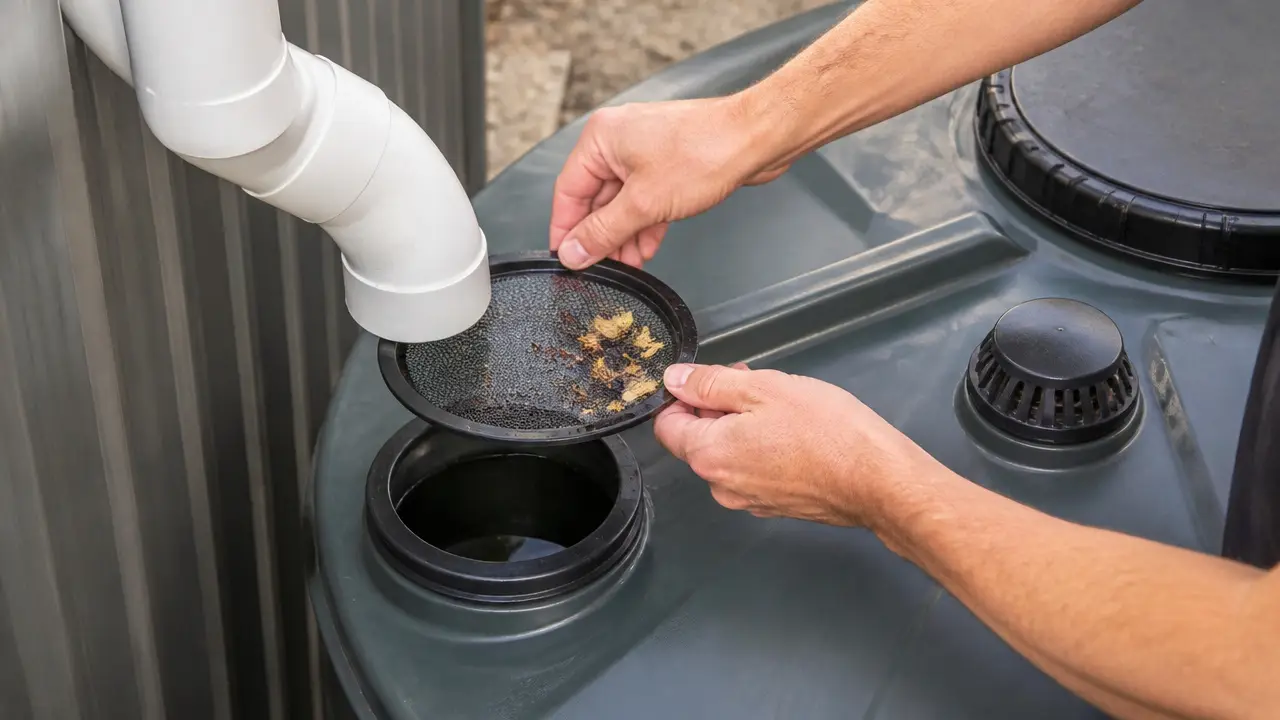
Screens stop leaves, twigs, and other large debris from entering the collection system.
First-Flush Devices
A first-flush device diverts some of the first runoff from a rainfall event. That early runoff often contains more roof dust and debris than the water that follows.
A first-flush device does not make rainwater safe to drink. It is simply one part of reducing contamination entering the tank.
Tank Inlet Screening
Additional screening at the tank inlet can keep insects and larger particles out while allowing collected water to enter.
These components should not be confused with the main sediment cartridge used downstream of the pump.
Sediment Filter Placement for Garden Irrigation
A garden watering system may not need the same filtration arrangement as household plumbing.
For a simple rain barrel feeding a hose, there may not be enough pressure for a restrictive cartridge filter. A washable screen may be more practical.
For pumped irrigation, a common arrangement is:
Tank → pump protection strainer → pump → irrigation filter → valves and watering lines
The filter should normally be upstream of parts that have small openings.
This is especially important for:
- Drip emitters
- Micro-sprayers
- Small irrigation valves
- Narrow tubing
Drip irrigation can clog from particles that would pass through an ordinary garden hose without causing trouble. Match the filtration level to the irrigation equipment manufacturer's requirements.
Sediment Filter Placement With UV Treatment
If a rainwater system uses ultraviolet treatment, sediment filtration normally comes before the UV unit.
A simplified treatment sequence might be:
Tank → pump → pressure tank → sediment filtration → additional treatment if needed → UV → fixtures
UV systems work best when the water reaching them meets the unit's water-quality requirements. Suspended particles can interfere with UV treatment.
Do not assume that adding a sediment filter and UV unit automatically makes collected rainwater potable.
Potable means suitable for drinking.
Use practical considerations for the filter be before or after the water pump to interpret service priorities supported by the latest reliable readings.
A drinking-water rainwater system requires suitable collection and storage, appropriate treatment stages, proper maintenance, and water-quality verification. Local requirements may also apply. Current laboratory testing and qualified professional guidance are appropriate when rainwater will be used for drinking.
Where Should Multiple Sediment Filters Go?
Some systems use sediment filters in stages.
Instead of asking one very fine filter to catch everything, the water passes through progressively finer filtration.
For example:
Pump → pressure tank → coarse sediment filter → finer sediment filter → other treatment
The first filter catches larger particles. The second deals with smaller particles.
This can keep a fine filter from plugging as quickly.
The appropriate filter sizes depend on the equipment downstream and the water entering the filters. There is no single micron rating that is correct for every rainwater system.
A micron rating describes the approximate size of particles a filter is designed to capture. Smaller micron numbers mean finer filtration.
Leave Enough Space to Service the Filter
Good filter placement is not only about water flow.
You also need room to maintain it.
Install the housing where you can:
- Reach the shutoff valves
- Place a bucket underneath it
- Remove the filter housing
- Replace or clean the cartridge
- Inspect for leaks
- See pressure gauges, if installed
Avoid burying a cartridge housing behind permanent walls or equipment.
Remember that the filter bowl usually has to move downward when you unscrew it. Leave enough clearance underneath.
Install Shutoff Valves Around the Filter
Shutoff valves can make filter changes much easier.
A typical arrangement is:
Shutoff valve → filter → shutoff valve
Closing both valves isolates the housing while you service it.
Some systems also use a bypass line. A bypass allows water to flow around the filter while maintenance is being performed. Whether that is appropriate depends on the water use and treatment system.
Do not bypass required treatment when the water is intended for drinking.
Pressure Gauges Can Show When a Filter Is Clogging
If the system is large enough to justify them, pressure gauges on both sides of the filter can help identify restriction.
As a cartridge collects sediment, the pressure difference across the filter can increase.
You may also notice:
- Lower faucet pressure
- Reduced shower flow
- Poor irrigation performance
- Longer pump operation
Do not assume every pressure problem is caused by the filter. Pump problems, undersized pipes, partially closed valves, clogged screens, and pressure-control problems can produce similar symptoms.
Keep Filters Protected From Freezing
If the sediment filter is outdoors or in an unheated shed, freezing conditions require special planning.
Water trapped inside a filter housing can freeze and expand. This can damage the housing, fittings, valves, or nearby pipe.
Place equipment in a protected location when possible. Seasonal systems may need to be drained according to the equipment manufacturer's instructions.
Do not assume insulation alone will protect a water-filled filter through freezing weather.
Do Not Put the Filter Where Leaks Would Cause Major Damage
Filter housings are serviceable plumbing components. They are opened repeatedly over the life of the system.
Place them somewhere a small leak can be noticed quickly and managed safely.
A utility area with drainage is usually easier to manage than a finished ceiling, attic, or inaccessible wall cavity.
Make sure the housing and mounting bracket are properly supported. A large filter full of water can place significant weight on its plumbing connections.
A Simple Placement Rule
Think of a rainwater system as several layers of protection.
Before the tank: Keep large debris and dirty first runoff out.
Before the pump: Stop debris large enough to damage the pump without unnecessarily restricting its water supply.
After the pump and pressure tank: Remove finer sediment from pressurized water.
Before sensitive equipment: Make sure water meets the filtration requirements of UV units, valves, appliances, irrigation emitters, or other downstream equipment.
For many home rainwater systems, that means the main sediment cartridge belongs here:
Storage tank → pump → pressure tank → sediment filter → additional treatment → fixtures
That arrangement protects downstream equipment while avoiding unnecessary restriction on the pump's suction line.
Frequently Asked Questions
Should a sediment filter go before or after a water pump?
A main cartridge sediment filter is usually placed after the pump, often after the pressure tank. A coarse strainer or intake screen may be installed before the pump to stop larger debris. Avoid putting a restrictive fine filter on a pump's suction line unless the pump and system are designed for it.
Should a sediment filter go before or after a pressure tank?
In many pressurized rainwater systems, the sediment cartridge is installed after the pressure tank. This allows the pump to fill the pressure tank without having to push water through the main cartridge during every pump cycle.
Does a rainwater tank need a sediment filter?
Not every rainwater use requires the same filtration. Garden watering through a hose may need only coarse screening, while drip irrigation or household reuse may require finer filtration. The filter should match the equipment and intended water use.
Should a sediment filter come before a UV system?
Yes. Sediment filtration normally comes before UV treatment. Suspended particles can reduce the effectiveness of UV treatment, and UV manufacturers specify water-quality conditions that should be met before water enters the unit.
Can I put a sediment filter directly on a rain barrel?
You can, but a fine cartridge may greatly reduce gravity-fed flow. A washable screen or less restrictive filter is often better suited to a low-pressure rain barrel system.
Should the filter be installed inside or outside?
Either can work if the location is suitable. The housing should be accessible, supported, protected from freezing and physical damage, and located where leaks can be detected and managed.
Does a sediment filter make rainwater safe to drink?
No. A sediment filter removes certain suspended particles. It does not by itself establish that rainwater is microbiologically or chemically safe to drink. Drinking-water systems require appropriate collection, treatment, maintenance, and current water-quality verification.