As an affiliate, we may earn a commission from qualifying purchases. We get commissions for purchases made through links on this website from Amazon and other third parties.
For most homes, plastic water tanks are the easier choice, while concrete tanks are better for large, permanent, often underground storage.
Plastic tanks are lighter, faster to install, and do not rust. They work well for garden irrigation, rainwater storage, cabins, and many household reuse systems. Concrete tanks are heavier and harder to install, but they can be a good fit when you want a large tank that will stay in one place for many years.
The better tank depends on where it will sit, how much water you need, what the water will be used for, and how difficult the site is to access.
Concrete vs. Plastic Water Tanks at a Glance
| Factor | Concrete Tank | Plastic Tank |
|---|---|---|
| Installation | Requires more site work and heavy equipment | Usually simpler |
| Weight | Very heavy | Much lighter |
| Large capacities | Well suited | Available, but very large tanks need careful support |
| Underground use | Common when properly engineered | Only models designed for burial should be buried |
| Corrosion | Does not rust, but concrete can crack or deteriorate | Does not rust |
| Movement | Essentially permanent | Can often be moved when empty |
| Repairs | Cracks and joints may need specialist repair | Some damage can be repaired, but replacement may be easier |
| Sun exposure | Not normally affected by sunlight in the same way plastic is | Must be designed for outdoor UV exposure |
| Foundation needs | Engineered base and structural planning are important | Needs a flat, firm, fully supported base |
| DIY suitability | Usually limited | Often better for simple above-ground installations |
When a Plastic Water Tank Is Better
A plastic tank is usually the practical choice for a straightforward rainwater system.
Most residential plastic water tanks are made from polyethylene. They are molded as one piece or as a small number of joined sections, depending on the tank design.
Plastic Tanks Are Easier to Install
Plastic tanks weigh much less than concrete tanks. A smaller tank may be positioned without large lifting equipment, although bigger tanks can still require machinery.
This makes plastic useful where access is limited.
For example, a homeowner may be able to place a plastic rainwater tank beside a garage or behind a house where pouring or delivering a concrete tank would be difficult.
The tank still needs a suitable base. Water is heavy. A tank holding thousands of gallons places a large load on the ground below it.
The manufacturer's foundation requirements should always be followed.
Plastic Does Not Rust
Plastic tanks do not have the corrosion problems associated with metal tanks.
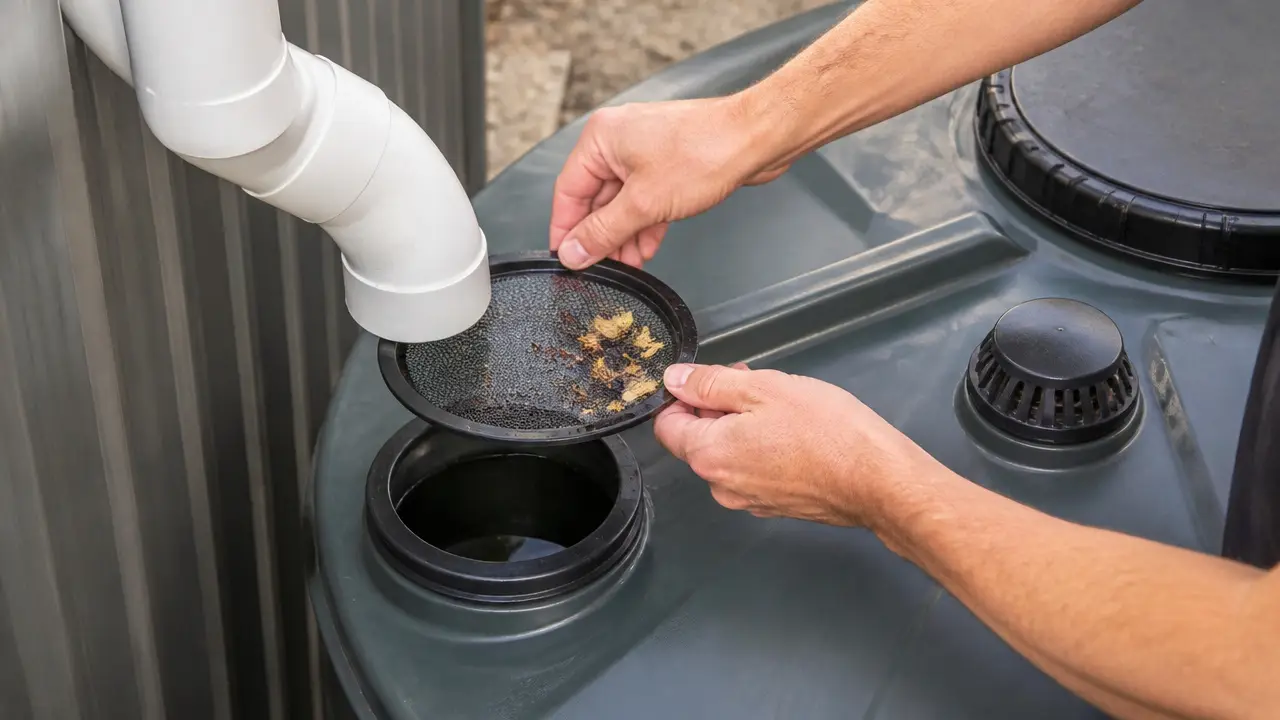
That does not make them maintenance-free. Fittings can leak. Sediment can collect at the bottom. Screens can clog. Sunlight entering through openings can encourage biological growth.
But the tank wall itself does not rust.
Plastic Works Well for Above-Ground Storage
Plastic tanks are widely used for:
- Garden irrigation
- Rainwater harvesting
- Toilet-flushing systems
- Outdoor cleaning
- Livestock or agricultural water where suitable
- Cabin water storage
- Emergency non-potable storage
Non-potable means water that is not intended for drinking.
Plastic is especially convenient when the tank can sit above ground near the collection area.
Plastic Tanks Can Be Easier to Connect
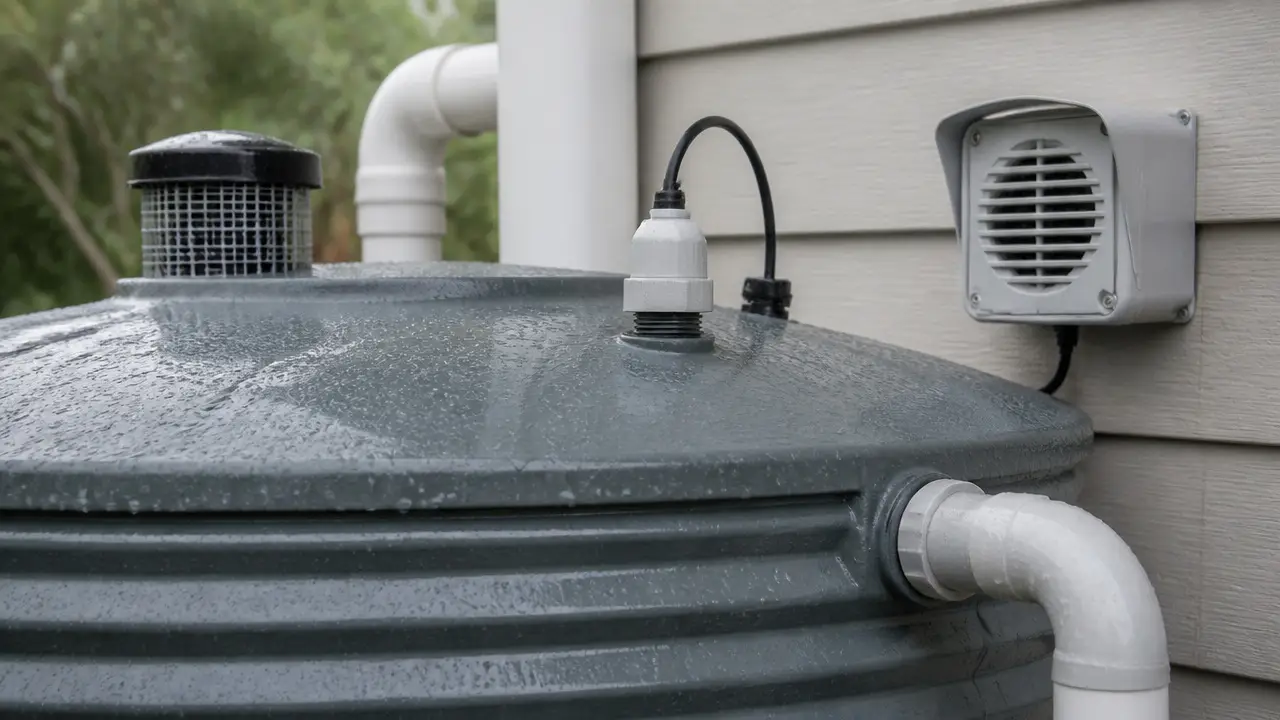
Many tanks come with molded areas for outlets, overflows, and other fittings.
A bulkhead fitting is a fitting that passes through a tank wall and seals around the opening. It can provide a connection for a valve, pipe, hose, pump, or overflow line.
Connections still need to match the tank manufacturer's requirements. Drilling random holes into a tank can weaken it or create leaks.
Plastic Tanks Can Move or Deform
The lighter weight of plastic is helpful during installation, but it also means the tank depends heavily on proper support.
A poor foundation can cause the tank to lean or distort.
An empty tank can also be affected by strong wind if it is not installed as required by the manufacturer.
Plastic tanks should not normally be buried unless the tank is specifically designed and rated for underground installation. Soil pressure can crush or deform an ordinary above-ground tank.
When a Concrete Water Tank Is Better
Concrete becomes more attractive when the tank is large, permanent, and integrated into the property.
Concrete Works Well for Large Permanent Systems
Concrete tanks can be built in large sizes and may be installed underground, partly underground, or as part of a larger structure when properly engineered.
This can make concrete useful for properties where a large above-ground plastic tank would take up too much visible space.
An underground tank can also leave the surface area available for other uses, depending on the tank design and structural requirements.
Concrete Tanks Have High Structural Mass
Concrete tanks are heavy and stable.
Once installed, they are not easily moved by wind or minor site activity.
That same weight makes installation much more involved. Excavation, lifting, formwork, reinforcement, soil conditions, and structural loading can all matter.
Large concrete tank installations are generally not simple DIY jobs.
Concrete Can Develop Cracks
Concrete is strong, but it is not immune to damage.
Possible problems include:
- Shrinkage cracks
- Ground movement
- Joint leaks
- Poor waterproofing
- Deterioration around penetrations
- Damage from unsuitable construction methods
Small cracks are not automatically a tank failure, but active leaks or structural cracking should be evaluated properly.
Repairing a concrete tank can also be more involved than replacing a fitting on a plastic tank.
Concrete Can Affect Stored Water
New concrete can influence water chemistry because cement-based materials are alkaline.
The effect depends on the tank construction, lining, water characteristics, age of the concrete, and intended use.
For drinking-water systems, tank materials, coatings, sealants, pipes, and fittings should all be suitable for contact with potable water.
Potable means intended and suitable for drinking.
A tank material alone does not make rainwater safe to drink.
Which Tank Is Better for Rainwater Harvesting?
For a typical above-ground residential rainwater system, plastic is usually the simpler option.
It works especially well when the water will be used for:
- Gardens
- Drip irrigation
- Washing tools
- Outdoor cleaning
- Other appropriate non-potable uses
Concrete may make more sense when the system needs a much larger permanent tank, particularly when underground installation is part of the property design.
The tank should be chosen as one part of the entire rainwater system rather than by material alone.
Consider whether rainwater tanks need a concrete slab to understand vessel construction compatible with the expected water use.
A good storage setup also needs appropriate:
- Roof and gutter collection
- Leaf and debris screening
- Inlet protection
- Overflow routing
- Mosquito protection
- Access for inspection and cleaning
- Pump connections, if a pump is used
Some systems also use a first-flush device. A first-flush device diverts some of the first roof runoff, which may contain more dust, droppings, and other debris.
It reduces part of the initial contamination load, but it does not make rainwater automatically safe to drink.
Which Tank Is Better Underground?
Concrete is commonly suited to underground applications when it has been properly designed for the surrounding soil and groundwater conditions.
Plastic can also be used underground, but only when the tank is specifically designed for burial.
This distinction is important.
An ordinary above-ground polyethylene tank should not simply be placed in a hole and covered with soil. Underground tanks must withstand forces that above-ground tanks do not experience.
These include:
- Soil pushing against the tank walls
- Groundwater pressure
- Loads above the tank
- Uneven soil movement
An empty underground tank can also experience upward forces when groundwater rises.
Excavation and underground tank installation can involve serious safety and structural risks. Large underground systems should follow the tank manufacturer's installation requirements and may require qualified site or engineering help.
Which Tank Is Better in Freezing Climates?
Neither material is automatically freeze-proof.
Water expands when it freezes. That can damage pipes, valves, fittings, pumps, and sometimes the tank itself.
An above-ground plastic tank may be especially exposed to outdoor temperature changes.
A buried concrete tank may experience more stable temperatures, depending on burial depth, local frost conditions, soil, and installation design. That does not mean all buried tanks are protected from freezing.
In cold areas, pay close attention to the parts that usually freeze first:
- Exposed outlet pipes
- Valves
- Pump housings
- Filters
- Small-diameter water lines
- Overflow pipes with trapped water
Freeze protection should be planned for the complete system, not just the tank wall.
Which Tank Is Easier to Clean?
Plastic tanks often have smooth interior surfaces, which can make sediment removal easier when access is properly designed.
Concrete surfaces can be rougher, and some tanks have joints, corners, or coatings that require more careful inspection.
For either material, look for a tank with safe access for maintenance.
Rainwater tanks can collect sediment from roofs and gutters even when screens and prefilters are used.
Maintenance may include:
- Cleaning roof gutters
- Clearing inlet screens
- Checking mosquito screens
- Inspecting overflow pipes
- Looking for leaks
- Checking fittings
- Removing accumulated sediment when necessary
Never enter a large water tank casually. Tanks and cisterns can be confined spaces with serious hazards. Internal work may require trained professionals and proper safety procedures.
Which Tank Lasts Longer?
There is no simple winner.
A well-made and properly installed concrete tank can remain useful for a long time. A suitable polyethylene tank can also provide long service when it has proper support and is protected from conditions outside its design limits.
Service life depends on factors such as:
- Tank design
- Material quality
- Foundation
- Sun exposure
- Ground movement
- Installation quality
- Water chemistry
- Freeze conditions
- Maintenance
- Damage around fittings and penetrations
Choosing the right type for the site is more important than assuming one material always lasts longer.
What About Drinking Water?
If stored rainwater may be used for drinking, choosing between concrete and plastic is only one small part of the decision.
Roof runoff can contain microorganisms, animal waste, dust, metals, chemicals, and other contaminants.
A drinking-water system may require suitable collection surfaces, prefiltration, treatment stages, protected storage, regular maintenance, and current laboratory testing.
A single filter, UV unit, purifier, test strip, or meter cannot by itself establish that untreated roof runoff is safe to drink.
Where drinking water is involved, use tanks, liners, coatings, sealants, fittings, and plumbing components intended for potable-water contact where applicable. Follow current local health and plumbing requirements and obtain professional guidance when the treatment system becomes complex.
How to Choose Between Concrete and Plastic
Start with the way the tank will actually be used.
Choose Plastic When:
- You want a straightforward above-ground rainwater tank.
- Access for installation is limited.
- You may need to relocate the empty tank later.
- You want simpler connections for garden or household reuse.
- The required storage capacity is available in a suitable plastic tank.
- You do not need a custom structural tank.
Choose Concrete When:
- You want a large, permanent installation.
- Underground storage is part of the property design.
- Heavy construction equipment can reach the site.
- Structural stability is a major part of the project.
- The tank can be professionally designed and installed where needed.
Neither material compensates for a bad foundation, poor overflow planning, unsuitable fittings, contaminated collection surfaces, or neglected maintenance.
Frequently Asked Questions
Is a concrete water tank better than a plastic tank?
Not in every situation. Concrete is often better for large permanent or underground installations. Plastic is usually easier for common above-ground residential rainwater systems.
Is a plastic water tank safe for drinking water?
Some plastic tanks are manufactured for potable-water storage, while others are not. Check the tank's intended use and applicable certifications. The tank alone does not make collected rainwater safe to drink.
Can I bury a plastic rainwater tank?
Only if the tank is specifically designed for underground installation. Ordinary above-ground plastic tanks can be damaged by soil pressure.
Do concrete water tanks crack?
They can. Ground movement, shrinkage, construction problems, and other stresses may cause cracks or leaks. Significant or active cracking should be evaluated by someone qualified to assess the structure.
Do plastic tanks grow algae?
Algae can grow when light reaches stored water and suitable nutrients are present. An opaque tank with properly covered openings helps limit light, but the collection system still needs regular cleaning and inspection.
Which tank is better for garden irrigation?
Plastic tanks are often the easier choice for garden systems because they are simple to install and connect to pumps or gravity-fed irrigation lines. Tank height, outlet size, required water flow, and pump needs still matter.
Can a water tank sit directly on soil?
Only if the tank manufacturer allows the specified base. Many tanks require a flat, level, stable surface that supports the entire tank bottom. Soft or uneven soil can settle and damage a full tank.
Should I choose concrete or plastic for a large cistern?
Concrete can be well suited to large permanent cisterns, especially underground installations. Large plastic cisterns are also available. The best choice depends on capacity, site access, soil conditions, structural requirements, and whether the tank will be above or below ground.