As an affiliate, we may earn a commission from qualifying purchases. We get commissions for purchases made through links on this website from Amazon and other third parties.
Rainwater tanks do not always need a concrete slab. Many above-ground tanks can sit on a properly prepared base of compacted gravel, crushed stone, or another material approved by the tank maker.
What matters most is that the base is level, smooth, strong, and able to support the full weight of the tank without settling. A concrete slab is often a good choice for large tanks, soft ground, or sites where long-term stability is a concern.
Why the Tank Base Matters
A rainwater tank becomes very heavy when it is full.
Water weighs about 8.34 pounds per gallon. That means:
| Tank capacity | Approximate water weight |
|---|---|
| 250 gallons | 2,085 pounds |
| 500 gallons | 4,170 pounds |
| 1,000 gallons | 8,340 pounds |
| 2,500 gallons | 20,850 pounds |
| 5,000 gallons | 41,700 pounds |
These numbers do not include the weight of the tank, fittings, pumps, or other equipment.
The base must carry this weight evenly. If one part of the tank sinks lower than another, the tank can twist or place extra stress on its walls and connections.
A poor base can lead to:
- Tank movement or leaning
- Stress cracks
- Damaged outlet fittings
- Pipe connections pulling apart
- Poor drainage around the tank
- Premature tank failure
A good foundation is more important than simply choosing concrete.
When a Concrete Slab Is Usually a Good Choice
Concrete can provide a very stable surface when it is designed and installed correctly.
It may make sense when you have:
- A large rainwater tank
- Soft or unstable soil
- Ground that becomes muddy after rain
- A tank installed close to a building
- Pumps or plumbing that need to stay aligned
- Several tanks connected together
- A site where erosion is a concern
Concrete can also make the area around the tank easier to keep clean.
However, pouring a slab does not automatically solve every foundation problem. The soil below the slab still needs to support the load.
A slab built over poorly compacted fill can settle or crack.
When You May Not Need Concrete
Many common above-ground polyethylene rainwater tanks can use a properly built compacted base instead of concrete, provided the tank manufacturer allows it.
Possible base materials include:
- Compacted crushed stone
- Compacted road base
- Fine gravel designed to lock together
- Other stable materials specified by the tank manufacturer
Loose gravel should not simply be dumped on the ground and used immediately. A tank base needs to resist movement and settling.
The finished surface also needs to be free of sharp rocks or objects that could damage the bottom of the tank.
Small Rain Barrels Are Different
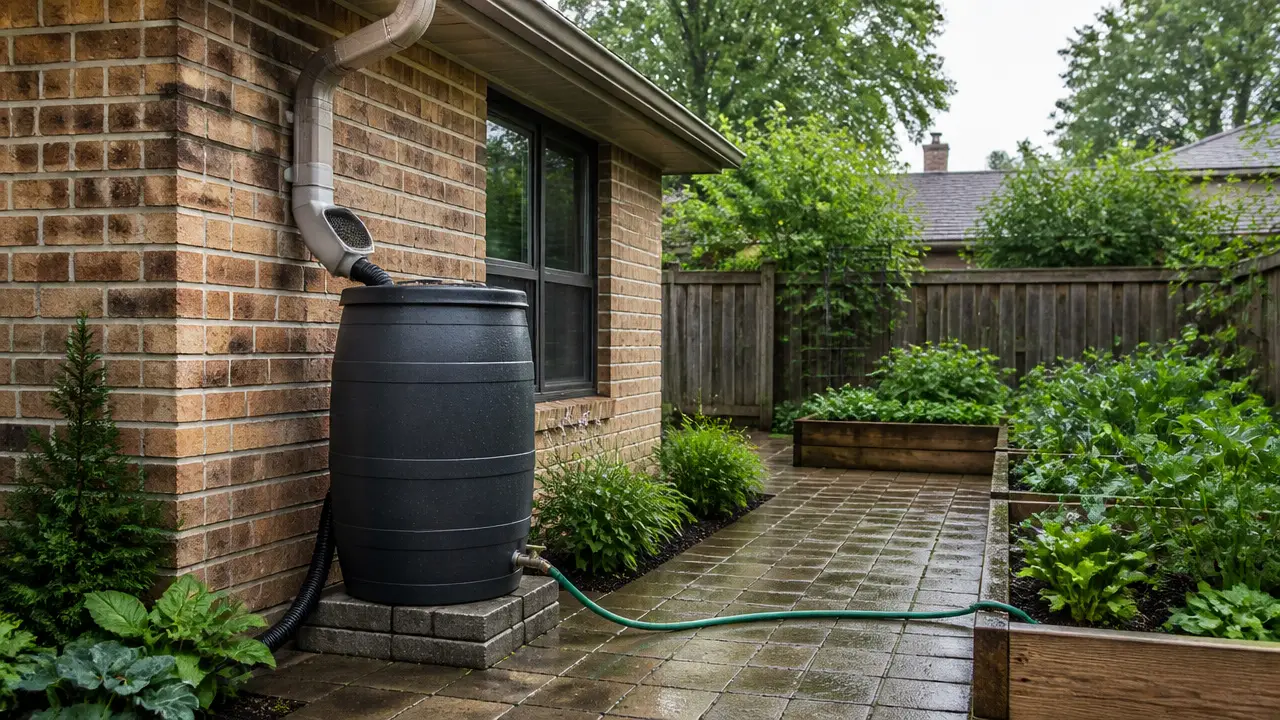
A small rain barrel normally does not need a concrete slab.
It still needs a firm, level surface. Patio blocks or another stable platform may be enough when properly supported.
Remember that even a 55-gallon barrel holds about 459 pounds of water. A raised barrel stand must safely support that weight as well as the barrel itself.
Follow the Tank Manufacturer's Base Requirements
Before preparing the site, check the installation instructions for your specific tank.
Tank designs vary.
One manufacturer may allow compacted crushed stone, while another may require a concrete slab for certain tank sizes or installations.
The instructions may specify:
- Base material
- Base thickness
- How far the base must extend beyond the tank
- Drainage requirements
- Maximum slope
- Anchoring requirements
- Whether sand, gravel, concrete, or another surface is acceptable
These requirements can affect the tank's warranty as well as its safety.
Do not assume that a foundation used for one tank will work for another.
The Base Should Support the Whole Tank
Most flat-bottom above-ground tanks need continuous support across the entire bottom.
Avoid placing a large tank directly on:
- Uneven soil
- Loose fill
- Individual bricks
- Widely spaced concrete blocks
- Timber that may rot or shift
- Sharp gravel
- Ground with exposed roots
Supporting only a few points underneath a tank can concentrate thousands of pounds in small areas.
The safest approach is to provide the type of full, even support required by the tank manufacturer.
Ground Preparation Is Important Even With Concrete
A concrete slab is only as dependable as the ground beneath it.
The site normally needs to be cleared of unsuitable material and prepared so the foundation does not settle unevenly.
Drainage matters too.
Water flowing underneath or around a tank foundation can wash away soil or cause movement over time. Roof runoff and tank overflow should be directed away from the foundation where practical.
Avoid placing a large tank where overflow can repeatedly erode the supporting ground.
Does the Concrete Slab Need Reinforcement?
That depends on the tank size, soil, slab dimensions, and local conditions.
A small pad and a foundation carrying tens of thousands of pounds are not the same structural job.
For large tanks, do not guess at concrete thickness or reinforcement. The tank manufacturer may provide foundation specifications. If it does not, a qualified contractor or engineer can determine an appropriate design for the soil and expected load.
This becomes especially important for very large tanks, tanks on slopes, or foundations near buildings and retaining walls.
What About Tanks Installed on a Slope?
Large tanks should not simply be placed on sloping ground and leveled with loose fill.
A tank needs a stable, level platform.
Creating that platform may require excavation, retaining structures, engineered fill, drainage work, or a designed concrete foundation.
Trying to build up one side of a large tank site without proper support can allow the fill to settle or move.
Study a suitable foundation for a rainwater tank to understand vessel capacity and fittings within the available space.
For a difficult slope, professional site preparation is usually worth considering.
What About IBC Totes?
An IBC tote has a different base design from a typical round polyethylene tank.
The tote's metal or plastic pallet needs firm, level support. A concrete pad is one option, but a correctly prepared compacted surface may also work depending on the tote and site.
A 275-gallon tote contains about 2,294 pounds of water when full. A 330-gallon tote contains about 2,752 pounds.
Do not place a filled tote on unstable soil, loose blocks, or a platform that was not designed for the load.
Also remember that an IBC tote should only be used for water applications if its previous contents and material suitability are known.
Can You Put a Rainwater Tank on Pavers?
Sometimes, but the answer depends on the size of the tank and how the pavers are installed.
Pavers over a properly compacted base can provide a firm surface for some smaller tanks. Pavers placed directly on soft soil may settle unevenly.
Large tanks create much greater loads, so a manufacturer-approved compacted base or properly designed concrete foundation is often a better choice.
Do not judge the foundation only by how solid it feels when the tank is empty.
Can You Put a Tank on a Deck?
This requires much more caution.
A rainwater tank can place several thousand pounds on a relatively small area. An ordinary deck may not have been designed for that load.
For example, a 500-gallon tank holds more than 4,000 pounds of water before the tank itself is counted.
Do not place a large rainwater tank on a deck, balcony, elevated platform, roof, or similar structure unless a qualified professional has confirmed that the structure can safely carry the full load.
Think About the Plumbing Before Building the Base
The tank foundation affects more than the tank itself.
Its height can change:
- Gutter and downspout connections
- Overflow routing
- Outlet height
- Pump plumbing
- Gravity-fed water pressure
- Connections between multiple tanks
Plan these connections before building a permanent slab.
For example, raising a tank slightly may make it easier to reach a bottom outlet or connect a garden hose. Raising a large tank too high, however, can create a serious structural problem if the support was not designed for the weight.
Do Buried Rainwater Tanks Need a Concrete Slab?
Buried cisterns have different installation requirements from above-ground tanks.
Some buried tanks may require a concrete base, anchoring, controlled backfill, or other measures. Others are designed for different installation methods.
Groundwater is an important concern because an empty or partly empty buried tank can experience upward forces.
Do not apply above-ground tank foundation advice to an underground cistern.
Follow the tank manufacturer's excavation, bedding, backfill, and anchoring instructions. Deep excavation and unstable soil can also create serious safety hazards, so professional installation may be appropriate.
Check Local Requirements for Large Systems
Foundation and installation rules can vary by location, especially for large tanks, structural work, setbacks, plumbing connections, or buried cisterns.
Before installing a large system, check current requirements with your local building, planning, or plumbing authority.
This is especially important when the tank will connect to household plumbing rather than being used only for simple outdoor watering.
Choosing Between Concrete and a Compacted Base
A simple way to decide is to start with the tank manufacturer's instructions.
If both options are permitted, consider the site.
A compacted aggregate base can work well when the soil is stable, drainage is good, and the tank is suitable for that foundation.
Concrete may be worth considering when you want a permanent surface or when the tank is large and the site requires greater stability.
Neither option makes up for poor preparation underneath.
The main rule is simple: the full tank needs continuous, level, stable support that will not wash away, sink, or shift.
Frequently Asked Questions
Does a 1,000-gallon rainwater tank need a concrete slab?
Not necessarily. A 1,000-gallon tank holds about 8,340 pounds of water, so it does need a strong foundation. Some tanks can sit on properly compacted crushed stone or another approved base. Follow the tank manufacturer's foundation requirements.
Can I put a rainwater tank directly on dirt?
Usually, this is not a good idea for a large tank. Soil can soften, erode, or settle unevenly. Prepare a stable, level base using a method approved for the tank.
Is gravel better than concrete under a water tank?
Neither is always better. Properly compacted aggregate can work well for tanks designed for it. Concrete provides a durable surface but still needs good soil preparation underneath. Follow the tank manufacturer's instructions.
How level does a rainwater tank need to be?
The foundation should be level enough to provide even support as required by the tank manufacturer. Do not try to correct a badly sloped site by adding loose material under one side of the tank.
Can I place a rain barrel on concrete blocks?
Small barrels are often raised to improve access to the spigot, but the support must safely carry the full barrel. A 55-gallon barrel can weigh well over 450 pounds when full. Use a stable stand or platform rather than loose or poorly supported blocks.
Should the tank base be larger than the tank?
Often, yes, but the required amount depends on the tank design and foundation material. Follow the manufacturer's instructions for the base dimensions rather than using a universal measurement.
Do I need an engineer for a rainwater tank foundation?
Most small residential barrels and tanks do not require an engineered foundation. Professional advice becomes more important for very large tanks, difficult soil, steep slopes, elevated platforms, retaining structures, or installations close to buildings.