As an affiliate, we may earn a commission from qualifying purchases. We get commissions for purchases made through links on this website from Amazon and other third parties.
A rainwater tank should sit on a flat, level, stable base that can support the full weight of the tank and water. The best base depends on the tank size, material, and the tank maker’s installation instructions.
For many small tanks and rain barrels, a firm concrete pad or properly prepared paving base works well. Large polyethylene tanks often need a smooth, fully supported base made from concrete, compacted material, or another surface approved by the manufacturer.
Do not place a large tank directly on soft soil, loose gravel, uneven blocks, or a deck that has not been checked for the load.
Why the Base Under a Rainwater Tank Matters
Water is heavy. One U.S. gallon weighs about 8.34 pounds, and one liter weighs about 1 kilogram.
That means the water alone in a:
- 50-gallon barrel weighs about 417 pounds
- 250-gallon tank weighs about 2,085 pounds
- 1,000-gallon tank weighs about 8,340 pounds
The tank itself adds more weight.
A poor base can settle or tilt after the tank fills. This can put stress on the tank wall, outlet fitting, pipes, and connections. In severe cases, the tank can become unstable or damaged.
The base should keep the tank:
- level
- fully supported
- protected from sharp objects
- stable when the soil gets wet
- accessible for plumbing and maintenance
Good Materials to Put Under a Rainwater Tank
Concrete Pad
A concrete pad is one of the most reliable bases for a rainwater tank.
It provides a firm, smooth surface that is less likely to settle unevenly. It can be especially useful for large tanks or locations with poor soil.
The pad should extend under the entire tank bottom. The surface should be level and free from stones, ridges, bolts, or other objects that could press into the tank.
The required thickness and reinforcement depend on the tank size, soil, and installation. Follow the tank manufacturer's requirements. Large installations may need input from a qualified contractor or engineer.
Concrete Pavers
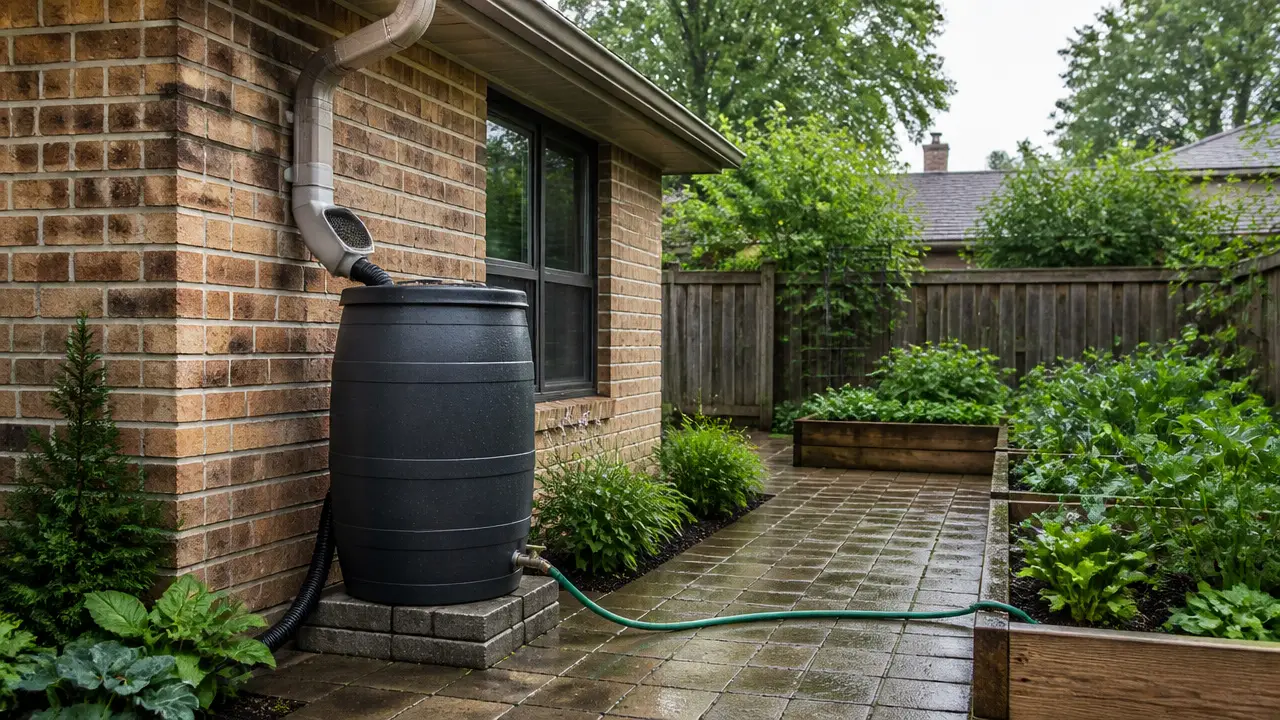
Pavers can work well for smaller tanks when installed on a properly prepared base.
The important part is what sits under the pavers. Simply placing a few pavers on grass or loose soil can lead to uneven settling.
A good paver base normally needs:
- Firm soil underneath.
- A compacted base material.
- Level pavers with tight joints.
- Full support beneath the tank.
Do not support only the edges or a few points under a flat-bottom tank unless the manufacturer specifically allows it.
Compacted Crushed Stone or Road Base
Some rainwater tank manufacturers allow tanks to sit on compacted crushed material.
This is different from loose decorative gravel.
The material must be prepared so it forms a firm, level surface that does not shift or wash away. Sharp stones should not contact a plastic tank bottom.
Whether this type of base is suitable depends on the tank design. Follow the manufacturer's installation instructions rather than assuming gravel is acceptable for every tank.
Compacted Sand
A prepared sand base is sometimes allowed for certain polyethylene tanks.
Sand can create a smooth surface, but it must be contained and compacted well enough that it cannot wash out from under the tank.
Erosion around the base is a concern. Overflow water, roof runoff, and drainage should be directed away from the foundation.
Again, check the tank maker's instructions before choosing sand.
What to Put Under a Small Rain Barrel
A small rain barrel usually needs less foundation work than a large cistern, but it still needs a solid base.
Common options include:
- concrete pavers
- a small concrete pad
- a purpose-built barrel stand placed on a firm surface
- sturdy masonry blocks supporting a properly designed platform
The base should be level and strong enough for the barrel when completely full.
A 55-gallon barrel can hold roughly 459 pounds of water, so a filled barrel is much heavier than it looks.
If you raise the barrel to make room for a watering can or improve gravity flow, the stand must be stable. Avoid stacking loose blocks or using an improvised wooden structure that could shift or rot.
Should You Put a Rainwater Tank on Gravel?
Sometimes, but not automatically.
Loose gravel is usually a poor choice because it can shift and create uneven pressure points.
A properly compacted crushed-stone base may be suitable for some tanks when the manufacturer permits it. It should be:
- compacted
- level
- contained at the edges
- protected from erosion
- free from large or sharp stones at the tank surface
Do not assume that spreading a few inches of gravel over soil creates an adequate foundation.
Can You Put a Rainwater Tank Directly on the Ground?
Small containers may sometimes sit on firm prepared ground, but placing a large rainwater tank directly on ordinary soil is usually risky.
Soil can:
- soften when wet
- settle unevenly
- erode around the edges
- develop low spots
- allow roots or stones to press against the tank
The problem often does not appear until the tank fills and places thousands of pounds of load on the site.
Preparing a proper base before filling the tank is much easier than correcting a foundation after the tank is full.
Make Sure the Entire Tank Bottom Is Supported
Reviewing practical steps for preparing a base for a water tank helps compare tank dimensions and fittings suited to the available space.
Many flat-bottom polyethylene tanks are designed to have continuous support underneath them.
Do not place one across widely spaced beams, sleepers, blocks, or pavers that leave unsupported areas unless the tank manufacturer specifically approves that arrangement.
Uneven support can concentrate loads in parts of the tank that were not designed to carry them.
Check the installation instructions for:
- required base dimensions
- acceptable base materials
- minimum clearances
- anchoring requirements
- whether the tank must be fully supported
Following these instructions may also be important for the tank warranty.
Plan Drainage Around the Tank Base
The ground around a tank should not become a muddy basin.
Rainwater may reach the area from:
- tank overflow
- gutter overflow
- leaking fittings
- nearby roof runoff
- irrigation
- heavy rainfall
Direct overflow through suitable plumbing to an appropriate discharge point. Grade the surrounding area so water does not continually wash material out from under the tank.
This is especially important with sand or compacted aggregate bases.
Think About the Tank Outlet Before Building the Base
Check where the tank's outlet fitting will sit.
A bulkhead fitting is a fitting installed through the tank wall that creates a sealed connection for a pipe, valve, or hose.
Make sure there will be enough room to:
- attach the valve
- connect pipework
- remove fittings for repair
- reach the outlet for maintenance
A tank installed too close to the ground, wall, or another tank can make simple repairs difficult.
Do not use the plumbing to support the tank or hold it in position. Pipes should be arranged so tank movement or minor settling does not place excessive stress on fittings.
Can You Put a Rainwater Tank on a Deck?
Only if the structure has been designed or checked for the load.
A full tank can weigh several tons. Even relatively small rain barrels create a concentrated load.
For example, 100 gallons of water weighs about 834 pounds before adding the barrel and stand.
Do not assume an existing deck, balcony, porch, shed floor, or raised platform can safely support a tank. For larger tanks or uncertain structures, have the support system evaluated by a qualified structural professional.
Do You Need to Raise the Tank?
Not always.
Raising a small barrel can provide more room under the outlet and slightly increase gravity pressure.
The pressure created by water height is called head height. More vertical distance between the water surface and the outlet can increase available pressure, but raising a barrel a short distance does not create the kind of pressure produced by a household pump.
Large tanks generally should not be raised on improvised stands just to improve pressure. If an irrigation or household reuse system needs significant pressure, a properly sized pump is usually the safer approach.
A Simple Base Guide by Tank Size
| Tank setup | Common base approach |
|---|---|
| Small rain barrel | Level pavers, concrete, or a strong purpose-built stand |
| Small freestanding tank | Prepared paver or concrete base |
| Large polyethylene tank | Full-support base approved by the tank manufacturer |
| Large cistern | Engineered or manufacturer-specified foundation |
| Tank on a deck or raised structure | Structure verified for the full loaded weight |
These are general examples. The tank manufacturer's installation requirements should take priority.
Before You Fill the Tank
Once a large tank is full, correcting the foundation becomes difficult.
Before adding water, check that:
- the base is level
- the tank bottom is fully supported as required
- no sharp objects touch the tank
- the foundation will not easily wash away
- the overflow has somewhere safe to discharge
- valves and fittings remain accessible
- pipes are not pulling on the tank wall
- the site can support the filled tank weight
- any required anchoring has been completed
Also consider how the tank will behave when empty. In areas exposed to flooding or strong winds, an empty tank may need anchoring or other installation measures specified by the manufacturer or a qualified professional.
Frequently Asked Questions
What is the best thing to put under a rainwater tank?
A level concrete pad is a common durable choice, but it is not the only option. Some tanks can use properly prepared pavers, compacted crushed material, or sand. Follow the tank manufacturer's foundation requirements.
Can I put a plastic water tank on concrete blocks?
Do not support a flat-bottom plastic tank on a few individual blocks unless the manufacturer specifically approves that setup. Most large flat-bottom tanks need even support across the entire bottom.
How level does a rainwater tank need to be?
The foundation should be level enough to keep the tank evenly supported and prevent leaning. Large differences in height across the base can place uneven stress on the tank and connections.
Can I put plywood under a rainwater tank?
Plywood is generally not a good long-term outdoor foundation by itself. It can absorb moisture, rot, bend, and lose strength. If the tank is on a structural platform, the entire platform must be designed for the full tank load and outdoor conditions.
Should I put rubber under my water tank?
A rubber sheet is usually not needed unless the tank manufacturer calls for one. A mat cannot correct a soft, uneven, or poorly prepared foundation. The structural base underneath is what carries the load.
Can I put a rain barrel on cinder blocks?
A small barrel can be raised on a properly designed, stable support, but loose or poorly stacked blocks can tip or shift. The platform should carry the full barrel safely and remain stable when the barrel is full.
How much does a full rainwater tank weigh?
Water weighs about 8.34 pounds per U.S. gallon, or about 1 kilogram per liter. Multiply the tank's water capacity by those figures, then add the weight of the tank and attached equipment.