As an affiliate, we may earn a commission from qualifying purchases. We get commissions for purchases made through links on this website from Amazon and other third parties.
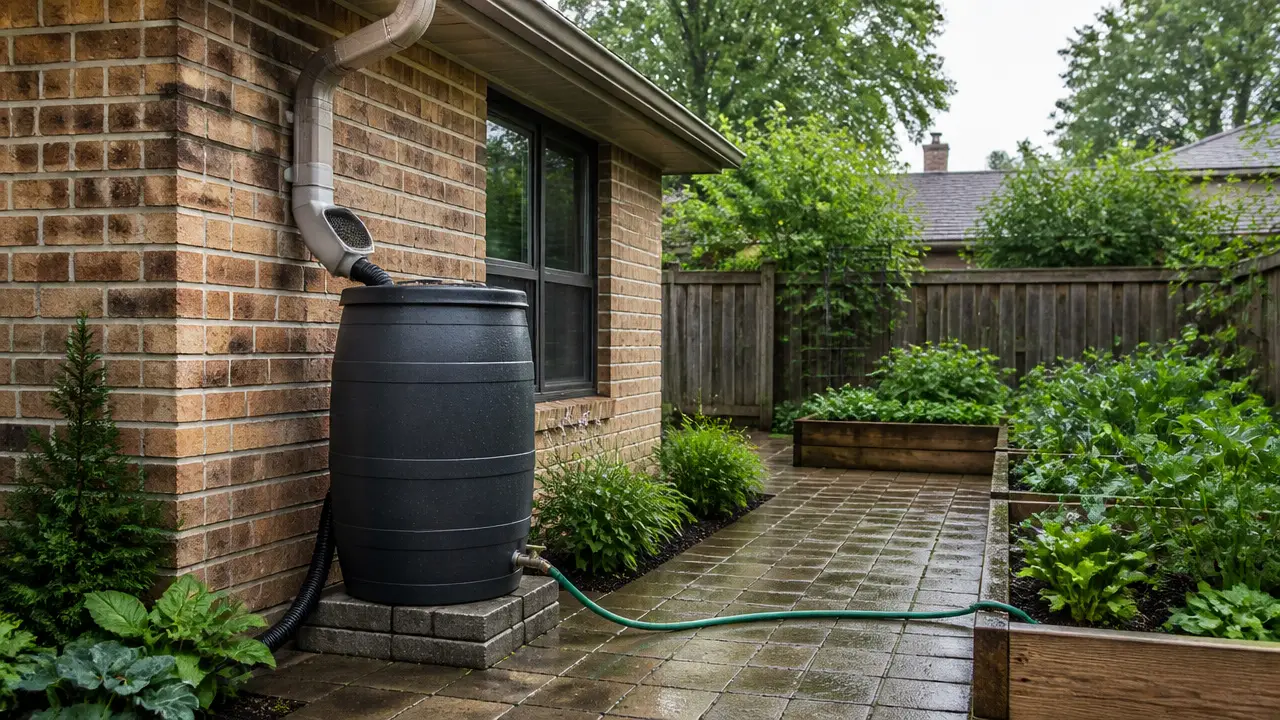
A rain barrel should sit on a firm, level, water-resistant base. Good choices include concrete pavers, patio blocks, a poured concrete pad, or a sturdy purpose-built stand placed on compacted ground.
The base has two jobs: keep the barrel stable and raise it high enough to make the spigot easier to use. A full rain barrel is very heavy, so loose soil, stacked scrap wood, and lightweight furniture are poor choices.
Best Materials to Put Under a Rain Barrel
For most homes, the simplest setup is:
- Compacted gravel or crushed stone.
- One or more large concrete pavers.
- A rain barrel or a strong stand on top.
This gives the barrel a flat surface while helping water drain around the base.
Concrete Pavers
Concrete pavers are one of the easiest options for a typical rain barrel.
They are:
- Strong.
- Water-resistant.
- Easy to level.
- Available in several sizes.
- Easy to remove if you change the system later.
Use enough pavers to support the entire footprint of the barrel or stand. Do not leave part of the base hanging over an unsupported edge.
Patio Blocks
Large patio blocks work much like pavers. A single large block can sometimes provide a more even surface than several small blocks.
The ground underneath still matters. A perfectly flat block can tilt if soft soil below it settles.
Compacted Gravel
Gravel can make a useful lower layer, especially where the soil becomes muddy.
Remove loose organic material first, then create a firm, level area. The gravel should be compacted rather than simply poured onto the ground.
It is usually better to put a paver or solid stand over the gravel instead of placing a plastic rain barrel directly on loose stones. A solid upper surface spreads the weight more evenly.
A Concrete Pad
A concrete pad is a good option for a larger or more permanent installation.
It provides excellent support when it is properly built and level. It can be especially useful when several barrels or a larger storage tank will occupy the same area.
A concrete pad is usually more work than necessary for one small residential rain barrel, however.
Why the Base Needs to Be Strong
Water is heavy.
One U.S. gallon of water weighs about 8.34 pounds. That means the water alone in a 55-gallon barrel weighs roughly:
55 × 8.34 = 459 pounds
Add the barrel, fittings, stand, and any water remaining on or around the system, and the installation can easily carry several hundred pounds.
That weight is concentrated in a fairly small area.
Soft soil can sink. Loose blocks can shift. A weak stand can buckle. A barrel that starts leaning can put extra stress on its fittings and downspout connection.
Treat the barrel as a heavy permanent load, not as an empty plastic container.
Should You Raise a Rain Barrel?
Usually, yes, but only as much as you need.
Raising a rain barrel can:
- Give you room to fit a watering can under the spigot.
- Make attaching a garden hose easier.
- Provide a little more gravity-fed pressure.
- Keep the spigot away from mud and standing water.
A height of several inches to around a foot is common for small barrel systems, but there is no single required height. The right height depends on your barrel, spigot position, hose setup, and stand.
Do not keep stacking blocks simply to increase pressure.
Height Adds Only a Small Amount of Pressure
Gravity creates water pressure based mainly on the vertical distance between the water surface and the outlet.
Raising a barrel helps, but a typical rain barrel does not create household-style water pressure.
As a rough rule, each foot of water height provides about 0.43 psi of pressure. Even adding a couple of feet of elevation still produces only low pressure compared with a pressurized plumbing or irrigation system.
If an irrigation device requires significant pressure, raising the barrel higher and higher is usually not the right solution. A properly selected pump may be needed instead.
Can You Put a Rain Barrel on Cinder Blocks?
Concrete masonry blocks can support substantial loads when they are installed correctly, but improvised block stacks can be unstable.
Problems arise when:
- Blocks sit on soft soil.
- Blocks are uneven.
- The barrel only rests on part of each block.
- Blocks are stacked in unstable orientations.
- A narrow platform is placed on top.
- The stand becomes top-heavy.
A broad, purpose-built platform or low stand is generally easier to make stable than a tall stack of blocks.
If you use masonry blocks, the entire assembly needs solid ground underneath and even support above.
Can You Put a Rain Barrel on Wood?
Wood can work as part of a properly designed stand, but it must handle long-term outdoor exposure and the full weight of the barrel.
A few pieces of scrap lumber placed on the ground are not a good base. They can rot, sink, twist, or shift.
A wooden stand should provide:
- Full and even support.
- Strong joints.
- Resistance to sideways movement.
- Materials suitable for outdoor use.
- Protection from prolonged contact with wet soil.
Inspect wooden stands regularly for rot, cracking, loose fasteners, and movement.
For a simple low-maintenance installation, masonry or concrete usually makes a better ground-level base.
Do You Need Gravel Under the Pavers?
Not always, but it often helps.
If you already have a level concrete patio, you may be able to place the barrel or stand directly on it.
On soil, a compacted gravel base can reduce settling and improve drainage.
A typical arrangement is:
firm soil → compacted gravel → level pavers → barrel stand → rain barrel
The exact foundation needed depends on the soil and barrel size. Very soft, wet, or recently disturbed ground may require more preparation.
Make Sure the Base Is Level
Check the base before filling the barrel.
A small tilt may not look serious when the barrel is empty. Once hundreds of pounds of water are inside, the load can make an unstable base settle further.
Check level in more than one direction.
Also look at where the barrel actually contacts the stand. Some rain barrels have molded bases that require broad support rather than a few narrow contact points.
Follow the barrel manufacturer's support instructions when available.
Leave Space Around the Spigot
Evaluating tools and materials for raise the rain barrel helps understand safe ventilation and overflow routing for stored water.
Before deciding how high to build the base, look at the spigot.
You may want enough clearance for:
- A watering can.
- A bucket.
- A hose fitting.
- A shutoff valve.
- A filter screen or accessory.
Measure this before placing the barrel. Raising a full barrel later is much harder than getting the height right while it is empty.
Plan for Overflow Too
The ground underneath the barrel is only part of the installation.
Every rain barrel needs somewhere for excess water to go when it fills.
An overflow should send water to a suitable drainage location rather than dumping it against the foundation or eroding the soil supporting the barrel.
Depending on the site, overflow may be directed toward an appropriate:
- Garden area.
- Drainage area.
- Infiltration area.
- Second barrel.
Keep water away from places where it can create foundation, basement, erosion, or walkway problems.
Local drainage requirements may also affect where overflow can be discharged.
Keep the Barrel Away From Unstable Ground
Avoid placing a rain barrel directly over:
- Loose topsoil.
- Mud.
- Mulch.
- Tree roots that make leveling difficult.
- Steeply sloped ground.
- Recently filled soil that has not settled.
- Areas where runoff regularly washes soil away.
Mulch is especially poor as a structural base. It decomposes and moves as it gets wet.
You can still have mulch around the rain barrel area. Just give the barrel itself a solid foundation.
Do Not Forget the Downspout Connection
The barrel position also needs to work with your gutter and downspout.
Before building the base, check:
- Where the barrel inlet will sit.
- Where the downspout diverter or inlet pipe will connect.
- Whether the barrel can be disconnected for cleaning.
- Whether the overflow has a clear path.
- Whether you can reach the lid, screen, fittings, and valves.
Raising a barrel changes the height of all these connections.
Plan the complete setup before permanently altering the downspout.
A Simple Rain Barrel Base Setup
For a typical residential barrel on soil, a practical setup is:
1. Choose Firm Ground
Pick a location close enough to the downspout while allowing safe overflow drainage.
2. Remove Loose Material
Clear away mulch, loose soil, vegetation, and debris from the footprint.
3. Level and Compact the Area
Create a broad, firm surface rather than leveling only the exact spots where blocks will sit.
4. Add Compacted Gravel if Needed
Gravel can improve drainage and provide a more stable foundation on ordinary soil.
5. Install Large Pavers
Set them level and make sure they do not rock.
6. Add a Strong Stand if Extra Height Is Needed
The stand should be designed for more than the expected filled weight and should support the barrel correctly.
7. Check Everything Before Filling
Push gently from different directions and look for rocking or movement.
If the base shifts while the barrel is empty, fix it before adding water.
What Not to Put Under a Rain Barrel
Avoid makeshift materials that can move, rot, crush, or create an uneven load.
Poor choices include:
- Loose bricks stacked into a tall tower.
- Milk crates.
- Plastic storage bins.
- Indoor furniture.
- Pallets in poor condition.
- Loose scrap lumber.
- Mulch.
- Bare soft soil.
- Uneven rocks.
The goal is not simply to get the barrel off the ground. It is to support several hundred pounds reliably through rain, wind, seasonal soil movement, and repeated filling and emptying.
Larger Tanks Need More Planning
The guidance above is mainly for ordinary residential rain barrels.
Large tanks, interconnected storage systems, IBC totes, and cisterns create much larger loads. Their foundations need to match the tank manufacturer's requirements and site conditions.
For example, 275 gallons of water weighs about 2,294 pounds before the container and fittings are added.
At that scale, foundation preparation should not be treated like a simple rain-barrel stand project. Uneven support can damage a tank or its fittings.
If there is any doubt about soil stability, structural loading, elevated platforms, or support near a building, get qualified help.
Frequently Asked Questions
Can I put a rain barrel directly on the ground?
You can place some barrels directly on firm, level ground, but bare soil often settles or becomes muddy. A solid paver or prepared base usually provides better long-term support.
What is the best base for a rain barrel?
For many small rain barrels, a compacted foundation topped with large concrete pavers is simple and durable. Add a strong stand only if you need extra height.
How high should a rain barrel be off the ground?
Raise it enough to provide useful clearance below the spigot and make hose connections convenient. Do not build a tall stand merely to increase water pressure, because the pressure gain from modest height is small.
Can I put a rain barrel on patio pavers?
Yes. Patio pavers can make an excellent base when they are level, stable, and large enough to support the whole barrel or stand.
Can I put a rain barrel on my deck?
Possibly, but do not assume the deck can safely carry it. A full barrel can weigh several hundred pounds. Larger storage containers can weigh thousands. Have the structure evaluated if its load capacity is uncertain.
Do rain barrels need a stand?
No. A stand is optional. It is mainly useful for creating clearance under the spigot and adding some gravity-fed head height. The barrel still needs a strong, level foundation underneath the stand.
Should I put gravel around my rain barrel?
Gravel can help control mud and improve drainage around the barrel. It can also form part of the foundation when properly compacted. Make sure overflow water is directed away rather than relying on a small gravel patch to handle large amounts of runoff.