As an affiliate, we may earn a commission from qualifying purchases. We get commissions for purchases made through links on this website from Amazon and other third parties.
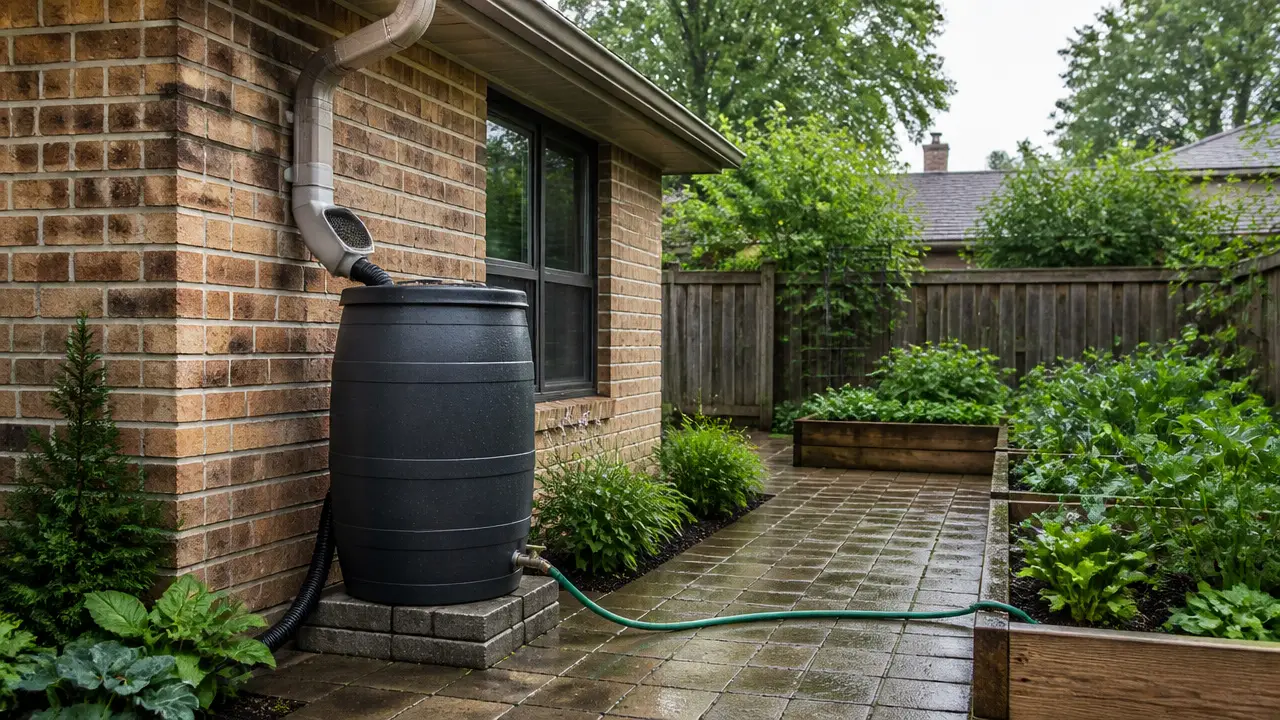
A rain barrel can be raised on a strong, level base made from concrete blocks, solid pavers, a reinforced wood stand, or a purpose-built rain barrel stand. The best choice is one that can hold the barrel’s full weight without shifting, sinking, or tipping.
Raising the barrel can make it easier to fill a watering can. It can also give a gravity-fed garden hose a little more pressure. But the higher the barrel sits, the more important a stable base becomes.
Good Ways to Raise a Rain Barrel
Concrete Blocks
Concrete blocks are a common choice because they are strong and easy to arrange.
Place them on firm, level ground. A flat paver or compacted gravel base underneath can help keep the blocks from sinking into soft soil.
Use enough blocks to support the whole bottom of the barrel or its stand. Do not balance a barrel on a narrow stack.
Concrete blocks work well when you only need to raise the barrel about one or two block heights.
Solid Concrete Pavers
Large concrete pavers can provide a wide, stable platform.
They work especially well when combined with a short block base. The paver spreads the barrel's weight across a larger area and gives the barrel a flat surface to sit on.
Make sure the paver stays level after rain. Soil under a heavy barrel can settle over time.
A Reinforced Wood Stand
A wood stand can work if it is designed for a heavy load.
Use strong framing rather than a lightweight table, shelf, or decorative plant stand. Outdoor wood also needs protection from moisture and decay.
Check the stand regularly for:
- Rot
- Loose screws or bolts
- Cracked lumber
- Wobbling
- Sinking legs
If you are not comfortable building a load-bearing structure, use blocks or a purpose-built stand instead.
A Purpose-Built Rain Barrel Stand
A stand made for rain barrels is another option. Check that its size and load rating match your barrel.
The barrel should sit fully on the supporting surface. A stand that is too small can concentrate the load in the wrong places or make the barrel less stable.
How Strong Does the Base Need to Be?
Water is heavy.
In U.S. measurements, water weighs about 8.34 pounds per gallon. That means 55 gallons of water alone weighs about:
55 × 8.34 = 459 pounds
The barrel, fittings, and anything attached to it add more weight.
A larger tank gets heavy very quickly. For example, about 100 gallons of water weighs roughly 834 pounds before adding the tank itself.
Your base needs to safely support the full barrel, not just the empty one.
Start With Firm, Level Ground
The material under the stand matters almost as much as the stand itself.
Avoid setting a raised barrel directly on:
- Loose soil
- Mud
- Uneven rocks
- Soft mulch
- Steep ground
- Loose stacked bricks
A compacted gravel pad topped with a level concrete paver can make a good foundation for a small residential rain barrel.
Check the base after heavy rain. Water flowing from the downspout or barrel overflow can wash soil away and cause one side to sink.
How High Should You Raise a Rain Barrel?
You usually only need enough height to make the outlet useful.
For example, raising the barrel may create enough space to place a watering can under the spigot. More height can also improve gravity flow through a hose.
The water pressure created by elevation is called head pressure. In simple terms, the greater the vertical distance between the water level in the barrel and the hose outlet, the more gravity can help move the water.
A few extra inches can help, but a short rain barrel stand will not produce household-style water pressure. Long hoses, small fittings, filters, and uphill garden lines can reduce the flow further.
Do not keep stacking blocks simply to gain more pressure. A taller barrel has a greater tipping risk.
If you need significant pressure for sprinklers or irrigation equipment, a suitable pump may be a better solution than a very tall stand.
Keep the Barrel From Tipping
A raised rain barrel should remain stable when it is full, partly full, and nearly empty.
Factor in a stable base for a rain barrel to assess cleaning access that supports sediment and odor management.
This matters because a nearly empty barrel weighs much less and may be easier for wind or accidental contact to move.
Keep the barrel:
- On a flat platform
- Close to a stable wall when appropriate
- Away from areas where children may climb on it
- Away from vehicle paths
- Away from unstable slopes
Follow any anchoring instructions provided by the barrel or stand manufacturer.
Do not rely on the downspout to hold the barrel in place.
Make Sure the Downspout Still Fits
Raising the barrel changes where its inlet sits.
Before building the base, check the height of:
- The rain barrel inlet
- The downspout
- Any downspout diverter
- The overflow connection
- The barrel spigot
A diverter may need to be installed at a particular height relative to the barrel. Follow the instructions for that system rather than choosing the stand height first.
Also make sure the overflow can carry excess water away from the foundation.
Leave Room to Use the Spigot
One of the biggest benefits of raising a barrel is easier access to the outlet.
Measure your watering can or bucket before choosing the height. Make sure there is enough clearance underneath the spigot to use it comfortably.
If you plan to attach a hose instead, check that the hose can bend away from the fitting without being sharply kinked.
Avoid Weak Household Furniture
A normal table, plastic shelf, storage crate, stool, or garden bench may look strong enough when the barrel is empty. It may not be designed to hold several hundred pounds for months outdoors.
Water weight is also a long-term load. Rain, sun, insects, corrosion, and ground movement can weaken a stand over time.
Use materials intended for structural support rather than improvised household furniture.
What About Putting a Rain Barrel on a Deck?
Be careful.
A full rain barrel places a large amount of weight in a small area. Larger storage tanks create even greater loads.
Whether a deck can safely carry that weight depends on its framing, condition, support locations, and the size of the tank. Do not assume a deck can handle a full barrel just because several people can stand on it.
If the structural capacity is uncertain, have a qualified builder or structural professional evaluate it.
A Simple Setup for Many Small Rain Barrels
For a typical backyard barrel placed on the ground, a simple arrangement may be:
- Choose firm ground near the downspout.
- Remove loose soil or mulch.
- Prepare and compact a level base.
- Place a broad concrete paver or suitable pad on the base.
- Add stable concrete blocks if more height is needed.
- Place another strong, flat supporting surface on top if needed to distribute the load.
- Set the empty barrel in place and check for rocking.
- Connect the downspout, overflow, and outlet.
- Recheck the base after the barrel fills.
If anything shifts, leans, cracks, or sinks, empty the barrel before rebuilding the support.
Frequently Asked Questions
Can I put a rain barrel on cinder blocks?
Concrete masonry blocks can be used when they are placed correctly on a firm, level foundation and provide stable support for the barrel. Avoid narrow or unstable stacks. The complete base must be able to carry the weight of the full barrel.
Can I put a rain barrel on bricks?
Individual bricks are generally less convenient for building a stable rain barrel platform because many small pieces can shift or settle. A broad concrete paver with properly arranged structural blocks usually creates a more dependable base.
How much does a full 55-gallon rain barrel weigh?
The water alone weighs about 459 pounds because water weighs roughly 8.34 pounds per gallon. The barrel and fittings add additional weight.
Will raising my rain barrel increase water pressure?
Yes, raising the water level increases gravity pressure. However, a short stand only produces a modest improvement. It will not normally provide the same pressure as a household plumbing system or suitable water pump.
Can I put my rain barrel on a wooden pallet?
A pallet should not automatically be assumed strong enough. Pallets vary greatly in construction and condition, and outdoor moisture can weaken them. Use a support system with a known ability to carry the barrel's full load.
How do I stop a rain barrel stand from sinking?
Start with firm soil and a properly prepared, level base. Compacted gravel and a broad concrete paver can help distribute the load. Also route overflow water away so it does not erode the soil around the stand.
Is it safe to stack several concrete blocks to make the barrel higher?
A low, wide base is generally safer than a tall, narrow stack. Raising the barrel higher increases tipping concerns. If you need substantial height or pressure, use a properly designed structure or consider a suitable pump instead of continuing to stack blocks.