As an affiliate, we may earn a commission from qualifying purchases. We get commissions for purchases made through links on this website from Amazon and other third parties.
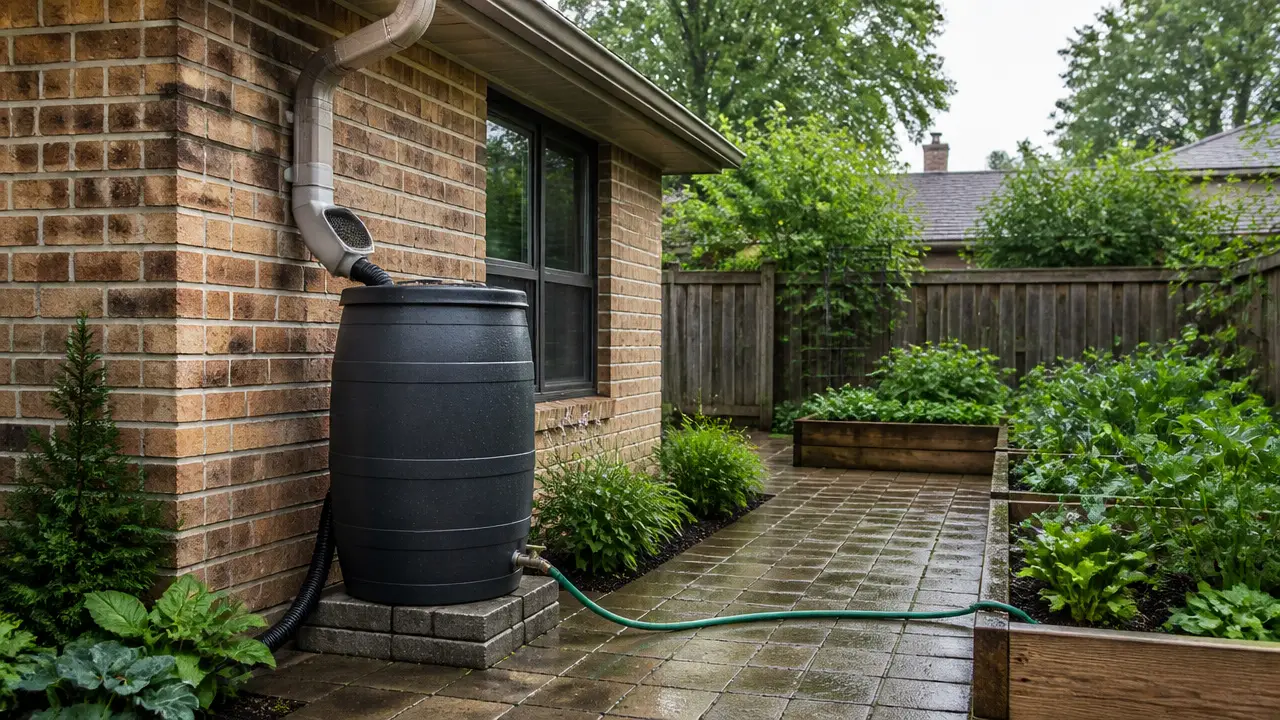
A good rain barrel for a small space is compact, narrow, stable, easy to connect, and large enough to be useful without blocking a walkway or crowding a patio. For many homes, a slim or wall-hugging barrel works better than a wide round barrel.
Capacity matters, but dimensions matter more when space is tight. A taller barrel may hold more water without using much ground area, as long as it is placed on a firm, level base and cannot tip.
What to Look for in a Small-Space Rain Barrel
Start by measuring the space where the barrel will sit. Measure width, depth, and available height. Leave enough room to reach the lid, spigot, overflow connection, and downspout.
A good small-space barrel should have:
- A narrow footprint
- A stable shape and base
- A screened or covered inlet
- A low-mounted spigot
- A proper overflow connection
- Connections that match your downspout or diverter
- An accessible opening for cleaning
- Opaque or light-blocking walls
- Materials intended for water storage
Do not choose a barrel based only on its gallon capacity. A barrel can technically fit into a corner but still be frustrating to use if you cannot reach the fittings.
Choose the Shape Before the Capacity
Traditional round barrels use quite a bit of floor space. In a narrow side yard, balcony, patio, or area beside a garage, another shape may fit better.
Slim or Wall-Hugging Barrels
These are usually the best choice for very tight spaces. They are deeper from top to bottom but relatively shallow from front to back.
They can work well beside:
- A house wall
- A garage
- A shed
- A narrow patio
- A walkway
Check that the barrel still has enough clearance for hoses and overflow plumbing.
Rectangular Barrels
A rectangular tank can make better use of a corner than a round barrel. Flat sides also make it easier to place the tank close to a wall.
The main concern is stability. Tall, narrow containers become very heavy when full, so they need a solid and level foundation.
Decorative Vertical Barrels
Some vertical barrels are designed to look more like planters, columns, or outdoor furniture. The shape can make them easier to fit into a landscaped patio.
Appearance should come after practical features. Make sure the inlet, outlet, overflow, and cleaning access are usable.
How Much Capacity Do You Need?
For small spaces, the largest barrel you can physically fit is not always the best choice.
Think first about what you want to water.
A smaller barrel may be enough for:
- Potted plants
- A small vegetable bed
- A few raised beds
- Patio plants
- Spot watering around a yard
Larger storage becomes more useful if you have a larger garden or want to keep more water between storms.
Remember that water is heavy. One U.S. gallon of water weighs about 8.34 pounds, not including the barrel itself. A filled barrel can therefore place a substantial load on its base.
This is especially important on decks, balconies, platforms, and raised structures. Do not place a full rain barrel on a structure unless you know it can safely support the load.
Make Sure the Barrel Fits Your Downspout
The barrel and downspout need a controlled connection.
Two common approaches are a direct inlet and a downspout diverter.
With a direct inlet, the downspout sends runoff into the top of the barrel. The system then needs a dependable overflow path for water once the barrel becomes full.
A diverter sends some water from the downspout into the barrel and can direct excess water back through the normal drainage path.
Either approach can work in a tight area. What matters is that the parts physically fit and excess water has somewhere safe to go.
Do not simply disconnect a downspout and let overflow spill beside the foundation.
Pay Close Attention to Overflow
Overflow is particularly important with small rain barrels because they can fill quickly during a strong storm.
Once the barrel is full, every additional gallon must go somewhere.
A good setup has a dedicated overflow outlet that carries extra water toward an appropriate drainage area. The hose or pipe should be large enough to handle incoming runoff without causing the barrel to back up.
Keep overflow away from places where it could create problems, such as:
- Building foundations
- Basement walls
- Doorways
- Walkways
- Neighboring property
- Areas that already drain poorly
The original roof-drainage system should continue to protect the building.
Look for a Useful Spigot Position
A low spigot lets you use more of the stored water.
However, a very low spigot can be difficult to reach if the barrel sits directly on the ground. Raising the barrel slightly on a suitable base can provide room for a watering can or hose connection.
Any stand must support the full weight of the barrel and water. Avoid unstable stacks of loose blocks, makeshift furniture, or lightweight shelves.
A raised barrel also creates a little more gravity pressure.
Pressure from a rain barrel depends mainly on head height, which is the vertical distance between the water surface and the point where the water is being used. A small increase in height can help, but a rain barrel still provides much less pressure than a normal household water line.
Do Not Expect Normal Hose Pressure
Small rain barrels work especially well for filling watering cans or slowly watering nearby plants.
A gravity-fed barrel may also supply some simple irrigation systems, but performance depends on the height of the water, tubing size, hose length, fittings, and irrigation device.
Alongside a suitable rain barrels in 2026, assess vessel construction compatible with the expected water use.
Devices designed for household water pressure may perform poorly.
If you need stronger or more consistent pressure, a pump may be required. The pump must be suitable for the intended water source, flow needs, power supply, and irrigation equipment.
A Screened Inlet Is Important
Roof runoff can carry leaves, insects, dirt, pollen, and other debris.
A good rain barrel should have a screened or covered opening that helps keep larger debris and mosquitoes out. The screen must remain securely fitted and should be easy to remove for cleaning.
A leaf screen or other prefilter before the barrel can reduce the amount of debris entering storage.
Some systems also use a first-flush device. A first flush redirects an initial portion of roof runoff before water enters storage. This can reduce some of the dirt and debris washed from the roof, but it does not make rainwater automatically safe for drinking.
Choose an Opaque Barrel
Sunlight inside stored water encourages algae growth.
An opaque barrel that blocks light is normally easier to manage than a clear or translucent container. If you can see sunlight through the wall of the barrel, algae can become more of a problem.
Placement in a shaded area can also help, although the barrel still needs suitable access to the downspout.
Cleaning Access Matters More Than It Seems
Small barrels can still collect sediment.
Look for a design that allows you to inspect and clean the inside. A barrel with an opening too small to reach or rinse effectively may become frustrating over time.
Regular maintenance can include:
- Clearing inlet screens
- Removing leaves and sediment
- Checking hoses and fittings
- Inspecting the overflow
- Looking for leaks
- Checking for mosquito access
- Cleaning the storage container as needed
How often this is necessary depends on the roof, nearby trees, weather, and system design.
Consider Winter Conditions
If temperatures in your area regularly fall below freezing, plan for winter before choosing a barrel.
Water expands when it freezes and can damage barrels, valves, hoses, and fittings.
Depending on the system and climate, seasonal preparation may include draining the barrel, disconnecting vulnerable plumbing, or routing the downspout back to its normal drainage path.
Do not assume a barrel is freeze-proof unless its manufacturer specifically provides suitable instructions for those conditions.
Rain Barrel Water Is Usually for Non-Potable Uses
Non-potable means water that is not intended for drinking.
Roof-collected rainwater may pick up contaminants from roofing materials, bird droppings, insects, airborne pollution, gutters, and the storage system itself.
For a simple small-space rain barrel, garden watering and similar outdoor uses are usually the practical focus.
Be more cautious when using roof runoff on edible plants. Avoid applying untreated stored water directly to parts of food crops that will be eaten when safer irrigation practices are available.
Drinking-water use requires a much more carefully designed system. Collection surfaces, pretreatment, treatment, storage, current laboratory testing, maintenance, plumbing separation, and applicable local requirements all matter. A basic barrel, screen, or filter alone does not establish that rainwater is potable.
What Is the Best Setup for a Very Small Area?
For most tight spaces, a practical setup is a slim, opaque barrel positioned close to a downspout with a screened inlet, accessible spigot, and controlled overflow.
Before buying or installing one, check these five measurements:
- Maximum barrel width
- Maximum barrel depth
- Available height
- Distance to the downspout
- Space needed to operate and clean the fittings
Then decide how you will actually use the water.
If you mainly fill a watering can for patio plants, you may not need a large tank or pump. If you want to run irrigation tubing across a garden, outlet height, available flow, pressure, and connection sizes become much more important.
The best small-space rain barrel is not simply the smallest barrel. It is the one that fits the available area while leaving enough room for safe support, useful connections, overflow control, and routine cleaning.
Frequently Asked Questions
What size rain barrel is best for a small patio?
Choose based on the barrel's physical dimensions first and capacity second. A slim vertical or rectangular barrel may provide useful storage while taking up less patio space than a wide round barrel. Leave room to reach the spigot, inlet, and overflow connection.
Can I put a rain barrel against my house?
A barrel can often be positioned near a wall, but do not block important building access or allow overflow to drain against the foundation. Leave enough clearance to inspect and maintain the barrel and its plumbing.
Can I put a rain barrel on a balcony?
Only if the balcony or structure is known to support the full weight safely. Stored water is very heavy. Structural loading should be checked before placing a filled barrel on a balcony, deck, or other elevated structure.
Should I raise a small rain barrel?
Raising it can make the spigot easier to reach and provide slightly more gravity pressure. Use only a strong, stable, level support designed to carry the full weight of the filled barrel.
Will a small rain barrel run a garden hose?
Water can flow through a hose by gravity, but pressure will be much lower than household water pressure. Short, larger-diameter hoses generally restrict flow less than long or narrow ones. Some irrigation equipment may require a pump.
How do I stop mosquitoes from getting into a rain barrel?
Keep all openings securely screened or sealed, including the inlet and overflow where appropriate. Inspect screens regularly for gaps, damage, or debris that prevents them from fitting properly.
Does a first-flush diverter make rain barrel water safe to drink?
No. A first-flush device can divert some initial roof runoff and reduce certain debris entering storage, but it does not make the remaining rainwater automatically potable. Drinking-water systems require a whole-system approach to collection, treatment, testing, maintenance, and local requirements.