As an affiliate, we may earn a commission from qualifying purchases. We get commissions for purchases made through links on this website from Amazon and other third parties.
Rain barrels can be very useful for gardens. They collect roof runoff that would otherwise flow away, then store it for later watering.
They work best for garden beds, shrubs, flowers, and container plants that are close to the barrel. The main limits are storage capacity, low water pressure, and the quality of the water coming from the roof.
A rain barrel is not an endless water supply. A typical barrel may fill quickly during a good rain and empty just as quickly during hot, dry weather. It works best as one part of your normal garden watering plan.
Why Rain Barrels Work Well for Gardens
A rain barrel gives you a simple way to save water between storms.
Instead of sending roof runoff into a drain or across the yard, a downspout directs some of that water into the barrel. You can then use a watering can, short hose, or suitable irrigation setup to move the stored water to plants.
The main garden benefits are:
- Water is stored for use after the rain stops.
- You can reduce how much tap or well water you use for irrigation.
- Barrels can help keep roof runoff away from foundations and problem areas when the overflow is planned correctly.
- A small system is usually easier to install and maintain than a large cistern.
- You can add more storage later if one barrel is not enough.
The biggest benefit is convenience. Water collected close to the garden is often easier to use than water that has to be carried or pumped from farther away.
How Much Garden Water Can a Rain Barrel Provide?
That depends on three things:
- Your roof collection area.
- How much rain falls.
- How much storage you have.
A large roof can produce far more runoff than one small barrel can hold. This means barrel capacity often becomes the limiting factor.
For example, a barrel may fill during one storm even though much more water continues coming off the roof. Once the barrel is full, the extra water must leave through a properly sized overflow or downspout diversion system.
During dry weather, the opposite problem occurs. A garden can use the stored water faster than the next storm replaces it.
Because of this, a rain barrel is usually best for supplementing garden irrigation rather than supplying every watering need.
Which Plants Can You Water With Rain Barrel Water?
Collected rainwater can be useful for many ornamental plants, lawns, trees, shrubs, and garden beds.
Vegetable gardens need a little more care.
Roof runoff can pick up:
- Bird and animal droppings
- Dust
- Pollen
- Leaves
- Roofing debris
- Metals or other materials from roofs, gutters, and fittings
The amount and type of contamination depend on the collection surface and the surrounding environment.
For edible gardens, avoid assuming that roof runoff is clean simply because it came from rain. Consider the roof material, gutter condition, nearby pollution sources, and how the water will contact the crop.
Applying water to the soil around plants generally limits direct contact with leaves and edible portions compared with spraying water over the whole plant.
Do not treat basic screening or a simple barrel filter as proof that the water is safe to drink or suitable for every food-growing situation.
Rain Barrels Have Very Little Water Pressure
One of the most common surprises is how slowly water may come out of a rain barrel.
The pressure comes mainly from head height, which means the vertical distance between the water level in the barrel and the outlet where the water is being used.
The higher the water surface is above the outlet, the more pressure gravity can provide.
A barrel sitting on the ground may work well for filling a watering can. It may not provide enough pressure for:
- Long garden hoses
- Many sprinklers
- Some drip irrigation systems
- Pressure-regulated irrigation equipment
Flow also becomes slower as the barrel empties because the water level drops.
Raising the barrel can increase gravity pressure, but this creates another concern: weight.
A Full Rain Barrel Is Very Heavy
Water is heavy. A large, full barrel can place a substantial load on its base.
The stand must support the barrel safely when it is completely full, not just when it is empty.
Use a level, stable base that will not sink, tilt, rot, or collapse. Do not stack a heavy barrel on loose blocks or an improvised platform just to gain more pressure.
Larger storage tanks need even more attention to foundation and structural support.
Can You Connect a Hose to a Rain Barrel?
Usually, yes, if the barrel has a suitable outlet.
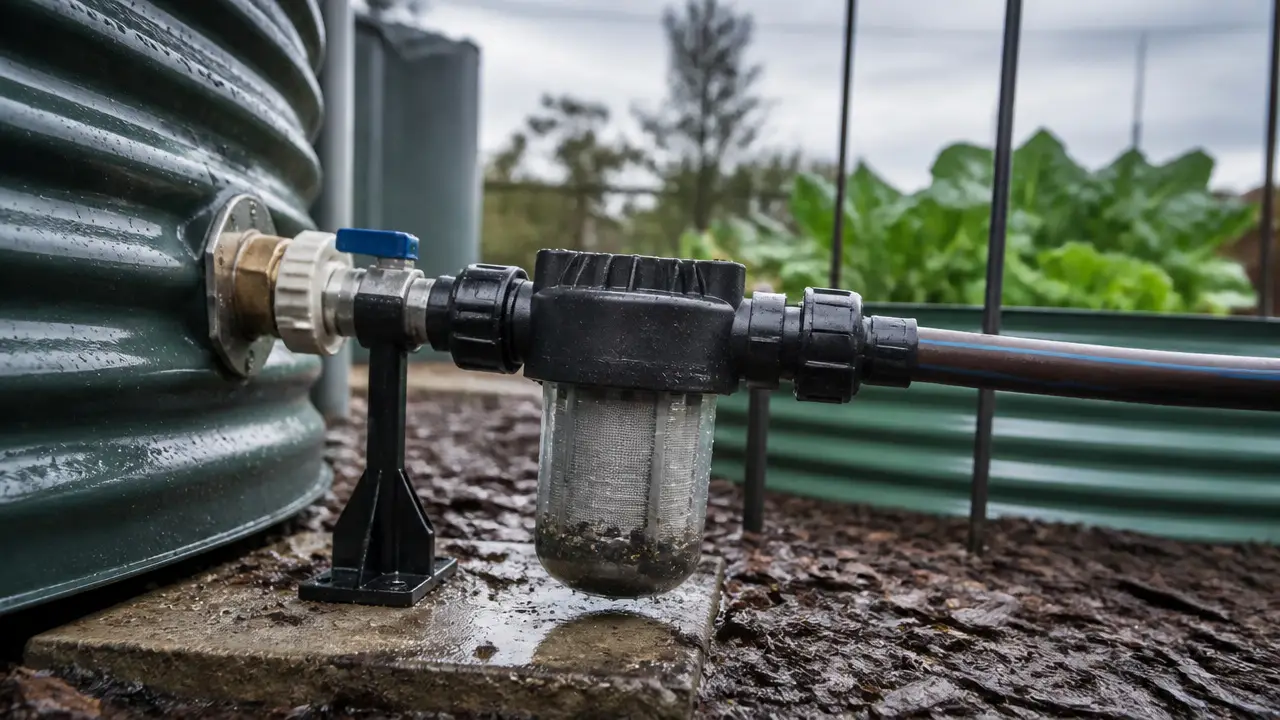
Check the outlet size and thread or fitting type before buying adapters. Rain barrels do not all use the same connections.
A short hose is generally easier for gravity-fed watering than a very long hose. Every hose, valve, elbow, screen, and fitting adds some resistance to flow.
If you need water to travel uphill, through a long line, or through equipment that requires pressure, a pump may be needed.
Pump systems introduce additional issues such as power, flow rate, dry-run protection, electrical safety, and freezing. They should be planned as a complete water-moving system rather than added without checking compatibility.
Are Rain Barrels Good for Drip Irrigation?
They can be, but not every drip system works well from gravity alone.
Many irrigation parts are designed for pressurized household water. A rain barrel may not produce enough pressure for them.
A gravity-fed drip system works best when:
- The garden is below the barrel.
- The run is fairly short.
- The tubing and emitters are designed for low pressure.
- The barrel outlet provides adequate flow.
- Filters and valves do not restrict the flow too much.
Check the pressure and flow needs of your irrigation components before connecting them.
If a drip system waters unevenly, low pressure is one possible cause.
Should a Rain Barrel Have a Screen?
Yes. Openings should be screened so leaves and larger debris do not enter easily.
Screening also helps keep mosquitoes from reaching stored water.
Check the screen regularly. Pollen, roof grit, leaves, and other material can block it and cause water to spill where it should not.
A screen is useful, but it does not make the stored water sterile or potable. Potable means safe for drinking.
A First-Flush System Can Reduce Some Debris
The first runoff from a roof after a dry period may carry more dust, droppings, pollen, and other material than later runoff.
A first-flush diverter is a device designed to divert some of this early runoff before water enters storage.
It can be a useful part of a better rainwater collection system, especially when keeping stored water cleaner matters.
However, first-flush equipment does not remove every possible contaminant. It is only one stage of managing water quality.
Keep the Barrel Covered
Examine simple garden rainwater collection methods to understand pressure requirements of the planned timer and valves.
An open barrel creates several problems.
Leaves and animals can get inside. Sunlight can encourage algae growth. Open water may also allow mosquito access.
A garden rain barrel should normally have a secure lid or closed top along with screened openings.
An opaque container can also reduce the amount of sunlight reaching the stored water.
Plan the Overflow Before the Barrel Fills
Every rain barrel needs somewhere for excess water to go.
This matters because a barrel can fill surprisingly quickly during heavy rain.
The overflow should carry excess water to a suitable location without creating:
- Foundation problems
- Erosion
- Muddy garden areas
- Damage to neighboring property
- Water flowing back toward the house
Do not assume that a small overflow fitting can handle everything the downspout delivers during intense rain.
The original downspout drainage path should also continue to function safely if the barrel or inlet becomes blocked.
Clean the Barrel and Gutters
Rain barrels are not maintenance-free.
Inspect the system during the watering season and remove accumulated debris when needed.
Pay attention to:
- Roof gutters
- Downspout screens
- Inlet screens
- First-flush components
- Barrel sediment
- Spigots
- Overflow lines
- Hose connections
Sediment will often settle on the bottom over time.
How often the barrel needs cleaning depends on the roof, nearby trees, local weather, and how much debris enters the system.
Watch for Leaks Around Fittings
Barrel outlets are often installed through the wall of the container using a sealed fitting.
A bulkhead fitting is one common type. It passes through a hole in the tank wall and forms a sealed connection for a pipe, valve, or hose fitting.
Leaks can develop if fittings loosen, seals wear out, or the barrel wall becomes damaged.
Check connections before relying on the barrel during the growing season.
Rain Barrels Need Special Care in Freezing Climates
Water expands when it freezes.
A barrel, valve, hose, or fitting that remains full during freezing weather can be damaged.
If your area has hard freezes, follow the barrel manufacturer's cold-weather instructions. Depending on the system, this may involve draining and disconnecting parts before winter.
Do not assume that a flexible-looking barrel or hose is automatically freeze-proof.
When One Rain Barrel Is Not Enough
A single barrel is a good starting point for small watering jobs.
More storage may make sense if you have:
- A large garden
- A large roof collection area
- Long gaps between rainfall
- Several garden zones
- High summer watering needs
Multiple barrels can sometimes be connected together, but the connections, overflow capacity, support, and water levels must be planned correctly.
For much larger storage needs, a cistern or other purpose-built tank may be more practical than adding many small barrels.
When a Rain Barrel May Not Be the Best Choice
A rain barrel is less useful when the garden is far from the collection point or when you need high pressure.
It may also be a poor fit if you have nowhere safe to direct overflow.
A larger storage and pumping system may work better when you need to:
- Move water a long distance
- Send water uphill
- Supply several irrigation zones
- Run pressure-dependent irrigation equipment
- Store substantial amounts of seasonal rainfall
The right system depends on both how much water you can collect and how you plan to use it.
The Bottom Line
Rain barrels are good for gardens when they are used for what they do best: storing a modest amount of roof runoff close to where plants need water.
They are especially useful for hand watering, small garden beds, containers, shrubs, and simple low-pressure irrigation.
For a reliable setup, pay attention to the roof and gutter condition, barrel support, screened openings, outlet connections, overflow routing, water quality, and regular cleaning.
The main mistake is expecting one small barrel to act like a pressurized, unlimited water supply. Treat it as supplemental garden storage, and it can be a practical part of a rainwater system.
Frequently Asked Questions
Is rain barrel water better for plants than tap water?
Not always. Rainwater can avoid some substances found in treated or naturally mineral-rich water, but roof runoff can also collect dirt and contaminants. Plant suitability depends on the collection surface, stored-water condition, and intended use.
Can I water vegetables with rain barrel water?
Roof runoff may be used for some garden irrigation, but edible crops deserve extra care because runoff can contain contaminants from the roof, gutters, animals, and surrounding environment. Consider the collection surface and avoid unnecessary contact between untreated runoff and edible plant parts.
How long can water stay in a rain barrel?
There is no single safe storage time for every barrel. Water quality changes with temperature, sunlight, debris, insects, and contamination entering the system. Keep the barrel covered, use the water regularly, and clean the system as needed.
Will a rain barrel run a garden hose?
It can supply a hose, but the flow may be much weaker than a household faucet. Gravity pressure depends mainly on the height of the water above the hose outlet. Short, downhill hose runs generally work better.
Do I need a pump for a rain barrel?
Not for simple gravity watering. A pump may be useful when you need greater pressure, longer hose runs, uphill movement, or irrigation equipment that cannot operate from low gravity pressure.
How do I keep mosquitoes out of a rain barrel?
Keep the barrel closed and place fine screening over openings mosquitoes could use to reach the water. Inspect screens, lids, overflow fittings, and other openings regularly because gaps or damaged mesh can allow access.
Can I connect several rain barrels together?
Yes, many systems can use connected barrels. The fittings must be compatible, the barrels need stable support, and the system still needs enough overflow capacity for incoming roof runoff.