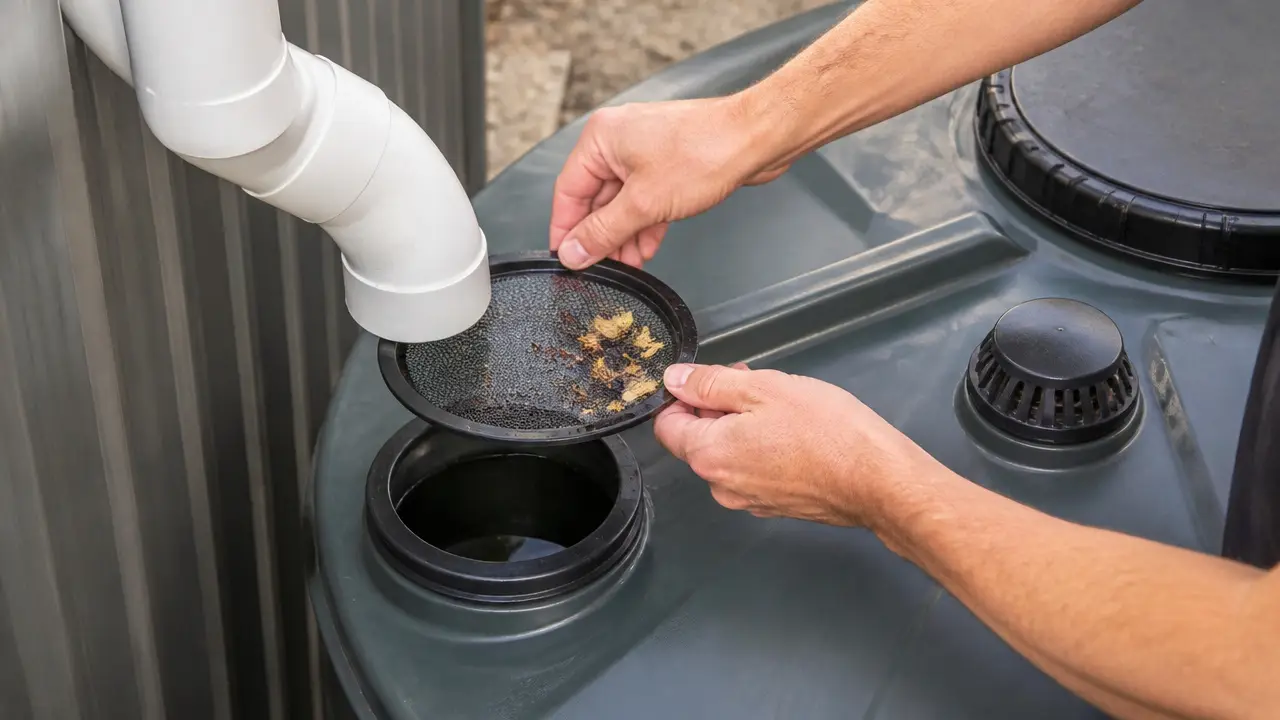
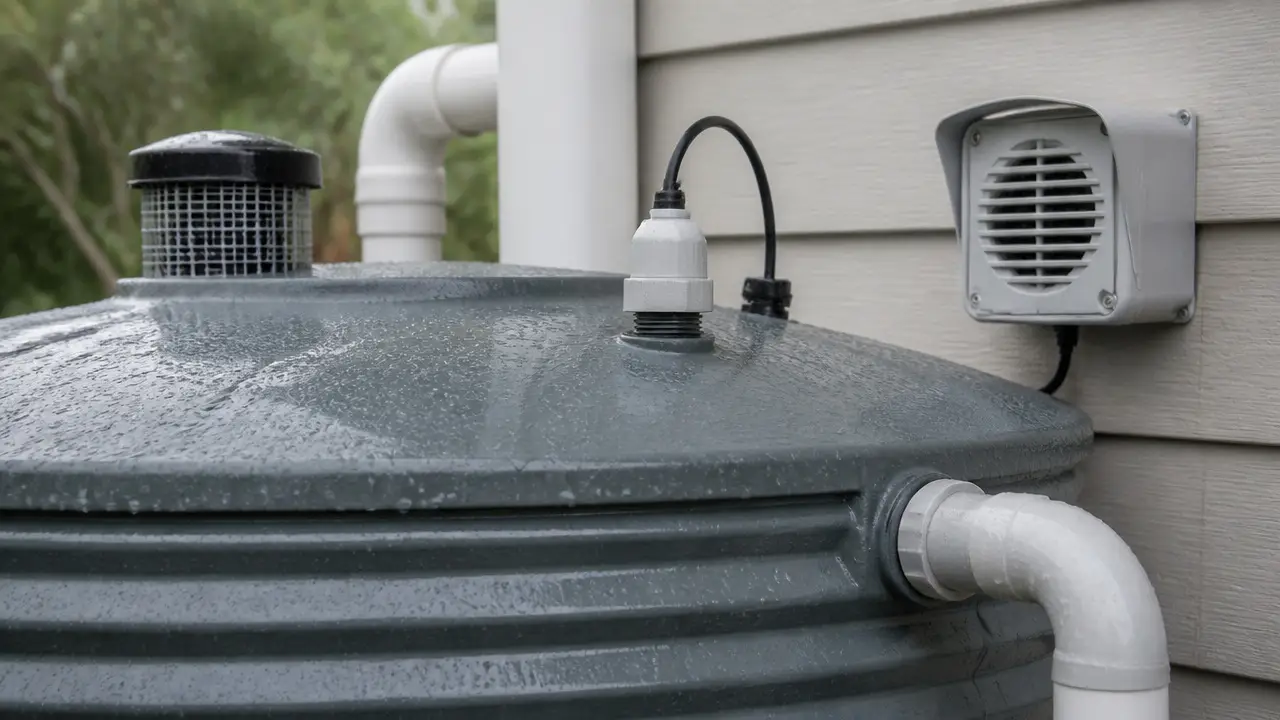
As an affiliate, we may earn a commission from qualifying purchases. We get commissions for purchases made through links on this website from Amazon and other third parties.
Should the Filter Be Before or After the Water Pump?
In most rainwater systems, some filtration should happen before the pump, while finer filtration usually goes after the pump.
A common setup looks like this:
Tank → coarse prefilter or pump strainer → pump → sediment filter → other treatment → faucet or irrigation system
The exact order depends on the filter type and how you plan to use the water.
The main goal is to keep leaves, grit, and large debris out of the pump without making the pump struggle to pull water through a restrictive filter.
What Should Go Before the Pump?
Filters placed before the pump should usually be coarse and low restriction.
Their job is to protect the pump from material that could clog or damage it.
Examples include:
- Tank inlet screens
- Leaf screens
- First-flush devices
- Floating intake screens
- Coarse suction strainers
- Pump inlet strainers
A strainer is different from a fine sediment filter. It catches larger particles while allowing water to move easily.
This matters because most pumps work best when water can reach their inlet without much resistance.
Why Fine Filters Usually Go After the Pump
Fine sediment filters can restrict water flow as they collect dirt.
If you place a small-micron cartridge filter on the suction side of a pump, the pump may have trouble drawing enough water.
Possible problems include:
- Reduced flow
- Poor pump performance
- Difficulty priming
- Cavitation
- Increased pump wear
- Loss of pressure
- Pump cycling problems
Cavitation happens when pressure at the pump inlet becomes too low and vapor bubbles form in the water. Those bubbles can reduce performance and may damage the pump over time.
Putting a fine filter after the pump lets the pump push water through the filter instead of trying to pull water through it.
A Typical Rainwater Filtration Layout
For a basic rainwater system, the water path might look like this:
Roof → gutter screen → first flush → storage tank → coarse intake screen → pump → sediment filter → point of use
The sediment filter might remove finer dirt that made it through the tank and intake screen.
If the water receives additional treatment, more stages may follow.
For example:
Tank → pump strainer → pump → sediment filter → carbon filter → other treatment → outlet
The correct treatment sequence depends on the intended use of the water.
The Pump Still Needs Protection
Putting fine filtration after the pump does not mean the pump should receive dirty water.
Rainwater tanks can contain:
- Sand
- Roof grit
- Insect debris
- Organic material
- Sediment that settles on the tank floor
A pump should draw relatively clean water from the tank.
A floating intake can help because it takes water from below the surface instead of from the sediment-heavy bottom of the tank. A coarse screen or strainer can provide additional pump protection.
The intake should also stay far enough above settled sediment that the pump does not continually pull debris into the plumbing.
Avoid Restrictive Filters on the Suction Line
The pipe between the tank and pump is called the suction line when the pump must pull water toward itself.
Restrictions on this line can cause problems.
Common restrictions include:
- Fine cartridge filters
- Undersized pipe
- Long pipe runs
- Too many elbows
- Partially closed valves
- Dirty strainers
Pump manufacturers usually specify limits for suction lift, pipe size, and inlet conditions. Follow those requirements when designing the system.
A filter that works well on the pressure side may be unsuitable on the suction side.
What If the Pump Is Inside the Tank?
Submersible pumps work differently because the pump sits in the water.
A typical arrangement might be:
Tank → pump intake screen → submersible pump → sediment filter → distribution system
The pump may have its own intake screen or strainer.
Fine cartridge filtration normally remains downstream of the pump unless the pump manufacturer specifically allows another arrangement.
What About Irrigation Systems?
Garden irrigation usually does not need very fine filtration unless the watering equipment has small passages.
Drip irrigation is more sensitive to debris than an open garden hose.
A typical system might be:
Rain tank → coarse strainer → pump → irrigation filter → pressure regulator → drip lines
Alongside putting a sediment filter before the pump, compare a filtration approach matched to the proposed household use.
The irrigation filter protects emitters from clogging.
Check the filtration requirements of the emitters or irrigation equipment rather than choosing a micron rating at random.
A micron rating describes the approximate size of particles a filter is designed to capture. A smaller micron number means finer filtration and usually more resistance to flow.
What About Household Rainwater Systems?
Household systems may require several treatment stages depending on how the water will be used.
For non-potable uses such as toilet flushing or some outdoor cleaning, the system may only need enough treatment to protect pumps, valves, fixtures, and plumbing.
Drinking-water systems require much more careful planning.
Roof runoff should not be considered safe to drink simply because it has passed through a sediment or carbon filter. Potable water means water that is suitable for drinking.
A drinking-water rainwater system may involve suitable collection surfaces, debris removal, first-flush control, protected storage, filtration, disinfection, regular maintenance, current laboratory testing, and compliance with applicable local requirements.
Filter position is only one part of that system.
When Can a Filter Go Before the Pump?
Some filters are specifically designed for pump inlet use.
Examples include large strainers or oversized washable filters that create very little pressure loss.
Whether one is suitable depends on:
- Pump design
- Filter size
- Required flow rate
- Pipe diameter
- Suction lift
- Filter condition
- Manufacturer instructions
Flow rate means how much water moves through the system over a period of time, usually measured in gallons per minute or liters per minute.
Even a large filter can become restrictive when it gets dirty.
If a filter is installed before the pump, it should be easy to inspect and clean.
Pressure Ratings Matter After the Pump
A filter housing installed after a pump must be designed for the pressure the pump can produce.
Check both:
- Normal operating pressure
- Maximum possible system pressure
The housing, fittings, valves, and tubing must all be suitable for that pressure.
Do not install a gravity-only filter housing on a pressurized pump outlet unless it is specifically designed for that use.
Watch for Pressure Loss
Every filter creates some resistance.
As a filter becomes dirty, resistance usually increases.
You may notice:
- Lower faucet pressure
- Weak irrigation flow
- Longer pump run times
- Greater pressure drop across the filter
A pressure gauge before and after a filter can make this easier to diagnose on larger systems.
If flow returns after the cartridge is replaced or the screen is cleaned, the filter was probably causing part of the restriction.
A Simple Rule to Follow
For most rainwater systems:
Protect the pump with coarse screening before it, and put restrictive or fine filtration after it.
A practical layout is:
Tank → coarse strainer → pump → fine sediment filter → additional treatment or distribution
This arrangement gives the pump reasonably clean water while reducing the chance that a clogged fine filter will starve the pump.
Always check the pump and filter manufacturer's installation requirements because some systems are designed differently.
Frequently Asked Questions
Can I put a sediment filter before my water pump?
You can if the filter is designed for the pump inlet and creates very little restriction. Fine cartridge filters are usually better placed after the pump because they can restrict suction as they become dirty.
Should a whole-house filter go before or after the pump?
A pressurized whole-house cartridge filter is normally installed after the pump. It should be rated for the system's operating pressure and required flow.
Does a pump need a filter before it?
Most rainwater pumps benefit from some form of coarse intake protection. This may be a tank screen, floating intake, suction strainer, or built-in pump screen rather than a fine cartridge filter.
Can a clogged filter damage a pump?
A severely restricted inlet can cause poor pump performance and may contribute to cavitation, overheating, loss of prime, or other problems depending on the pump design. Keep inlet strainers clean and avoid unnecessary suction restrictions.
Where should a carbon filter go?
Carbon filters are normally installed after the pump and after sediment filtration. Removing sediment first helps keep the carbon filter from clogging quickly.
Should an irrigation filter go before or after the pump?
Most pressurized irrigation filters are installed after the pump. The pump itself should still have coarse protection from debris in the tank.
What is the best order for rainwater filters?
A common order is coarse debris removal before storage, coarse pump protection at the tank outlet, the pump, and then finer filtration. Additional treatment depends on the intended water use.