As an affiliate, we may earn a commission from qualifying purchases. We get commissions for purchases made through links on this website from Amazon and other third parties.
Clogged downspouts stop rainwater from leaving the gutter system as intended. Water can back up into the gutters, spill over the edges, soak areas near the house, and sometimes work its way behind fascia or siding.
For a rainwater harvesting system, a clogged downspout can also sharply reduce how much water reaches the barrel, IBC tote, or cistern.
What Happens When a Downspout Is Blocked?
A downspout is supposed to carry water from the gutter to a safe discharge point. When leaves, roof debris, dirt, or other material blocks that path, water begins to collect upstream.
Several problems can follow.
Gutters Can Overflow
Once the downspout cannot drain fast enough, the gutter fills with water.
During heavier rain, water may spill over the gutter edge instead of traveling down the pipe. This can send large amounts of water directly beside the house.
Occasional dripping is one thing. Repeated overflow during storms usually means the drainage system needs attention.
Water Can Collect Near the Foundation
Downspouts normally move roof runoff away from the building.
If water pours over the gutter or leaks from a clogged downspout, it may collect near the foundation. Poor grading can make the problem worse because water may remain against the house instead of flowing away.
Repeated wetting can contribute to:
- Damp soil beside the foundation
- Basement or crawl-space moisture
- Soil erosion
- Water entering existing cracks or weak points
- Settlement problems in some soil conditions
The goal is not only to clear the clog but also to make sure the downspout discharge has somewhere safe to go.
Clogged Downspouts Can Damage Gutters
A gutter full of standing water is much heavier than an empty gutter.
Add wet leaves, sediment, or ice, and the load can increase further. Over time, the gutter may begin to sag or pull away from the fascia.
Loose hangers and poorly supported gutter sections are especially vulnerable.
Standing debris also stays wet longer, which can shorten the life of some gutter components and encourage corrosion in susceptible materials.
Water May Get Behind the Fascia
When gutters repeatedly overflow, water does not always fall cleanly to the ground.
It may run across the gutter edge or behind the gutter and wet the fascia board. Water can sometimes reach soffits, trim, siding, or roof-edge materials as well.
Warning signs include:
- Peeling paint
- Staining below the gutter
- Soft or damaged fascia
- Mold or mildew growth
- Water marks on exterior walls
- Dripping from unexpected places
The exact path depends on the roof and gutter installation, so unexplained staining should not automatically be blamed on the downspout. Roof flashing or other leaks can produce similar symptoms.
Water Can Back Up Under Some Roof Conditions
A clogged downspout does not usually force water underneath a properly installed roof by itself. However, a gutter packed with water and debris can create conditions where water reaches parts of the roof edge that normally stay relatively dry.
This is more concerning when there are existing problems with flashing, fascia, roof edges, or gutter placement.
In freezing climates, clogged gutters can also hold water that later freezes. Ice can add weight and interfere with normal drainage.
A Clog Can Reduce Rainwater Harvesting
If your downspout feeds a rain barrel or larger storage tank, a blockage can prevent roof runoff from reaching the tank.
You may notice that the tank fills much more slowly than expected even after significant rainfall.
The restriction might be in the:
- Gutter outlet
- Downspout elbow
- Downspout itself
- Diverter
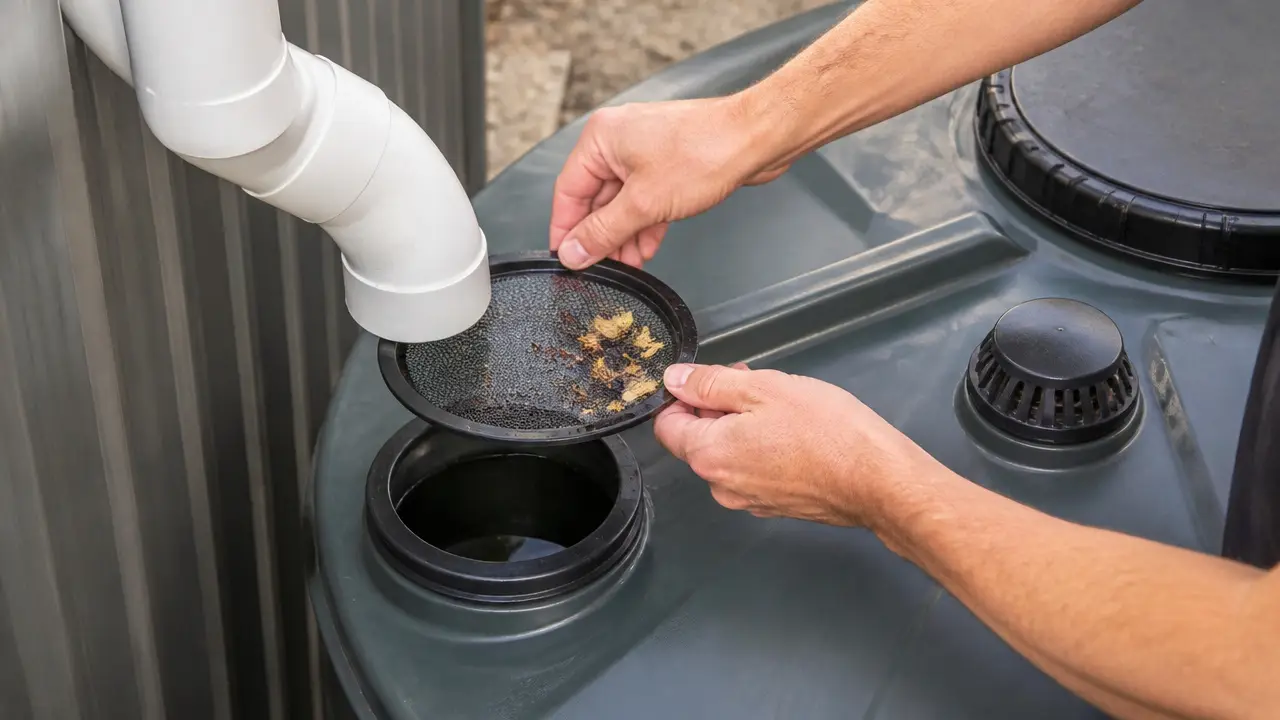
- Leaf screen
- First-flush device
- Pipe leading to the tank
A first-flush device diverts some of the earliest roof runoff so dirt and debris washed from the roof do not immediately enter storage.
Screens and first-flush devices are useful, but they can become restrictions themselves if they are not cleaned.
How to Tell if a Downspout Is Clogged
One of the easiest clues is gutter overflow close to the downspout during rain.
You might also see water coming from downspout joints or hear water sitting inside the pipe long after rain has stopped.
For harvesting systems, an unexpectedly low collection rate can be another clue.
Other signs include:
- Water spilling over one section of gutter
- Little or no water leaving the bottom of the downspout
- Debris visible at the gutter outlet
- Water leaking from pipe joints
- A downspout that feels unusually heavy
- Standing water in the gutter
An underground drain can also be blocked even when the visible downspout is clear.
Where Downspouts Usually Clog
Clogs often form where the water path changes direction or becomes narrower.
Common trouble spots include gutter outlets and elbows near the top of the downspout.
Leaves may enter the outlet, get stuck in an elbow, and gradually trap smaller debris until water can barely pass.
Other common locations include:
Downspout Elbows
Elbows create turns that can catch leaves, pine needles, roof grit, and small twigs.
Gutter Outlets
The opening between the gutter and downspout is relatively small compared with the gutter itself. A handful of leaves can restrict it.
Downspout Strainers
Guidance on conditions that call for gutter maintenance helps compare expected collection losses across the catchment surface.
Strainers can stop larger debris from entering the downspout, but debris can pile up around them.
They still need cleaning.
Rainwater Diverters
A rain barrel diverter may have a smaller internal passage than the main downspout. Debris that would pass through a normal downspout can sometimes restrict the diverter.
Underground Drain Pipes
If a downspout disappears into the ground, the problem may be farther downstream.
Roots, sediment, damaged pipe, or accumulated debris can restrict underground drainage.
What Should You Do About a Clogged Downspout?
Start with the areas that are easy to inspect safely from the ground.
Look for obvious debris at accessible outlets and check whether the bottom discharge is blocked.
If the downspout can be safely disconnected near ground level, you may be able to determine whether the obstruction is in the above-ground downspout or the underground drain.
Avoid aggressive methods that could separate pipe joints or damage a rainwater harvesting component.
Most importantly, do not take unnecessary risks on a ladder or roof. High gutters, steep roofs, awkward access, and wet conditions are good reasons to call a gutter or roofing professional.
Can You Flush a Downspout With Water?
Water can sometimes clear loose material, but it should not be used blindly.
If the pipe is completely blocked, adding more water can cause it to back up and overflow. High-pressure water can also separate weak fittings or force water where it should not go.
For harvesting systems, disconnect or protect components such as filters and storage-tank inlets when appropriate so loosened gutter debris is not washed directly into the tank.
If a blockage is difficult to reach or repeatedly returns, finding and removing the cause is better than simply forcing water through it.
How to Help Prevent Downspout Clogs
Keeping roof debris out of the drainage path reduces the chance of blockage.
Useful maintenance can include:
- Periodically cleaning gutters
- Checking gutter outlets
- Removing leaves around downspout entrances
- Cleaning leaf screens
- Inspecting diverters
- Cleaning first-flush devices
- Checking downspout elbows
- Watching the system during a rainstorm from a safe location
The right cleaning schedule depends on the property.
A house surrounded by trees may need much more frequent attention than a building with little nearby vegetation.
Gutter Guards Do Not Eliminate Maintenance
Gutter guards can reduce the amount of large debris entering gutters, but they do not make the system maintenance-free.
Small particles, roof grit, pine needles, seeds, and decomposed organic material may still accumulate.
Some guards can also develop debris buildup on top of the screen.
For a rainwater harvesting system, periodic inspection remains important because good water flow depends on the entire path from the roof to the tank.
Check the Overflow Path Too
Even a perfectly clean downspout can receive more water than it can carry during an intense storm.
Water should have a reasonable place to go if the gutter, rain barrel, or storage tank reaches its capacity.
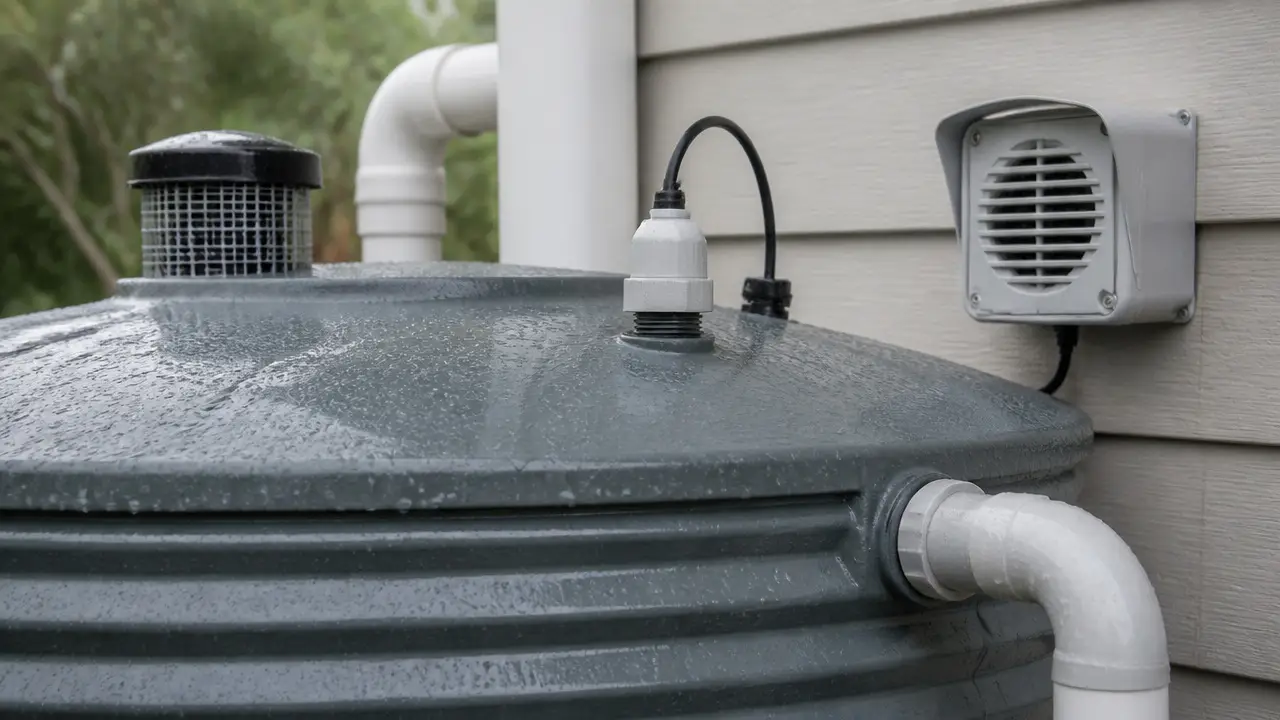
For rain barrels and tanks, the overflow outlet should carry excess water away from foundations and other areas where concentrated runoff could cause problems.
A clogged downspout combined with a poorly planned overflow route can make drainage problems much worse.
When to Call a Professional
Professional help is sensible when the blockage requires unsafe roof or ladder access or when water damage is already visible.
You may also need help if:
- Gutters are pulling away from the house
- Fascia appears rotten or damaged
- Water is entering the building
- An underground drain repeatedly backs up
- The downspout has hidden connections
- The drainage problem returns soon after cleaning
- Ice or freezing conditions make access unsafe
A drainage or foundation professional may be appropriate if large amounts of water consistently collect beside the building even after the gutter system is working correctly.
Frequently Asked Questions
Can clogged downspouts cause gutters to overflow?
Yes. When water cannot move through the downspout quickly enough, it backs up in the gutter. Once the gutter fills, water can spill over the edge.
Can a clogged downspout cause basement water problems?
It can contribute to them. Overflowing roof runoff may saturate soil near the foundation, especially where grading or drainage is poor. Basement water can have several causes, so clearing the downspout may not solve every moisture problem.
Why is my gutter overflowing only near one downspout?
A blockage at the gutter outlet, downspout elbow, or nearby pipe section is a common cause. The gutter may also be improperly sloped or undersized for the amount of runoff it receives.
Can a clogged downspout damage a rain barrel system?
It can interfere with collection and may cause water to overflow in unintended places. Debris can also clog a diverter, screen, first-flush device, or pipe leading to the barrel.
How often should downspouts be checked?
There is no single schedule that fits every property. Check them more often when nearby trees drop leaves, needles, flowers, or seeds onto the roof. Inspection after major storms can also reveal developing problems.
Do gutter guards prevent downspout clogs?
They can reduce large debris, but they cannot guarantee that a downspout will stay clear. Small debris and roof sediment can still enter or collect around outlets.
Why is no water coming out of my downspout during rain?
The downspout may be clogged, but other causes are possible. The gutter may not slope toward the outlet, an upstream gutter section may be blocked, or an underground drain may be restricted.