As an affiliate, we may earn a commission from qualifying purchases. We get commissions for purchases made through links on this website from Amazon and other third parties.
Keeping debris out of a rain barrel starts before the water reaches the barrel. Use a screened inlet, keep gutters reasonably clean, and make sure every opening in the barrel is covered.
A good setup stops leaves, twigs, roof grit, insects, and other large debris while still allowing rainwater to flow freely. It will not make roof runoff safe to drink, but it can make stored water easier to use and the barrel easier to maintain.
Start With the Gutters
Your gutters are the first place to reduce debris.
Leaves, pine needles, seed pods, and small branches can wash toward the downspout during a storm. If too much material reaches the barrel, it can clog screens and fittings.
Check the gutters regularly, especially:
- After heavy wind
- During leaf-fall season
- After long dry periods
- Before a season of frequent rain
You do not need perfectly clean gutters. The goal is to keep large piles of debris from washing into the collection system.
If cleaning requires roof access or work from an unsafe ladder position, use a safer cleaning method or hire someone qualified to do the work.
Install a Screen at the Rain Barrel Inlet
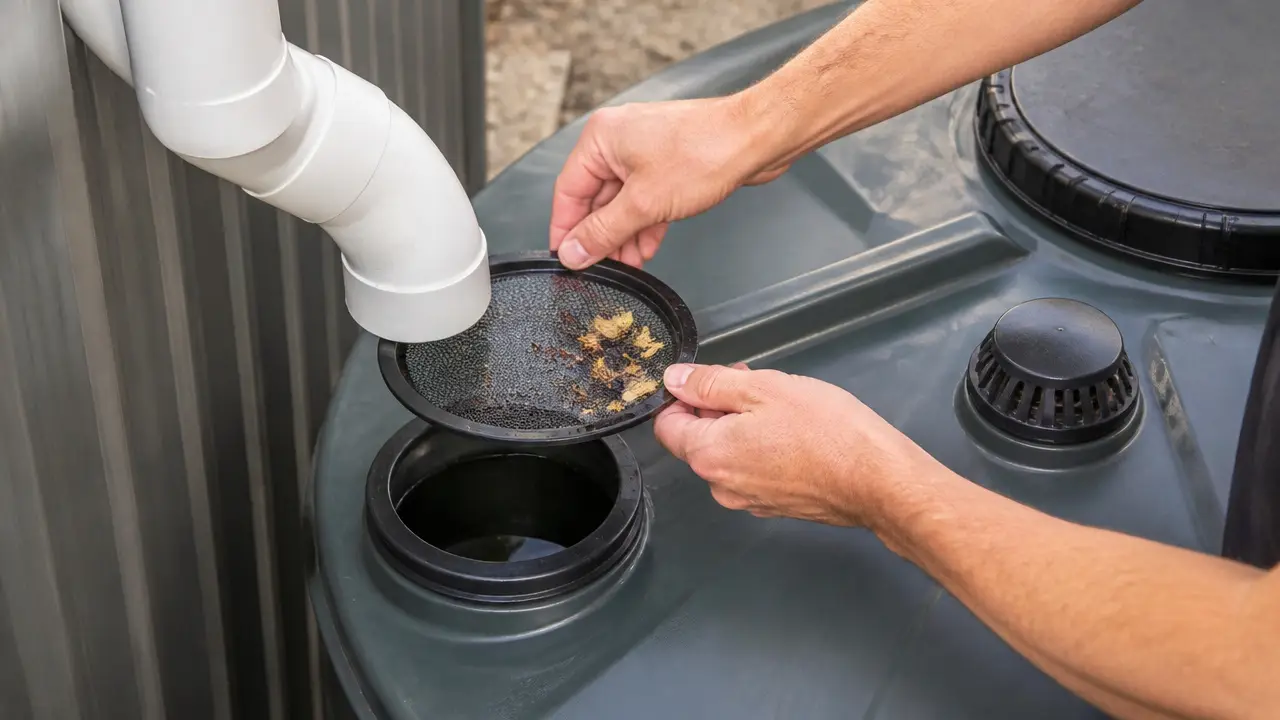
A screen over the barrel inlet is one of the simplest ways to keep debris out.
The screen should cover the entire opening where water enters the barrel. It should be secured so wind, animals, or flowing water cannot move it out of place.
The openings need to be small enough to block leaves and insects but large enough that water can pass through without backing up.
A screen that is too fine may clog quickly with pollen, roof grit, and plant material. When that happens, rainwater can spill over the top instead of entering the barrel.
For that reason, the best screen is not necessarily the finest screen. It is one that catches unwanted material and is easy to remove and clean.
Add a Downspout Debris Filter When Needed
If your roof sheds a lot of leaves or needles, an inlet screen alone may need frequent cleaning.
A downspout debris filter can catch larger material before it reaches the barrel. Depending on the design, leaves may fall away while water continues toward storage.
This can be especially useful when the barrel is connected to a large roof section or sits under trees.
Check that the filter can handle the amount of water coming from your downspout. A clogged or undersized filter can cause water to back up or spill near the house.
Keep the normal gutter and downspout drainage path in mind. Water should still have a safe place to go if the collection system cannot accept the full flow.
Consider a First-Flush Diverter
A first-flush diverter sends the first portion of roof runoff away from the storage barrel.
The beginning of a storm can carry concentrated dust, pollen, bird droppings, small roof particles, and other material that collected during dry weather. Diverting some of this initial runoff can reduce the amount that enters storage.
A first-flush diverter does not remove every contaminant. It also does not make rainwater potable, meaning safe to drink.
Its main value is reducing the dirt load entering the barrel.
The diverter itself needs maintenance. Sediment can collect inside it, and drains or small openings can become clogged.
Keep the Barrel Lid Closed
Do not leave the top of a rain barrel open.
A secure lid helps keep out:
- Leaves
- Insects
- Animals
- Windblown dirt
- Grass clippings
- Other yard debris
Any inlet passing through the lid should also be screened.
Inspect the lid occasionally for cracks, gaps, or warped sections. Openings that seem small can still admit insects and fine debris.
A secure lid is also important around children and animals. Larger storage containers can create serious drowning hazards, so they should not have easily accessible openings.
Screen the Overflow Opening
The overflow is another possible entry point.
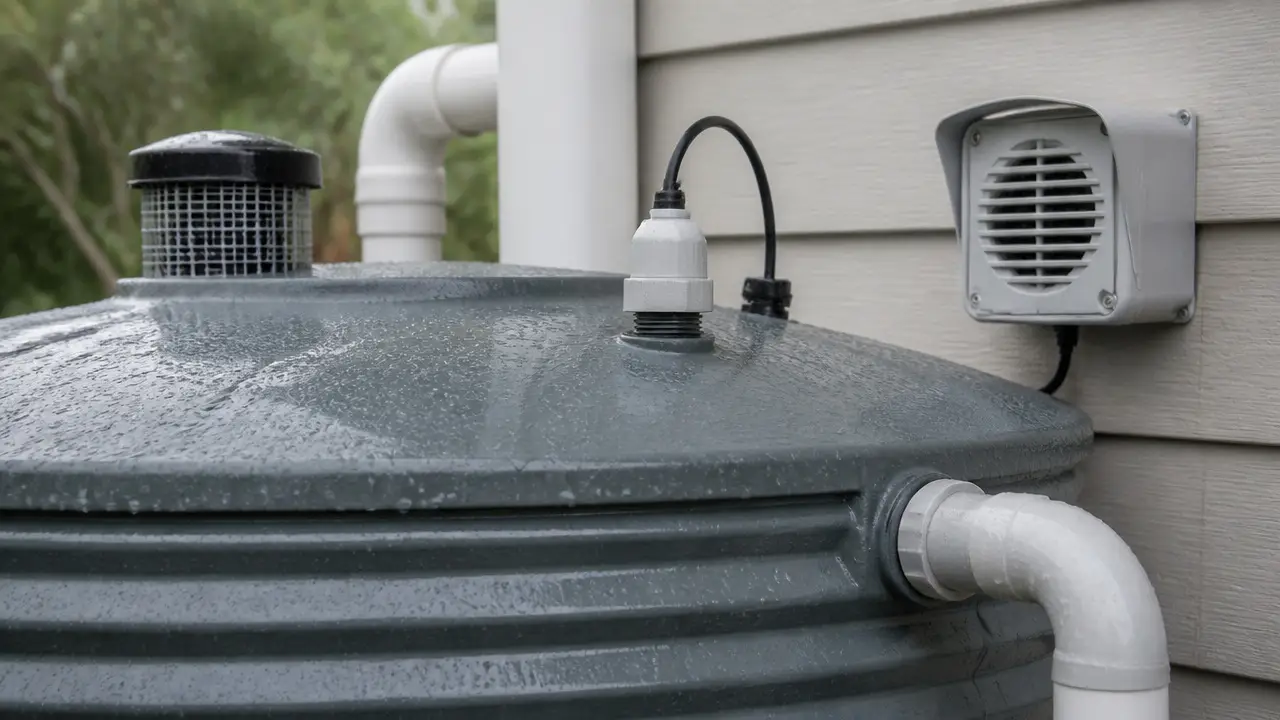
When the barrel fills, excess water leaves through the overflow fitting or hose. If this opening is not screened, insects and small debris may enter from the outside.
Use a screen or suitable barrier that does not significantly restrict overflow.
This is important because an overflow must be able to carry water away quickly during heavy rain. A screen packed with debris can reduce flow and cause the barrel to spill from the top.
Direct overflow toward a suitable drainage area and away from foundations or other places where concentrated water could cause problems.
Keep the Barrel Away From Falling Debris
Location matters.
A barrel directly beneath overhanging branches may receive more leaves, seeds, insects, and other material around its lid and openings.
You may not be able to move the collection point because the barrel needs to connect to a specific downspout. Even so, trimming safe-to-reach vegetation around the barrel can reduce debris.
Do not cut large branches or work near overhead electrical lines yourself. Those jobs should be handled by qualified professionals.
Make Screens Easy to Clean
A debris-control system works only while water can flow through it.
Design the setup so you can reach the inlet screen without dismantling the entire barrel system.
During wet seasons, look at the screen frequently. Remove accumulated leaves and rinse off smaller material when needed.
Check practical steps for cleaning a rain barrel to verify a storage-tank design compatible with the location.
Pay particular attention after:
- Windstorms
- Heavy rain
- Pollen season
- Nearby tree trimming
- Long dry spells followed by rain
If water suddenly starts spilling around the inlet, check the screen and upstream filters before assuming the barrel is full.
Do Not Rely on One Very Fine Filter
It may seem helpful to put an extremely fine filter at the barrel inlet. In practice, very fine filters can clog quickly when they receive untreated roof runoff.
A staged approach usually works better.
For example:
- Gutters keep large material moving toward the downspout without major blockages.
- A leaf or downspout screen catches larger debris.
- An inlet screen blocks smaller material and insects.
- Sediment that still reaches the barrel is managed through periodic cleaning.
This keeps one small filter from having to handle everything.
If the stored water will pass through pumps, irrigation emitters, or other equipment with small passages, additional filtration may be useful downstream. Choose that filtration according to what the equipment requires rather than trying to remove every particle at the barrel inlet.
Expect Some Sediment in the Bottom
Even a well-screened rain barrel will usually collect some fine sediment.
Dust and very small roof particles can pass through basic debris screens. Over time, they settle at the bottom.
This does not necessarily mean the screen has failed.
Inspect the inside of the barrel periodically. If a noticeable sediment layer develops, drain and clean the barrel according to its design.
How often this is needed depends on the roof, surrounding trees, local conditions, and how much rainwater passes through the system.
Reduce Debris Without Blocking Water Flow
Debris control is a balance.
If every opening is covered with extremely fine material, the system may stay cleaner but overflow during strong storms because water cannot enter or leave quickly enough.
If the openings are too large, leaves, insects, and other material can enter easily.
Watch the system during a normal rainstorm when it is safe to do so. Check whether:
- Water enters without backing up.
- Leaves are being stopped before storage.
- The inlet screen stays in place.
- Overflow can leave freely.
- Water is not collecting against the house.
Observing the actual flow can reveal problems that are difficult to notice when the system is dry.
What Debris Screens Cannot Do
Screens are useful for controlling physical debris, but they are not complete water treatment.
A screen that catches leaves does not reliably remove microorganisms, dissolved chemicals, metals, or other contaminants that may be present in roof runoff.
Rain barrel water is generally best treated as non-potable water unless a properly designed system provides suitable collection, treatment, testing, and maintenance for the intended potable use. Non-potable means water that is not intended for drinking.
If you plan to use collected rainwater for drinking, cooking, or other household uses where water quality is critical, the entire collection and treatment system needs to be evaluated rather than relying on an inlet screen or single filter.
A Simple Debris-Control Setup
For a typical garden rain barrel, a practical arrangement is:
Roof → gutter → downspout debris control → screened barrel inlet → covered barrel → screened overflow
A first-flush diverter can be added when reducing the initial load of dirt and roof debris is useful.
The most important part is regular inspection. Even a well-designed screen will eventually collect material.
Keeping the pathway easy to reach and easy to clean often works better than building a complicated filtration system that is difficult to maintain.
Frequently Asked Questions
What is the best way to keep leaves out of a rain barrel?
Use a leaf screen or downspout debris filter before the barrel and a secure screen over the barrel inlet. Keeping large accumulations of leaves out of the gutters also reduces the amount reaching the barrel.
How fine should a rain barrel screen be?
It should be fine enough to block unwanted debris and insects while allowing the expected rain flow to pass freely. Very fine screens can clog quickly, so choose a screen that can be removed and cleaned easily.
Do I need a filter before my rain barrel?
Not every system needs a separate filter. A screened inlet may be enough for a simple garden barrel. Roofs surrounded by trees often benefit from additional debris control at the gutter or downspout.
Will a first-flush diverter keep my rain barrel clean?
It can reduce some of the dirt and material washed from the roof at the beginning of a storm, but it will not keep the barrel completely clean. Screens and periodic barrel cleaning are still needed.
Why is dirt still getting into my rain barrel through the screen?
Fine dust, pollen, and small roof particles can pass through ordinary debris screens. Some of this material settles at the bottom of the barrel as sediment. Periodic cleaning is still necessary.
Should the rain barrel overflow be screened?
Yes. Screening the overflow can help prevent insects and debris from entering the barrel. The screen must remain clean enough that it does not restrict overflow during heavy rain.
Can filtered rain barrel water be used for drinking?
A debris filter or screen does not make roof runoff safe to drink. Drinking-water use requires a suitable collection and treatment system, ongoing maintenance, appropriate laboratory testing, and compliance with applicable local requirements.