
As an affiliate, we may earn a commission from qualifying purchases. We get commissions for purchases made through links on this website from Amazon and other third parties.
Best Overall
Best for 2 x 3-Inch Downspouts
Best for Longer Hose Runs
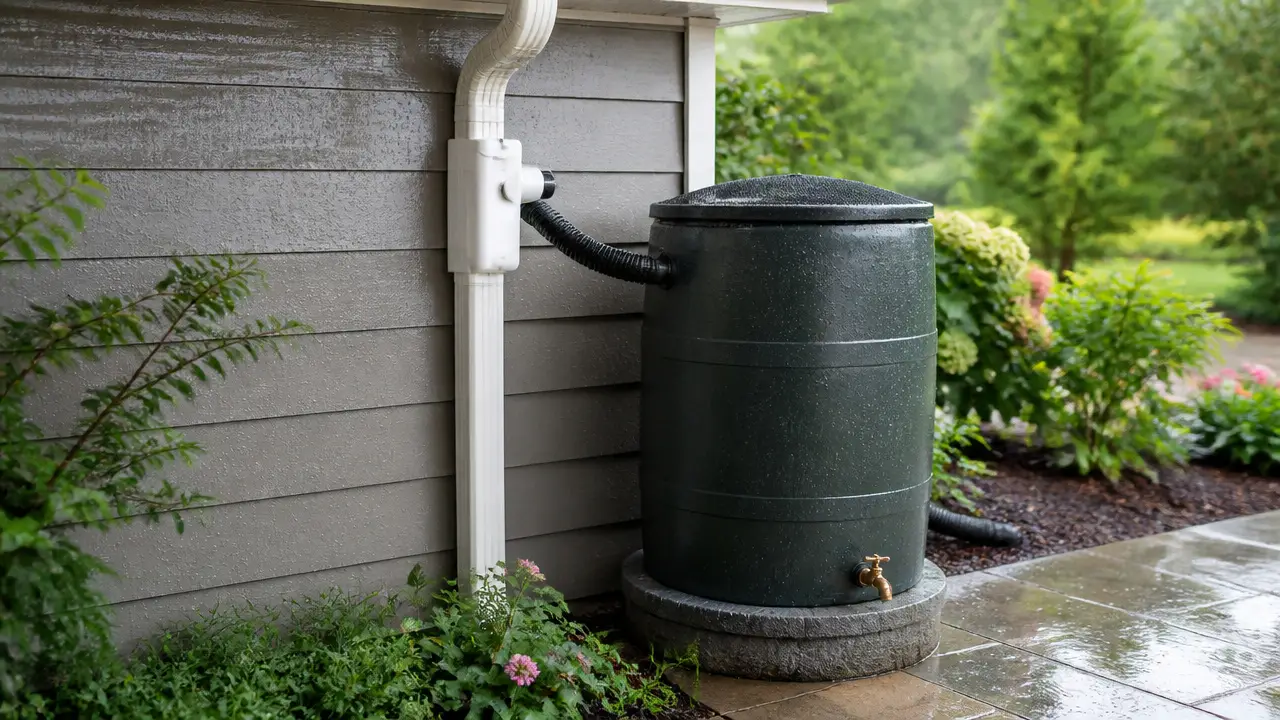
A rain barrel diverter can look like a simple plastic fitting, but the small details decide whether it actually makes collection easier. The downspout has to fit, the hose has to stay open, the barrel connection has to seal, and the diverter needs a way to handle debris without turning every storm into a maintenance job.
The five kits here solve that job in different ways. The EarthMinded kit is the most complete choice for turning a suitable barrel or drum into a collection setup. Oatey's Mystic system is a straightforward match for a standard 2 x 3-inch downspout. The Prestantious model adds a four-foot hose and removable filter access. Anivia has the smallest documented body of the group. WADEO combines dual-size downspout fit with a removable filter panel, but its hose and housing deserve closer attention over time.
Before choosing one, measure the actual downspout and decide where the barrel will sit. A nominal size printed on a box does not guarantee a perfect slip fit, and a soft hose that works in a straight line can collapse when it has to turn around a corner.
Quick Comparison
| Diverter Kit | Best For | Downspout Fit | Main Strength | Main Tradeoff |
|---|---|---|---|---|
| EarthMinded DIY Rain Barrel Kit | Building a barrel from a suitable drum or bin | Standard rectangular downspouts | Includes the main parts for a DIY barrel conversion | Drain fittings can leak if the seal is poor |
| Oatey Mystic Rainwater Collection System | Standard 2 x 3-inch downspouts | 2 x 3 in | Four-foot hose and simple inline layout | Hose can arrive flattened and kink easily |
| Prestantious Filter-Screen Diverter | Longer, mostly straight hose runs | 2 x 3 in and 3 x 4 in | Four-foot hose, built-in screen, removable top | Hose pinches sharply on bends |
| Anivia Rain Barrel Diverter Kit | Tight downspout areas | 2 x 3 in and 3 x 4 in | Compact 4.3 x 3.5 x 6.3-inch body | Diversion performance can be inconsistent |
| WADEO Rain Barrel Diverter Kit | Easy filter access | 2 x 3 in and 3 x 4 in | Removable filter panel and adjustable intake | Hose and housing durability are concerns |
What Matters Most in a Diverter Kit
The first question is not which kit has the longest feature list. It is whether the diverter will fit the downspout and give the water a clear path into the barrel.
A 2 x 3-inch downspout needs a product designed around that profile. If you have a 3 x 4-inch downspout, a dual-size model gives you more options, but you still need to see how the body is supported and how the hose leaves the unit. Some inserts occupy only part of a larger downspout opening, which can change how much water reaches the barrel.
Hose behavior matters just as much as hose length. Several products here use flexible hose that can flatten or kink. A four-foot hose sounds generous, but it can become a bottleneck if the barrel sits around a corner. Plan for a smooth route with a gentle bend and no low spot that stays full of debris-laden water.
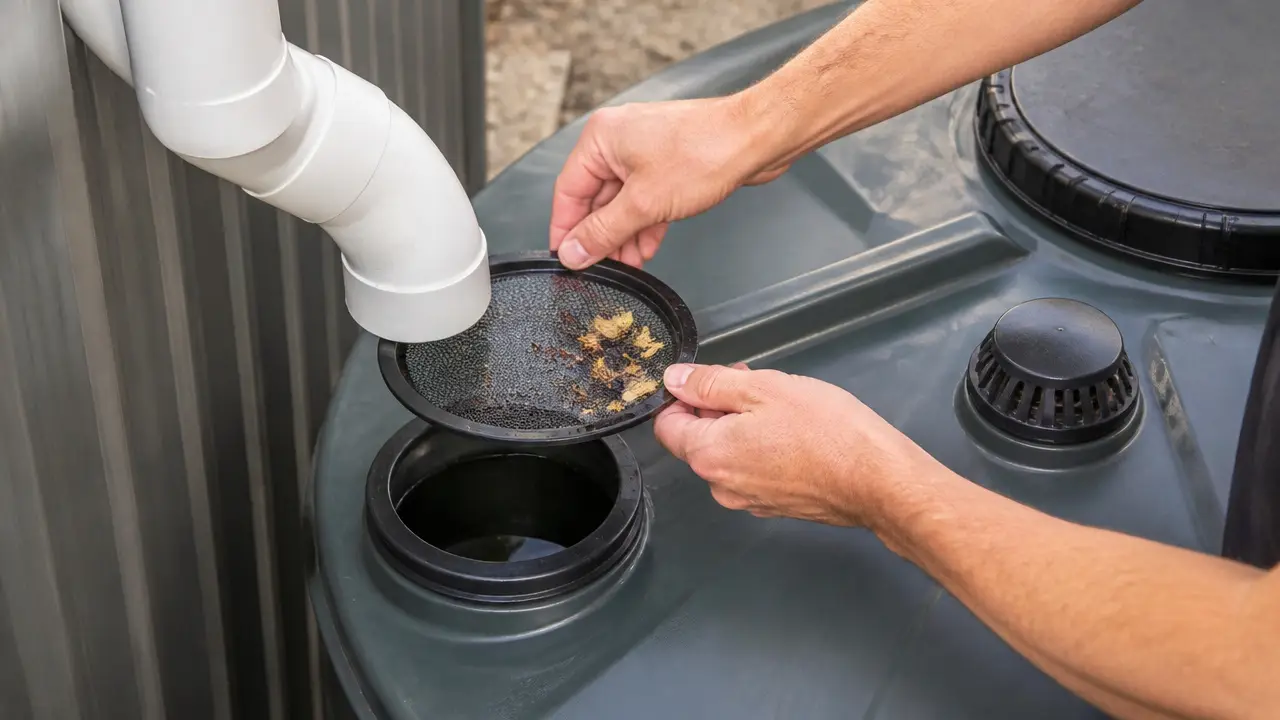
Cleaning access is the other recurring issue. Screens can catch large leaves, but finer roof grit, pine needles, and moss may still pass through. A removable top or filter panel helps only when the installation leaves enough room to reach it.
A Complete DIY Barrel-Conversion Kit
1 / 5
EarthMinded RBK-0001 DIY Rain Barrel Kit

Use
DIY barrel conversion
Downspout Fit
Standard rectangular
Included Hardware
Installation parts included
The EarthMinded RBK-0001 is the strongest all-around choice if you already have a suitable plastic drum or sturdy container and want the hardware to turn it into a rain barrel. Instead of supplying only a downspout insert, the kit is built around the larger conversion job. It includes the diverter and the parts needed to connect a barrel, which cuts down on the number of separate pieces you have to source.
That fuller kit is useful for a first build. The FlexiFit-style diverter routes downspout water toward the barrel, and the setup is designed so excess water can return toward the downspout when the barrel reaches its working level. Users have also found the supplied cutting tools helpful for making the required barrel openings. The installation is still real DIY work, though: the barrel wall, fitting holes, seals, and hose path all need to line up properly.
The biggest caution is leakage around the barrel fittings. A kit can include every part and still drip if a seal sits crooked, the hole is rough, or the barrel wall does not suit the fitting. The diverter also needs extra thought on a 3 x 4-inch downspout because its intake does not fill that larger opening the way it fills a 2 x 3-inch profile.
Why It Works
- Gives you the main hardware for converting a suitable drum or bin rather than supplying only a downspout adapter.
- Works with standard rectangular downspouts and has a clear role in a complete DIY barrel project.
- Included cutting hardware can reduce extra tool shopping for a first installation.
What To Keep In Mind
- Drain fittings can leak if the barrel holes or seals are not seated cleanly.
- The diverter occupies less of a 3 x 4-inch downspout opening than a 2 x 3-inch opening.
- A full barrel still needs a stable base and a safe overflow route away from the building.
A Straightforward Choice for 2 x 3-Inch Downspouts
2 / 5
Oatey Mystic Rainwater Collection System

Downspout Fit
2 x 3 in
Body Size
6 x 4 x 8 in
Included Hose
4 ft
Oatey's Mystic system is the most focused option here for a standard 2 x 3-inch residential downspout. Its body measures 6 x 4 x 8 inches, and the kit includes a four-foot high-flow hose for routing water from the diverter to a collection container. The layout is simple: the diverter becomes part of the downspout and sends part of the runoff through the outlet hose.
The narrow compatibility target is helpful when you already know your downspout size. Users have found the installation manageable with normal gutter and barrel tools, and the hose can connect neatly to a compatible barrel fitting. Once installed well, the system can operate without constant adjustment.
The included hose is the weak point. It can arrive severely flattened and may keep trying to return to that shape. Tight bends reduce the open area even further. This kit makes the most sense when the barrel can sit near the downspout and the hose can run with a broad, gentle curve. The available material details conflict, so material composition should not be the reason you choose it.
Why It Works
- Purpose-built for the common 2 x 3-inch residential downspout size.
- The four-foot hose gives useful reach when the barrel sits beside, rather than directly under, the downspout.
- Its 6 x 4 x 8-inch body gives you a clear size to check against the available installation space.
What To Keep In Mind
- It is not the right choice for a 3 x 4-inch downspout.
- The hose can flatten and restrict flow, especially when forced into a sharp bend.
- The hose connection may need added support so it cannot work loose over time.
A Screened Diverter With a Four-Foot Hose
3 / 5
Prestantious Gutter Downspout Diverter With Filter Screen

Downspout Fit
2 x 3 in and 3 x 4 in
Included Hose
4 ft x 1-1/4 in
Control
Off / Medium / High
The Prestantious diverter gives you more flexibility when you need a dual-size body and a longer connection to the barrel. It is designed for both 2 x 3-inch and 3 x 4-inch downspouts and comes with a four-foot, 1-1/4-inch hose. A built-in screen catches larger debris, while a three-position valve lets you change the amount of water being sent toward the barrel.
The removable top is a practical feature because any screen in a downspout needs regular cleaning. Large leaves are easier to intercept before they enter a narrow hose, but the screen is not fine filtration. Pine needles, moss, and roof grit can still get through. Some installations also need metal strapping above and below the diverter because the body is not rigid enough to support loose downspout sections by itself.
The hose again decides whether the extra reach is useful. It can flatten after shipping and kink when turned sharply. A stiff replacement hose may be the better choice when the barrel must sit around a corner. This model is strongest when its four-foot reach can follow a mostly straight path.
Why It Works
- Fits both common rectangular residential downspout sizes.
- Four feet of hose gives more placement freedom than a short connector.
- The removable filter area is easy to inspect for large debris.
What To Keep In Mind
- The soft hose loses flow quickly when it bends or collapses.
- Fine roof debris can pass through the built-in screen.
- The downspout may need added strapping rather than relying on the diverter body for support.
A Compact Diverter for Crowded Installations
4 / 5
Anivia Rain Barrel Diverter Kit

Downspout Fit
2 x 3 in and 3 x 4 in
Body Size
4.3 x 3.5 x 6.3 in
Included Hose
39 in
Anivia's diverter has the smallest documented body among the products with dimensions here. At 4.3 x 3.5 x 6.3 inches, it is easier to consider when a barrel sits near a wall, fence, or narrow side-yard downspout. The kit is designed for both 2 x 3-inch and 3 x 4-inch downspouts and includes a 39-inch hose plus two set screws.
The compact package keeps the installation simple when the hose can travel directly to the barrel. Cleaning access is straightforward, and the diverter can catch larger debris before it reaches the storage container. The included hose is flexible enough to position easily at first, but that flexibility also lets it kink.
The more important concern is diversion performance. Some setups send less water toward the barrel than expected because much of the runoff continues down the downspout. Treat the valve and filter as useful features only after the basic water path works. If your roof sends a lot of runoff to one downspout, a small diverter with a soft outlet hose may become the limiting point.
Why It Works
- The 4.3 x 3.5 x 6.3-inch body is easier to place in a tight installation area.
- Supports both 2 x 3-inch and 3 x 4-inch downspouts.
- The 39-inch hose and included screws cover the basic connection pieces for a simple setup.
What To Keep In Mind
- Diversion can be inconsistent if most runoff continues through the downspout.
- The hose kinks easily and should not be forced around a tight corner.
- A small diverter is not automatically the best match for a large roof area or very high downspout flow.
A Dual-Size Diverter With Removable Filter Access
5 / 5
WADEO Rain Barrel Diverter Kit

Downspout Fit
2 x 3 in and 3 x 4 in
Filter
Removable panel
Flow Control
Adjustable
The WADEO kit is designed for both 2 x 3-inch and 3 x 4-inch downspouts and combines an adjustable intake with a removable filter panel. That panel is its clearest practical advantage. You can open the debris area for inspection instead of waiting for reduced flow to tell you that the diverter needs attention.
The collection control can reduce or shut off flow to the barrel, and the product guidance calls for positioning the diverter above the barrel so the connecting path can work with gravity. This kind of layout is easier when the barrel can sit close to the downspout and the hose can fall gently toward the inlet.
Long-term durability is the main reason this model ranks lower. The outlet hose has failed early in some installations, and leaks can appear around the lower control area. The available material details also conflict, so the exact material should not be used as a buying claim. Choose it for the filter-access layout, not for an unsupported material advantage or a promise of long service life.
Why It Works
- Fits both common rectangular downspout sizes.
- The removable filter panel makes debris inspection simple.
- Adjustable intake lets you reduce or stop collection when needed.
What To Keep In Mind
- The outlet hose can degrade and may need replacement sooner than the rest of the installation.
- Drips can develop around the lower control area.
- Do not rely on an uncertain material claim when comparing outdoor durability.
How to Match a Diverter to Your Downspout
Measure the Real Outside Profile
Residential downspouts are often called 2 x 3 inches or 3 x 4 inches, but the actual profile can vary. Old downspouts may be slightly crushed, oversized, undersized, or shaped differently from a new fitting. Measure where the diverter will sit rather than assuming the label is enough.
A product designed only for 2 x 3 inches can be a better choice than a dual-size product when that is exactly what you have. Dual-size compatibility matters when you need flexibility, not because it automatically creates a tighter fit.
Decide Whether You Are Cutting the Downspout or Drilling Into It
Not every diverter installs the same way. Some become an inline section of downspout. Others use an insert or side connection. A full DIY rain-barrel kit may also require holes in the barrel for the inlet, outlet, or overflow hardware.
Look at the job before you buy. If you need hole saws, fasteners, support straps, pipe, or a barrel fitting, make sure those parts are included or already on hand. A kit that looks complete can still require extra hardware once the real downspout and barrel are in front of you.
Keep the Hose Open
A flexible hose is easy to route but easy to flatten. Avoid sharp turns, especially immediately after the diverter outlet. A broad curve preserves more of the hose opening and gives debris less chance to lodge in a pinched section.
If the barrel must sit around a corner, a stiffer compatible hose can be more useful than a longer soft hose. Extra length does not help when half of the cross-section collapses at the first bend.
Give the Downspout Its Own Support
A plastic diverter should not carry the weight of loose upper and lower downspout sections unless the installation is designed for that load. Use the building's normal downspout straps or suitable support so the diverter does not become the structural connection.
This also reduces movement at hose fittings and seals. Repeated flexing can turn a small fit problem into a recurring leak.
Debris, Overflow, and Maintenance
A Diverter Screen Is Not a Complete Filter
Screens in these kits are useful for leaves and larger pieces of debris. They do not remove fine sediment, roof grit, dissolved contaminants, or microorganisms. If the stored water is used for anything beyond basic non-potable outdoor tasks, the rest of the treatment and testing plan still matters.
Clean the screen often enough that water can move through it freely. The right schedule depends on the roof, nearby trees, season, and storm pattern. A house under pines may need much more frequent attention than an open roof with little overhanging vegetation.
Plan Overflow Separately
A diverter that reduces inflow when a barrel fills can help, but it does not eliminate the need to think about overflow. Water still has to move safely away from the building during heavy rain or when the barrel cannot accept more water.
Choosing the best downspout diverter for filling rain barrels also depends on overflow routing and downspout compatibility.
Keep the original downspout path functional, and make sure any barrel overflow does not dump water against the foundation, across a walkway, or onto an area that cannot drain it.
Winter Shutdown Needs More Than a Switch
An off setting can reduce collection, but water may remain trapped in the hose, filter housing, or barrel fitting. In a freezing climate, drain the parts that can hold water and follow the manufacturer's winter directions.
Soft hoses and plastic controls are especially vulnerable when water freezes inside them. A dry, disconnected hose is usually easier to protect than one left full all winter.
Common Diverter Problems
The Barrel Barely Fills
Check the hose first. A flattened or kinked section can reduce flow more than the diverter setting itself. Also look at whether the diverter inlet is actually intercepting enough of the downspout stream.
Water Leaks at the Barrel Connection
A leak usually points to fit, hole quality, gasket position, or movement at the connection. Do not keep tightening a plastic fitting past its safe limit. Recheck how the gasket sits and whether the barrel wall provides a clean, stable sealing surface.
Debris Keeps Reaching the Barrel
A coarse diverter screen is doing its job if it stops large leaves while fine grit still passes through. If finer debris control matters, add a suitable upstream or downstream filtration stage rather than expecting a leaf screen to perform like a fine filter.
The Hose Fails Early
Sun exposure, repeated flexing, freezing, and thin hose walls can all shorten service life. Inspect the hose during routine barrel cleaning. Replace it when it starts cracking, flattening permanently, or leaking rather than waiting for it to split during a storm.
Frequently Asked Questions
What size downspout fits most rain barrel diverter kits?
Many residential kits are made for 2 x 3-inch or 3 x 4-inch rectangular downspouts. Some fit only one size, while others are designed for both. Measure the actual downspout before cutting because older or deformed profiles may not match a nominal size perfectly.
Is a rain barrel diverter the same as a first-flush diverter?
No. A rain barrel diverter routes some downspout water toward a storage container. A first-flush device is intended to send an initial portion of runoff away from storage so some early roof debris is not carried into the tank. They solve different parts of the collection path.
Will a diverter stop my rain barrel from overflowing?
Some diverters are designed to reduce or redirect collection when the barrel reaches its working level, but you should still plan a safe overflow path. Heavy rain, clogs, poor hose routing, or installation differences can change how the system behaves.
Do built-in screens make rainwater safe to drink?
No. A diverter screen is mainly debris control. It does not make roof runoff potable or remove every contaminant. Drinking-water use needs a suitable whole-system treatment plan, maintenance, current water testing, and applicable local requirements.
Why does the hose on my rain barrel diverter keep kinking?
Soft corrugated hose can collapse when the bend is too sharp or the barrel sits too far to one side. Use a gentler route, move the barrel closer, or use a stiffer compatible hose when the supplied hose will not stay open.
How often should I clean a rain barrel diverter?
Inspect it often enough to prevent leaves and roof debris from blocking the water path. The interval depends on nearby trees, roof debris, storm frequency, and the screen design. Check it more often during leaf drop or after heavy storms.
Can I install a rain barrel diverter for winter use?
Freezing climates need a shutdown plan. An off setting alone may leave water trapped in hoses or fittings. Drain vulnerable parts, protect the barrel and plumbing from trapped water, and follow the manufacturer's cold-weather directions.
If you want a broader roof-to-container setup rather than only a diverter, compare rainwater harvesting kits and their hose and downspout layouts. A full barrel also needs a controlled path for excess water, so rain barrel overflow kits are a useful next step. To keep larger debris out of an open barrel or inlet, review rain barrel screens separately from the diverter screen. Stored outdoor water also needs routine pest control, and mosquito control products for rain barrels cover that maintenance problem.