As an affiliate, we may earn a commission from qualifying purchases. We get commissions for purchases made through links on this website from Amazon and other third parties.
Rain barrel diverters do work when they are sized, installed, and maintained correctly. They can send roof runoff from a downspout into a rain barrel while also allowing extra water to continue through the downspout when the barrel is full.
A diverter is useful when you want a cleaner setup than cutting the downspout and letting it empty directly into the top of the barrel. It can also reduce overflow problems because many diverters are designed to send excess water back down the normal drainage path.
However, a diverter does not make rainwater clean or safe to drink. It simply controls where the water goes.
How a Rain Barrel Diverter Works
A rain barrel diverter fits into or replaces a section of your downspout.
During rain, water flows down the inside walls of the downspout. The diverter catches some of that water and sends it through a hose into the rain barrel.
When the barrel reaches the correct water level, water can no longer easily flow through the hose. The extra runoff then continues down the downspout toward the normal drainage system.
This setup can provide two important functions:
- Fill the rain barrel automatically during storms.
- Keep excess roof runoff moving through the original downspout.
The exact way this happens depends on the type of diverter.
Common Types of Rain Barrel Diverters
In-Downspout Diverters
An in-downspout diverter is installed through a hole cut into the side of the downspout.
The diverter sits inside the downspout and catches water running along its walls. A hose carries the captured water to the barrel.
These systems can work well because they usually leave the lower part of the downspout in place.
They also tend to handle a full barrel better than a simple open downspout connection.
Downspout Cut-In Diverters
Some diverters replace a short section of the downspout.
Water enters the diverter body and is directed toward the rain barrel. Extra water may continue through the bottom of the diverter.
These systems often have larger openings than small in-downspout inserts, which may help where rainfall is heavy.
Installation can be more involved because you need to cut and reconnect the downspout.
Manual Diverters
A manual diverter usually has a flap, lever, or switch that directs water either toward the barrel or down the regular downspout.
They are simple, but they depend on you changing the setting.
For example, you might direct water away from the barrel before winter or when the barrel has been disconnected.
Do Diverters Capture All the Water From a Downspout?
Usually not.
Many diverters are intentionally designed to capture only part of the water moving through the downspout.
That is often a good thing.
Trying to force every gallon of roof runoff through a small hose can cause backups during heavy rain. Allowing some water to continue down the downspout helps the drainage system keep working normally.
How much water reaches your barrel depends on factors such as:
- Roof area draining into the downspout
- Rainfall intensity
- Downspout size
- Diverter design
- Hose diameter
- Hose length
- Height of the barrel connection
- Leaves and debris in the system
A diverter that fills a barrel easily during moderate rain may capture a smaller percentage of the flow during a very heavy storm.
The main question is not whether it captures every drop. It is whether it can fill your available storage without interfering with normal drainage.
What Happens When the Rain Barrel Is Full?
This is one of the main reasons people use a diverter.
With many properly designed diverter systems, the hose connection on the barrel is installed at about the same height as the diverter outlet.
Once the water in the barrel reaches that level, the hose also fills with water. Additional runoff then continues down the downspout instead of constantly entering the barrel.
The barrel still needs to be set up exactly as required by the diverter design. If the barrel inlet is too low or the hose slopes incorrectly, the automatic bypass feature may not work as intended.
Do not assume every diverter provides automatic overflow control. Some systems still require a separate overflow hose.
The overflow should discharge somewhere that will not cause foundation, erosion, or flooding problems.
Diverters Work Best With the Right Height
Height is especially important with systems that rely on the water level in the barrel to control the flow.
The diverter outlet and barrel connection generally need to be positioned according to the manufacturer's layout.
A hose that climbs sharply uphill can prevent water from reaching the barrel.
A barrel connection that is much lower than intended may allow water to keep entering even after the barrel is nearly full.
Keep the hose route simple and avoid low spots where sediment can collect.
Do Rain Barrel Diverters Clog?
They can.
Roof runoff may contain:
- Leaves
- Pine needles
- Seeds
- Moss
- Insects
- Roof grit
- Small twigs
- Other organic debris
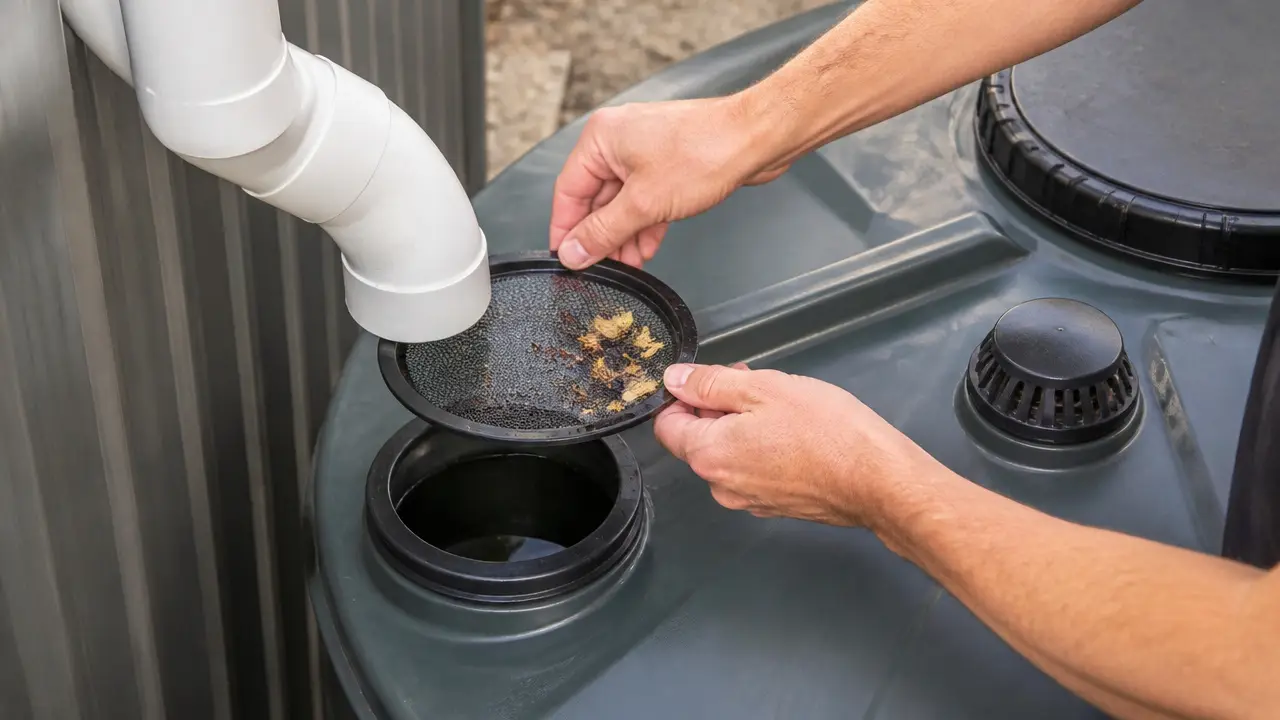
Large debris should be kept out of the rainwater system before it reaches small hoses and fittings.
Clean gutters and suitable gutter guards or inlet screens can help, but they do not remove everything.
Small diverter passages are usually more likely to clog than a full-size downspout.
Check the diverter periodically, especially if the barrel suddenly stops filling even though water is flowing through the downspout.
A Diverter Is Not the Same as a First-Flush Device
These two parts serve different purposes.
A diverter directs rainwater toward the storage container.
A first-flush device is intended to keep some of the first roof runoff from entering storage.
The first water washing across a roof can carry dirt, droppings, pollen, and other material that built up between storms. A first-flush setup attempts to separate some of this initial runoff.
A regular rain barrel diverter usually does not provide this function unless it was specifically designed as part of a first-flush system.
Even with first flush and screening, stored roof runoff should still be treated as non-potable water unless the whole collection and treatment system has been designed for drinking-water use.
Non-potable means the water is not intended for drinking.
Are Diverters Better Than Running a Downspout Into the Barrel?
They can be, depending on your goals.
Running the full downspout directly into a barrel is simple and can capture a large amount of water. But you must provide enough overflow capacity for heavy rain.
A diverter can make overflow management easier because the original downspout often stays connected to its normal drainage route.
A diverter may be a good choice when:
- You have a small or medium rain barrel.
- You want to preserve the existing downspout drainage path.
- You do not need to capture every gallon of runoff.
- You want a barrel that stops filling automatically when full.
- You want to disconnect the barrel seasonally.
Direct downspout plumbing may make more sense for larger tanks or cisterns where you want to capture a greater share of the available runoff.
Can a Diverter Fill More Than One Rain Barrel?
Evaluate whether a diverter for a rain barrel is necessary to understand capacity needed to cover demand until the next refill.
Yes, but the barrels normally need to be connected as part of a planned system.
One common approach is to send water into the first barrel and connect additional barrels with hoses or larger fittings.
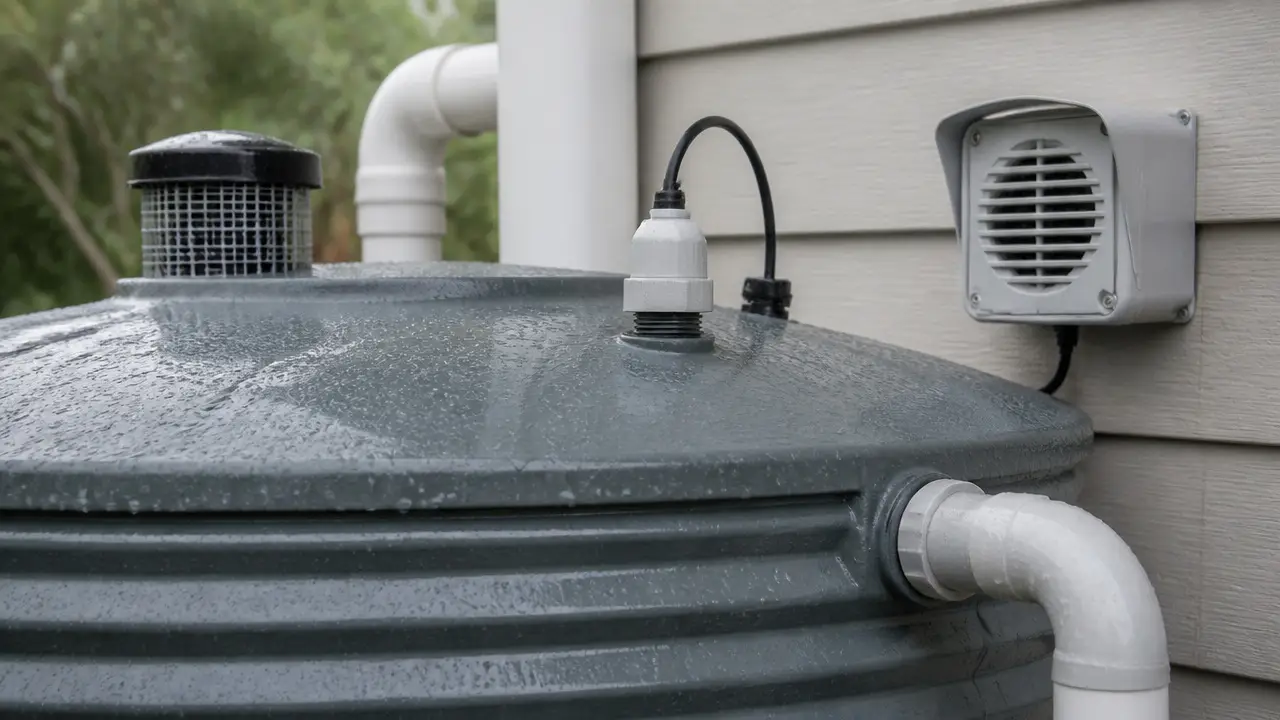
A bulkhead fitting is a watertight fitting that passes through the wall of a barrel or tank. It provides a secure place to connect pipes or hoses.
For linked barrels to fill reliably, consider:
- Connection height
- Hose or pipe size
- Barrel elevation
- Venting
- Overflow capacity
Very small hoses can make water transfer between barrels slow.
If the first barrel fills faster than water can move into the next barrel, it may reach the diverter's shutoff level before the other barrels are full.
How Fast Will a Diverter Fill a Rain Barrel?
There is no single filling time.
Your roof can produce a surprisingly large amount of runoff, so a typical rain barrel may fill during one moderate storm.
In U.S. units, the theoretical roof runoff can be estimated with:
Gallons = roof area in square feet × rainfall in inches × 0.623
For example, 500 square feet of roof receiving 1 inch of rain has a theoretical yield of about:
500 × 1 × 0.623 = 311.5 gallons
Actual collection will be lower because of splash, wetting, leaks, first-flush losses, diverter efficiency, and other system losses.
Also remember that only the roof area draining toward that particular downspout counts.
If your rain barrel holds far less water than the roof can produce, you do not necessarily need a diverter that captures the entire downspout flow.
Why a Rain Barrel May Not Fill Through a Diverter
If your barrel barely fills during rain, check the simple problems first.
The Diverter Is Too High or Low
Incorrect placement can interfere with both filling and automatic bypass.
Check the installation dimensions for your specific diverter.
The Hose Slopes the Wrong Way
Water should have a clear path from the diverter to the barrel.
Sharp upward sections, kinks, or sagging hose can reduce flow.
The Diverter Is Clogged
Remove accessible debris according to the diverter's cleaning instructions.
Also check the gutter and downspout above it.
The Barrel Is Already at the Shutoff Level
Some systems stop sending water to the barrel before water reaches the absolute top.
That is intentional.
Little Roof Area Drains to That Downspout
A large roof does not help if most of the runoff goes toward different downspouts.
Look at how the roof is divided by its slopes and gutters.
The Diverter Cannot Handle the Available Flow
A small diverter or hose may capture only part of the runoff during intense rainfall.
That does not always mean something is wrong. The remaining water may simply be continuing through the downspout as designed.
Installation Details Matter
A diverter is usually a manageable DIY project, but careful installation is important.
Before cutting or drilling a downspout:
- Confirm the downspout's dimensions and shape.
- Make sure the diverter fits that type of downspout.
- Decide where the barrel will sit.
- Check the required relationship between the diverter and barrel inlet.
- Make sure the barrel has a stable, level base.
- Plan where excess water will go.
- Check that the downspout can still drain normally.
A full rain barrel is very heavy. Water weighs about 8.34 pounds per U.S. gallon, so a filled barrel can weigh several hundred pounds once the barrel itself is included.
Use a stable base that can support the load.
Maintenance Is Simple but Necessary
A diverter should not be treated as a maintenance-free part.
Inspect it during the rainy season and after storms that carry lots of leaves or debris.
Typical maintenance includes:
- Cleaning gutters and screens
- Removing debris from the diverter
- Checking hoses for kinks and blockages
- Looking for leaking connections
- Confirming the barrel is still level
- Checking that overflow drains safely
- Cleaning the rain barrel as needed
If you live where temperatures fall below freezing, follow the appropriate winter procedure for your barrel and diverter.
Water trapped inside hoses, valves, fittings, or barrels can freeze and expand. Many systems should be drained or bypassed for winter rather than left full.
Are Rain Barrel Diverters Worth Using?
For many small rain barrel systems, yes.
They provide a convenient way to collect roof runoff while keeping the original downspout available for excess water.
They work especially well when your goal is garden watering or other non-potable outdoor use and you have much more potential roof runoff than barrel storage.
A diverter is less important when you are building a larger collection system where most of the roof runoff needs to reach a cistern. In that case, full-flow piping, larger prefilters, and a properly sized overflow system may be more appropriate.
The key is matching the diverter to the downspout, barrel, expected water flow, and intended use.
Frequently Asked Questions
Do rain barrel diverters really stop water when the barrel is full?
Many do, but the system must be installed correctly. Some designs use the water level in the barrel and connecting hose to redirect additional runoff down the original downspout. Other systems need a separate overflow. Follow the design requirements for your particular diverter.
Does a rain barrel diverter reduce downspout flow?
It diverts some runoff away from the downspout while the barrel is filling. A properly sized system should still allow excess water to continue through the normal drainage route. A clogged or incorrectly installed diverter can interfere with drainage.
Can a rain barrel diverter handle heavy rain?
It may continue working during heavy rain, but it might not capture all of the runoff. Many diverters are designed to let excess water continue down the downspout rather than forcing the entire flow through a small hose.
Can I use a diverter with an IBC tote?
Possibly. The diverter must be compatible with the inlet arrangement and water level you plan to use. An IBC tote holds much more water than a typical rain barrel, so also consider inlet flow, venting, overflow capacity, the tote's previous contents, and the strength of its base.
Does a rain barrel diverter filter the water?
Not necessarily. Some diverters may block large debris, but that does not make them complete filters. Roof runoff can still contain fine particles, microorganisms, chemicals, and other contaminants.
Do I need a first-flush system with a rain barrel diverter?
Not always for basic non-potable garden collection, but the two devices perform different jobs. The diverter directs water into storage. A first-flush device keeps some of the initial roof runoff out of storage. Whether first flush is useful depends on your roof, intended water use, and maintenance plan.
Can I leave a rain barrel diverter connected during winter?
That depends on the climate and system design. In freezing areas, trapped water can damage hoses, fittings, valves, and barrels. Drain, disconnect, or bypass the collection system as appropriate before freezing weather.