As an affiliate, we may earn a commission from qualifying purchases. We get commissions for purchases made through links on this website from Amazon and other third parties.
Downspout diverters are often worth it when you want a simple way to send roof runoff into a rain barrel or small storage tank without rebuilding the whole downspout.
They work best for modest rainwater systems used for gardens, landscaping, and other non-potable uses. A good diverter can also help prevent a barrel from overflowing by sending excess water back through the downspout.
They are less useful when you need high flow, several tanks, large-volume storage, or a system designed for household water use.
What a Downspout Diverter Does
A downspout diverter is installed in a roof downspout.
When rainwater flows through the downspout, part of that water is redirected through a hose or pipe into a rain barrel or tank.
Many diverters are designed so that once the barrel fills, extra water continues down the original downspout. This can be much cleaner than cutting the downspout off and letting all roof water flow directly into a barrel.
The basic water path looks like this:
Roof → gutter → downspout → diverter → rain barrel
Excess water may continue:
Diverter → lower downspout → normal drainage area
That makes a diverter useful when you want to collect some roof runoff while keeping the home's existing drainage system mostly intact.
When a Downspout Diverter Is Worth It
A diverter makes the most sense when simplicity matters more than maximum collection.
You Have One or Two Rain Barrels
A diverter is a good match for a basic barrel system.
Instead of rerouting the entire downspout, you can tap into it and send water to the barrel through a smaller hose.
This usually leaves the original downspout available to carry excess water away from the house.
You Want Better Overflow Control
Overflow is one of the main problems with poorly planned rain barrels.
If water enters faster than the barrel can hold it, it has to go somewhere.
Without proper overflow plumbing, water can spill beside the foundation, wash away soil, or create standing water.
Some downspout diverters reduce this problem by allowing water to continue down the downspout once the barrel reaches the proper level.
The exact behavior depends on the diverter design and how the barrel connection is installed.
You Want an Easier Installation
A diverter usually needs less modification than completely rerouting a downspout.
You may only need to:
- Cut or drill the downspout as required by the diverter design.
- Install the diverter at the correct height.
- Connect a hose between the diverter and tank.
- Keep the lower downspout connected to the normal drainage route.
This can be a practical setup for homeowners who do not need a large harvesting system.
You Want to Keep the Downspout Looking Normal
Direct-fill barrel systems often require the bottom part of the downspout to be moved or shortened.
A diverter can keep more of the original downspout in place.
That may give the installation a cleaner appearance and make it easier to return the system to normal later.
When a Diverter May Not Be Worth It
Downspout diverters have limits.
They are not automatically the best way to collect rainwater from every roof.
You Want to Capture as Much Water as Possible
A small diverter opening or hose can restrict the amount of water reaching the tank.
During heavy rain, much of the runoff may continue down the downspout instead of entering storage.
That is not necessarily a problem for a 50-gallon rain barrel that fills quickly anyway.
It can become a problem when you are trying to fill a large cistern.
A full-flow downspout connection is usually better suited to high-volume collection.
You Have a Large Storage System
A small diverter feeding a large tank may create an unnecessary bottleneck.
Larger systems may work better with:
- Full-size downspout piping.
- Leaf screens.
- Sediment separation.
- First-flush equipment where appropriate.
- Proper tank inlet and overflow piping.
A first-flush device is a part of a rainwater system that diverts some of the initial roof runoff before later water enters storage. It does not make the remaining water automatically safe to drink.
Your Downspout Carries a Lot of Debris
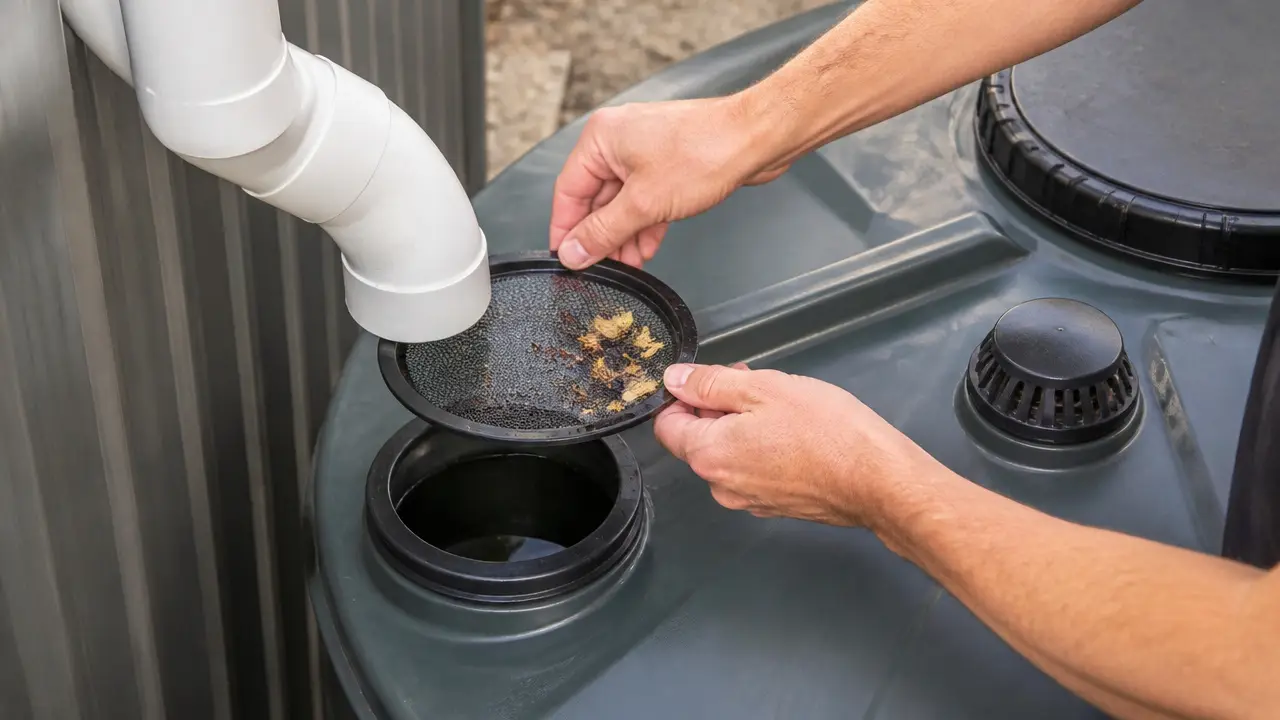
Leaves, roof grit, seeds, and other material can collect around small diverter openings.
This may reduce flow or cause clogging.
A gutter screen or other coarse prefilter can help, but it also needs cleaning.
A diverter is not a substitute for maintaining the roof, gutters, and downspouts.
Your Downspouts Are an Unusual Size or Shape
Compatibility matters.
A diverter made for one downspout size may not fit another.
Before choosing one, check:
- Downspout width and depth.
- Round versus rectangular shape.
- Diverter connection size.
- Hose size.
- Tank inlet location.
- Required installation height.
Do not assume that all downspouts or diverters use the same dimensions.
How Much Water Can a Diverter Collect?
The amount depends first on the roof area and rainfall, then on how much water the diverter can actually send into storage.
A common starting estimate for roof runoff in U.S. units is:
Collected gallons ≈ roof area in square feet × rainfall in inches × 0.623
For example, 500 square feet of roof receiving 1 inch of rain has a theoretical runoff volume of about:
500 × 1 × 0.623 = 311.5 gallons
Actual collection will be lower.
Guidance on the performance of rain barrel diverters helps verify airflow and overflow provisions around the storage vessel.
Water can be lost because of:
- Roof wetting.
- Gutter losses.
- Splashing.
- Debris screens.
- First-flush diversion.
- Diverter flow limits.
- An already-full tank.
This is why a small barrel can fill much faster than many first-time users expect.
If your roof can produce hundreds of gallons during a storm but your barrel holds only a small fraction of that, perfect diverter efficiency usually is not important.
Diverter Versus Direct Downspout Connection
Both approaches can work.
| Feature | Downspout diverter | Direct connection |
|---|---|---|
| Installation | Often simpler | May require more piping |
| Existing downspout | Usually stays functional | Often rerouted |
| Overflow handling | Can be convenient | Must be planned separately |
| Maximum flow | May be restricted | Can handle more flow |
| Small rain barrels | Very practical | Also works |
| Large tanks | Often less suitable | Usually better |
| Maintenance | Diverter may need cleaning | Screens and pipes still need cleaning |
For a simple backyard barrel, the diverter often wins on convenience.
For a large storage system, direct piping usually gives you more control over water flow.
Check the Overflow Before You Buy
The overflow path matters more than many people realize.
A rain barrel should not simply fill until water spills over the lid.
Water leaving the system should be directed somewhere that will not damage the foundation or create erosion.
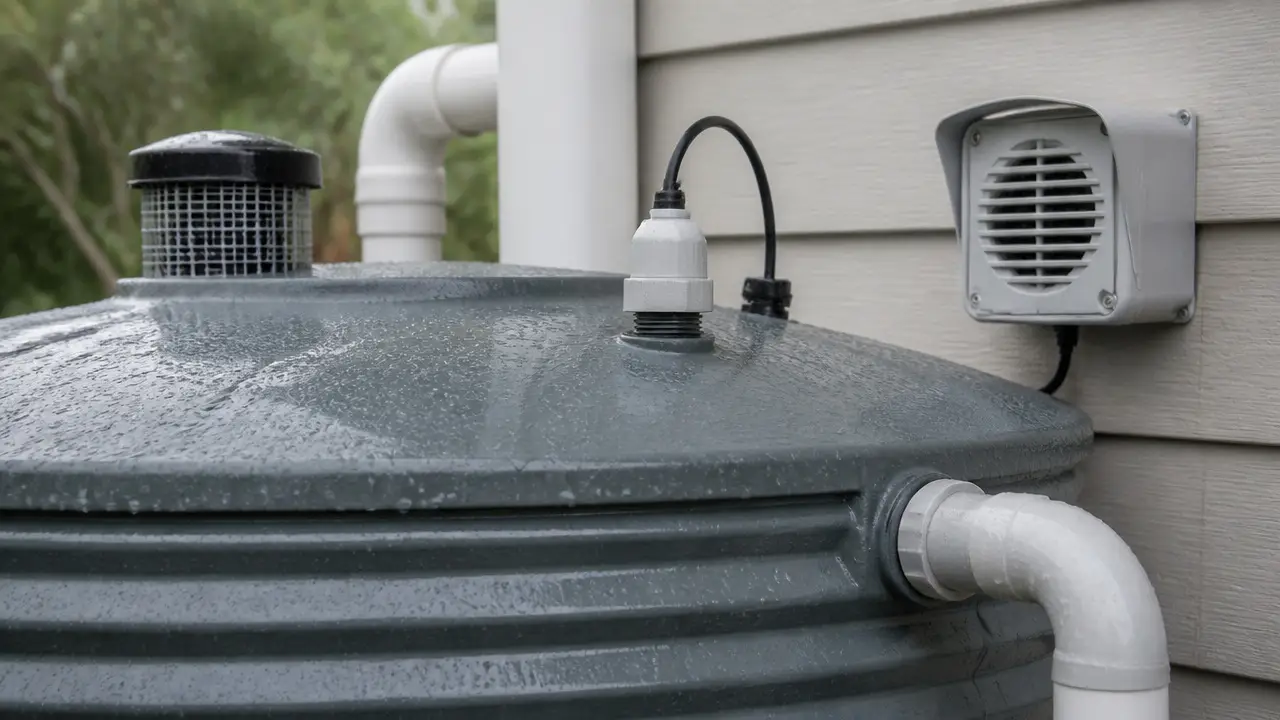
Some diverter systems use the fill hose itself to regulate the tank level. Once water reaches approximately the same height as the diverter opening, more runoff stays in the downspout.
Other systems work differently.
Check the design carefully rather than assuming every diverter provides automatic overflow protection.
If your barrel has a separate overflow fitting, make sure that connection is large enough and routed to a suitable drainage location.
Installation Height Matters
Many diverters depend on water levels.
That means the height of the diverter compared with the tank inlet can affect whether the system fills or overflows correctly.
Do not simply install the diverter wherever it is easiest to reach.
Follow the intended height relationship for the system you are using.
Also make sure the barrel sits on a stable surface.
Water is heavy. A full container can place hundreds of pounds of load on its base.
Do not put a filled barrel on an unstable stack of loose blocks, soft soil, or a weak platform.
What Maintenance Does a Diverter Need?
A diverter is simple, but it is not maintenance-free.
Check it during the rainy season for:
- Leaves.
- Roof grit.
- Twigs.
- Insect nests.
- Algae or organic buildup.
- Loose hoses.
- Cracked fittings.
- Leaks around connections.
- Blocked downspouts.
You should also keep gutters clear enough to move water toward the downspout.
A clogged gutter cannot feed a rain barrel effectively, no matter how good the diverter is.
What About Freezing Weather?
A diverter that holds water can be damaged by freezing.
The connected hose and barrel also need attention.
Before freezing conditions, the correct approach may include draining or disconnecting parts of the system. The exact steps depend on the diverter design, tank, piping layout, and climate.
Do not assume a closed valve is enough to protect equipment from freeze damage.
Follow the equipment instructions and make sure trapped water has somewhere to drain.
Can You Use Diverter-Collected Water for Drinking?
A downspout diverter does not make roof runoff potable.
Potable means suitable for drinking.
Roof runoff can contain microorganisms, animal waste, roofing material residue, dust, smoke particles, metals, and other contaminants.
A screen or diverter may remove larger debris, but it does not provide complete water treatment.
Using harvested rainwater as drinking water requires a properly designed collection and treatment system, suitable materials, maintenance, current laboratory testing, and compliance with applicable local requirements.
For most simple barrel-and-diverter systems, treating the water as non-potable is the safer assumption.
Non-potable water is water that is not considered suitable for drinking.
Are Downspout Diverters Worth It Overall?
For a small rain barrel system, usually yes.
They are especially useful when you want:
- A simple installation.
- The existing downspout to remain in service.
- Convenient barrel filling.
- A relatively tidy setup.
- Easier management of excess roof runoff.
They become less attractive when maximum collection rate is important or when the storage system grows beyond a few small barrels.
The main question is not whether a diverter works.
It is whether its flow capacity, downspout fit, tank connection, overflow method, and maintenance needs match the system you are building.
Frequently Asked Questions
Do downspout diverters collect all the rainwater from a roof?
Usually not. Many divert only part of the water flowing through the downspout. During heavier rain, some runoff may continue down the normal drainage path.
Will a downspout diverter stop a rain barrel from overflowing?
Some designs can help by sending excess water back down the downspout once the barrel reaches the intended water level. Other designs require a separate overflow. Check how the specific system is meant to work.
Do downspout diverters clog?
They can. Leaves, roof grit, seeds, and other debris may reduce flow. Keeping gutters clean and using appropriate coarse screening can reduce problems.
Can I use a downspout diverter with an IBC tote?
Possibly, but a small diverter may fill an IBC tote slowly compared with a full-size downspout connection. Check the diverter flow path, hose size, inlet location, and overflow arrangement before using it with larger storage.
How high should a downspout diverter be installed?
That depends on the design. Many systems need the diverter positioned at a specific height compared with the rain barrel inlet or desired full-water level. Follow the intended installation layout rather than choosing the height at random.
Are downspout diverters good for heavy rain?
They can still work, but their smaller openings and hoses may limit how much water reaches the tank. Excess runoff should continue through a safe drainage path.
Can I leave a downspout diverter installed through winter?
That depends on the system and climate. In freezing areas, trapped water in the diverter, hose, fittings, or barrel may cause damage. Drain or winterize the system according to its design before hard freezes.