As an affiliate, we may earn a commission from qualifying purchases. We get commissions for purchases made through links on this website from Amazon and other third parties.
A downspout diverter sends roof runoff from a gutter into a rain barrel instead of letting all of it continue to the ground. The simplest DIY setup is to cut the downspout, add an elbow or short extension, and direct the water through a screened opening in the barrel.
This works well, but there is one important catch: the barrel needs a dependable overflow path. Once the barrel is full, every extra gallon still coming down the gutter has to go somewhere. The U.S. EPA includes an overflow as a basic rain-barrel component, along with a secure cover and debris or mosquito screening.
If you want the barrel to fill while excess water automatically continues down the original downspout, a bypass-style diverter is usually a better design. Making that type from scratch is harder because the internal opening has to collect water without creating a place for leaves and debris to clog.
What a Rain Barrel Downspout Diverter Does
A basic system has four parts:
- The gutter collects runoff from the roof.
- The downspout carries that runoff downward.
- The diverter directs some or all of it toward the barrel.
- An overflow carries excess water safely away when the barrel is full.
The diverter does not clean the water. Roof runoff can contain dirt, leaves, bird droppings, roofing particles, and other contaminants.
For a barrel used to water a garden or landscape, debris screening and good maintenance are still important. Do not assume roof runoff is drinking water simply because it has passed through a screen or diverter.
Choose the Type of Diverter Before You Start
There are two practical ways to connect a rain barrel to a downspout.
Simple Cut-and-Route Diverter
This is the easiest DIY method.
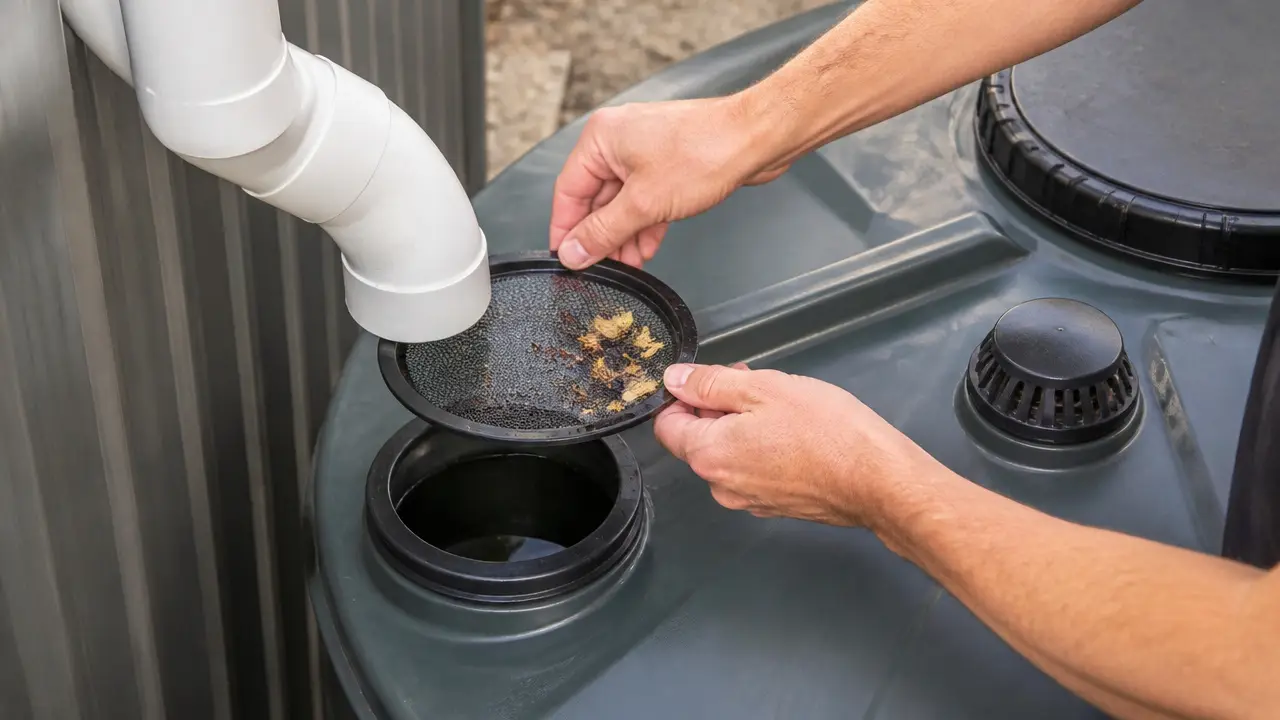
You cut the downspout above the barrel and use a downspout elbow or extension to direct the runoff into a screened opening on top of the barrel.
It looks roughly like this:
Gutter
  |
  |
Downspout
  |
  |
 Elbow -----> Screened barrel inlet
                 |
              Rain barrel
                 |
              Overflow --------> safe drainage area
Nearly all water from that downspout enters the barrel during a storm. Because of that, the overflow must be able to handle water after the barrel fills.
EPA rain-barrel instructions use this basic arrangement: the downspout is shortened so runoff enters the screened barrel opening, and a separate overflow carries excess water away.
Automatic Bypass Diverter
A bypass diverter sits inside or alongside the downspout and sends some water through a hose into the barrel.
When the barrel fills to the level of the diverter connection, water can continue down the original downspout.
Gutter
  |
  |
Downspout
  |
 [Diverter] ------ hose ------> Barrel
  |
  |
Original
downspout
  |
Normal drainage
This can be useful when you want to preserve the existing downspout and drainage route. Penn State Extension describes this arrangement using a downspout adapter, flexible connector hose, and barrel inlet located at about the same height.
A homemade internal bypass is harder to get right. A poorly shaped scoop can catch leaves, reduce downspout capacity, or send water toward the house during a heavy storm. For this style, using a fitting designed for the shape and size of your downspout is often the simpler choice.
What You Need for a Simple DIY Diverter
For the cut-and-route method, you normally need:
- A rain barrel with a secure lid
- Fine insect-resistant screen for the inlet
- A downspout elbow or extension that matches your downspout
- Sheet-metal snips or a hacksaw suitable for the downspout material
- Tape measure
- Marker
- Drill and appropriate bits if you are adding the barrel inlet or overflow
- Barrel overflow fitting and pipe or hose
- Downspout screws where needed
- Gloves and eye protection
Do not choose fittings by appearance alone. Measure the downspout first.
Rectangular downspouts come in different sizes, and round systems use different fittings. The elbow, connector, or adapter needs to fit securely without creating a large restriction.
How to Make a Simple Downspout Diverter for a Rain Barrel
1. Put the Rain Barrel in Its Final Position
Set the barrel where it will actually be used before cutting the downspout.
The surface needs to be firm, flat, and able to support the barrel when full. Water is heavy, so do not place a filled barrel on a weak shelf, loose stack of blocks, or unstable soil.
Leave enough room to:
- Reach the spigot
- Remove or clean the inlet screen
- Inspect the overflow
- Disconnect the downspout if necessary
If you elevate the barrel to improve gravity flow from the spigot, use a broad, stable base designed for the load.
2. Decide Where Water Will Enter the Barrel
The inlet is normally on top of the barrel.
Keep the opening large enough to accept runoff without forcing water to back up in the downspout, but keep it covered with securely attached screen.
The screen serves two jobs:
- It catches larger debris.
- It helps keep mosquitoes and other insects from entering the stored water.
EPA guidance for rain barrels includes screening at the inlet for debris and insect control.
Do not leave a large open hole around the downspout.
3. Mark the Downspout Cut
Hold the elbow or extension in position so you can see where the downspout needs to end.
You want enough downward slope for water to reach the barrel without creating a low point where water sits.
Mark the cut carefully.
Before cutting, check what is behind the downspout. Be careful around siding, electrical wiring, outdoor outlets, and other utilities.
If accessing the downspout requires unsafe ladder work, stop and have someone qualified handle that part.
4. Cut the Downspout
Remove or loosen the lower section if that makes the work safer.
Cut along your mark with a tool suitable for the material. Smooth any sharp edges.
Wear gloves and eye protection. Cut metal downspouts can have very sharp edges.
Avoid crushing the downspout while cutting it. A badly deformed end may not fit the elbow correctly and can restrict water flow.
5. Fit the Elbow or Extension
Attach the elbow so it directs water toward the barrel inlet.
The outlet should point into the screened inlet without pressing hard against the barrel.
Try to make the connection easy to remove. You will eventually need access for cleaning, winter preparation in freezing climates, or repairs.
Secure loose downspout sections so wind and flowing water cannot pull them apart.
6. Add a Proper Overflow
Do this before relying on the barrel during a storm.
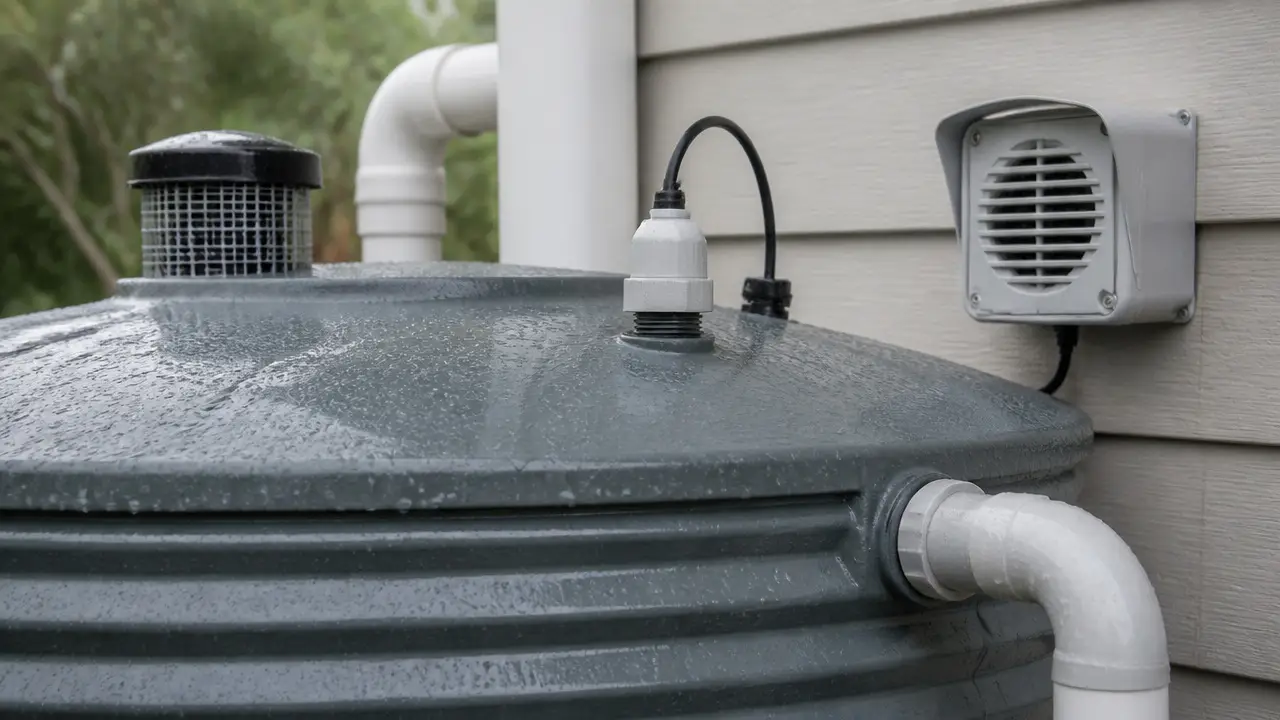
The overflow fitting should be near the top of the barrel, below the lid or other openings where uncontrolled water could escape.
Route the overflow toward an appropriate drainage area or, where the system is designed for it, back into the original downspout.
The discharge should not dump water against the foundation.
This matters because even a large barrel can fill quickly during steady rain. Once it is full, the incoming roof runoff does not stop.
The EPA specifically recommends providing an overflow when constructing a rain barrel.
Keep the overflow open and inspect it for blockage.
7. Test the System With Water
You do not need to wait for a thunderstorm to discover a problem.
Run water into the gutter or upper downspout at a moderate rate while watching the system.
Check that:
- Water enters the barrel.
- No connection leaks toward the wall.
- The inlet does not immediately back up.
- The screen stays in place.
- The overflow works.
- Overflow water moves away from the foundation.
- The barrel and base stay stable.
Then inspect the system again during a normal rainfall when it is safe to do so from ground level.
Heavy rain may reveal flow problems that a hose test does not.
How to Make an Automatic Bypass Setup
If preserving the original downspout is important, use a side-fill arrangement instead.
The basic layout is:
              fill hose
                  |
Downspout --> diverter ------> barrel inlet
    |
    |
    | excess water
    v
existing drainage
Details about building a homemade rain barrel diverter help verify a storage-tank design compatible with the location.
The barrel's inlet and downspout diverter are normally positioned at compatible heights so the system can fill by gravity.
Penn State Extension, for example, describes placing the barrel in its final elevated position first, using a level to transfer the barrel inlet height to the downspout, and then installing the diverter and connecting hose.
That height relationship matters.
If the barrel connection is much higher than the downspout outlet, water may not flow into the barrel properly. If the layout creates a low section in the hose, debris and standing water may collect there.
Why Not Make an Internal Scoop From Scrap Metal?
It is possible to cut a hole in a downspout and fabricate a small internal scoop.
The problem is not making water enter the hose. The harder part is making sure the downspout can still handle leaves, grit, and heavy runoff.
A homemade scoop can:
- Catch leaves
- Narrow the downspout
- Cause water to back up
- Leak around the opening
- Shift out of position
- Send too much water through a small hose
For a bypass system, matching the diverter to the actual downspout is usually more reliable than improvising the internal water-catching part.
Make Sure the Barrel Can Overflow Safely
Overflow is one of the most important parts of the project.
Imagine that your barrel fills halfway through a storm. From that moment on, the rest of the roof runoff still needs a drainage path.
A good overflow route should:
- Stay open during rain
- Handle debris without clogging easily
- Carry water away from the house
- Avoid creating erosion
- Avoid flooding a neighboring property or unwanted area
- Follow any applicable local stormwater requirements
If the old downspout was connected to an underground drain, do not assume you can disconnect or modify it without checking where that drain goes. Some properties have downspouts connected to storm systems or other drainage arrangements.
The EPA advises checking local guidance when redirecting downspouts because site and drainage conditions can differ. Its current downspout-disconnection guidance was updated July 31, 2026.
Keep Leaves and Mosquitoes Out
A diverter should not turn the barrel into an open container.
Use screening anywhere insects could enter, including:
- The main inlet
- Vent openings
- Large overflow openings where appropriate
Keep gutters reasonably clear as well. A screen at the barrel cannot make up for a downspout packed with leaves.
Inspect the inlet after storms, especially during seasons when trees are dropping leaves, flowers, seeds, or needles.
Remove accumulated material instead of allowing it to form a wet layer over the screen.
A Downspout Diverter Is Not a First-Flush Diverter
The two terms are easy to confuse.
A downspout diverter directs roof runoff toward your rain barrel.
A first-flush diverter is intended to separate an initial portion of roof runoff before later runoff enters storage.
They perform different jobs.
Adding a first-flush device does not replace inlet screening, overflow protection, tank cleaning, or any treatment required for the intended use of the water.
For ordinary landscape watering, you may decide that good gutter maintenance, screening, and barrel cleaning fit your system. Uses involving greater human exposure require more careful water-quality planning.
Common DIY Diverter Problems
Water Spills Over the Barrel
The barrel may be full, the inlet screen may be clogged, or the incoming flow may exceed what the inlet can accept.
Check the overflow first. Never solve the problem by simply removing insect screening and leaving the barrel open.
Water Runs Down the Outside of the Downspout
Look for a poorly fitted elbow, loose joint, cracked connector, or side opening that was cut too large.
Correct the fitting rather than relying on large amounts of sealant to hold an unstable joint together.
The Barrel Barely Fills
Check for:
- A blocked gutter
- A blocked downspout
- A kinked fill hose
- A hose that slopes uphill
- An incorrectly positioned bypass diverter
- A barrel inlet higher than the diverter outlet
A bypass system depends on its installation height as well as the size of its fittings.
Leaves Keep Clogging the Diverter
Clean the gutter and downspout first.
If a homemade internal scoop is causing the blockage, changing to a less restrictive setup may be better than repeatedly clearing it.
The Overflow Cannot Keep Up
Stop directing the full downspout into the barrel until the overflow problem is corrected.
An undersized, clogged, kinked, or poorly routed overflow can allow water to escape near the foundation.
What to Do in Freezing Climates
Water trapped in a barrel, hose, diverter, or fitting can freeze and expand.
Before freezing weather, follow the winter plan appropriate for your system. This often means draining and disconnecting the barrel and restoring the downspout to its normal drainage route.
Penn State Extension recommends disconnecting and emptying its rain-barrel system before winter to prevent freezing water from damaging the barrel.
Do not assume insulation alone will keep an outdoor barrel or small hose from freezing.
When a Simple DIY Diverter Makes Sense
A cut-and-route setup is a good option when:
- The barrel sits directly beside the downspout.
- The water is intended for suitable non-potable uses such as landscape watering.
- You can install a dependable overflow.
- You can reach the inlet for regular cleaning.
- Redirecting the downspout does not interfere with an important drainage system.
Choose a bypass-style connection instead when you want excess runoff to continue through the existing downspout automatically.
For complicated drainage, buried downspout connections, large roof areas, multiple tanks, pumps, or water intended for household use, look at the whole system rather than treating the diverter as an isolated part.
Frequently Asked Questions
Can I run a downspout straight into a rain barrel?
Yes. A simple DIY setup can use a downspout elbow or extension directed into a screened barrel inlet. The barrel also needs a reliable overflow so excess runoff has somewhere safe to go after the barrel fills.
Does the downspout have to go inside the rain barrel?
No. It only needs to direct water securely through the screened inlet. Leaving enough clearance to remove and clean the screen can make maintenance easier.
Can I make a diverter without cutting the downspout?
Sometimes. A side-fill system still normally requires an opening or fitting in the downspout, but it may let you keep most of the original downspout intact. Another option is rearranging removable downspout sections rather than permanently cutting them.
What happens when the rain barrel gets full?
A cut-and-route system needs a separate overflow to carry incoming water away. A properly designed bypass diverter can allow excess runoff to continue through the original downspout. Never rely on water simply spilling over the barrel.
How high should the diverter be on the downspout?
For a side-fill system, its height needs to match the barrel inlet and the way the specific diverter works. Set the barrel on its finished base before marking the downspout. A level can help transfer the inlet height to the downspout.
Do I need a screen if the gutter already has a leaf guard?
Yes. A secure inlet screen adds another barrier against insects and debris. Gutter guards do not make the stored rainwater container insect-proof.
Is a downspout diverter the same as a first-flush diverter?
No. A downspout diverter routes water toward storage. A first-flush diverter is intended to separate an initial portion of roof runoff. One does not automatically replace the other.
Can I use water from a DIY rain barrel for drinking?
Do not assume it is safe to drink. Roof runoff can contain biological and chemical contaminants. Drinking-water use requires a suitable collection system, appropriate treatment, current laboratory testing, ongoing maintenance, and compliance with applicable local requirements. A downspout diverter or inlet screen alone does not make rainwater potable.