As an affiliate, we may earn a commission from qualifying purchases. We get commissions for purchases made through links on this website from Amazon and other third parties.
Rain barrels work best when the downspout sends roof runoff into the barrel without creating leaks, overflow problems, or a permanent drainage headache. In most installations, you will need to cut the downspout so you can add a diverter, elbow, or connector at the correct height.
The most important step is measuring from the actual rain barrel position before making the cut. Different barrel inlets and diverters sit at different heights, so there is no single correct cutting height.
Before You Cut the Downspout
Set the rain barrel where it will stay before measuring anything.
The barrel should sit on a firm, level base that can support its full weight. Water is heavy. One US gallon weighs about 8.3 pounds, so even a modest rain barrel becomes very heavy when full.
Also check that you can reach:
- The barrel inlet
- The spigot or outlet
- The overflow connection
- Any screen that needs cleaning
- The downspout connection
Do not place the barrel where its weight could make an unstable deck, platform, or soft soil settle.
Before cutting, decide how the downspout will connect to the barrel. The two common arrangements are a downspout diverter or a direct connection.
Decide How Water Will Enter the Barrel
Downspout Diverter
A diverter is installed into the downspout and sends some roof runoff through a hose or short pipe into the rain barrel.
Many diverter systems allow excess water to continue down the original downspout once the barrel is full.
This can be a convenient setup because the home's existing drainage path may remain usable. However, the diverter must be installed at the height required for that particular design.
Do not assume the hole or cut should line up with the top of the barrel. Follow the installation dimensions for the diverter you are using.
Direct Downspout Connection
Another option is to cut the downspout and direct the open end toward the barrel inlet.
This may use:
- A downspout elbow
- A short extension
- A flexible downspout connector
- Another suitable drainage fitting
A direct connection is simple, but it makes overflow management especially important. Once the barrel fills, incoming rainwater needs somewhere safe to go.
Do not rely on water spilling over the barrel rim.
Check the Downspout Material and Size
Identify what you are cutting before choosing a tool.
Residential downspouts are commonly made from aluminum, galvanized steel, vinyl, or other plastics.
Also check the shape and dimensions. Downspouts are not all the same size. A fitting made for one rectangular downspout may not fit another.
Measure the outside dimensions if you are adding an elbow, diverter, or coupling.
The barrel connection also needs to match the system. A connector that fits the downspout does not automatically fit the barrel inlet.
Tools You May Need
The exact tools depend on the downspout material and connection method.
Common items include:
- Tape measure
- Pencil or marker
- Level
- Work gloves
- Eye protection
- Screwdriver or drill for removing downspout straps
- Suitable cutting tool
- File or deburring tool
- Downspout elbow, diverter, or connector
- Fasteners recommended for the fitting
For thin metal downspouts, aviation snips or a suitable metal-cutting tool may be appropriate. Plastic downspouts can usually be cut with a suitable fine-tooth saw or plastic-cutting tool.
Use tools designed for the material you are cutting.
Metal edges can be extremely sharp after cutting, so gloves and eye protection are important.
How to Measure the Downspout Cut
Measuring carefully is more important than cutting quickly.
1. Put the Barrel in Its Final Position
Set the barrel on its finished base.
Do not measure with the barrel sitting temporarily on the ground if you plan to raise it later. Even a small change in height can affect the downspout connection.
2. Locate the Barrel Inlet
Find the point where rainwater will enter.
If you are using a diverter hose, identify the diverter's required height relative to the barrel inlet.
If the downspout will discharge directly into the barrel, determine where the elbow or extension must sit so water enters the screened opening.
3. Hold the Fitting in Position
Whenever possible, hold the actual diverter, elbow, or connector against the downspout before marking your cut.
Account for the part of the downspout that must slide inside or over the fitting.
Cutting exactly at the final outlet height without allowing for fitting overlap can leave the downspout too short.
4. Mark the Cut
Mark the downspout clearly on all accessible sides.
Use a level if the fitting requires a straight horizontal cut.
Check the measurement again before cutting.
If you are unsure, leave the downspout slightly longer at first. You can usually remove more material. Adding material back is harder.
How to Cut a Downspout for a Rain Barrel
Once the barrel, fittings, and measurements are confirmed, you can make the cut.
Step 1: Make the Work Area Safe
Work from stable ground whenever possible.
If the required cut is high enough that roof access or unstable ladder work would be needed, stop and use a safer installation approach or hire someone equipped for the job.
Move the rain barrel out of the immediate cutting area if metal or plastic debris could fall into it.
Wear gloves and eye protection.
Step 2: Loosen a Downspout Strap if Necessary
A wall strap may prevent the downspout from moving enough to install the new fitting.
If necessary, loosen or remove the nearest strap while supporting the downspout.
Do not leave a long section hanging unsupported.
Step 3: Start the Cut Carefully
Use a cutting tool appropriate for the downspout material.
Try to keep the cut close to your marked line. A badly angled cut can make fittings difficult to seat and may create gaps.
Avoid crushing thin metal downspouts while holding them.
Step 4: Finish the Cut
Work around the downspout until the section separates.
Do not pull or twist aggressively on a partly cut metal section. Sharp unfinished edges can tear or deform the downspout.
Step 5: Smooth Sharp Edges
Remove sharp burrs from cut metal.
This reduces the chance of injury and can make it easier to install the fitting.
Clean away metal filings, plastic chips, and other debris before connecting the barrel.
Step 6: Install the Diverter or Elbow
Fit the selected connection according to its intended orientation.
A direct-feed elbow should discharge into the barrel's screened inlet without resting heavily on the barrel.
A diverter should sit at the height and orientation required by its design.
Secure fittings so ordinary wind, water flow, or accidental bumps will not easily pull them apart.
Step 7: Reattach Downspout Supports
Evaluating installing a rain barrel correctly helps assess maintenance access for controlling sediment and odors.
Replace or tighten any wall straps you loosened.
The modified downspout should remain properly supported rather than placing its weight on the rain barrel.
Do Not Forget the Overflow
A rain barrel can fill quickly during heavy rain.
Once it is full, every additional gallon arriving from the roof must go somewhere.
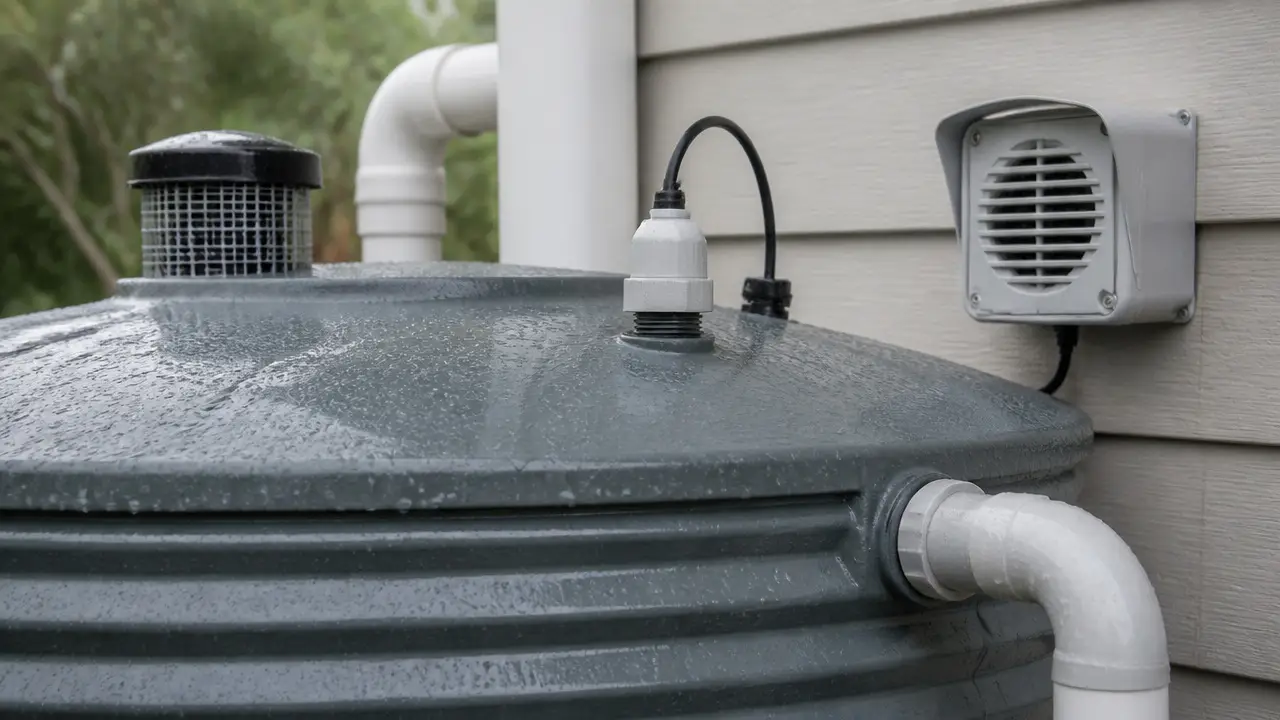
A proper overflow should carry excess water to a suitable drainage location. Depending on the property, that might mean reconnecting to an existing drainage route or using an appropriately sized overflow hose or pipe.
Keep overflow water away from places where it could cause trouble, including:
- Building foundations
- Crawl spaces
- Basement walls
- Neighboring property
- Areas that already drain poorly
- Walkways where standing water can become a hazard
An overflow opening that is much smaller than the incoming downspout can become a bottleneck during heavy rainfall.
A diverter that returns excess water to the original downspout can simplify overflow management, but only if it is installed and operating as intended.
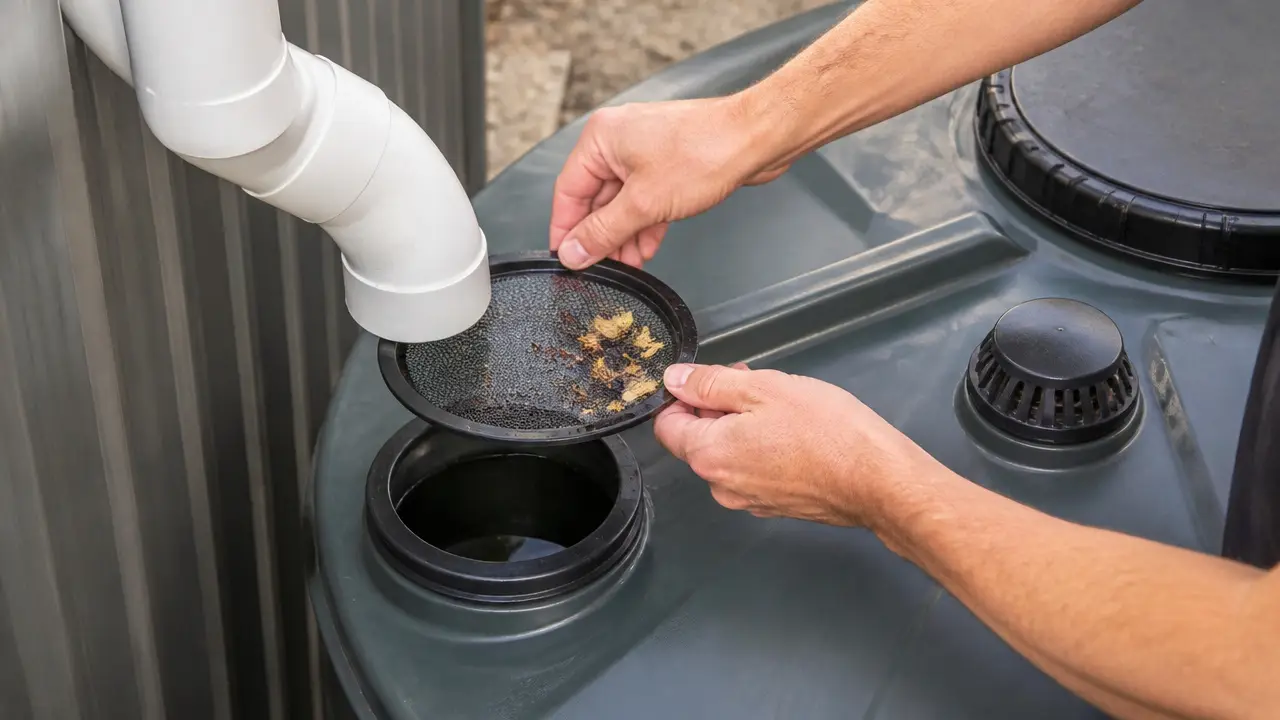
Keep Leaves and Mosquitoes Out
Roof runoff can carry leaves, grit, insects, bird droppings, roofing debris, and other contaminants.
A rain barrel inlet should normally be screened or otherwise protected from large debris and mosquitoes.
Check screens regularly. A clogged inlet can cause water to back up around the downspout connection instead of entering the barrel.
The barrel should also remain covered rather than having a large open top.
Collected roof runoff should not be assumed to be potable. Potable means suitable for drinking. A basic rain barrel screen or debris filter does not make roof runoff safe to drink.
Test the Installation With Water
You do not have to wait for a major storm to discover that the connection is poorly aligned.
If practical, test the downspout connection with a modest amount of water entering the gutter or downspout.
Watch the system rather than assuming it works.
Check whether:
- Water reaches the barrel inlet
- The diverter leaks
- The elbow stays in position
- Water backs up in the downspout
- The barrel connection leaks
- The overflow flows freely
- Water is being discharged near the foundation
Then inspect it again during the next normal rainfall.
A small test cannot reproduce the flow from a heavy storm, so the first significant rain is an important system check.
What If You Cut the Downspout Too Short?
A downspout that is slightly too short can often be repaired without replacing the entire vertical run.
Depending on the setup, you may be able to add:
- A downspout coupling
- A short matching downspout section
- An appropriate extension
- A flexible connector
The repair should remain securely supported and should not restrict drainage.
If you cut far above the intended connection point, replacing a section of downspout may provide a cleaner and more reliable result than trying to bridge a large gap with several improvised fittings.
What If You Want to Remove the Rain Barrel Later?
Think about this before cutting.
If you rent, move barrels seasonally, or expect to change the system later, a diverter arrangement may make restoring normal downspout drainage easier.
Keep any removed section of downspout if it is still usable. Labeling and storing it can make future changes easier.
You can also plan the cut around standard compatible fittings so you have a practical way to reconnect the downspout later.
Cold-Weather Considerations
Rain barrels in freezing climates often need seasonal attention.
Water trapped in the barrel, valves, hoses, fittings, or diverter can freeze and expand.
Some systems are disconnected or bypassed for winter so the downspout can return to its normal drainage route.
The correct method depends on the barrel and diverter design. Follow the equipment's cold-weather instructions rather than assuming a fitting is freeze-proof.
Also make sure winter drainage continues to carry roof water away from the building.
Common Downspout Cutting Mistakes
Cutting Before Positioning the Barrel
This is one of the easiest mistakes to avoid.
The barrel's base height changes the inlet height. Put the barrel in its final position first.
Ignoring the Fitting Length
Elbows and diverters need space.
Measure the complete connection rather than simply marking the height of the barrel opening.
Forgetting About Overflow
Getting water into the barrel is only half of the job.
You also need a safe path for water when the barrel is full.
Letting the Downspout Rest on the Barrel
The rain barrel should not be used as structural support for the home's downspout.
Keep the downspout properly attached to the building.
Leaving Sharp Metal Edges
Cut aluminum or steel can leave edges sharp enough to cause serious cuts.
Deburr exposed edges before finishing the installation.
Using an Open Barrel
A wide open barrel allows debris and insects to enter easily.
Use a covered barrel with a suitable screened inlet.
Assuming Rainwater Is Clean
Roof runoff can contain contaminants even when it looks clear.
Rain barrels are commonly used for non-potable purposes such as garden watering. Drinking-water systems require a much more complete approach to collection, treatment, testing, maintenance, and applicable local requirements.
Frequently Asked Questions
How high should I cut a downspout for a rain barrel?
There is no universal height. Put the barrel on its final base, locate its inlet, and measure using the actual diverter, elbow, or connector you plan to install. Include the fitting's overlap before marking the cut.
Can I cut an aluminum downspout with tin snips?
Suitable aviation or metal snips can cut many thin aluminum downspouts. Use a tool designed for the material, wear gloves and eye protection, and smooth sharp edges afterward.
Can I connect a downspout directly to a rain barrel?
Yes, a downspout can discharge through an elbow or extension into a suitable screened barrel inlet. The barrel still needs a safe overflow system for times when incoming water exceeds its remaining capacity.
Do I need a downspout diverter?
Not always. A direct connection can work, but a diverter may make it easier to preserve the original downspout drainage path and manage excess water. The best arrangement depends on the barrel, downspout, and drainage layout.
What happens when the rain barrel becomes full?
Additional roof runoff must leave through an overflow or continue through a properly designed diverter system. Do not depend on uncontrolled water spilling over the top of the barrel.
Should the downspout touch the rain barrel?
The downspout or connector can enter or align with the barrel inlet as required, but the barrel should not support the weight of the downspout. Keep the downspout securely attached to the building.
Can I reconnect the downspout if I remove the rain barrel?
Usually. You may be able to use a matching coupling and downspout section or reinstall a section you saved when making the original cut. Planning for this before cutting makes future changes easier.
Does collecting rainwater in a barrel make it safe to drink?
No. A rain barrel, inlet screen, or simple debris filter does not make roof runoff potable. Drinking-water use requires suitable collection, treatment, current water-quality testing, ongoing maintenance, and compliance with applicable local requirements.