As an affiliate, we may earn a commission from qualifying purchases. We get commissions for purchases made through links on this website from Amazon and other third parties.
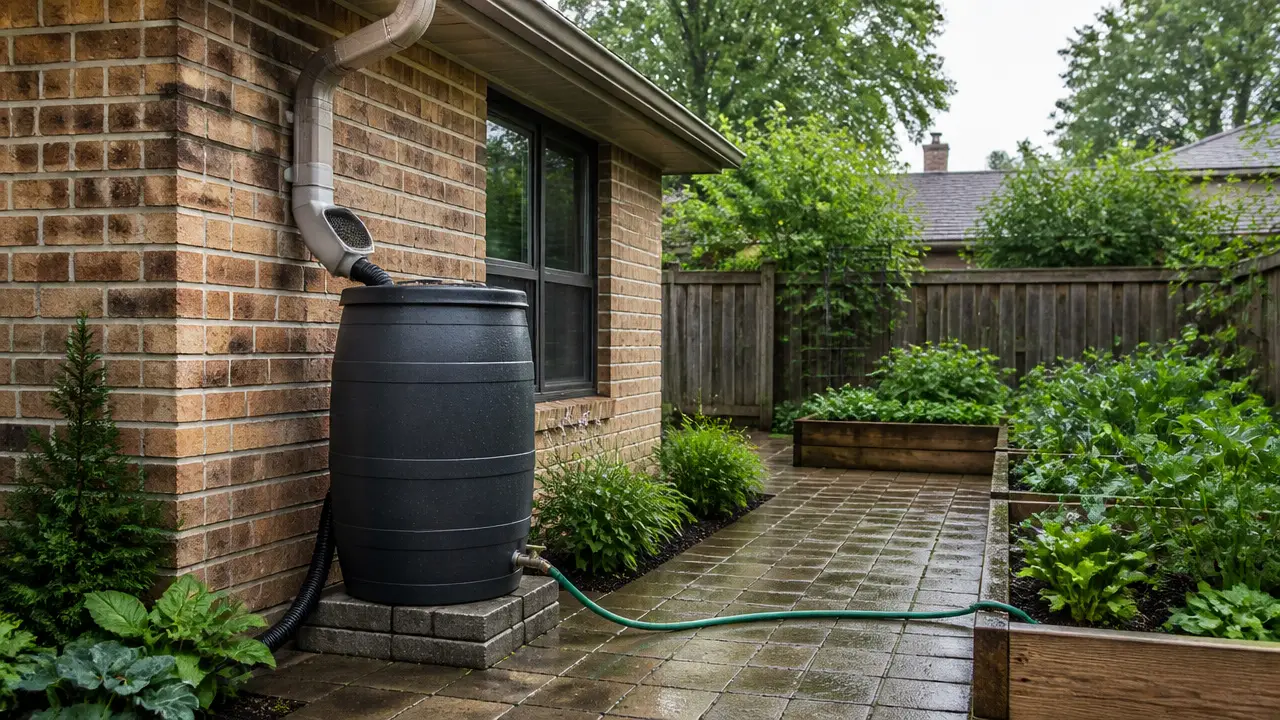
A rain barrel does not have to be attached to a gutter, but a gutter and downspout usually make rainwater collection much easier and more effective.
Without a gutter, you can still collect rainwater by placing a barrel where roof runoff naturally falls or by using another collection surface. The main challenge is getting water into the barrel without also collecting large amounts of dirt, leaves, insects, and splash debris.
Why Rain Barrels Are Usually Connected to Gutters
A roof collects rain over a much larger area than the opening of a rain barrel. Gutters gather that runoff and direct it toward a downspout.
Connecting the barrel to the downspout gives you several advantages:
- More rainwater reaches the barrel.
- Water enters through a controlled opening.
- A screen or filter can be added more easily.
- Overflow can be directed away from the house.
- The barrel does not need a large open top.
- Mosquitoes and debris are easier to keep out.
For most homes that already have gutters, connecting the rain barrel to a downspout is the simplest setup.
Can You Use a Rain Barrel Without Gutters?
Yes. There are several ways to collect rainwater without a gutter system.
Place the Barrel Under a Roof Drip Line
A barrel can be placed where water falls from the edge of a roof.
This is simple, but it has drawbacks. Water may fall across a wide area instead of directly into the barrel. Wind can also move the falling water away from the opening.
A wide collection opening or funnel can help, but the inlet should still have a secure screen to keep out leaves, insects, and other debris.
Do not leave an open barrel where children or animals could fall into it.
Add a Short Section of Gutter
You do not necessarily need gutters around the entire building.
For a shed, greenhouse, chicken coop, or small cabin, a short gutter along one part of the roof may provide enough collection area for a rain barrel. The gutter can feed a small downspout directly into the barrel.
This often gives better results than trying to catch water directly from the roof edge.
Use a Separate Catchment Surface
Rainwater can also be collected from a suitable dedicated surface rather than a house roof.
For example, a small shed roof may feed a garden barrel even when the main house has no gutters.
The materials used in the catchment area matter, especially if the water will be used around edible plants or for more sensitive purposes. Roof runoff can carry dirt, animal droppings, roofing particles, metals, and other contaminants.
A Barrel With No Roof Connection Collects Very Little Water
You can technically leave a rain barrel outside and collect only the rain that falls directly into it. However, this usually produces very little water.
For example, a barrel with a 2-foot-wide opening has only a few square feet of collection area. A section of roof may provide hundreds of square feet.
That difference matters because rainwater yield depends heavily on collection area.
A useful estimate for roof collection is:
Gallons collected = roof area in square feet × rainfall in inches × 0.623
That is the theoretical amount falling on the collection area. An actual system collects less because of splash, gutter losses, leaks, debris removal, first-flush diversion, and overflow.
For example, 100 square feet of roof receiving 1 inch of rain gets about 62 gallons of rain before losses. That is enough to fill a common rain barrel.
The barrel opening alone would collect only a small fraction of that amount.
You Do Not Always Need the Downspout to Empty Into the Barrel
Connecting a rain barrel to a gutter does not necessarily mean cutting the downspout and placing its open end inside the barrel.
Another option is a downspout diverter. It sends some water from the downspout through a hose or fitting into the barrel.
When the barrel fills, some diverter systems allow excess water to continue through the original downspout.
This can make overflow management easier, but the diverter, hose, barrel inlet, and downspout must be compatible.
Plan the Overflow Before Installing the Barrel
Whether the barrel is connected to a gutter or catches water another way, it needs a safe overflow path.
A roof can deliver water faster than many people expect. Once the barrel is full, incoming rain has to go somewhere.
Overflow should not:
- collect against the house foundation
- wash soil away from the barrel
- flood a basement or crawl space
- create a muddy walkway
- flow toward a neighboring property
- undermine the barrel's base
A dedicated overflow hose or pipe can carry excess water to a suitable drainage area.
If you use a downspout diverter, check how that specific type handles a full barrel. Do not assume every diverter automatically sends all excess water back through the downspout.
Keep Debris and Mosquitoes Out
Regarding using a rain barrel without a gutter, understand collection design for forecast rainfall and debris loads.
Roof runoff often carries leaves, seeds, grit, insects, and animal debris.
A rain barrel should have a covered inlet with a fine, durable screen. Openings around hoses, overflow fittings, and lids should also be protected from mosquitoes.
A leaf screen or downspout filter can remove larger debris before it enters the barrel. These devices still need regular cleaning.
A first-flush diverter is another option. A first flush diverts the first portion of runoff from a rain event because that water often carries more debris that accumulated on the roof between rains.
A first-flush device can reduce some contamination entering storage, but it does not make rainwater automatically safe to drink.
Make Sure the Barrel Has a Stable Base
A full rain barrel is heavy.
Water weighs about 8.3 pounds per gallon. A 55-gallon barrel can therefore contain more than 450 pounds of water, not including the weight of the barrel and its hardware.
Place it on a firm, level base that can support the load.
If you raise the barrel to improve gravity flow, use a platform designed for the full weight. Do not balance a filled barrel on loose blocks, unstable lumber, or soft soil.
Does the Barrel Need to Be Right Next to the Downspout?
Not necessarily.
A barrel can sometimes sit several feet away if water is carried to it through suitable piping or a diverter hose.
However, longer connections introduce more chances for:
- sagging hoses
- trapped water
- clogs
- leaks
- poor drainage
- freezing problems
Keeping the barrel reasonably close to the collection point usually makes the system easier to maintain.
What If Your House Has No Gutters?
If you want to collect a useful amount of rainwater, adding at least a small gutter section is often worth considering.
For a simple garden system, the basic path can be:
Roof → gutter → downspout or diverter → screened barrel inlet → storage → overflow
The system does not have to be complicated.
Before adding gutters, make sure the roof edge, fascia, mounting points, and drainage layout are suitable. Larger or unusually high installations may be better handled by a qualified installer.
Think About How You Will Use the Water
The best collection setup depends partly on what you intend to do with the rainwater.
For watering ornamental plants, a simple screened barrel may meet your needs.
Water used on an edible garden deserves more attention to the roof material, contaminants, storage cleanliness, and how the water is applied.
Indoor use involves additional plumbing and water-quality concerns. Drinking-water use is much more demanding. Roof runoff should never be assumed potable, meaning safe to drink.
A drinking-water system requires suitable collection materials, appropriate treatment stages, maintenance, current laboratory testing, and compliance with applicable local requirements. A basic rain barrel filter or screen does not establish drinking-water safety.
Frequently Asked Questions
Can I put a rain barrel directly under the edge of my roof?
Yes. A barrel can catch runoff directly from a roof edge, but collection is less controlled than with a gutter. Use a secure screened inlet and make sure splashing and overflow will not cause drainage problems.
Will a rain barrel fill without a gutter?
It can. If it only catches rain falling directly into the barrel opening, however, it will fill much more slowly than a barrel collecting runoff from a roof.
Do I need a downspout diverter?
No. A downspout can sometimes feed a barrel directly. A diverter can make installation and overflow management more convenient in some systems.
Can one gutter feed multiple rain barrels?
Yes. Barrels can be connected together or supplied through a suitable distribution arrangement. The connecting fittings and hoses must be large enough for the expected flow, and every barrel needs secure mosquito protection and adequate overflow planning.
Should rain barrels have lids?
Yes. A secure lid helps keep out debris, animals, and children. Water-entry and overflow openings should be screened against mosquitoes.
What happens when a rain barrel gets full?
Additional rain must leave through an overflow system or return to the normal drainage path through a suitable diverter. Overflow should be directed somewhere that will not damage the building or surrounding soil.
Can rain barrel water be used for drinking?
Do not assume roof-collected rainwater is safe to drink. Drinking-water use requires a properly designed collection and treatment system, suitable materials, regular maintenance, current laboratory testing, and compliance with applicable local requirements.