As an affiliate, we may earn a commission from qualifying purchases. We get commissions for purchases made through links on this website from Amazon and other third parties.
Yes, you can hang a rain chain without gutters. But it only works well when the roof already sends water toward one clear discharge point.
A normal gutter collects runoff from a wide section of roof and feeds it into a downspout. A rain chain replaces that downspout. Without a gutter, there may be nothing to concentrate the water onto the chain. Water can simply fall from the whole roof edge instead.
If your goal is to move roof runoff into a rain barrel or keep water from splashing near the house, the way the roof sheds water matters more than the rain chain itself.
How a Rain Chain Works Without a Gutter
A rain chain guides water downward using surface tension. Water clings to the links, cups, or other shapes and follows the chain toward the ground.
For this to happen, water needs to land close to the top of the chain.
With a gutter system, that is easy:
Roof → gutter → outlet → rain chain
Without gutters, the setup becomes:
Roof → concentrated drip point → rain chain
The important part is the concentrated drip point.
If runoff leaves a 10-foot-wide roof edge evenly, hanging one chain in the middle will not collect most of it. The chain may catch some water, but much of the runoff will fall around it.
When a Gutterless Rain Chain Can Work
A rain chain can work without gutters when the roof naturally concentrates water in one place.
Common situations include:
- A roof valley that directs runoff toward one corner
- A small porch or shed roof with a narrow drainage point
- A roof design with a built-in channel or scupper
- A short roof edge where runoff naturally collects near one spot
- A small diverter that directs part of the roof runoff toward the chain
Watch the roof during a moderate rain before installing anything. You can usually see whether water forms one strong stream or falls along most of the roof edge.
That observation tells you far more than the appearance of the roof when it is dry.
When It Usually Does Not Work Well
A rain chain alone is usually a poor replacement for gutters on a long roof edge.
If water comes off the entire edge, one chain cannot gather it. You may still get:
- Water splashing against siding
- Soil erosion below the roof
- Puddles beside the foundation
- Runoff missing a rain barrel
- Water pouring past the chain during heavy rain
Adding several chains can spread the runoff among more locations, but they still do not perform the collection job of a continuous gutter.
If your main concern is managing a large amount of roof runoff, a properly sized gutter and drainage system is usually the more dependable approach.
You May Need a Roof Runoff Diverter
For some roofs, a small runoff diverter can send water toward a rain chain without installing a full gutter.
A diverter is a raised or angled section that redirects water moving down the roof.
This can work for a limited drainage area, but it needs careful placement. A poorly placed diverter can push water under roofing materials or cause water to collect where it should not.
Avoid drilling or fastening through roofing unless the installation method is appropriate for that roof system. Roof penetrations can become leak points.
If modifying shingles, metal roofing, flashing, or a roof valley is required, a roofing professional can help prevent drainage and leak problems.
Where to Position the Chain
Place the top of the rain chain directly below the point where the strongest stream leaves the roof.
Do not assume that the lowest-looking corner is the right location. Watch the roof during rain if possible.
The chain should hang nearly vertical. Its bottom should also be controlled so wind cannot repeatedly swing it into:
- Windows
- Siding
- Posts
- Vehicles
- Walkways
Many installations anchor the bottom to a basin, stake, drain, or other secure point.
Remember that strong wind can push falling roof water sideways. Even a correctly positioned chain may not catch every drop during windy rain.
Make Sure the Water Has Somewhere to Go
Managing the bottom of the chain is just as important as catching water at the top.
Do not simply move roof runoff down a chain and leave it beside the foundation.
Depending on the site, the chain can discharge into:
- A drainage basin
- A gravel splash area
- An appropriate surface drain
- A landscaped area that can safely receive runoff
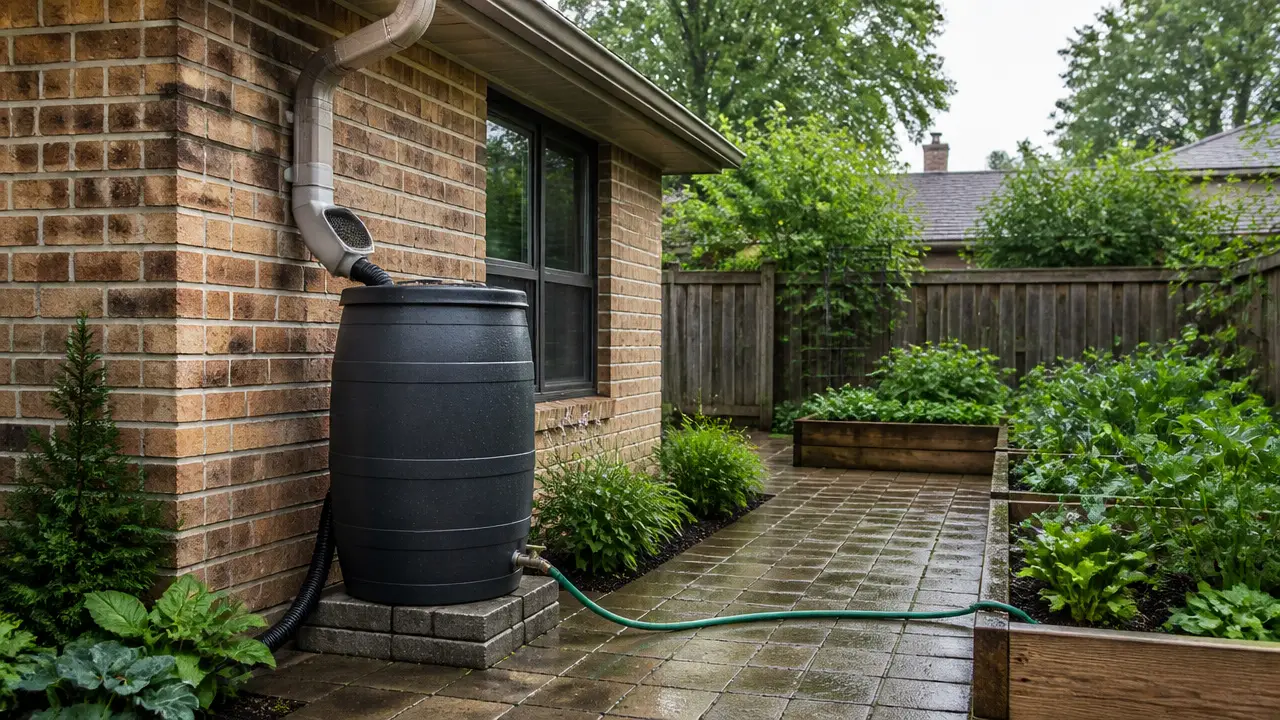
- A rain barrel or other storage tank
The discharge area should allow water to move away without causing erosion or persistent pooling near the building.
Using a Rain Chain With a Rain Barrel
You can direct a gutterless rain chain toward a rain barrel, but collection may be unreliable unless runoff is well concentrated.
A barrel also needs an overflow path.
Once the barrel is full, every additional gallon has to go somewhere. Overflow should be directed to a safe drainage area rather than allowed to spill against the house.
If you are collecting roof runoff for later use, remember that rainwater can pick up dirt, bird droppings, roofing debris, pollen, and other contaminants. Storage and treatment choices should match the intended use of the water.
Consider How Much Roof Water You Are Handling
Roof runoff can become substantial during heavy rain.
Check rain-chain performance without conventional gutters to evaluate roof drainage that protects the foundation before storage.
A useful estimate for rainwater collection is:
Gallons ≈ roof area in square feet × rainfall in inches × 0.623
For example, 100 square feet of roof receiving 1 inch of rain has a theoretical yield of about:
100 × 1 × 0.623 = 62.3 gallons
Actual collected water will be lower because of losses such as splash, wet roofing, diversion, overflow, and incomplete capture.
This explains why a small stream during light rain can become much harder to control during a storm.
If a large roof section drains toward one point, a decorative chain or small basin may not be enough.
Cups or Link-Style Chains?
Both can work without gutters if water reaches them properly.
Cup-style chains
Cups give water more surface area to contact and may catch a concentrated stream more easily. They can also reduce some splashing compared with an open chain.
They still have limits during heavy rainfall.
Link-style chains
Simple links are lighter and visually less bulky, but water may separate from them more easily when runoff is fast, windy, or poorly aimed.
Neither design solves the main problem of gutterless installations: getting roof runoff to the top of the chain.
Watch for Splash and Erosion
Rain chains do not contain water the way enclosed downspouts do.
Some splashing is normal.
That matters more when the chain is close to:
- Wood siding
- Doors
- Windows
- Foundations
- Walkways
- Soil that erodes easily
A basin or gravel area at the bottom can help control splash and reduce soil erosion.
Observe the installation during real rain. Light testing with a hose may show where water travels, but it may not reproduce the volume or wind conditions of a storm.
What About Freezing Weather?
Rain chains can collect ice in freezing conditions.
Ice adds weight and can increase the load on the mounting point. It can also create falling-ice hazards or allow the chain to strike nearby surfaces in wind.
In freezing climates, make sure the support is suitable for expected loads and keep the chain away from paths and entrances where ice could create a hazard.
Do not assume a rain chain provides freeze protection for a rain barrel, drain, or other connected system.
Is a Rain Chain Without Gutters Worth Doing?
It can be.
A gutterless rain chain makes the most sense when a small roof already produces a concentrated stream of water and you want to guide that stream to a controlled drainage area.
It makes less sense when you are trying to collect runoff from a broad roof edge. In that situation, the missing gutter is the main limitation.
Before installing the chain, answer three questions:
- Where does the roof actually discharge water?
- Can that water reliably reach the top of the chain?
- Where will the water go after it reaches the bottom?
If all three have good answers, a rain chain can work without gutters. If the first answer is "all along the roof edge," you will usually need some form of collection or diversion before the chain can do much useful work.
Frequently Asked Questions
Can a rain chain replace gutters completely?
Usually not. A rain chain guides concentrated water downward, while a gutter collects water from a much wider roof area. A gutterless chain works best where the roof already concentrates runoff at one point.
Can I attach a rain chain directly to the roof?
A chain needs a secure support, but fastening directly through roofing can create leak problems. The correct mounting method depends on the roof and fascia construction. Avoid unnecessary roof penetrations.
How do I get roof water onto a rain chain without gutters?
Use a location where runoff naturally concentrates or, when appropriate, a properly installed runoff diverter. Watch the roof during rain to identify the actual drainage path before choosing the chain location.
Can I put a rain barrel under a gutterless rain chain?
Yes, but the barrel will only collect water that reaches the chain. You also need a screened inlet where appropriate and a safe overflow route for water once the barrel fills.
Will a rain chain stop erosion around my house?
Not by itself. It can concentrate water into a controlled location, but the bottom still needs suitable drainage, such as a basin, gravel area, drain, or other method that carries or absorbs water safely.
Do rain chains splash more than downspouts?
Generally, yes. Rain chains are open to the air, so some water can splash or blow away from them. Placement and a suitable basin can help limit the problem.
Can I use a rain chain on a metal roof without gutters?
Yes, but metal roofs can shed water quickly. The chain needs to be positioned where runoff is concentrated, and the drainage point must be able to handle the resulting flow. Avoid modifying the roof in ways that could damage panels, coatings, seams, or flashing.