As an affiliate, we may earn a commission from qualifying purchases. We get commissions for purchases made through links on this website from Amazon and other third parties.
You can hang a rain chain from a gutter outlet, but simply attaching the chain and letting water fall wherever it lands is usually not enough. A useful rain-chain setup also needs a secure attachment, a clear path for the water, and a way to handle runoff at ground level.
Rain chains work best as an alternative to a downspout in places where roof runoff is moderate and splashing will not damage siding, foundations, walkways, or landscaping.
What a Rain Chain Actually Does
A rain chain guides water from a gutter toward the ground.
Instead of sending water through an enclosed downspout, the water travels along cups, links, or other shapes in the chain. The moving water can be attractive, especially during light and moderate rain.
But a rain chain does not make roof runoff disappear. All the water collected by that part of the roof still has to go somewhere.
That means the bottom of the rain chain matters almost as much as the top.
Can You Hang a Rain Chain Directly From a Gutter?
Usually, yes, provided the gutter has a suitable outlet and the attachment is secure.
A common arrangement is:
- Roof runoff enters the gutter.
- Water reaches the gutter outlet.
- An outlet adapter or hanger supports the rain chain.
- Water travels down the chain.
- A basin, drain, gravel area, or other drainage system handles the water below.
Do not assume the gutter itself can support any amount of weight. A long metal rain chain becomes heavier when wet, and ice can add much more weight in freezing weather.
The attachment should transfer the load to a suitable part of the gutter system without bending the outlet or pulling the gutter away from the fascia.
Why You Should Not Just Hook It Anywhere
A rain chain needs to sit below the point where the gutter is meant to drain.
Hanging one over the edge of a gutter without a proper outlet can cause water to:
- run behind the chain
- spill over the gutter
- wet the fascia
- splash against siding
- miss the chain during heavy rain
A proper outlet helps direct the water onto the chain.
If you are replacing an existing downspout, the existing gutter opening may work with a suitable rain-chain adapter. Check the opening size and shape before choosing the connection.
Avoid cutting or modifying a gutter unless you understand how the outlet will be sealed and supported.
The Bottom of the Rain Chain Needs a Plan
This is the part that is easy to overlook.
A downspout normally carries water away from the house. Replacing it with a rain chain should not mean dumping that same water next to the foundation.
Depending on the site, the bottom of the chain may lead to:
- a gravel-filled drainage area
- a decorative basin with controlled overflow
- a suitable surface drain
- a landscape area designed to accept runoff
- a rain barrel or other storage system
The right choice depends on how much water that part of the roof produces and where the overflow can safely go.
A Decorative Bowl Is Not Automatically Drainage
A small bowl may look good under a rain chain, but it can fill very quickly.
Once full, it simply overflows.
If the bowl sits beside the foundation, you may end up concentrating roof runoff exactly where you do not want it.
Treat a basin as part of the drainage system, not just decoration. Give it a safe overflow path.
How Much Water Will the Rain Chain Handle?
A rain chain does not have a single universal flow capacity.
Performance depends on:
- the design of the chain
- the gutter outlet
- roof area draining to that outlet
- rainfall intensity
- wind
- chain length
- whether the chain stays vertical
Cup-style rain chains generally control water better than simple open links because the cups help catch and direct the flow. Even so, very heavy runoff can overwhelm the chain and cause splashing.
A large roof section draining through one outlet can send a surprising amount of water through that location.
Before replacing a downspout, consider how much roof drains toward it. A rain chain that works well under a small porch roof may behave very differently under a large roof valley.
Keep the Rain Chain Straight
Rain chains work best when they hang nearly vertical.
Wind can move an unsecured chain away from the gutter outlet. That can increase splashing and cause the chain to strike siding, windows, railings, or other surfaces.
The bottom can often be stabilized using an appropriate anchor or a connection to the drainage feature below.
The chain should normally have some controlled tension, but it should not be pulled so tightly that it places unnecessary force on the gutter.
Watch for Splashing
Some splashing is normal.
The question is where that water lands.
A rain chain may be a poor choice if the outlet is very close to:
- wood siding
- doors
- windows
- finished walls
- electrical equipment
- narrow walkways
- areas where repeated wetting would be a problem
Study practical considerations for a rain chain have to be attached to a gutter to coordinate the runoff route between the catchment and storage.
Splashing can also make nearby pavement slippery.
If water hitting the chain or basin repeatedly soaks the wall, moving the drainage point or keeping a conventional downspout may be the better solution.
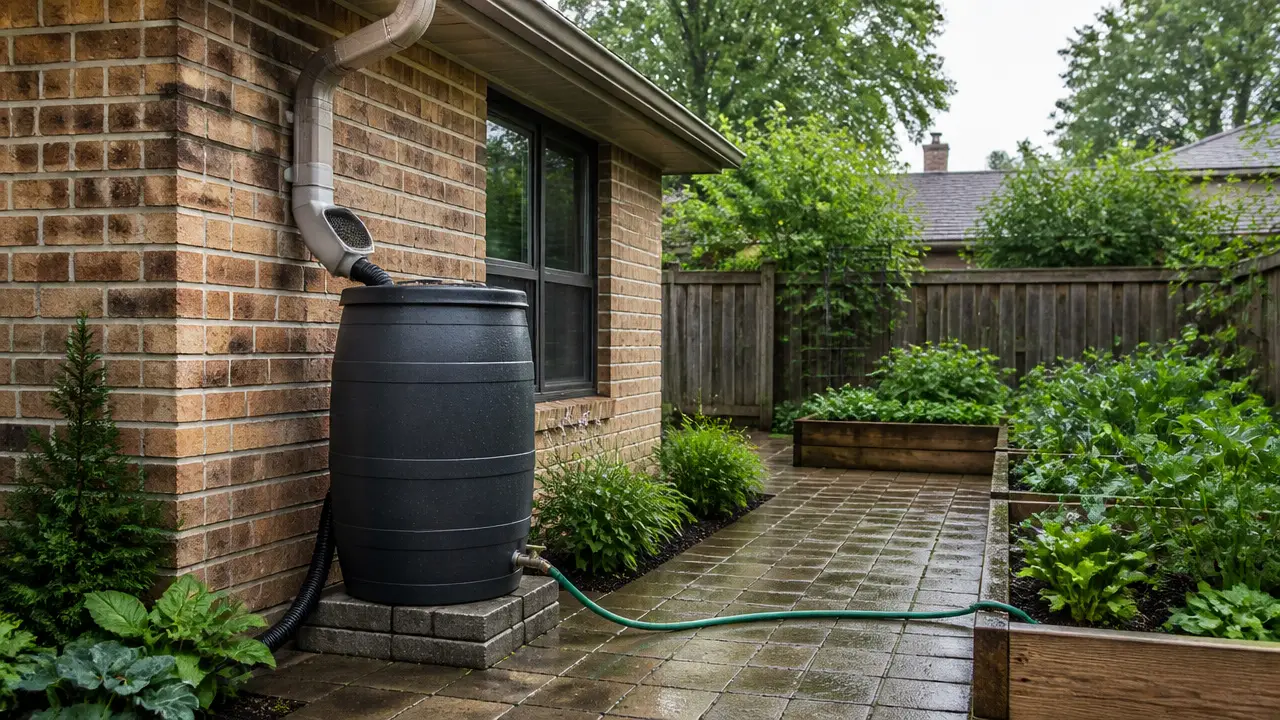
Can a Rain Chain Feed a Rain Barrel?
It can, but the connection needs more planning than simply placing a barrel under the chain.
The barrel must have an inlet that can receive the falling water without allowing excessive splash or debris into storage. It also needs a screened opening and a reliable overflow route.
Roof runoff can carry leaves, dirt, insects, bird droppings, roofing particles, and other contaminants. A rain chain does not filter the water.
For garden storage, suitable screens and debris controls can make maintenance easier.
If the water is intended for drinking or other potable use, a rain chain alone has no role in making the water safe. Potable means water suitable for drinking. Drinking-water use requires a suitable collection system, treatment appropriate to the hazards involved, ongoing maintenance, current laboratory testing, and compliance with applicable local requirements.
What Happens in Freezing Weather?
Freezing climates require extra care.
Water can freeze on the chain and create a heavy column of ice. That additional load may strain:
- the rain-chain hanger
- gutter outlets
- gutter brackets
- fascia attachments
Ice can also fall from the chain.
If significant freezing is common where you live, consider whether a rain chain is suitable for that location and how the manufacturer expects it to be handled during winter.
Do not work beneath heavy hanging ice or climb onto an icy roof or ladder to clear it.
Does the Gutter Still Need Maintenance?
Yes.
A rain chain does not replace normal gutter maintenance.
Leaves and debris can clog the gutter outlet above the chain. When that happens, water may back up and spill over the gutter instead of traveling down the chain.
Periodically check:
- the gutter
- the outlet
- the hanger
- chain connections
- the bottom anchor
- the basin or drain
- the overflow route
Also look for signs that runoff is eroding soil or collecting close to the foundation.
When a Downspout Is the Better Choice
Rain chains are attractive, but they are not automatically better than downspouts.
Keep or use a conventional downspout when you need to move a large amount of roof runoff efficiently or when the water must travel horizontally away from the building.
A downspout is often the safer choice when:
- a large roof area drains to one outlet
- heavy rain is common
- the outlet is close to vulnerable siding
- wind frequently moves hanging objects
- runoff must be carried well away from the foundation
- winter ice loads are a concern
You can also use rain chains only on selected outlets rather than replacing every downspout.
A Simple Rain-Chain Setup
For a basic installation, think about the whole path rather than just the chain:
Gutter outlet → secure hanger → rain chain → stabilized bottom → drainage or storage → safe overflow
If each part has a clear job, a rain chain can be a practical way to guide roof runoff.
If the plan stops at "hang the chain," there is probably still some drainage work to do.
Frequently Asked Questions
Can you hang a rain chain without a gutter?
Sometimes, but it is harder to control the water. Rain chains work best when a gutter and outlet concentrate runoff onto the top of the chain. Water falling directly from a roof edge may miss the chain, especially in wind.
Does a rain chain need to touch the ground?
No. It can end above a basin, drain, or other collection point. However, stabilizing the bottom often helps prevent the chain from swinging in wind.
Do you need to anchor a rain chain?
An anchor is often useful, especially for long chains or windy locations. It helps keep the chain aligned with the gutter outlet and reduces swinging. The attachment should not place excessive tension on the gutter.
Can a rain chain replace any downspout?
Not always. Large roof areas, high runoff rates, strong winds, vulnerable walls, and drainage requirements may make an enclosed downspout more suitable.
What should you put under a rain chain?
Use something that can safely receive and manage the runoff, such as a properly drained gravel area, basin with an overflow route, surface drain, or suitable rainwater storage system. Avoid concentrating water beside the foundation.
Do rain chains splash water?
Yes. Some splash is normal, and open-link chains may splash more than designs that better contain the flow. Keep them far enough from surfaces that should not stay wet.
Can you collect rainwater from a rain chain?
Yes. A rain chain can direct roof runoff toward a rain barrel or other storage container. The storage system still needs suitable screening, overflow control, cleaning, and treatment appropriate to the intended use.