As an affiliate, we may earn a commission from qualifying purchases. We get commissions for purchases made through links on this website from Amazon and other third parties.
Rain chains can work for rainwater collection, but they do not collect water by themselves. They replace a downspout and guide roof runoff from the gutter down to a rain barrel, tank, basin, or drain.
For a small rain barrel or garden system, a rain chain can work well when it is sized for the roof area and local rainfall. For large roofs, heavy storms, or systems where you need to capture as much water as possible, a closed downspout is usually more dependable.
How a Rain Chain Works
A rain chain hangs from the outlet in a roof gutter. Water leaves the gutter and follows the chain toward the ground.
There are two common styles:
- Link chains let water run along connected metal links.
- Cup chains use small cups that catch water and spill it into the cup below.
Cup-style chains usually control water better than simple links. They can reduce splashing and keep more water moving toward a collection container.
The bottom of the chain can end above:
- A rain barrel
- A storage tank inlet
- A decorative basin
- A gravel drainage area
- A pipe that leads to a larger cistern
For rainwater harvesting, the important part is what happens at the bottom. The chain must deliver water into an inlet that can accept the expected flow.
Rain Chains vs. Downspouts for Collection
A rain chain and a downspout can both move roof runoff downward, but they behave differently.
| Feature | Rain Chain | Closed Downspout |
|---|---|---|
| Guides water downward | Yes | Yes |
| Works with rain barrels | Yes | Yes |
| Controls splashing | Moderate | Better |
| Handles heavy flow | Depends on design | Usually better |
| Keeps water contained | Partly | Yes |
| Easy to connect to pipe | Less direct | Easier |
| Decorative appearance | Often | Usually not |
A downspout surrounds the water with a pipe. This gives the runoff fewer chances to blow sideways or splash away.
A rain chain leaves the water exposed. Wind and heavy rainfall can therefore reduce how much reaches your barrel or tank.
Can a Rain Chain Fill a Rain Barrel?
Yes. A rain chain can feed a rain barrel if the barrel inlet is positioned correctly.
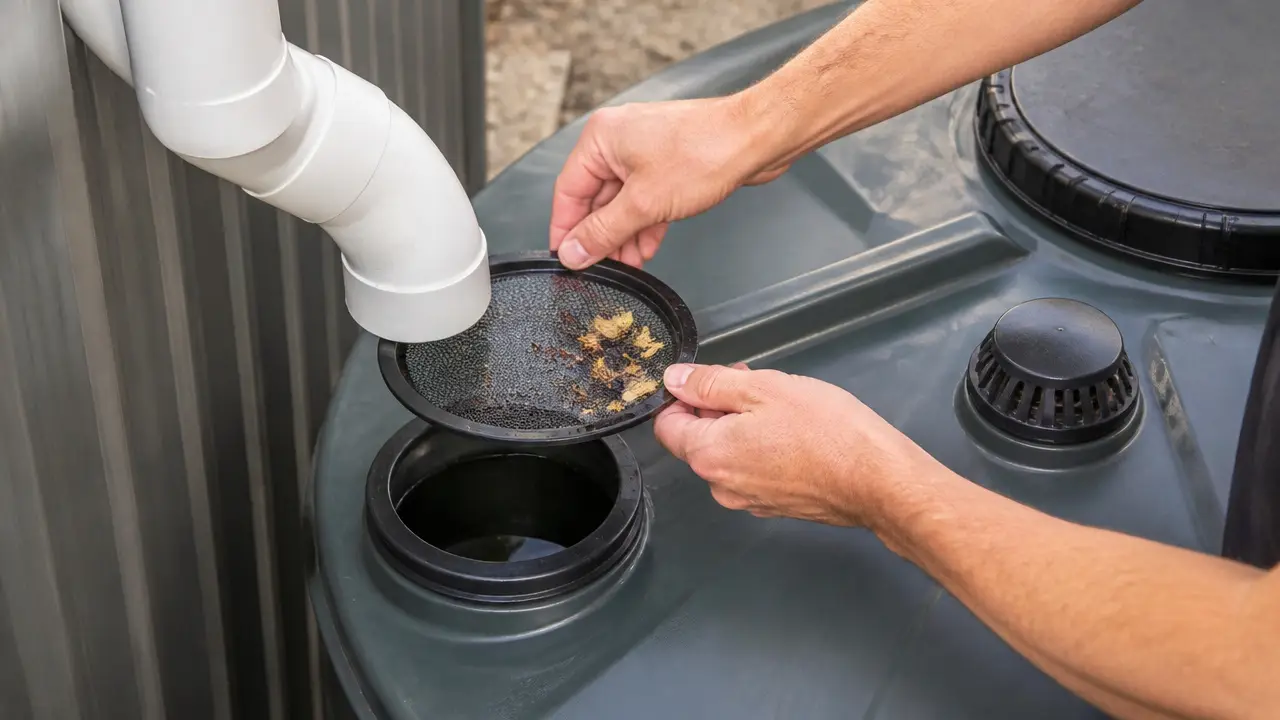
The barrel should have a screened opening large enough to receive the falling water. The screen helps keep leaves, insects, and larger debris out of the barrel.
Avoid relying on a tiny opening directly under the chain. During a strong storm, water may splash around it instead of entering the barrel.
A funnel-shaped inlet or wide screened top can make the system more forgiving.
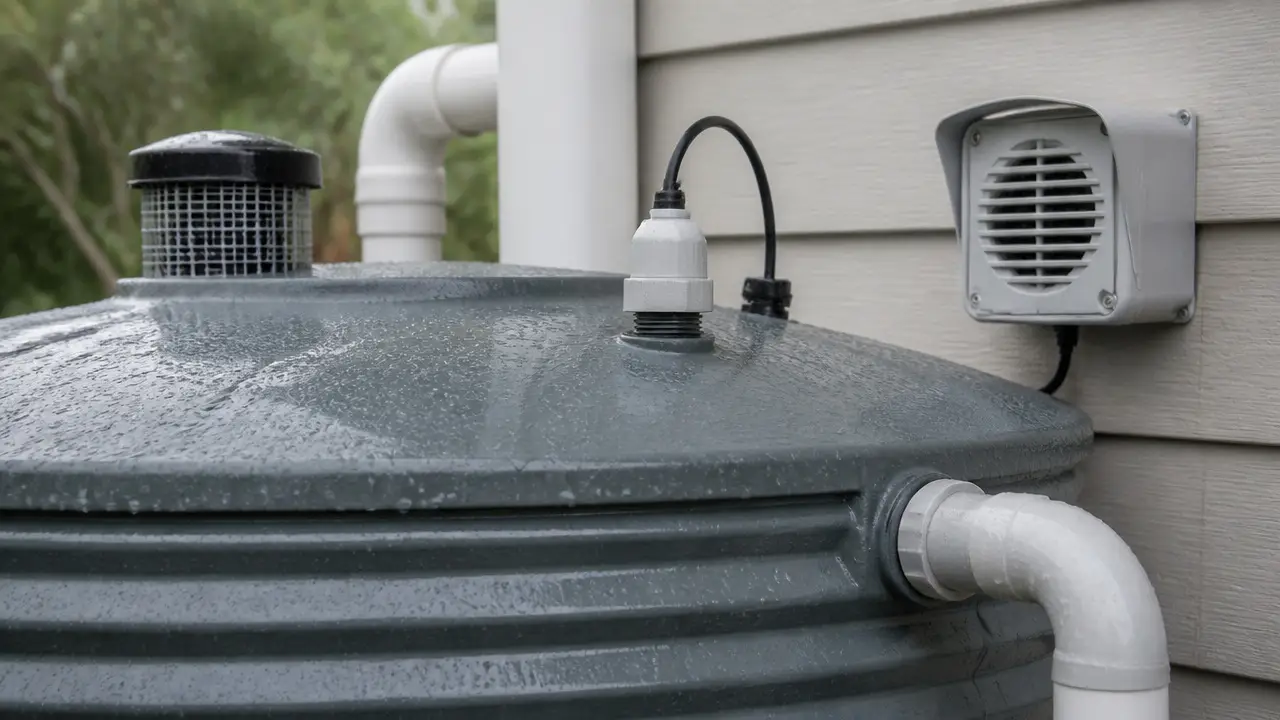
You also need an overflow. Once the barrel becomes full, incoming roof runoff needs somewhere safe to go. Route overflow away from foundations and other places where standing water could cause problems.
How Much Rainwater Can You Collect?
The rain chain does not determine the total amount of water available. Roof area and rainfall do.
A useful estimate is:
Gallons collected = roof area in square feet × rainfall in inches × 0.623
For example, 500 square feet of roof receiving 1 inch of rain has a theoretical yield of about:
500 × 1 × 0.623 = 312 gallons
Real collection will be lower. Some water is lost to roof wetting, gutter overflow, leaks, splashing, wind, debris, and any first-flush system.
A rain chain may add more splash and wind loss than an enclosed downspout.
This also shows why a typical rain barrel can fill quickly. Even a modest roof section can produce far more water than one barrel can hold during a good storm.
When Rain Chains Work Best
Rain chains are most practical when they serve a fairly small section of roof and rainfall intensity is moderate.
They can be a good fit when:
- You want to fill a rain barrel for garden watering.
- The gutter outlet handles only part of the roof.
- The collection opening below the chain is wide.
- Wind around the building is limited.
- The chain is securely anchored.
- Some collection loss is acceptable.
They can also work as the visible first part of a larger system. For example, the chain can empty into a basin that drains through piping into a storage tank.
When a Downspout May Be Better
Keep or install a closed downspout when capturing water efficiently matters more than appearance.
A downspout is usually the better choice when:
- A large roof area drains through one outlet.
- Heavy storms are common.
- Strong winds can blow water away from the chain.
- Water must travel through piping to a remote tank.
- The outlet is close to walls, doors, or foundations.
- Splashing could damage nearby surfaces.
- You want to send water through a downspout diverter.
A rain barrel diverter is especially easy to use with a conventional downspout because the water remains inside the pipe.
Make Sure the Gutter Outlet Can Handle the Flow
The rain chain is only one part of the drainage path.
Water travels through:
roof → gutter → outlet → rain chain → collection inlet → storage → overflow
Every part must handle the incoming flow.
Installing a decorative chain does not help if the gutter outlet is too small and the gutter overflows during storms. Likewise, a large rain chain cannot make a narrow barrel inlet accept more water.
Roof size, roof slope, gutter size, outlet size, and rainfall intensity can all affect peak flow.
Explore the drainage difference between chains and downspouts to evaluate roof drainage that protects the foundation before storage.
For unusually large roof sections or intense storms, a gutter or drainage professional can help check whether the system has enough capacity.
Reduce Splashing Around the Collection Point
Splash is one of the main problems with rain chains.
If the chain feeds a barrel, place the chain close enough to the inlet that wind cannot easily push the stream away. A wide screened inlet also gives the water a larger target.
If the chain ends at ground level, use a basin, stone bed, or other drainage method designed for the site. Do not allow repeated runoff to soak the soil beside the foundation.
The bottom of the chain should also be secured when needed. An unsecured chain can swing in strong wind and send water in unexpected directions.
Keep Debris Out of the System
Rain chains do not replace normal rainwater prefiltration.
Leaves, twigs, roof grit, bird droppings, insects, and other material can wash from a roof into the gutter. Use appropriate gutter screens, inlet screens, or other debris controls when needed.
Some systems also use a first flush device. A first-flush system diverts an initial portion of roof runoff before later water enters storage. It can reduce some of the material washed from the roof, but it does not make rainwater safe to drink.
Check the chain and gutter periodically for:
- Leaves
- Seed pods
- Ice
- Bird nests
- Corrosion
- Loose mounting hardware
- Clogged barrel screens
Cup-style chains may need extra cleaning because debris can collect inside individual cups.
What About Freezing Weather?
Rain chains can develop ice in freezing conditions.
Ice adds weight to the chain, gutter outlet, and supporting hardware. It can also block the normal path of water during freeze-and-thaw cycles.
Do not assume a decorative gutter fitting is designed to support a large ice load.
If freezing weather is common, make sure the chain, gutter, brackets, and attachment point are suitable for local conditions. Seasonal removal may make sense for some installations.
Rain barrels and exposed water lines may also need winter preparation. The rain chain alone does not protect the rest of the harvesting system from freezing.
Can Rain-Chain Water Be Used for Drinking?
A rain chain does not make roof runoff potable.
Potable means suitable for drinking. Roof runoff can pick up contaminants from roofing materials, animals, airborne pollution, gutters, storage tanks, and other parts of the system.
A rain chain may also leave the flowing water more exposed to the surrounding environment than an enclosed downspout.
Water intended for drinking requires a whole-system approach. That can include suitable collection surfaces, debris control, appropriate treatment stages, protected storage, maintenance, and current laboratory testing. Local requirements may also apply.
For a simple rain-chain system, non-potable uses such as garden irrigation are generally much less complicated than designing a drinking-water system.
Is a Rain Chain Worth Using for Rainwater Harvesting?
A rain chain can be a practical way to guide water into a rain barrel while giving the gutter system a more decorative appearance.
The main tradeoff is control.
A closed downspout contains the water and usually handles high flow, wind, and plumbing connections more predictably. A rain chain exposes the water, so some splashing and collection loss should be expected.
For a small garden rain barrel, that may not matter much. For a large cistern where you want to capture as much runoff as possible, a conventional downspout and enclosed piping will usually be the simpler choice.
Frequently Asked Questions
Do rain chains collect as much water as downspouts?
Not always. Wind and splashing can cause some water to miss the collection inlet. An enclosed downspout generally gives you better control of the runoff.
Can I put a rain chain directly over a rain barrel?
Yes. Use a wide, screened barrel inlet and position the chain so water falls into the opening. Make sure the barrel also has a safe overflow path.
Are cup rain chains better for rainwater collection?
Cup-style chains often control water better than simple link chains because each cup catches and directs part of the flow. Their actual capacity still depends on the chain design and rainfall intensity.
Can a rain chain handle heavy rain?
Some can handle substantial flow, but very heavy runoff may splash or jump away from the chain. Large roof areas and intense storms are usually better served by properly sized downspouts.
Do I need a first-flush diverter with a rain chain?
Not for every non-potable system, but it may be useful when reducing the first wash of roof debris is important. A first-flush device does not make collected rainwater safe for drinking.
Can I connect a rain chain to an IBC tote?
Yes, provided the bottom of the chain drains into a suitable screened inlet or piping arrangement. Avoid leaving the tote inlet open, and provide overflow capacity for storms that produce more water than the tote can hold.
Should the bottom of a rain chain touch the ground?
It does not have to. The important issue is controlling the water at the bottom. The chain can end above a barrel, basin, drain, or other collection point. Anchoring the lower end may help prevent swinging in windy conditions.