As an affiliate, we may earn a commission from qualifying purchases. We get commissions for purchases made through links on this website from Amazon and other third parties.
A rainwater tank pump usually keeps running because the system is still calling for water or the pump cannot build enough pressure to reach its shutoff point.
Common causes include a hidden leak, an open tap or irrigation valve, low tank water, a blocked inlet, an air leak on the suction side, a faulty check valve, a pressure tank problem, or a pressure switch or electronic pump controller that is not shutting the pump off.
Do not let a pump run dry for long. Running without enough water can overheat and damage many pumps. If the pump sounds different, gets unusually hot, or is moving little or no water, switch it off until you find the cause.
First, Check What the Pump Is Doing
The pattern can tell you where to look.
The pump runs nonstop even when no water is being used
Start by checking for:
- A leaking pipe, tap, toilet, or irrigation valve
- A hose or outlet that was left open
- A pressure system that cannot reach its shutoff pressure
- A failed pressure switch or electronic controller
- A leaking check valve
- A suction problem that prevents the pump from getting enough water
The pump stops, then starts again every few seconds or minutes
This is usually called short cycling. It is different from a pump that runs continuously.
Possible causes include:
- A small leak somewhere downstream
- A pressure tank with the wrong air charge
- A damaged pressure tank bladder
- A leaking check valve
- A faulty pressure switch
Frequent starting can shorten pump life, so it is worth fixing rather than ignoring.
The pump runs but little or no water comes out
This points more strongly toward a water-supply or suction problem.
Possible causes include:
- The rainwater tank is nearly empty
- The pump has lost its prime
- The suction pipe is leaking air
- A filter or strainer is blocked
- The tank outlet is blocked
- A valve is partly or fully closed
- The pump cannot lift the water from its current location
Check for an Open Outlet or Water Leak
A pressure pump normally turns on when pressure falls and shuts off after pressure rises to a set level.
If water keeps leaving the system, pressure may never rise enough for the pump to stop.
Turn off all known water uses connected to the rainwater system. This may include:
- Garden taps
- Irrigation zones
- Toilets supplied by rainwater
- Washing-machine connections
- Hose reels
- Outdoor cleaning lines
Then watch the pump.
If it continues running, inspect accessible pipes, fittings, valves, and appliances for leaks.
A buried irrigation leak can be harder to spot. Look for unusually wet soil, an irrigation valve that will not close, or water flowing when the controller says the system is off.
Check the Water Level in the Tank
A low tank can cause a pump to run without getting enough water.
Do not rely only on a tank level gauge unless you know it is working correctly. If you can safely check the actual water level without climbing onto the tank or entering it, do so.
Never enter a rainwater tank or cistern. Tanks can be confined spaces with serious hazards.
If the water level is below the pump intake, the pump may draw air instead of water.
Some systems have low-water protection that shuts the pump down automatically. Others do not.
If your tank regularly gets this low, consider adding suitable dry-run or low-level protection rather than relying on someone noticing the pump.
Make Sure Water Can Reach the Pump
Even with plenty of water in the tank, a restriction between the tank and pump can prevent normal operation.
Check accessible parts of the supply line for:
- A closed isolation valve
- A clogged tank outlet
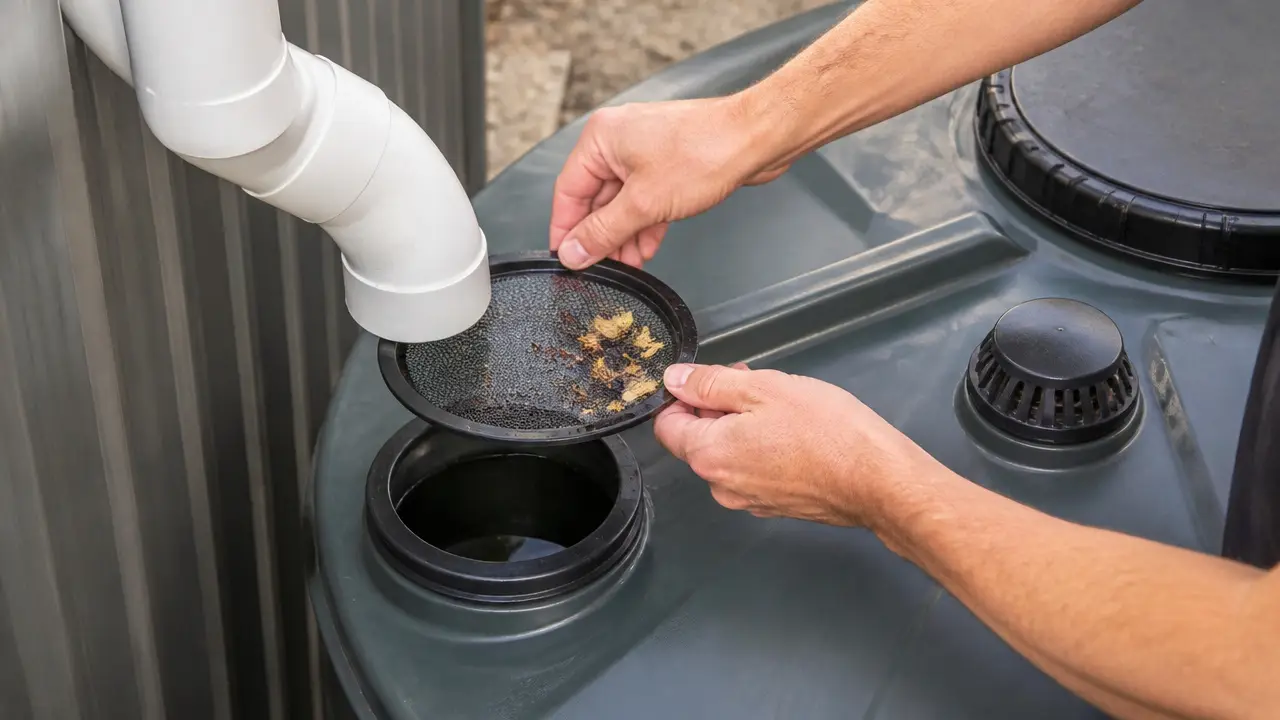
- A dirty inlet strainer
- A blocked filter
- A kinked flexible hose
- Debris in the suction line
Cleaning a filter may solve the problem if it has become badly restricted.
Follow the filter manufacturer's cleaning procedure. Shut off the pump and safely relieve system pressure before opening pressurized housings.
Look for a Suction-Side Air Leak
Pumps that pull water from a tank depend on an airtight suction line.
Even a small air leak can stop the pump from developing normal pressure.
Possible leak points include:
- Threaded fittings
- Unions
- Cracked suction pipes
- Loose clamps
- Pump inlet fittings
- Filter housings
- Seals around strainers or check valves
A suction leak may not drip water outward. The pump can instead pull air inward while running.
Signs include bubbles, uneven water flow, loss of prime, unusual pump noise, or a pump that runs for a long time without reaching normal pressure.
Check Whether the Pump Has Lost Its Prime
Some surface pumps must remain filled with water so they can pull water from the tank. This is called priming.
If air replaces the water inside the pump or suction line, the pump may run without moving enough water.
Loss of prime can happen because of:
- A leaking suction fitting
- A faulty foot valve or check valve
- Low tank water
- A cracked pipe
- Maintenance that allowed the line to drain
Do not keep restarting a pump that repeatedly loses its prime. Find the reason the water is draining away.
Follow the pump manufacturer's priming instructions because the correct method varies by pump design.
Inspect the Check Valve
A check valve allows water to move in one direction and helps stop it from flowing backward.
Some rainwater systems have a check valve near the pump. Others may use a foot valve at the end of a suction pipe inside the tank.
If this valve leaks, pressure can fall after the pump stops. The pump then starts again to restore pressure.
A badly leaking valve may also allow a suction line to drain and make the pump lose prime.
Check valves can become stuck or fail because of:
- Dirt
- Grit
- Leaves or organic debris
- Wear
- Damaged seals
Reviewing key facts about the common causes of automatic pump control failure helps understand pump capacity before continuous use begins.
Accessing a valve inside a tank can create additional safety problems. Do not climb into a cistern to service one.
Check the Pressure Tank
Many rainwater pump systems use a pressure tank.
The tank contains water and a pocket of compressed air. That stored pressure lets you use a small amount of water without starting the pump every time.
A pressure tank problem more often causes rapid cycling than continuous operation, but it can still contribute to abnormal pump behavior.
Signs of a problem include:
- Pump starts every time a tap is barely opened
- Pump cycles rapidly
- Water pressure changes sharply
- Very little water comes out between pump starts
Many pressure tanks have an internal bladder or diaphragm. If it fails, the tank can become waterlogged.
Checking or adjusting the air charge requires the water side to be depressurized and should be done according to the tank manufacturer's instructions. Do not simply add air while the plumbing system is under normal operating pressure.
The Pump May Not Be Reaching Its Shutoff Pressure
A pressure-controlled pump has a pressure at which it starts and another pressure at which it stops.
If the pump cannot reach the required stop pressure, it may run continuously.
Reasons include:
- A leak
- Poor suction
- A blocked inlet
- A worn pump
- Excessive lift
- Too much pressure loss through pipes or filters
- A pump that is not suitable for the system
Head height is the vertical distance and pressure resistance the pump must overcome to move water.
For example, pushing rainwater uphill to a garden or upper floor takes more pump effort than supplying a nearby ground-level hose.
Long pipes, narrow pipes, fittings, filters, and elevation all add resistance.
A pump may move plenty of water with little resistance but fail to reach its required pressure in a more demanding system.
Check the Pressure Switch or Pump Controller
Some pumps use a mechanical pressure switch. Others use an electronic controller that senses pressure and water flow.
Either type can fail.
A faulty controller may keep supplying power to the pump even after water demand has stopped.
Possible signs include:
- Pump continues running with all outlets closed
- Pressure is already normal or unusually high
- Controller shows an error
- Pump behavior does not change when water demand stops
Do not open electrical controls unless you are qualified to work on them. Rainwater pump equipment combines water and electricity, which makes unsafe electrical work especially risky.
If basic plumbing checks do not find the problem, have the controller, switch, wiring, and pump tested by a qualified technician.
Check for a Pump That Is Too Small or Worn
A pump can also run continuously because it simply cannot reach the pressure the system demands.
This may happen if:
- The pump is undersized
- The water must travel much higher than before
- New filters or plumbing have increased resistance
- The pump impeller is worn
- Debris has damaged the pump
- The system has been expanded beyond the original pump design
Look at the pump's performance information rather than only its maximum flow rate.
Flow rate is how much water a pump can move over time, often given in gallons per minute or liters per minute.
A pump's flow drops as the pressure and head it must overcome increase. A high advertised maximum flow does not mean the pump will deliver that same amount at your required pressure.
A Simple Troubleshooting Order
If your rainwater pump will not stop, work through the system in this order:
- Turn off all taps, irrigation, and other water uses.
- Check for obvious leaks.
- Confirm there is enough water in the tank.
- Make sure the tank outlet and isolation valves are open.
- Check accessible strainers and filters for blockage.
- Watch for signs that the pump has lost its prime.
- Inspect accessible suction fittings for possible air leaks.
- Check whether pressure rises normally while the pump runs.
- Consider the check valve and pressure tank if pressure falls again after shutdown.
- Have the pressure switch, controller, electrical supply, or pump checked if the basic plumbing checks do not solve the problem.
Stop running the pump if it is getting hot, making unusual noises, or failing to move water.
When to Call a Professional
Basic checks such as confirming tank level, closing taps, looking for leaks, and cleaning an accessible strainer are often reasonable DIY jobs.
Professional help is a better choice when the problem involves:
- Electrical wiring
- Pump motor faults
- Pressure switch replacement
- Electronic pump controllers
- Internal pump repairs
- Pressurized plumbing you are not comfortable servicing
- Equipment inside a tank or cistern
- Repeated loss of prime with no visible cause
A pump technician or plumber can also measure actual system pressure and flow. That can show whether the problem is the pump, the plumbing, the controls, or the way the system was sized.
Frequently Asked Questions
Why does my rainwater pump keep running when all the taps are off?
The system may have a hidden leak, a leaking check valve, a suction problem, or a faulty pressure switch or electronic controller. The pump may also be unable to reach its required shutoff pressure.
Can an empty rainwater tank make the pump keep running?
Yes. If the pump has no low-water protection, it may continue trying to pump after the water level falls below the intake. Switch it off because prolonged dry running can damage many pumps.
Why does my pump keep turning on and off?
Frequent starting and stopping is called short cycling. Common causes include a plumbing leak, a failed or poorly charged pressure tank, a leaking check valve, or a pressure control problem.
Can a dirty rainwater filter make the pump run continuously?
It can. A badly blocked filter can restrict water enough that the pump cannot deliver its normal flow or reach the required pressure. Check and clean serviceable filters according to their instructions.
Why does my pump run but no water comes out?
The tank may be empty, the pump may have lost its prime, or the suction line may be blocked or leaking air. A closed valve or clogged tank outlet can cause the same symptom.
Can a bad check valve cause a rainwater pump problem?
Yes. A check valve that leaks can allow pressure to drop or let a suction line drain backward. That can cause repeated pump starts or loss of prime.
Should I adjust the pump pressure switch myself?
Do not adjust it unless you understand the pump, pressure tank, plumbing limits, and manufacturer's settings. Incorrect settings can cause poor operation or excessive pressure. Electrical parts should be serviced by a qualified person.