As an affiliate, we may earn a commission from qualifying purchases. We get commissions for purchases made through links on this website from Amazon and other third parties.
Rain chains can be a good idea when you want to guide roof water downward while keeping the drainage system visible and decorative. They work best on smaller roof sections with moderate runoff and a good place for the water to drain at ground level.
The decorative role makes more sense when you understand the Japanese tradition behind rain chains.
They are not always a direct replacement for a downspout. During heavy rain, a rain chain can splash, sway in the wind, or carry less water than a closed downspout. The most important question is not whether the chain looks good. It is where the roof water goes after it reaches the bottom.
How Rain Chains Work
A rain chain hangs from a roof gutter outlet. Water leaves the gutter and travels down the chain instead of moving through an enclosed downspout.
There are two common designs:
- Link chains use connected metal links. Water follows the links downward but may splash more.
- Cup-style chains use small cups connected vertically. Water fills each cup and spills into the next one. These usually control water better than simple links.
At the bottom, the water still needs somewhere to go. It may drain into:
- A gravel or stone basin
- A drainage system
- A planted area
- A rain garden
- A rain barrel
- Another rainwater storage container
The chain is only one part of the drainage path.
When a Rain Chain Is a Good Idea
A rain chain makes the most sense when the roof drainage location is visible and you want something more attractive than a standard downspout.
It can work particularly well when the gutter serves a relatively small roof section. Smaller drainage areas send less water through the gutter outlet, which makes the flow easier for a chain to handle.
Rain chains can also be useful when you want to see whether water is flowing. Unlike an enclosed downspout, the entire water path is exposed.
They can also fit well with rainwater collection. A chain can direct water toward a barrel or decorative collection basin if the inlet is positioned correctly.
The Biggest Limitation Is Heavy Rain
Rain chains do not contain water as well as closed downspouts.
During light rain, water may follow the chain neatly. During a strong storm, runoff can arrive much faster. Water may then:
- Splash away from the chain
- Overshoot small collection containers
- Run down nearby walls
- Pool near the foundation
- Overflow the gutter outlet
Cup-style chains generally provide more control than simple link chains, but even they have limits.
The amount of runoff depends heavily on roof area and rainfall intensity. A large roof section can send a surprising amount of water toward one outlet during a short downpour.
For this reason, replacing a large downspout with a decorative chain without considering runoff volume can create drainage problems.
Pay Attention to the Gutter Outlet
The rain chain must connect properly to the gutter.
A chain hanging below the wrong type of opening may not catch the water cleanly. Some installations use a gutter outlet or adapter that helps direct water toward the center of the chain.
Check that:
- The outlet lines up with the chain.
- Water cannot easily run behind the chain toward the building.
- The chain hangs freely.
- The bottom is secured if wind is a problem.
- The drainage area below can handle the expected runoff.
A chain that looks properly installed when dry may behave very differently during a hard storm.
Watching it during actual rainfall is one of the easiest ways to find problems.
Rain Chains Can Splash
Splashing is normal.
How much you get depends on the chain design, rainfall rate, wind, installation height, and the surface underneath it.
A long drop onto concrete can create much more splash than a chain ending near a stone basin.
This matters when the chain is close to:
- Siding
- Doors
- Windows
- Walkways
- Wooden structures
- Foundation walls
Repeatedly soaking a wall or foundation area is not a good trade for a more decorative drainage system.
If splash is likely to be a problem, a traditional downspout may be the better choice.
You Still Need Ground-Level Drainage
One of the easiest mistakes is installing a rain chain without planning what happens at the bottom.
Roof runoff should not simply collect beside the house.
Depending on the site, the bottom of the chain might lead to a splash basin, gravel bed, rain garden, drain, or other suitable drainage arrangement.
The goal is to keep runoff from causing:
- Soil erosion
- Mud
- Standing water
- Foundation moisture
- Slippery walkways
- Water flowing toward the building
A decorative bowl by itself may not be enough. During a storm, it can fill quickly and overflow.
Can You Use a Rain Chain With a Rain Barrel?
Yes. A rain chain can feed a rain barrel if the setup catches the water effectively.
The barrel inlet should be large enough and positioned so that splashing does not send much of the water outside the container.
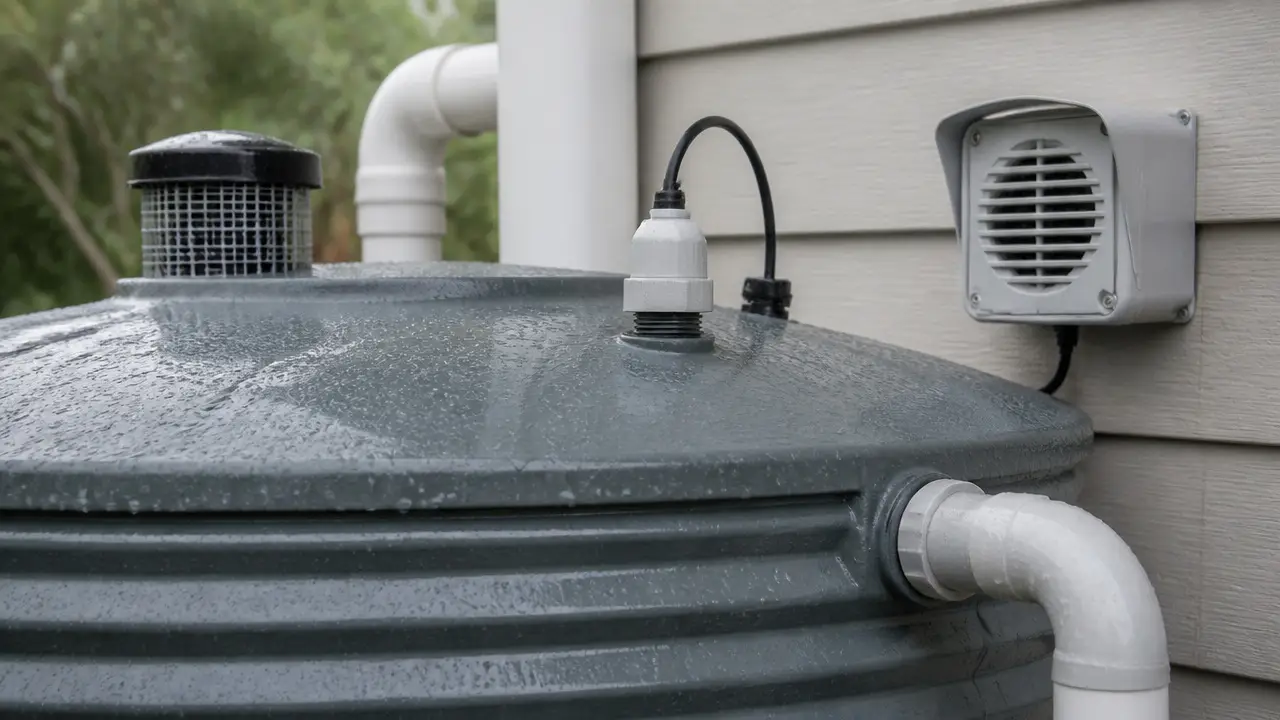
The barrel also needs an overflow.
Once the barrel is full, every additional gallon arriving from the roof has to go somewhere. The overflow should carry that water to a suitable drainage location rather than allowing it to collect against the house.
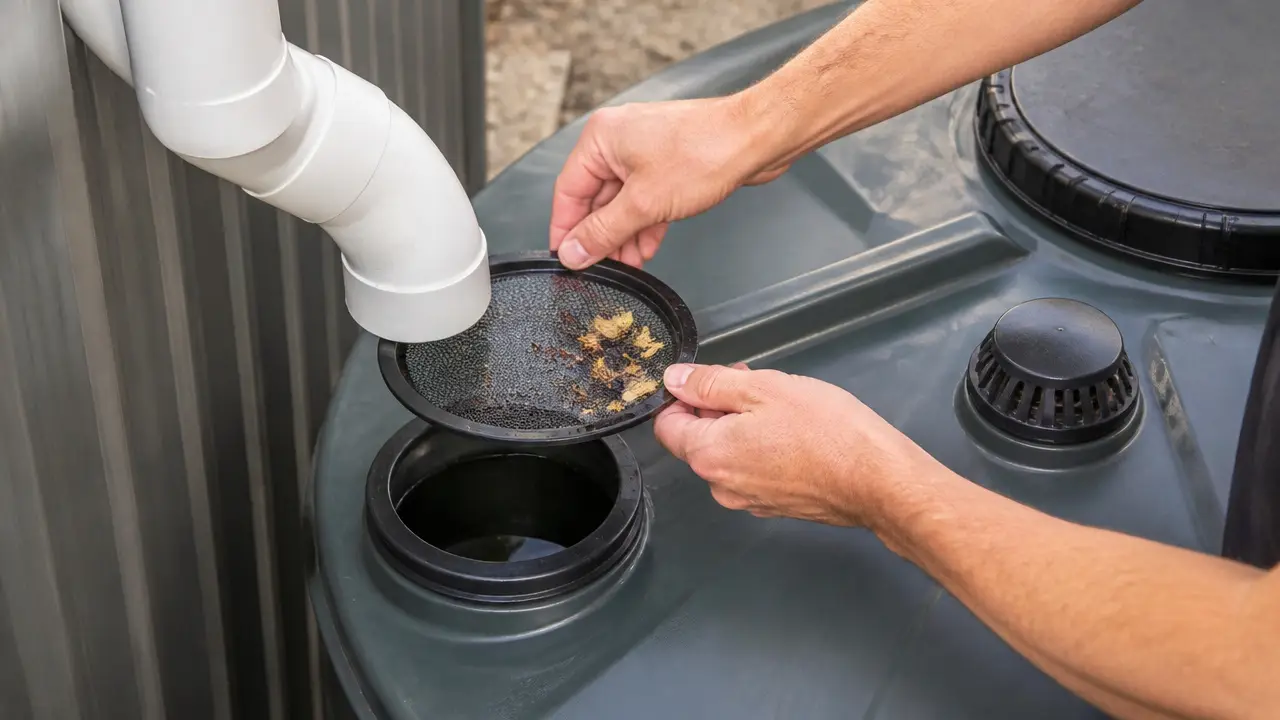
A screened inlet can also help keep larger debris and mosquitoes out of stored water.
Remember that roof runoff is not automatically clean or safe to drink. If collected water is intended for drinking, the entire collection, storage, treatment, testing, and maintenance system needs to be designed for that use. A rain chain does not provide any water treatment.
Are Rain Chains Good in Wind?
Wind can be a problem, especially with lightweight chains.
A swinging chain can:
- Hit siding
- Miss its collection basin
- Splash water farther away
- Make noise
- Damage nearby surfaces over time
Alongside rain-chain behavior under intense rainfall, coordinate the influence of roof material on usable rainwater.
The bottom of many rain chains can be anchored to a basin, stake, or other suitable attachment point.
The installation should still allow water to flow freely.
Very exposed locations may be better suited to a conventional downspout.
What About Freezing Weather?
Rain chains can form ice in freezing conditions.
Ice buildup adds weight to the chain, gutter outlet, and gutter. Large icicles can also become a falling hazard.
Do not assume that a rain chain solves winter drainage problems simply because it is open to the air.
Homes in freezing climates need to consider:
- Ice buildup
- Snowmelt
- Gutter condition
- Attachment strength
- Drainage at the bottom of the chain
- Areas where falling ice could injure someone
Avoid placing a chain where ice could fall onto a frequently used walkway or entrance.
Rain Chain vs. Downspout
Neither option is better for every house.
| Feature | Rain Chain | Downspout |
|---|---|---|
| Appearance | Decorative and visible | Usually less noticeable |
| Water containment | More exposed | Better contained |
| Splash | More likely | Usually less |
| Heavy runoff | Can be challenging | Generally better suited |
| Wind exposure | Can sway | Usually more stable |
| Inspection | Easy to see | Clogs can be hidden |
| Rain barrel connection | Possible | Usually easier to control |
| Winter icing | Visible ice can build up | Can also freeze or clog |
A downspout is usually the safer choice where controlling large volumes of water is the main concern.
A rain chain works better where runoff is manageable and appearance is important.
How to Decide if a Rain Chain Fits Your House
Start with the roof and drainage conditions rather than the chain itself.
Check the roof area feeding the gutter
A small porch roof is very different from a large roof section. More roof area means more runoff reaching the outlet.
Look at where the chain will hang
There should be enough clearance from walls, doors, windows, and other surfaces that should stay reasonably dry.
Plan the bottom drainage
Decide where the water will go before installing the chain.
Consider heavy storms
A system that works during drizzle may not work during an intense downpour. Make sure overflow and splash have a safe path.
Consider wind and freezing
Exposed or very cold locations need extra care.
Inspect the system during rain
After installation, watch how it performs during several different storms. Look for gutter overflow, excessive splash, erosion, pooling, and water moving toward the foundation.
Are Rain Chains Worth Using?
Rain chains are a good idea when they are treated as part of a drainage system rather than just a decoration.
They are best suited to locations where:
- Roof runoff is manageable.
- Splash will not damage nearby surfaces.
- The bottom has proper drainage.
- Wind can be controlled.
- The gutter outlet directs water cleanly onto the chain.
They are a weaker choice where a large roof section sends heavy runoff through one outlet or where water must be kept tightly controlled around the foundation.
For rainwater collection, they can work with a rain barrel or other container, but a standard downspout often provides easier control of high flows and overflow.
Frequently Asked Questions
Do rain chains work as well as downspouts?
Not always. Rain chains can guide water effectively during moderate rain, but a closed downspout usually contains heavy runoff and splash better.
Do rain chains cause water to splash on the house?
They can. Splash depends on the chain design, wind, rainfall, distance from the wall, and the basin below it. The chain should be placed where repeated splash will not create moisture problems.
What should go underneath a rain chain?
The bottom should lead to a suitable drainage area. Options can include a stone basin, gravel area, rain garden, drain, or rainwater collection container. The correct choice depends on the site and how much runoff reaches the chain.
Can a rain chain drain into a rain barrel?
Yes. Position the barrel so the chain directs water into its screened inlet. The barrel also needs a properly sized overflow that sends excess water away from areas where it could cause damage.
Do rain chains work in heavy rain?
They can carry water during heavy rain, but splash and overflow become more likely as runoff increases. Large roof drainage areas may be better served by conventional downspouts.
Do rain chains freeze?
Yes. Water can freeze on the chain and form ice. The added weight and falling ice can become hazards, so freezing climates require careful placement and regular inspection.
Do rain chains need to be anchored?
Anchoring is often helpful in windy locations. Securing the bottom can reduce swinging, noise, and water missing the intended drainage area.