As an affiliate, we may earn a commission from qualifying purchases. We get commissions for purchases made through links on this website from Amazon and other third parties.
In many parts of the United States, a simple residential rain barrel used outdoors does not need a permit. But there is no single nationwide rule. State and local governments can set different rules for rainwater collection, plumbing, drainage, and larger storage systems.
As of August 28, 2026, the U.S. Department of Energy advises homeowners to check state and local requirements because rainwater harvesting permits may be required in some locations. Rainwater harvesting itself is not regulated by one federal permitting system.
For a basic barrel connected to a roof downspout and used to water a garden, permitting is often simple or not required. A permit becomes more likely when the system gets larger, connects to household plumbing, uses a pump, changes regulated drainage, or supplies water indoors.
When a Basic Rain Barrel Usually Does Not Need a Permit
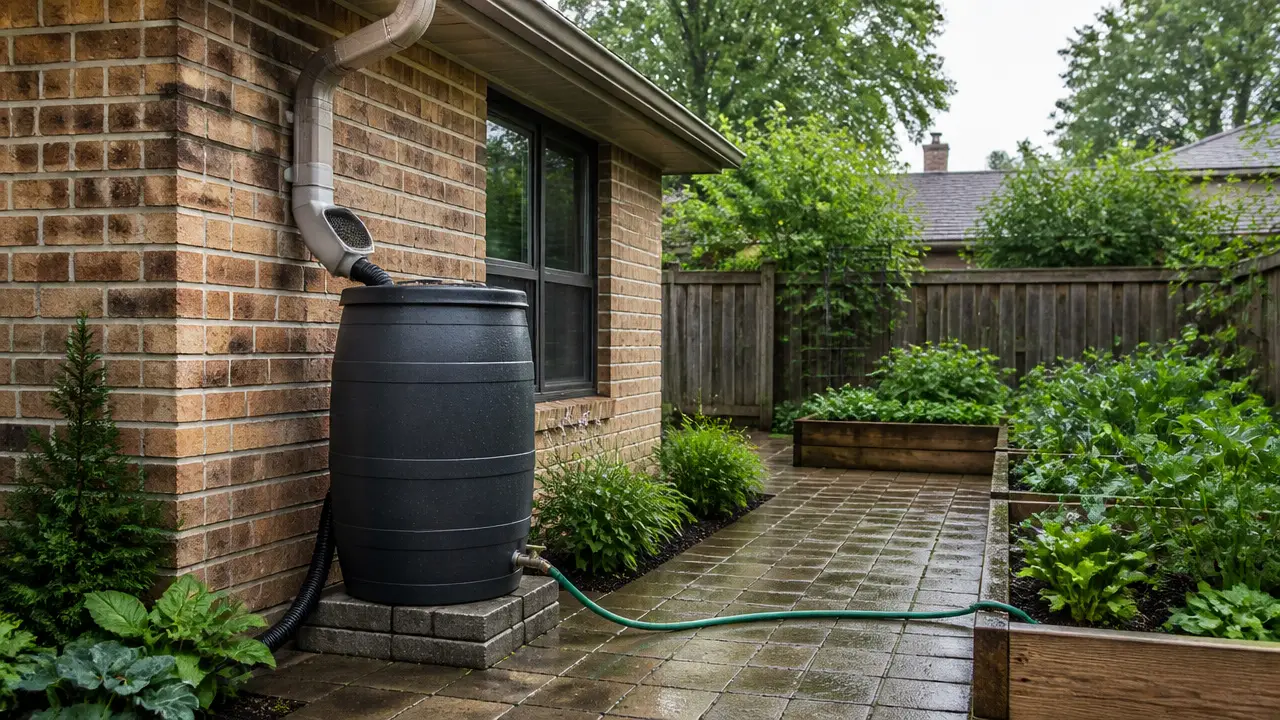
A small rain barrel is the simplest type of rainwater harvesting system. It normally:
- Collects runoff from a roof.
- Connects to a downspout.
- Stores a relatively small amount of water.
- Uses gravity rather than a pump.
- Supplies water only for outdoor, non-potable uses.
- Has no connection to the home's drinking-water plumbing.
Non-potable means water that is not intended for drinking.
The EPA has long treated small rain barrels differently from larger cistern systems in its municipal rainwater guidance. Its guidance recommends that correctly installed rain barrels with suitable overflow arrangements generally not require the same permitting process used for larger systems. Local rules still control what is actually required.
Even without a permit, the installation may have to meet local requirements for drainage, mosquitoes, setbacks, or where overflow can go.
When You Are More Likely to Need a Permit
The chances of needing approval increase when you move beyond a basic garden barrel.
You connect rainwater to indoor plumbing
Using captured rainwater for toilets, washing, or another indoor fixture is very different from connecting a hose to a barrel.
Indoor systems may fall under plumbing codes. They may require:
- Separate rainwater piping.
- Clear non-potable water labels.
- Backflow or cross-connection protection.
- Approved treatment.
- Plumbing permits and inspections.
A cross-connection is a connection that could allow rainwater or another non-potable supply to enter drinking-water pipes.
Washington, for example, allows rooftop rainwater collection without a water-right permit under stated conditions. However, water collected for in-home use requires approval from the local building department.
You want to use rainwater as drinking water
A simple rain barrel should not be treated as a drinking-water system.
Roof runoff can contain bird droppings, dust, roofing material contaminants, microorganisms, and other pollutants. Drinking-water use requires a whole-system approach that may include suitable collection materials, prefiltration, treatment, disinfection, current laboratory testing, maintenance, and compliance with health and plumbing requirements.
Local health authorities may also restrict or regulate potable rainwater systems. Washington notes that some counties allow rainwater as a drinking-water source while others do not.
If drinking water is your goal, contact your local health and building departments before designing the system.
You install a large cistern
A small barrel and a large cistern are not always treated the same way.
A large tank can create additional concerns involving:
- Structural loads.
- Foundations or pads.
- Setbacks from property lines.
- Excavation for underground tanks.
- Overflow drainage.
- Plumbing connections.
- Pumps and electrical equipment.
Water is heavy. One U.S. gallon weighs about 8.34 pounds. That means even a 275-gallon tote can hold more than 2,200 pounds of water before including the container itself.
A large tank should have a stable base designed for the full load. Building approval may be required depending on tank size, location, support structure, and local code.
You add a pump or electrical equipment
A gravity-fed rain barrel normally has no electrical permitting issue.
Adding equipment such as a pump, pressure tank, float switch, controller, or powered treatment system can introduce electrical and plumbing requirements. Outdoor electrical work also needs suitable weather protection and should comply with applicable electrical codes.
Do not assume that being allowed to collect rainwater automatically means you can install powered equipment without a permit.
You alter a regulated downspout or drainage connection
Where the downspout currently drains matters.
Disconnecting a downspout that empties onto your lawn is usually simpler than altering piping connected to a storm sewer, combined sewer, or other regulated drainage system.
California law is one example of this distinction. State provisions generally protect ordinary rain-barrel collection, while allowing local requirements where installing the barrel involves properly disconnecting a downspout from a sewer system.
Local stormwater departments may also have rules about where barrel overflow can discharge.
Rain Barrel Rules Can Be Very Different by State
The basic concept is legal in many states, but the details vary.
Colorado
Colorado allows qualifying residences to use up to two rain barrels with a combined capacity of no more than 110 gallons. The water must come from the residential rooftop, stay on the property, and be used outdoors for purposes such as gardening or lawn irrigation.
That is a good example of why you should not assume every state allows any barrel size or any use.
Washington
Washington does not require a water-right permit for qualifying rooftop rainwater collection. The water generally must be collected from an existing structure and used on the property where it was collected.
Indoor use, and especially use as a primary drinking-water source, can bring additional building and health requirements.
Texas
Texas actively supports rainwater harvesting, but more complex systems still have rules.
The Texas Water Development Board advises homeowners to check county and local construction requirements. Systems connected to a public water supply for potable purposes have additional requirements intended to prevent contamination of the public system.
These examples are not a substitute for checking your own city or county.
What to Check Before Installing a Rain Barrel
Evaluating rain-barrel collection restrictions helps understand the governing guidance for this installation.
For an ordinary outdoor barrel, you can usually get the answer with a few questions to your local building or public works department.
Tell them:
- How many barrels you plan to install.
- Their total storage capacity.
- Whether they collect only roof runoff.
- Whether they use gravity or a pump.
- What you will use the water for.
- Whether the system connects to household plumbing.
- Where the overflow will discharge.
- Whether you are disconnecting a downspout from a storm or sewer connection.
Ask specifically whether you need a:
- Building permit.
- Plumbing permit.
- Electrical permit.
- Stormwater or drainage approval.
- Water-right or water-resource approval.
For drinking-water use, also contact the local or state health authority.
A Permit Is Not the Only Rule That Can Apply
"No permit required" does not mean "no requirements."
Your rain barrel may still need to follow rules covering:
Overflow
Every barrel needs a safe place for excess water to go once the barrel fills.
Overflow should not be directed toward the foundation, a neighboring property, or another location where it can cause erosion or drainage problems.
Mosquito control
Openings should be screened or otherwise protected against mosquitoes.
Keep lids secure and repair damaged screens.
Structural support
A full barrel is heavy. Put it on a firm, level base that can handle the load.
If you elevate the barrel for better gravity flow, the support must safely hold the filled barrel. Avoid makeshift stands made from unstable stacked materials.
Property and HOA rules
Homeowners' association rules are separate from government permits.
An HOA may have rules about where barrels are visible, screening, or appearance. State law may limit what an HOA is allowed to prohibit. Texas, for example, restricts homeowners' associations from simply banning qualifying rainwater harvesting systems while allowing certain reasonable rules.
Water use
Permission to collect rainwater does not automatically mean every use is allowed.
Outdoor garden irrigation often has fewer requirements than indoor plumbing or drinking-water use.
What About a Simple DIY Rain Barrel?
For a typical homeowner who wants to place one barrel beside the house and water garden plants, the project is often a manageable DIY job.
A basic system normally needs:
- A sound barrel intended for water storage.
- A screened inlet.
- A secure lid.
- A properly fitted outlet.
- A stable base.
- An overflow line.
- A downspout connection that does not violate local drainage rules.
Do not use a recycled barrel that previously contained toxic chemicals, oils, pesticides, or other unsafe substances.
Also remember that roof runoff is not automatically clean just because it looks clear. Keep ordinary rain-barrel water separate from household drinking-water plumbing unless you have a system specifically designed, approved, treated, maintained, and tested for that purpose.
How to Find Your Local Rule
Start with your city or county building department. Ask whether a small residential rain barrel requires a permit.
Depending on the system, you may also need to contact:
- Your local plumbing authority.
- Public works or stormwater department.
- Your state water-resources agency.
- Your local health department.
- Your water utility.
The Department of Energy also maintains a state-by-state Rainwater Harvesting Tool, but it recommends checking directly with state and local governments because permitting requirements can change and local rules may be more specific.
Frequently Asked Questions
Do I need a permit for one 55-gallon rain barrel?
Often no, especially if it collects rooftop water for outdoor garden use and has no pump or plumbing connection. Local rules still apply, so check with your city or county building department before installation.
Is collecting rainwater illegal?
Rainwater collection is allowed in many parts of the United States, but states can regulate how much you collect and how you use it. There is no single federal rule that determines residential rain-barrel requirements nationwide.
Do I need a plumbing permit for a rain barrel?
A stand-alone outdoor barrel normally presents fewer plumbing-code issues. A permit becomes more likely if the rainwater system connects to toilets, sinks, household piping, a municipal water supply, or other building plumbing.
Can I connect a rain barrel directly to my home's plumbing?
Do not connect an ordinary rain barrel directly to household plumbing. Indoor rainwater systems may require permits, separate piping, backflow protection, treatment, inspections, and other safeguards.
Do I need a permit for a large rainwater tank?
Possibly. Larger cisterns may trigger building, plumbing, structural, excavation, setback, drainage, or electrical requirements. Check the proposed tank capacity and installation details with the local building department before construction.
Does adding a pump change the permit requirements?
It can. Pumps may introduce plumbing and electrical requirements that do not apply to a basic gravity-fed barrel. Outdoor electrical equipment also needs suitable installation and protection.
Can I drink water from a rain barrel if I filter it?
Do not assume a single filter makes rain-barrel water safe to drink. Potable rainwater requires a properly designed collection and treatment system, appropriate treatment stages, current laboratory testing, maintenance, and compliance with local health and plumbing requirements.