As an affiliate, we may earn a commission from qualifying purchases. We get commissions for purchases made through links on this website from Amazon and other third parties.
Rain barrels are not broadly illegal in the United States. In most places, homeowners can collect at least some rainwater from a roof. What changes from place to place is how much you may store, what you may use it for, and whether a permit or registration is required.
The idea that rain barrels are illegal comes mostly from older water-rights laws in dry western states. Some states once treated rooftop rainwater as part of a larger water supply that was already claimed for farms, cities, streams, or other users.
As of September 1, 2026, the U.S. Department of Energy says rainwater harvesting is not regulated by the federal government. States set their own collection rules, and local governments may add plumbing, building, drainage, or health requirements.
Why Would a State Restrict Rainwater Collection?
The main reason is water rights, not the rain barrel itself.
In many western states, water has long been managed under systems that assign rights to specific users. Rain that falls on a roof might otherwise run into the ground, a storm drain, a creek, or a river.
That runoff can eventually become part of a water supply used downstream.
A state may therefore regulate how much water one property owner can intercept before it reaches the larger watershed.
Utah gives a clear example. The Utah Division of Water Resources explains that precipitation may contribute to streams, groundwater, and other supplies that have already been allocated to existing water rights. That is why state law limits how rainwater can be stored.
This does not mean that every gallon caught in a barrel would otherwise reach a farmer or reservoir. Some water would soak into soil, evaporate, or be lost in other ways. Water-rights law is about managing the larger system rather than tracking each individual drop.
Rain Barrels and Western Water Rights
Many stories about "illegal rain barrels" come from western states where water is scarce and water rights have been carefully divided for many years.
One common system is called prior appropriation.
In simple terms, someone with an older legal right to use water may have priority over someone with a newer right.
That can make capturing runoff more complicated than it seems.
Imagine that rain falls on thousands of roofs throughout a watershed. One 55-gallon barrel has little effect on the river below. But lawmakers may still need rules covering millions of individual properties and much larger collection systems.
Modern laws often solve this problem by allowing small residential systems while limiting their size or use.
Colorado Is a Good Example
Colorado is probably responsible for many of the stories claiming that collecting rainwater is illegal.
Its rules were historically restrictive because of the state's water-rights system.
That changed.
Colorado's 2016 residential rainwater law allows qualifying homes to use up to two rain barrels with a combined storage capacity of 110 gallons or less. The water must come from the home's roof and generally be used on the same property for outdoor purposes such as lawn or garden watering.
So saying "rain barrels are illegal in Colorado" is outdated.
The more accurate statement is that Colorado regulates residential rainwater collection and places limits on it.
Utah Allows Rainwater Collection Too
Utah also regulates rainwater harvesting rather than simply banning it.
Under current Utah Code, a property owner or renter may use up to two covered containers of no more than 100 gallons each without registration.
Larger systems can be registered with the state. Registered storage may have a total capacity of up to 2,500 gallons per parcel, subject to the requirements in the law. The collected water must be used beneficially on the parcel where it was captured.
This is another example of why "illegal" can be misleading.
A barrel may be completely legal while a much larger unregistered tank on the same property is not allowed under the same exemption.
Nevada Also Has a Rainwater Exception
Nevada law says water sources within the state generally belong to the public and are managed under state water law.
However, Nevada now specifically exempts small-scale collection of precipitation from the roof of a single-family dwelling when the water is used for non-potable domestic purposes.
Non-potable means the water is not intended to be drinking water.
Again, the rule is not simply "you cannot collect rain."
It defines the type of collection that homeowners may do without going through the normal water-right process.
Water Rights Are Only One Reason for Regulations
Even where water rights are not a major issue, a rainwater system may still be regulated.
That is especially true when you move beyond a simple barrel connected to a downspout.
Plumbing safety
Problems can arise when rainwater piping is connected to household plumbing.
Untreated rainwater should not be able to flow backward into a home's drinking-water pipes. A connection between the two systems can create a contamination risk.
The CDC advises keeping rainwater separate from piped drinking water because rainwater can introduce germs and chemicals into treated water.
Larger indoor systems may therefore need approved backflow protection, separate piping, permits, inspections, or other safeguards.
Drinking-water safety
Legal rainwater collection does not mean the water is safe to drink.
Roof runoff can contain:
- Bird and animal waste
- Dirt and dust
- Pollen and leaves
- Bacteria and other germs
- Smoke particles
- Chemicals from roofing or gutter materials
- Metals from collection components
The CDC says rainwater is not necessarily safe to drink without appropriate treatment and recommends regular testing for germs and chemicals when it is used for drinking, cooking, or bathing.
A screen, first-flush diverter, or basic filter can improve water quality, but none of these alone proves that the water is potable.
Potable means suitable for drinking.
Using roof runoff as household drinking water requires a much more complete collection, treatment, testing, and maintenance plan, along with compliance with applicable local rules.
Mosquito control
An uncovered rain barrel can become a place for mosquitoes to breed.
This is one reason many rainwater rules call for covered tanks or screened openings.
The CDC recommends screening rain-barrel openings or regularly emptying the barrel to reduce mosquito breeding.
A good residential barrel should normally have a secure lid and fine screening wherever water or air can enter.
Stormwater and drainage
Alongside rain-barrel collection restrictions, understand local conditions governing use of the stored water.
A badly placed overflow can create problems even when the barrel itself is legal.
Once the barrel fills, every additional gallon needs somewhere to go.
Overflow should not be directed toward:
- Your home's foundation
- A neighbor's property
- Septic components
- A basement entrance
- Areas that already have drainage problems
Local stormwater or drainage rules may apply.
One benefit of properly designed rainwater harvesting is that it can reduce and slow runoff during storms. The Department of Energy notes that rainwater collection can help reduce runoff, erosion, and demands on other water supplies.
A Rain Barrel Is Different From a Large Cistern
A homeowner using one small barrel for garden watering is very different from someone installing a 5,000-gallon underground tank connected to toilets, washing equipment, or household plumbing.
Rules often become stricter as the system gets larger or more complicated.
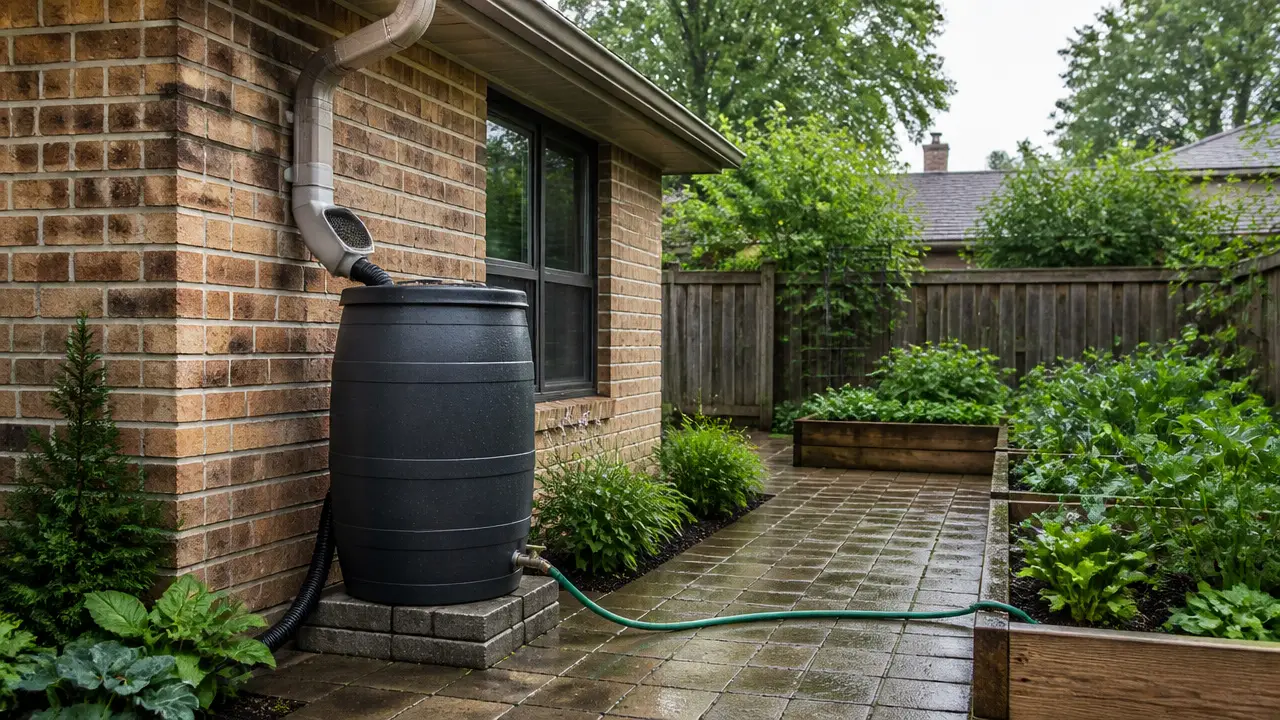
A basic system might look like:
Roof → gutter → screened downspout → rain barrel → garden hose
A larger system might include:
Roof → debris screening → first flush → cistern → pump → filtration → controls → separate plumbing
A first-flush diverter sends the first portion of roof runoff away from the tank. That early runoff often carries a larger amount of roof dirt and debris.
Larger systems can bring building codes, plumbing codes, electrical work, structural requirements, excavation rules, backflow protection, and water-treatment requirements into the picture.
The Department of Energy specifically advises checking state and local requirements because some rainwater harvesting systems may require permits.
Does an HOA Have the Right to Ban Your Rain Barrel?
Possibly, but state law can limit what an HOA is allowed to prohibit.
The answer depends on your state and the governing documents for the property.
For example, Colorado's rain-barrel legislation prevents certain homeowners associations from simply prohibiting qualifying rain barrels, although reasonable appearance or placement requirements may still be allowed.
Other states may handle HOA restrictions differently.
Before installing a visible barrel, check:
- State rainwater-harvesting rules.
- City or county codes.
- HOA or condominium rules if applicable.
- Local plumbing requirements if the system connects to a building.
A simple garden barrel usually has far fewer requirements than a system supplying water inside the home.
Is It Illegal to Collect Rainwater That Falls on Your Own Property?
Owning the land does not always mean you have an unrestricted legal right to capture every form of water passing through it.
Water law often treats water differently from ordinary property.
Groundwater, streams, springs, runoff, and precipitation can all be covered by different rules.
That is why the statement "I own the roof, so I own all of the rain" does not fully describe how water law works.
At the same time, modern state laws commonly make room for ordinary residential rainwater harvesting.
The Department of Energy maintains a state-by-state rainwater harvesting tool because the rules vary rather than following one nationwide ban.
Check the Intended Use Before Building the System
The easiest way to understand the rules is to start with what you want to do with the water.
For a small barrel feeding ornamental plants or a garden, the system may be simple.
For a larger cistern supplying irrigation, you may need to check storage limits and permit requirements.
For indoor non-potable uses such as toilet flushing, plumbing rules become much more important.
For drinking, cooking, or bathing, water quality becomes a major health issue. Rainwater should not be assumed safe simply because collection itself is legal.
EPA notes that treatment requirements depend heavily on the intended use. Irrigation generally has different requirements than indoor or potable applications.
How to Find Out Whether a Rain Barrel Is Legal Where You Live
Do not rely on an old article claiming that a whole state "bans rainwater."
Rules change.
As of September 1, 2026, a useful starting point is the U.S. Department of Energy's Rainwater Harvesting Tool, which provides state-level regulatory information. The department also recommends checking directly with state and local government because permits and local rules can apply.
For a typical homeowner system, confirm:
- Whether residential rooftop collection is allowed.
- Whether there is a storage-capacity limit.
- Whether registration is required.
- What uses are allowed.
- Whether tanks must be covered or screened.
- Whether local building or plumbing permits apply.
- Whether indoor use has additional requirements.
Check again before installing a large cistern or connecting rainwater to household plumbing.
Frequently Asked Questions
Are rain barrels illegal in the United States?
No. There is no general federal ban on residential rainwater harvesting. States regulate rainwater collection, and local rules can also apply.
Why did some states restrict rain barrels?
The main reason was water-rights law, especially in dry western states. Rainfall that becomes runoff can contribute to streams, groundwater, and water supplies already assigned to other users.
Is it illegal to collect rainwater in Colorado?
Qualifying residential rainwater collection is legal. Colorado law allows up to two rain barrels with a combined capacity of 110 gallons under specified conditions.
How much rainwater can you collect in Utah?
Utah allows up to two covered containers of no more than 100 gallons each without registration. Registered systems can generally store up to 2,500 gallons per parcel under the state's rainwater-harvesting law.
Can I drink water from a legal rain barrel?
Legality and drinking-water safety are separate issues. Roof runoff can contain germs and chemicals. The CDC recommends appropriate treatment and regular testing when collected rainwater is used for drinking, cooking, or bathing.
Do I need a permit for a rain barrel?
A basic outdoor barrel may not require one in many locations, but rules vary. Larger cisterns, underground tanks, pumps, and systems connected to building plumbing are more likely to have permit or inspection requirements.
Can I connect a rain barrel to my household plumbing?
Do not directly connect untreated rainwater to potable household plumbing without an approved system. Rainwater must be prevented from contaminating the drinking-water supply, and local plumbing and backflow rules may apply.