As an affiliate, we may earn a commission from qualifying purchases. We get commissions for purchases made through links on this website from Amazon and other third parties.
Rainwater storage is not broadly illegal in the United States, but some states place limits on how rainwater may be collected, stored, and used. In certain places, a rainwater system can become unlawful if you exceed a storage limit, skip a required registration or permit, collect water from an unapproved surface, or use the water for a purpose the law does not allow.
The key point is that the law usually regulates the collection and use of the water, not simply the fact that you own a barrel or cistern.
Rules can also change. The examples below reflect official guidance available as of August 31, 2026.
Why Do Some States Regulate Stored Rainwater?
Rain falling on your roof may seem like it should automatically belong to you. Water law does not always work that way.
In some western states, water is managed under a water-right system. Rain that falls on land may eventually reach streams, rivers, or groundwater supplies that are already assigned to other water users.
Because of this, states may regulate:
- How much rainwater you can store
- What surface you can collect it from
- Where the water can be used
- Whether registration or a permit is required
- Whether it can be used indoors
- Whether it can be used as drinking water
The EPA notes that rainwater rules vary by state, particularly in western states with established water-right systems.
That does not mean rain barrels are generally banned. In fact, several states that once had tighter rules now clearly allow residential rainwater harvesting under specific conditions.
States With Important Rainwater Storage Rules
These examples are not a complete list of every state or local requirement. They show why you should check the rules where the property is located before installing a large system.
| State | General residential rule |
|---|---|
| Colorado | Eligible homes can generally store up to 110 gallons in rain barrels without a permit under the standard residential exemption. |
| Utah | Small systems can operate without registration, while larger systems can be registered up to a 2,500-gallon total capacity. |
| Nevada | Limited rooftop collection from a single-family home for non-potable domestic use is exempt from normal water appropriation requirements. |
| Washington | Rooftop rainwater generally does not require a water-right permit when state conditions are followed. |
| Oregon | Collection and use of precipitation from an artificial impervious surface, such as a roof, is exempt from the normal water-right permit requirement. |
Colorado
Colorado allows rainwater collection, but its basic residential exemption has clear limits.
A single-family residence or qualifying residential property with up to four units may generally use rain barrels with a combined storage capacity of no more than 110 gallons without obtaining a permit from the Colorado Division of Water Resources.
The water must come from the roof of a building used mainly as a residence. Under this exemption, the stored water is for outdoor uses on the property where it was collected.
Colorado also has separate rules that may allow more rainwater collection on certain properties with qualifying residential well permits. Those systems require additional approval.
So a 55-gallon barrel or two connected 55-gallon barrels can fit the basic rule. Simply installing a much larger residential cistern does not automatically fall under that same exemption.
Utah
Utah allows rainwater harvesting but regulates storage capacity.
Without registration, a person may collect rainwater in no more than two covered containers, and neither container can have a capacity greater than 100 gallons.
Larger systems can be registered with the Utah Division of Water Rights. Registered rainwater systems may have a total storage capacity of up to 2,500 gallons. The collection, storage, and use must take place on the same parcel.
Registration is currently free.
For example, a homeowner planning a 1,000-gallon cistern should not assume that because rain barrels are legal, the larger tank can simply be installed without taking any other action. In Utah, that size falls into the registration system.
Nevada
Nevada law treats the state's water supplies as public water, but it provides an exemption for certain small-scale rainwater harvesting.
The state's current statute exempts the de minimis collection of precipitation from the rooftop of a single-family dwelling for non-potable domestic use from the normal water appropriation requirements.
"Non-potable" means water that is not intended to be used as drinking water.
Nevada's statute does not give this residential exemption a simple gallon figure in the cited provision. Someone planning a large collection or storage system should therefore check with the Nevada Division of Water Resources rather than assuming any tank size qualifies.
Washington
Washington generally allows rooftop rainwater collection without a water-right permit.
The state says the water must be collected from an existing structure whose main purpose is something other than collecting rainwater. The stored water must also be used on the property where it was collected.
Washington reserves the ability to impose local restrictions if rainwater harvesting begins to affect existing water rights or instream resources.
Indoor use is a separate issue. Plumbing and building requirements apply, and using rainwater as a drinking-water source may depend on county approval.
Oregon
Oregon generally requires water-right permits for many uses of surface water, but rainwater collected from an artificial impervious surface is specifically exempt.
An artificial impervious surface includes something such as a building roof.
Oregon's current water law lists the collection and use of precipitation from such a surface as an exempt use.
That distinction matters. Collecting roof runoff into a tank is not necessarily treated the same way as damming natural drainage or building a pond that captures other surface water.
Does a Larger Cistern Change the Legal Requirements?
It can.
A 50-gallon rain barrel beside a house and a buried 10,000-gallon cistern are very different projects.
Even where rainwater harvesting itself is allowed, a large system may involve other rules covering:
- Building permits
- Excavation
- Tank placement
- Property setbacks
- Structural support
- Overflow drainage
- Pumps and electrical equipment
- Indoor plumbing
- Cross-connections with municipal water
- Backflow protection
Consider legally collecting rainwater in the US to document collection limits for the planned storage capacity.
Very large ponds or reservoirs can also fall under water-right, dam, or reservoir rules that have little to do with ordinary residential rain barrels.
Check both state water law and local building or plumbing requirements before installing a large cistern.
The Intended Use Matters as Much as the Tank Size
A state may allow you to store rainwater for garden irrigation while placing much tighter controls on indoor or drinking-water use.
Common non-potable uses include landscape irrigation and some outdoor cleaning tasks.
Using rainwater to supply toilets, washing machines, showers, or other indoor fixtures can bring plumbing codes and cross-connection rules into play.
Using it as drinking water is a much bigger step.
The CDC warns that collected rainwater is not automatically safe to drink. Roof runoff can contain germs, animal waste, metals, chemicals, and other contaminants. Drinking-water use requires suitable collection materials, treatment based on actual water quality, regular testing, and proper maintenance. Local health and building requirements may also apply.
A basic sediment filter or household water filter by itself does not establish that stored rainwater is potable.
What About Rain Barrels?
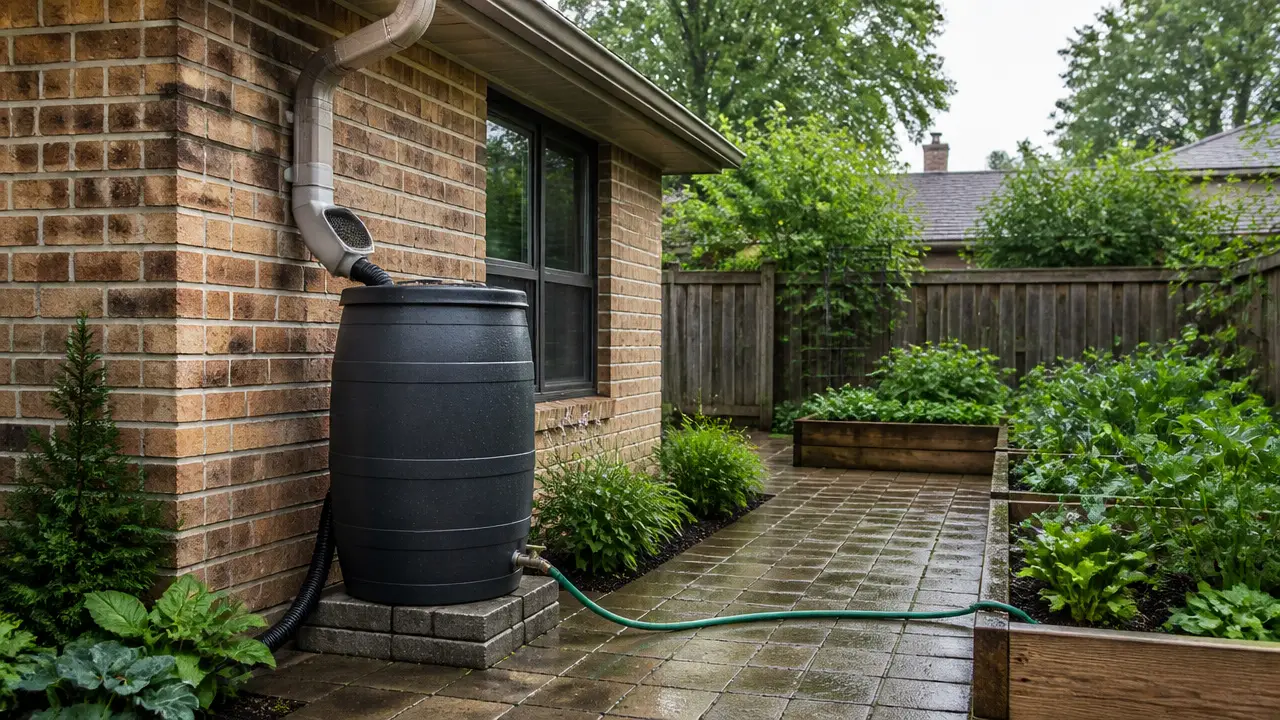
For most homeowners, a small rain barrel used for garden watering is the simplest legal situation.
Even then, check four things before connecting the downspout:
- Allowed collection surface. Some rules specifically refer to rooftops or other artificial surfaces.
- Storage limit. States such as Colorado and Utah have specific capacity rules for certain exemptions.
- Allowed use. Outdoor irrigation may be allowed even when indoor or drinking-water use is not.
- Local requirements. Cities, counties, water districts, and building departments can have additional rules.
Also use a covered or screened container. This keeps debris and animals out and helps prevent mosquitoes from breeding in standing water.
Can You Get in Trouble for Exceeding a Rainwater Storage Limit?
Potentially, yes.
A legal exemption normally applies only when you meet its conditions. If a state allows unregistered storage up to a certain capacity, installing a larger system without completing the required registration or permitting process could put the system outside that exemption.
The safest approach is not to assume that a larger tank is legal just because a small rain barrel is legal.
This is especially important with IBC totes and large cisterns. A homeowner may start with one container and later connect several together. Legally, regulators may look at the combined storage capacity, not just the size of each individual tank.
Colorado, for example, bases its standard residential rain-barrel exemption on a combined 110-gallon capacity. Utah uses total system capacity for its registered rainwater harvesting limit.
How to Check Whether Rainwater Storage Is Legal Where You Live
Start with your state's water resources, water rights, or environmental agency.
Then check with the city or county if you are planning a large tank, buried cistern, pump system, or indoor connection.
Ask specifically about:
- Rooftop rainwater harvesting
- Maximum unpermitted storage capacity
- Registration requirements
- Allowed uses
- Cistern permits
- Indoor rainwater plumbing
- Backflow or cross-connection rules
- Drinking-water requirements
Do not rely only on old charts or articles that say a particular state "bans rainwater collection." Rainwater laws have changed substantially in several states over the years.
Current EPA guidance also recommends checking the relevant state agency because state water-reuse and rainwater regulations vary and can change.
The Bottom Line
It can be illegal to store rainwater in certain ways, but ordinary residential rainwater storage is not broadly prohibited across the United States.
The restriction is usually tied to the size of the system, where the rain came from, how the water will be used, or whether registration or a permit is required.
A small barrel used for garden watering may require little or no paperwork. A large cistern, indoor plumbing system, or drinking-water supply deserves a much closer check of state and local rules.
Frequently Asked Questions
Is collecting rainwater illegal in the United States?
There is no single nationwide rule that bans residential rainwater collection. State and local laws vary. Some states allow ordinary rooftop collection freely, while others impose storage limits, registration requirements, or restrictions on how the water may be used.
Which states limit how much rainwater you can store?
Colorado and Utah are clear examples. Colorado's standard residential rain-barrel exemption allows up to 110 gallons of combined storage. Utah allows very small systems without registration and registered systems with up to 2,500 gallons of total storage. Different rules or exceptions may apply to certain properties.
Is a 1,000-gallon rainwater tank legal?
It depends on the state and local rules. A 1,000-gallon cistern may be legal in one state but require registration, a permit, or additional approvals in another. Large tanks may also be subject to building, plumbing, and placement requirements.
Can I connect several rain barrels together?
Usually, but check whether your state measures the combined storage capacity. Connecting several smaller containers does not necessarily let you avoid a legal storage limit. Colorado, for example, limits the combined capacity under its standard residential rain-barrel exemption.
Can stored rainwater be used inside the house?
Possibly, but indoor use commonly brings additional plumbing, backflow, and health requirements. Rules can be much stricter than those for garden irrigation. Contact the local building or health department before connecting a rainwater tank to household plumbing.
Is stored rainwater safe to drink?
Not automatically. Rainwater can pick up germs and chemicals from the air, roof, gutters, pipes, and tank. Drinking-water use should be treated as a whole-system issue involving suitable collection, treatment, current laboratory testing, maintenance, and applicable local requirements.
Do I need a permit for a rain barrel?
Often not, but it depends on where you live. For example, qualifying Colorado residential systems with no more than 110 gallons of combined rain-barrel capacity do not require a state water-right permit. Utah also allows limited storage without registration. Always check current state and local rules before installation.